Top 10 Best Online Shopping Apps In China 2026

Table of Contents
China's online shopping market remains the largest in the world, and the apps that dominate it have evolved far beyond simple product listings. Our ranking of the top 10 best online shopping apps in China for 2026 covers the platforms that matter most, from Alibaba's Taobao to the resale phenomenon Xianyu. Note that full-year 2026 figures are not yet published; most statistics below reflect the latest reported 2024-2025 data from company filings and industry trackers.
How We Ranked These
We weighed annual active user counts, gross merchandise value where disclosed, delivery and authenticity track records, and the breadth of each app's product or service catalog. Investor filings from Alibaba Group, JD.com, PDD Holdings and Meituan, along with 2026 traffic data from Visual Capitalist and Similarweb-style rankings, formed the backbone of our assessment. User sentiment across Chinese social platforms also shaped the order. Scale alone did not decide placement; specialization and reliability counted heavily.
These Are The Top 10 Best Online Shopping Apps In China 2026:
1. Taobao (淘宝)
Launched by Alibaba in 2003, Taobao still functions as the default shopping app for roughly 900 million annual active consumers. That user base makes it the largest C2C marketplace in China by gross merchandise value, and the range is genuinely unmatched. Clothing, home goods, electronics, niche collectibles, handmade crafts: if a product exists in China, a Taobao seller lists it.
The app layers livestream commerce and AI-driven recommendations on top of a search-first interface, and payments run through the Alipay ecosystem. For foreign shoppers, a dedicated English interface and international shipping options have lowered the barrier considerably over the past few years. Counterfeit risk exists on any open marketplace, so we advise checking seller ratings and store age before committing to higher-ticket purchases.
Taobao's position at number one comes down to infrastructure depth. No rival matches the combination of seller count, product variety and payment integration. The trade-off is that quality control varies wildly from store to store, which is exactly the gap JD.com built its business on.
2. JD.com (京东)
JD.com runs a first-party retail model backed by its own logistics network, and that combination delivers same-day or next-day shipping in most major cities. Roughly 580 million annual active customers use the app, and it holds the top spot in China for direct-sale electronics and appliances.
Authenticity is the core selling point. JD's anti-counterfeit controls are the strictest among the major platforms, which is why consumers trust it for smartphones, laptops, kitchen appliances and premium goods where a fake would be costly. The app also carries JD Worldwide for cross-border imports.
Delivery speed separates JD from every competitor. Order a laptop in Shanghai before noon and it often arrives the same evening. That reliability costs money, and JD's prices generally run slightly above Taobao and Pinduoduo. For big-ticket purchases, most Chinese consumers consider the premium worth paying.
3. Pinduoduo (拼多多)
Founded in 2015, Pinduoduo built its ~900 million annual active buyer base on two ideas: team purchase discounts and gamified shopping. The group-buying mechanic lets users recruit friends to unlock lower prices, and the formula drove explosive growth in lower-tier cities where price sensitivity runs high.
Fresh produce is a quiet strength. Pinduoduo connects farmers directly to consumers, cutting out distributors and pushing grocery prices below what rivals can match. Household goods and everyday staples follow the same pattern. Its parent company, PDD Holdings, also operates the international app Temu, which carries the same playbook into Western markets.
We rank it third rather than higher because the experience is rougher. The interface leans hard on gamification, seller quality is inconsistent, and customer service lags behind JD. If you want the lowest possible price on a bag of rice or a phone case, Pinduoduo wins. If you want certainty about what arrives, look elsewhere.
4. Meituan (美团)

Meituan is less a shopping app than a super-app for daily life, and with roughly 770 million annual transacting users it touches more routines than any competitor. Food delivery anchors the platform, processing tens of millions of orders daily, but the app also covers restaurant deals, hotel bookings, movie tickets and local services.
The shopping-adjacent features matter more each year. Meituan Grocery handles same-day fresh food delivery, and its flash delivery network moves pharmacy items and retail goods across cities within the hour. Instant retail of this kind competes with traditional e-commerce at the margins, particularly for urgent purchases.
Our reasoning for the fourth spot: Meituan dominates services commerce and instant delivery, but it does not compete head-on with product marketplaces like Taobao or JD. It complements them. The app's real moat is the courier network, which no product-focused platform has managed to replicate at scale.
5. Douyin E-commerce (抖音电商)
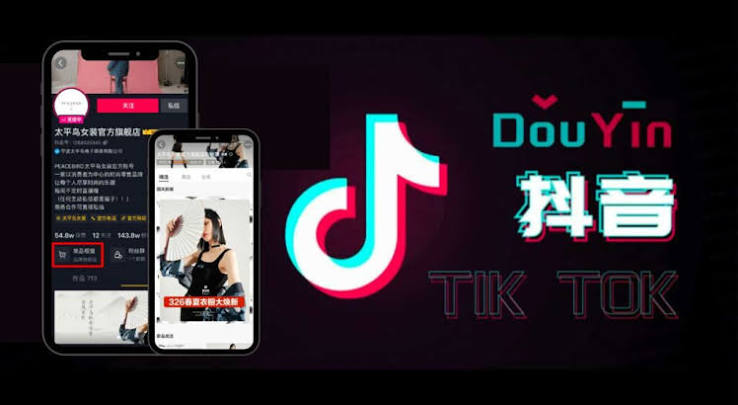
Douyin, the Chinese version of TikTok, turned short-video and livestream shopping into a commerce channel generating an estimated ¥3 trillion (roughly $400 billion) in GMV in 2024. The app counts 700+ million daily active users, and product links sit inside the entertainment feed itself.
Influencer-driven sales power the model. A beauty creator demonstrates a product on camera, viewers tap through, and the purchase completes without leaving the app. Fashion, cosmetics and impulse buys have been the biggest categories, and Douyin's e-commerce arm has grown faster than any major rival, putting real pressure on Taobao in particular.
The structural weakness is that commerce here is content-driven rather than search-driven. Consumers do not open Douyin looking for a specific item; they discover products while watching. That makes it formidable for impulse categories and weaker for planned purchases. Return rates on livestream sales also run higher than on traditional platforms, a cost brands absorb.
6. Vipshop (唯品会)

Vipshop carved out a profitable niche in branded discount fashion, serving ~80+ million annual active customers with limited-time flash sales of authentic apparel, shoes and cosmetics. Much of the inventory comes from brand clearance, which is how the app sustains 30-70% off retail pricing.
Repeat purchases drive the business. Vipshop's customers tend to be loyal, often women aged 25-40 shopping for branded fashion at a discount, and that focus produces margins the bigger generalist platforms envy in the off-price segment.
It ranks sixth because the ceiling is lower. Vipshop cannot match the user counts of the giants above it, and its model depends on a steady flow of brand surplus inventory. Within its lane, though, it has held ground for over a decade against competitors with far deeper pockets.
7. Xianyu (闲鱼)
Xianyu is Alibaba's second-hand marketplace with 500+ million registered users, and it functions as a hybrid of eBay and Craigslist for the Chinese market. Used electronics, fashion, collectibles and even services change hands peer to peer, and the platform has become a cultural hub for younger users trading hobby goods and vintage items.
Trust mechanics make it work. Xianyu integrates with Alibaba's credit system and offers escrow-style protection, holding payment until the buyer confirms receipt. That structure has kept fraud complaints manageable in a category where scams are common.
Resale is the fastest-growing corner of Chinese e-commerce, and Xianyu owns it. Transaction volumes remain smaller than the new-goods platforms, which caps its ranking, but for used iPhones, limited-edition sneakers and secondhand furniture, it is the first app most Chinese consumers open.
8. Suning (苏宁易购)

Founded in 1990, Suning is the legacy retailer that successfully carried its appliance and electronics business into the app era. Thousands of physical stores pair with the online platform, and that offline footprint supports installation services, trade-in programs and fast regional delivery on big-ticket items.
Trust carries the brand. For a refrigerator, air conditioner or washing machine, Chinese households often prefer a retailer with a physical service network behind it, and Suning's decades of appliance retail give it credibility that pure online players lack.
The ranking reflects lost ground. JD.com and Taobao have taken significant market share from Suning over the past decade, and its e-commerce growth has stalled. It remains one of the largest home-appliance and 3C retailers in the country, but the trajectory points sideways rather than up.
9. Xiaohongshu / RED (小红书)

Xiaohongshu, known internationally as RED or Little Red Book, blends social media, product reviews and in-app commerce for 300+ million monthly active users. Users share recommendations on beauty, fashion, food and travel, and those posts drive real purchase decisions.
Commerce features let brands and creators sell directly through posts and livestreams. The influence is strongest in beauty and fashion, where a single well-received review thread can move inventory faster than paid advertising. Travel-related buying decisions, from hotel stays to destination gear, also flow through the platform.
We place it ninth because commerce remains secondary to the content and social core. Xiaohongshu shapes what people buy more than it captures the transaction itself, and many purchases still complete on Taobao or JD after discovery happens on RED. The direct-sales business is growing, though, and brands now treat a presence on the platform as close to mandatory.
10. Alibaba's AliExpress / Tmall Global (天猫国际)
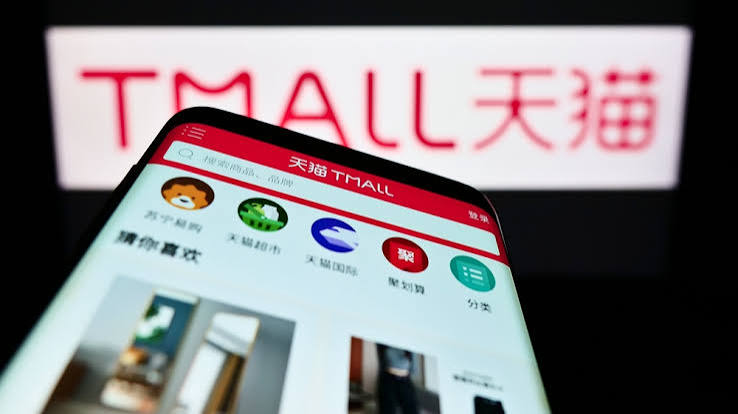
The final entry covers Alibaba's cross-border operations in both directions. Tmall Global hosts 40,000+ overseas brands selling into China, while sister app AliExpress serves buyers in 150+ countries shopping from Chinese sellers. Together they form the country's main gateway for imported and export e-commerce.
For foreign brands entering China, Tmall Global is the trusted route, offering logistics, marketing and payment infrastructure without requiring a domestic entity in every case. For overseas consumers, AliExpress provides direct access to Chinese sellers at prices local retailers struggle to match.
Cross-border friction keeps the ranking at ten. Shipping times run longer, customs adds uncertainty, and everyday consumer reach is narrower than the domestic giants. Still, no other platform matches the two-way trade volume these apps handle, and for imported goods specifically, Tmall Global remains the benchmark.
Related Posts



0 Comments
Join the discussion and share your thoughts
No Comments Yet
Be the first to share your thoughts on this article!