Top 10 Best Drone Delivery Companies In America 2026

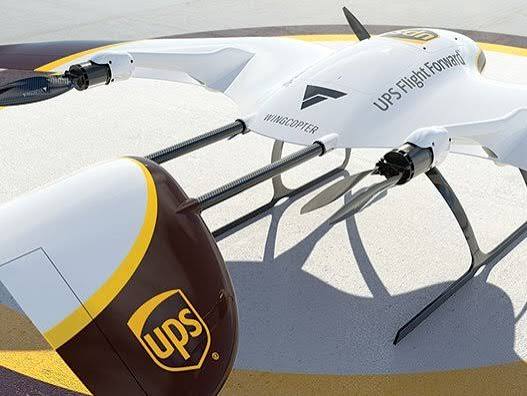
Table of Contents
The drone delivery market in America has crossed a threshold that seemed improbable a decade ago. Zipline alone has completed more than 1.5 million commercial autonomous deliveries, and Walmart surpassed 1 million drone deliveries by May 2026. This ranking of the top 10 drone delivery companies in America examines the operators actually moving packages through U.S. airspace at commercial scale, not the dozens of startups still chasing their first Part 135 certificate.
To build this list, we weighed FAA certification status (Part 135 air carrier or Special Airworthiness), cumulative delivery volume, operational footprint across U.S. states, partnership depth with retailers and health systems, and capital backing. We cross-referenced FAA Part 135 certification records, industry market reports including "Top Drone Companies in 2026: Defense, Delivery & Industrial," and company disclosures through mid-2026. Companies developing adjacent technology (heavy cargo, eVTOL) were included where their platforms have direct logistics applications. Pure defense drone manufacturers and consumer photography brands were excluded. The result is a ranking that reflects who is flying today and who has the regulatory and financial runway to dominate tomorrow.
These Are The Top 10 Drone Delivery Companies In America 2026:
1. Zipline

Zipline is the world's largest drone delivery company by volume, and in 2026 it is increasingly an American story. Roughly 70% of its deliveries now occur in the U.S., a dramatic shift for a company that built its reputation flying blood supplies across Rwanda and Ghana. Founded in 2014 and headquartered in South San Francisco, Zipline has logged more than 100 million autonomous flight miles across three continents.
The company's fixed-wing "Zip" aircraft cover a 10-mile service radius and deliver payloads with pinpoint precision, either by tether or parachute. Its FAA Part 135 certification allows commercial operations at scale, and in 2026 Zipline went live with prescription drone delivery for the Cleveland Clinic, extending its U.S. medical logistics footprint into one of the country's most respected health systems.
What separates Zipline from every competitor is the combination of volume and geography. No other operator has demonstrated sustained commercial delivery across rural Africa and dense U.S. healthcare networks simultaneously. For logistics planners evaluating instant delivery partners, Zipline remains the benchmark.
2. Wing (Alphabet)
Wing Aviation LLC holds a piece of history: the first FAA air carrier certification for drone delivery in the U.S., granted in 2019. As a subsidiary of Alphabet Inc., Wing has the balance sheet and technical resources to sustain a long game that most competitors cannot match.
The company's aircraft use a fixed-wing-with-hover design and carry packages up to roughly 2.5 pounds. That payload ceiling is modest, but Wing's real advantage is its integration with Walmart's drone delivery program, which has scaled to millions of deliveries across the Dallas-Fort Worth metroplex. Wing also develops proprietary unmanned traffic management (UTM) software, giving it structural control over how its aircraft share urban airspace.
Wing has been flying since 2012, which makes it the longest-operating drone delivery outfit in the country. That tenure shows in its safety record and its regulatory relationships. When retailers want a proven partner, Wing's name comes up first.
3. Amazon Prime Air
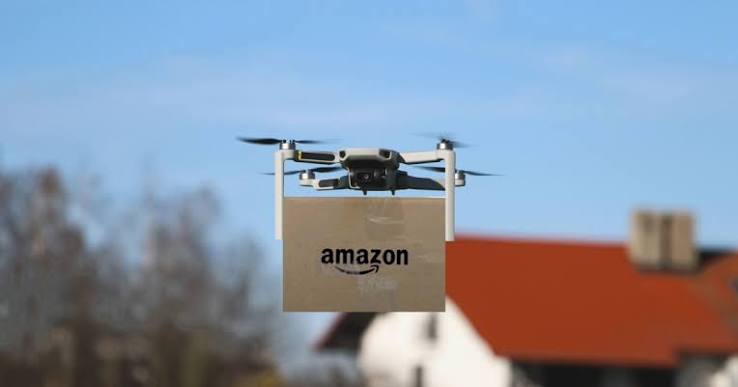
Amazon Prime Air received FAA Part 135 approval in 2020 and has since expanded to multiple U.S. markets, including College Station, Texas, and Tolleson, Arizona. The company's current MK30 drone carries packages up to 5 pounds within a 7.5-mile radius and flies in light rain and temperature extremes that grounded earlier models.
The ambition here is enormous. Amazon has stated a target of 500 million annual drone deliveries by the end of the decade. Whether that number is achievable is an open question, but no competitor has Amazon's fulfillment network, capital reserves, or direct integration with Prime checkout. Customers in eligible markets can select drone delivery as a shipping option without leaving the standard Amazon interface.
Amazon's scale advantage cuts both ways. The company moves more packages than anyone on earth, which means even a small percentage shift to drone delivery would dwarf competitors' totals. Watch the MK30 rollout closely over the next two years.
4. Walmart (Drone Delivery Program with Wing & Zipline)
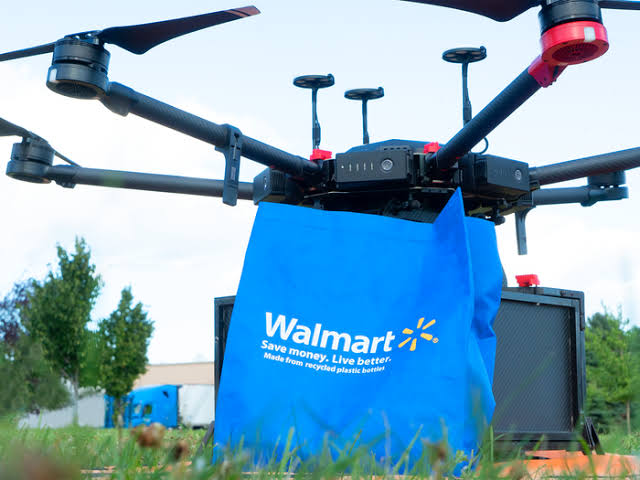
Walmart is not a drone manufacturer, but it has become the largest retailer-driven drone delivery operator in the United States. Working through partnerships with Wing and Zipline, Walmart delivers groceries and household goods across the Dallas-Fort Worth metroplex and additional markets.
The numbers tell the story. By May 31, 2026, Walmart reported surpassing 1 million cumulative drone deliveries, with roughly 40% of that total completed in the most recent quarter alone. That acceleration curve is the steepest in the industry. Walmart's existing store footprint functions as a ready-made network of launch sites, which is a structural advantage no pure-play drone company can replicate.
For American consumers, Walmart's program is likely to be their first real encounter with drone delivery. That first-mover position in retail could prove more valuable than any single technology patent.
5. UPS Flight Forward
UPS Flight Forward earned the first full FAA Part 135 Standard certification for drone delivery in 2019, a designation that allows unlimited drone operations without case-by-case approvals. That regulatory head start gave UPS a durable advantage in healthcare and campus logistics.
The subsidiary has focused on hospital deliveries, including operations at WakeMed in Raleigh, North Carolina, using aircraft from partner Matternet. Rather than chase suburban grocery delivery, UPS has built a defensible niche in high-value, time-critical medical transport where reliability matters more than payload size.
Backed by UPS's global logistics network, Flight Forward has a distribution infrastructure that pure startups lack. The company has been quieter than competitors in recent years, but its certification status and healthcare track record keep it firmly in the top tier.
6. Flytrex
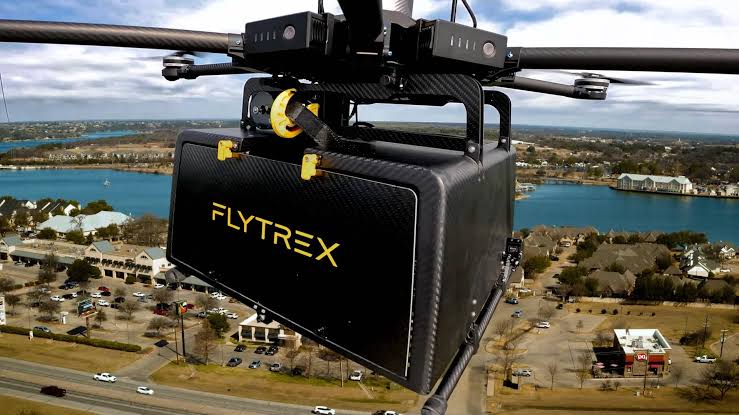
Its tethered-drop system allows delivery without landing, which matters in backyards where a safe landing zone does not exist. Flytrex has partnered with retailers and restaurants, including Walmart and Chick-fil-A pilot programs, targeting food and grocery delivery directly to residential yards.
Suburban density is where drone delivery economics work best: short distances, high order frequency, and customers willing to pay for speed. Flytrex has staked its business on that insight.
7. Matternet
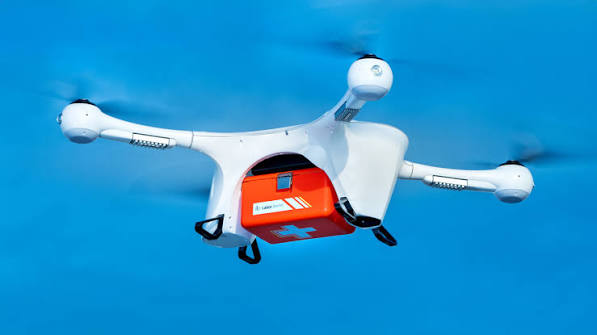
Matternet, headquartered in Mountain View, California, has completed more than 100,000 commercial deliveries, almost all of them medical. Its M2 drone system earned FAA Part 135 certification in 2019 and is purpose-built for autonomous transport of lab samples, prescriptions, and other time-critical payloads.
The company partners with UPS Flight Forward and health systems including WakeMed and hospitals in the Cleveland area. Medical payloads command higher margins than consumer packages and come with strict reliability requirements that create a natural moat against generic delivery competitors.
Matternet's platform is mature by drone industry standards. For hospitals evaluating drone logistics, it is often the first call.
8. DroneUp
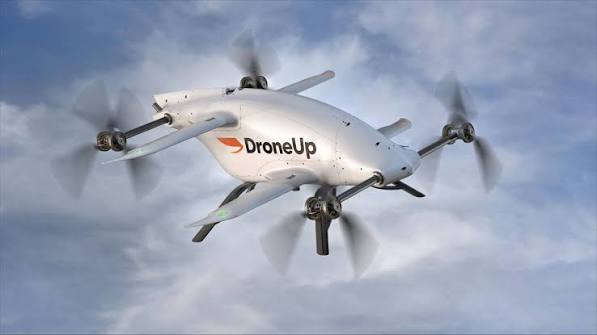
DroneUp, based in Virginia Beach, Virginia, built Walmart's earlier drone delivery network and operates more than 30 delivery hubs across six states as of 2024-2026. The company holds FAA Part 135 certification and has completed over 100,000 deliveries for Walmart, integrating drone drop-offs directly into retail store logistics.
In 2026, DroneUp continues to operate as a major U.S. drone delivery provider while expanding into inspection services and defense-adjacent work. That diversification reflects a broader reality in the sector: pure delivery margins are thin, and operators that survive are finding adjacent revenue streams.
DroneUp's hub network and retail integration experience give it operational knowledge that newer entrants lack. Its pivot toward defense and inspection is worth tracking as a signal of where the business model is heading.
9. Elroy Air
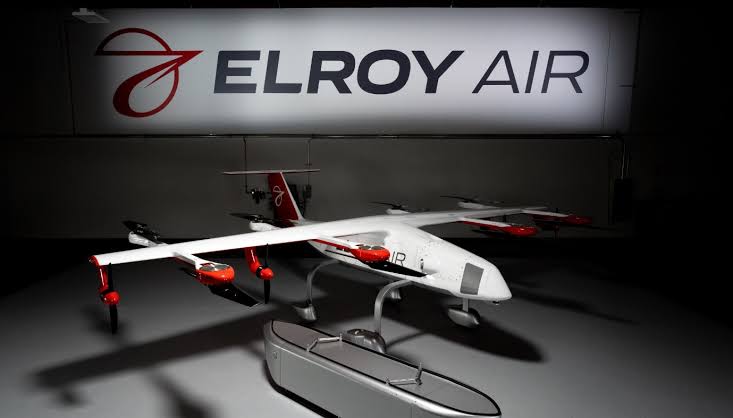
Elroy Air sits in a different weight class, literally. The South San Francisco company is developing the Chaparral C1, a hybrid-electric autonomous VTOL cargo aircraft with a 500-pound payload capacity and a 300-mile range. It holds an FAA Special Airworthiness Certificate and has secured partnerships with logistics operators and defense customers.
The Chaparral targets middle-mile logistics, the long-haul segment between distribution centers that small last-mile drones cannot serve. Its hybrid-electric architecture enables longer-range autonomous cargo delivery without the infrastructure demands of fully electric fleets.
Heavy cargo drones are a smaller market today than package delivery, but the defense and logistics traction Elroy Air has built suggests the segment will grow. The company complements last-mile operators rather than competing with them.
10. Wisk Aero
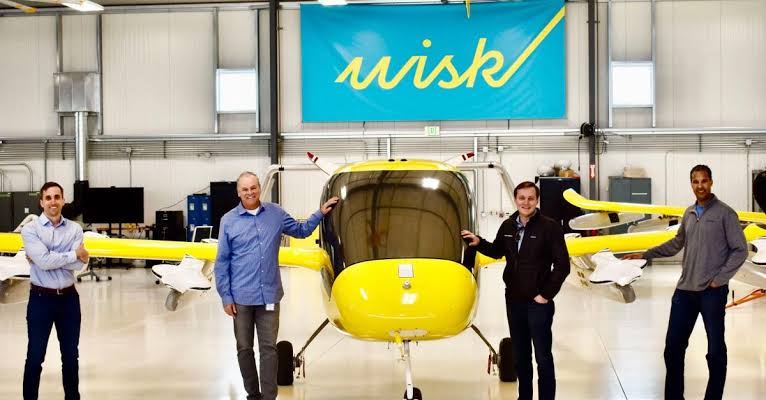
Wisk Aero, backed by Boeing and based in Mountain View, California, is developing a self-flying, four-passenger eVTOL aircraft for urban air mobility. Its focus is air taxi service rather than package delivery, but the autonomous flight technology and Boeing backing make it a significant player in the broader American drone logistics market.
Wisk holds a strong patent portfolio and is working through FAA type certification, a years-long process that few competitors have even started. Its fully autonomous design, with no on-board pilot, distinguishes it from piloted eVTOL companies like Joby Aviation.
The company's cargo-capable platform and regulatory progress give it a credible path to large-scale unmanned aerial logistics. Wisk is a longer-term bet, but one with Boeing's resources behind it.
Three trends will shape this ranking through 2027. First, Walmart's delivery acceleration, with 40% of its 1 million deliveries landing in a single quarter, suggests the retail channel is approaching an inflection point. Second, the Cleveland Clinic partnership between Zipline and one of America's top hospital systems signals that medical drone delivery is moving from pilot programs to standard operations.
Third, the FAA's certification pipeline remains the single biggest bottleneck. Companies holding Part 135 Standard certification, including UPS Flight Forward, have a regulatory moat that capital alone cannot buy. As Amazon pursues its 500 million delivery target and Wing expands its Walmart footprint, the gap between certified operators and hopeful applicants will likely widen.
Related Posts




0 Comments
Join the discussion and share your thoughts
No Comments Yet
Be the first to share your thoughts on this article!