Top 10 Best Gaming Companies In China 2026

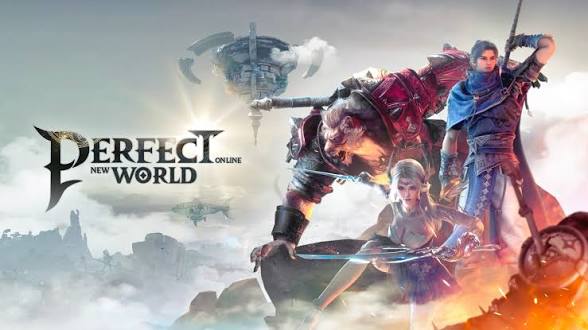
Table of Contents
China's gaming industry shows no signs of slowing down. The China Audio-Video and Digital Publishing Association reported industry revenue of ¥325.8 billion ($44.8 billion) in 2024, and Newzoo's estimates push that figure closer to $48.7 billion when accounting for all segments. To build this ranking, we weighed revenue figures from fiscal 2025 reports, market capitalization data from Capital.com as of April 2026, global publisher rankings from PocketGamer.biz and Sensor Tower, and each company's cultural footprint both at home and abroad. The result is a snapshot of which companies are actually shaping the future of gaming, not just posting strong quarterly numbers.
What stands out immediately is how much the landscape has shifted. A decade ago, this list would have been dominated by PC-centric MMORPG developers. Today, mobile-first live-service titles rule, and the companies that cracked global markets are the ones pulling ahead. Chinese developers now account for roughly 40% of global mobile gaming revenue, according to Sensor Tower data, and several companies on this list generate more than half their revenue outside China.
Here Are The Top 10 Best Gaming Companies In China 2026:
1. Tencent Holdings Ltd.
Tencent sits at the top of this list for the same reason it has topped every similar ranking for the past decade: it wins on every measurable axis. The company's market capitalization reached $588.7 billion as of April 2026, making it the second-largest gaming company worldwide behind only Microsoft. Games revenue hit ¥241.6 billion ($33.2 billion) in 2025, up 22% year over year.
The crown jewel remains Honor of Kings, which surpassed $5 billion in revenue in 2023 alone and maintains over 100 million daily active users across 160+ countries. It is still the highest-grossing mobile game in the world. But Tencent's 2025 performance was powered by fresh momentum: international games revenue crossed $10 billion for the first time, driven by a 33% jump, while domestic growth got a boost from new hits like Delta Force.
Tencent's influence extends far beyond its own titles. The company owns Riot Games outright and holds major stakes in Epic Games, Supercell, and Ubisoft. That portfolio gives Tencent a hand in nearly every major Western gaming success, from League of Legends to Fortnite to Clash of Clans. No other company on this list, or anywhere else, can match that breadth.
2. NetEase Inc.
NetEase remains China's clear number two, with a market cap of $73.3 billion and roughly $3.3 billion in quarterly games revenue, which annualizes to about $13 billion. The company's longevity comes from franchises like Fantasy Westward Journey, which has been running for over two decades, but its recent growth has been driven by newer properties.
Eggy Party went from launch to national phenomenon in months, proving NetEase can still create breakout hits from scratch. Knives Out has earned over $2 billion lifetime, with roughly 90% of that coming from Japan, a market where NetEase has built a surprisingly strong foothold. Mobile revenue is estimated at $4-5 billion for 2025, with several titles exceeding 10 million monthly active users in China alone.
NetEase's strategy differs from Tencent's in one key way: it develops more of its own IP rather than acquiring external studios. That approach has produced a diverse portfolio spanning battle royale, party games, RPGs, and survival titles, making it Tencent's most formidable domestic competitor.
3. miHoYo (HoYoverse)
miHoYo, operating globally as HoYoverse, is the only privately held company on this list that competes with the public giants on their own terms. Estimated 2025 revenue sits at $4.2 billion, a figure that becomes more impressive when you consider how few titles generate it.
Genshin Impact surpassed $10 billion in lifetime player spending by the end of 2025, an achievement no other Chinese game has come close to matching. Honkai: Star Rail crossed $2 billion on mobile in under two years. Add Honkai Impact 3rd and Zenless Zone Zero to the mix, and you have a company whose per-title revenue is the highest in the industry.
Chinese official media statistics suggest miHoYo's global influence now exceeds Tencent's in certain Western markets, where its anime-inspired aesthetic has built a passionate, spending-heavy audience. The company's gacha-based live-service model has proven extraordinarily profitable, and its refusal to go public has let it take long-term creative bets without shareholder pressure.
4. Century Games
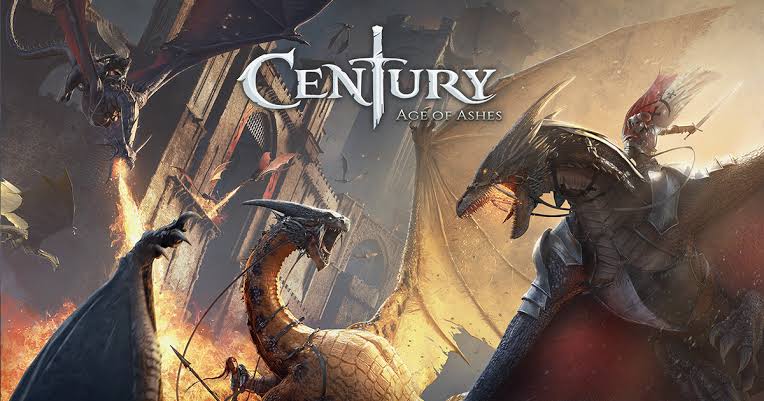
Century Games is the breakout story of China's gaming industry. The company ranked as the number two mobile games publisher worldwide on both the App Store and Google Play in 2025, an extraordinary achievement given the competition from Scopely, Dream Games, Playrix, and Zynga. Estimated revenue reached $2.73 billion.
The company's success is built on the 4X strategy genre. Whiteout Survival has been a global phenomenon, blending survival mechanics with territory expansion in a way that resonates with Western audiences. Call of Dragons pushed the genre further with fantasy elements and large-scale battles. Both titles consistently rank in the top-grossing charts across major markets.
What makes Century Games particularly notable is its template for international expansion. The company combines Chinese development expertise with a deep understanding of Western market preferences, from monetization design to cultural localization. PocketGamer.biz ranked Century Games as the top China game maker of 2026, and it's easy to see why.
5. 37 Interactive Entertainment (37Games)
37 Interactive Entertainment, commonly known as 37Games, is one of China's largest publicly listed gaming companies, with 2025 revenue of $2.32 billion. The Shanghai-headquartered developer and publisher has built its strength in the RPG and strategy genres, where its data-driven approach to game operation has proven consistently effective.
The company's international expansion has been aggressive, particularly in Southeast Asia and the Americas. 37Games has pursued a dual strategy of licensing adaptations of proven titles while also developing original IP. Its business model emphasizes long-term live-service monetization, with a focus on player retention and engagement metrics that rivals the best operators in the industry.
37Games doesn't generate the same headlines as some of its peers, but its consistency is remarkable. The company has ranked among China's top gaming companies by revenue for years, and its overseas operations continue to grow steadily.
6. Lilith Games
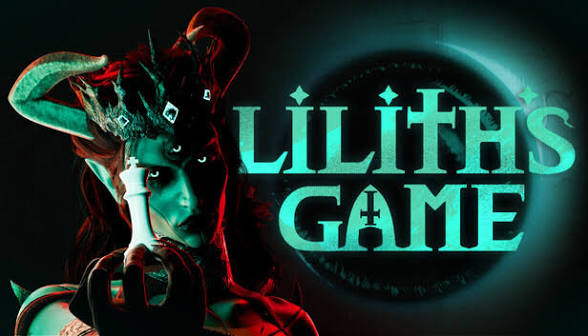
Lilith Games operates entirely as a private company, which has allowed it to take product bets that public companies might shy away from. That freedom has produced some of the most successful strategy games in the world. Estimated annual revenue sits between $1.5 and $2 billion.
Rise of Kingdoms has been a top-grossing strategy title globally since its 2019 launch, a remarkable run of sustained success. The game's blend of real-time strategy and city building, combined with aggressive global marketing, created a template that many competitors have since copied. AFK Arena dominated the idle RPG category for years, and its sequel AFK Journey has continued that legacy.
Lilith is also celebrated for its art quality, which sets its games apart in a market where visual polish increasingly determines success. The company's Shanghai studio is considered one of the best in China for art direction and animation.
7. Bilibili Inc.
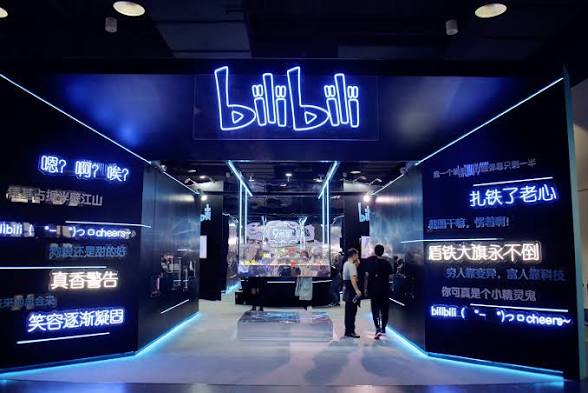
Bilibili started as a video-sharing platform and has transformed into a major gaming company, posting $4.59 billion in 2025 revenue. Some 2025 rankings placed Bilibili as China's top gaming company by revenue, a testament to how far the company has come.
Bilibili's gaming division benefits from a unique structural advantage: its platform is the primary destination for China's Gen Z gaming community. The company publishes and develops titles that resonate with its core user base, and it has successfully localized Japanese and Western games for the Chinese market while also developing original titles.
The integrated ecosystem is the key differentiator. Gaming, streaming, and community content reinforce each other in a way no competitor can easily replicate. When Bilibili launches a game, it already has a built-in audience of millions of engaged users who are accustomed to spending money on digital content.
8. Perfect World Games
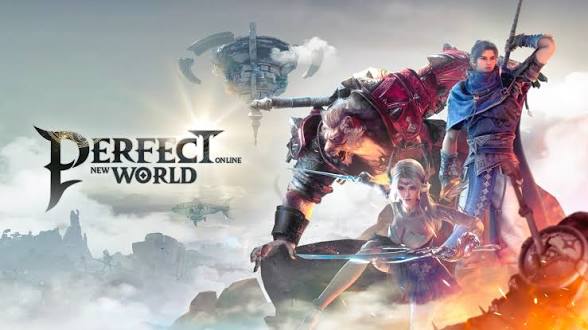
Perfect World has been through a turbulent few years. The company underwent mass layoffs in 2024, and both its CEO and co-CEO resigned. Revenue is estimated at approximately $1.5 billion for 2025. But the company remains a major force in Chinese gaming, and its recent moves suggest a strategic reinvention is underway.
The company's portfolio spans original IPs, licensed adaptations, and cross-platform games. The Perfect World MMORPG franchise has been running for nearly two decades, and the company's acquisition of Cryptic Studios gave it a Western development presence. In 2025-2026, Perfect World made a major bet on Hotta Studio's urban open-world RPG Neverness to Everness, entering the crowded open-world genre that has become a specialty of China's top companies.
Perfect World was an early pioneer of Chinese games going global, with its 3D fantasy titles finding audiences worldwide long before that was common. Its legacy importance is unquestionable, and its recent strategic pivot suggests the company is positioning itself for a comeback.
9. Game Science

Game Science achieved something no Chinese developer had managed before: mainstream Western success on console and PC with a AAA title. Black Myth: Wukong, released in August 2024, sold over 20 million copies within months and generated estimated revenue exceeding $1 billion.
The game, based on the classic Chinese novel Journey to the West, broke Steam records for single-player titles and was widely praised for its visual fidelity, combat design, and cultural authenticity. It demonstrated that Chinese developers could compete with the best in the world on traditional gaming platforms, not just mobile.
Game Science's success has been credited with inspiring a wave of investment in Chinese AAA game development. The company's next moves are being watched closely by the entire industry, and the expectations are enormous.
10. Yoozoo Games
Yoozoo Games rounds out this list as one of China's most established gaming companies, with revenue estimated at approximately $1 billion for 2025. The company operates across browser, mobile, and PC, and its MMORPG franchises League of Angels and League of Angels 2 have found popularity both domestically and internationally.
Yoozoo's partnership acumen is its defining strength. The company worked with Supercell to bring Brawl Stars to China, collaborated with KamaGames on social casino ventures in India, and acquired German developer Bigpoint in 2016. On mobile, titles like Legacy of Discord and Dynasty Origins have performed well.
The company's Shanghai headquarters hosts one of China's top-tier game development teams, with premium development services commanding hourly rates exceeding $150. That capability, combined with its strategic partnerships, keeps Yoozoo among China's elite despite the competitive pressure from larger rivals.
Related Posts


0 Comments
Join the discussion and share your thoughts
No Comments Yet
Be the first to share your thoughts on this article!