FlowLens Review 2026: AI, Login, App, Pricing & FAQs

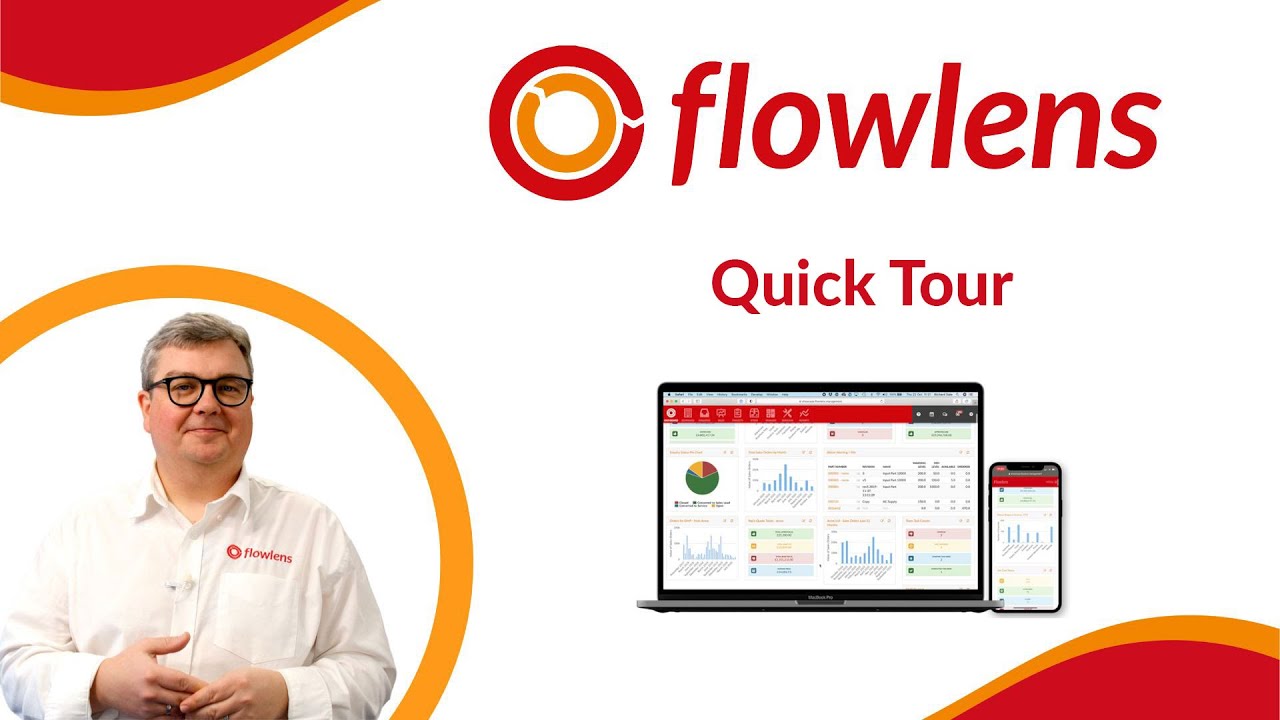
Table of Contents
If you run a small or mid-sized manufacturing or equipment dealership business and you have spent too many years juggling spreadsheets, disconnected systems, and late-night emails just to keep up with orders and inventory, then FlowLens is a name you have probably started to hear more often. We decided to take a proper look.
For this review, the Nubia Magazine team spent time going through FlowLens from multiple angles. We looked at what it actually does, how it handles AI features, how easy it is to get started, what users say about the day-to-day experience, how the pricing stacks up, and whether it genuinely delivers value for the businesses it targets. Here is what we found.
FlowLens: Quick Profile
Product Name | FlowLens |
Founded | 2015 |
Headquarters | Belfast, Northern Ireland, UK |
Type | Cloud-Based MRP & CRM Software |
Target Users | SME Equipment Manufacturers & Dealers |
Industries Served | Electrical Equipment, Industrial Machinery, Materials Handling, Automotive |
Pricing Model | Subscription (Custom Quote per Plan) |
Starting Price | From £39/user/month |
Free Trial | Yes |
Mobile App | Available (iPad, Android, iPhone) |
Key Integrations | Xero, QuickBooks Online, Sage 50, Mailchimp |
Support | Phone, Email, Live Chat, Online Form |
Training | Documentation, Live Online, Webinars, In-Person, Videos |
Overall Rating (Nubia) | 4.3 / 5 |
Nubia Magazine Ratings at a Glance
Category | Score |
AI & Automation Features | 4.1 / 5 |
Ease of Login & Onboarding | 4.4 / 5 |
App & Platform Performance | 4.2 / 5 |
Pricing & Value for Money | 4.3 / 5 |
User Experience (UX) | 4.5 / 5 |
Customer Support | 4.6 / 5 |
Overall Rating | 4.3 / 5 |
What Is FlowLens?
FlowLens is a cloud-based MRP (Manufacturing Resource Planning) and CRM platform built specifically for small and medium-sized equipment manufacturers and dealerships. It was designed to bring everything a manufacturing business deals with daily into one place: customer management, inventory, bills of materials, purchase orders, production scheduling, job cards, invoicing, and more.
The company behind it is based in Belfast, Northern Ireland, and has been quietly building a reputation among equipment businesses in the UK and beyond since around 2015. What makes FlowLens stand out from more generic business management tools is that it was designed with the manufacturing floor in mind, not retrofitted for it. It natively understands concepts like BOMs (bills of materials), serial number tracking, batch tracking, and multi-site stock operations.
It integrates directly with accounting tools like Xero, QuickBooks Online, Sage 50, and even Mailchimp for marketing, which means businesses do not have to build a complicated tech stack just to cover their bases. The platform is entirely cloud-based, so there is no server to maintain and updates happen automatically.
FlowLens and AI Features
This is where things get a bit nuanced. FlowLens is not an AI-first platform in the same way some newer SaaS tools market themselves. It does not have a chatbot or a built-in AI assistant giving you business advice on demand. That said, the platform incorporates smart automation features that take a lot of the repetitive thinking out of the equation.
The stock shortfall identification tool is one example. Rather than manually checking inventory against open orders, FlowLens can automatically flag when stock levels are likely to cause a production delay and prompt you to create a purchase order. That kind of proactive intelligence may not carry an AI badge, but it functions like one in practice.
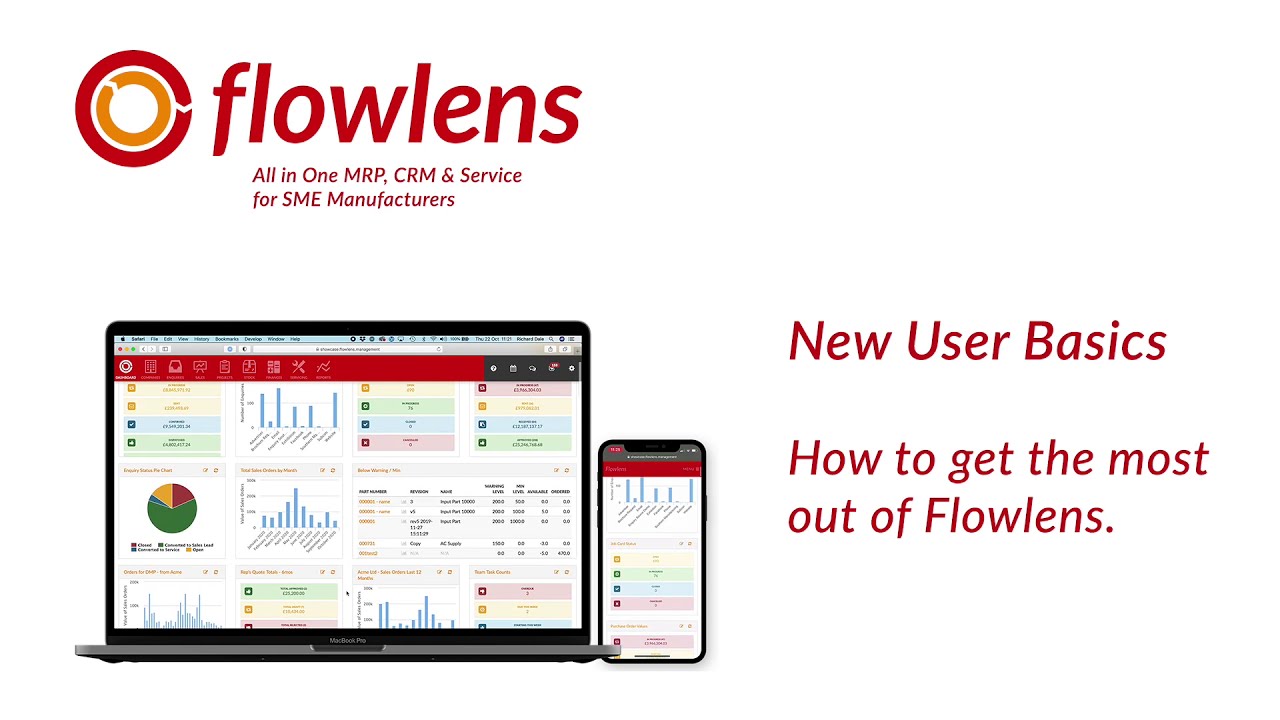
Real-time analytics and customizable dashboards give managers a live view of what is happening across the business without needing to run manual reports. The forecasting feature also pulls from sales history to help with production planning, which again, reduces guesswork considerably.
As of 2026, there are credible signals that FlowLens has been exploring deeper AI-assisted reporting and predictive planning capabilities as part of its product roadmap. The company has historically been very responsive to user feedback when it comes to adding new features, so this is an area worth watching.
For a platform targeting SME manufacturers, the current level of smart automation is genuinely useful, even if it is not going to compete head-to-head with enterprise AI platforms that cost ten times more.
Login and Getting Started with FlowLens
Getting into FlowLens is straightforward. The platform supports multi-factor authentication (MFA) as part of its standard security setup, which is reassuring for businesses that store sensitive customer, supplier, and financial data in the system. The login process itself is clean: you land on a branded portal, enter your credentials, complete MFA if enabled, and you are in.
Onboarding is where FlowLens arguably earns some of its strongest reviews. The company provides a combination of live online training, in-person sessions depending on your plan, documentation, video guides, and webinars. Users consistently mention that the support team is genuinely helpful rather than just pointing you to a help article. Several Capterra and G2 reviewers specifically name their account contacts as people who went above and beyond.
For new users, the initial setup does require some time to configure your product catalogue, set up your bill of materials, and map your workflows. This is not specific to FlowLens though. Any platform that properly handles manufacturing complexity is going to have a setup period. The difference with FlowLens is that the company walks you through it and offers data migration support as part of the implementation package.
Role-based access control means you can set different permission levels across your team from the start, so staff only see what is relevant to them. This keeps things clean and avoids confusion once the whole team is on board.
The FlowLens App and Platform
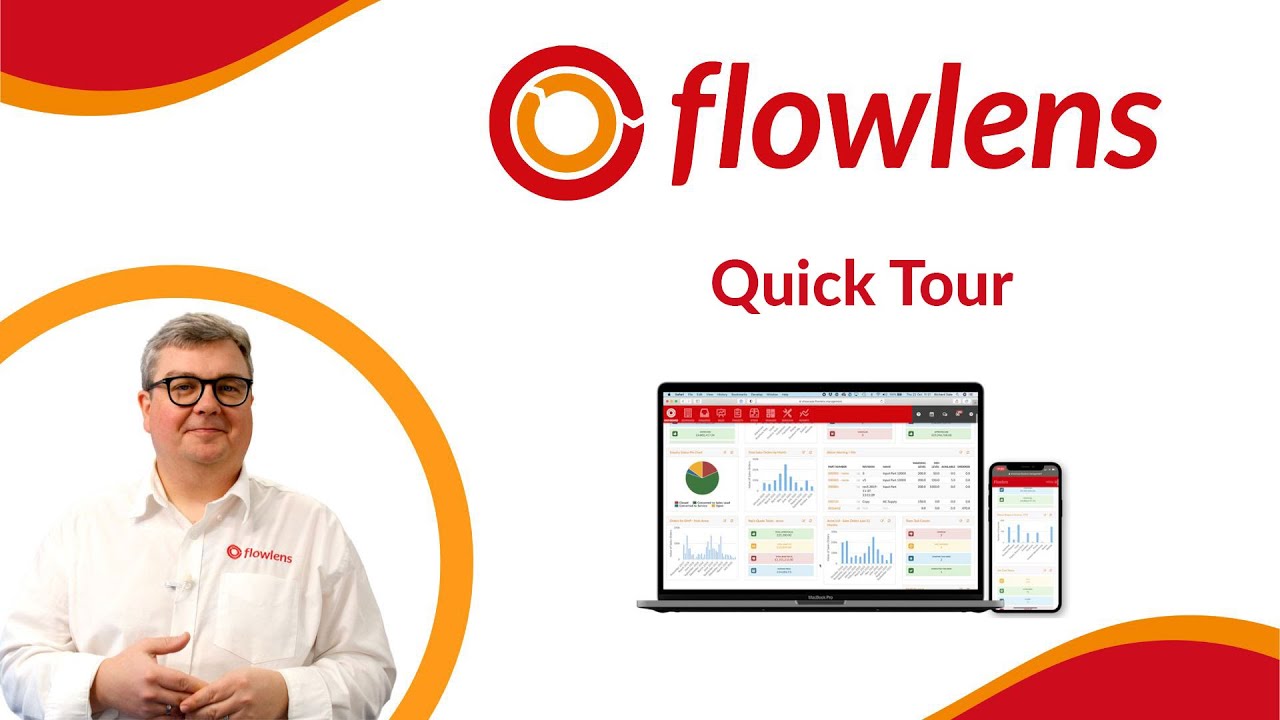
FlowLens is primarily a web-based platform, which means it works in your browser on desktop and laptop devices without needing to download anything. The platform has also extended to mobile through iOS and Android apps, making it accessible on iPad, iPhone, and Android devices.
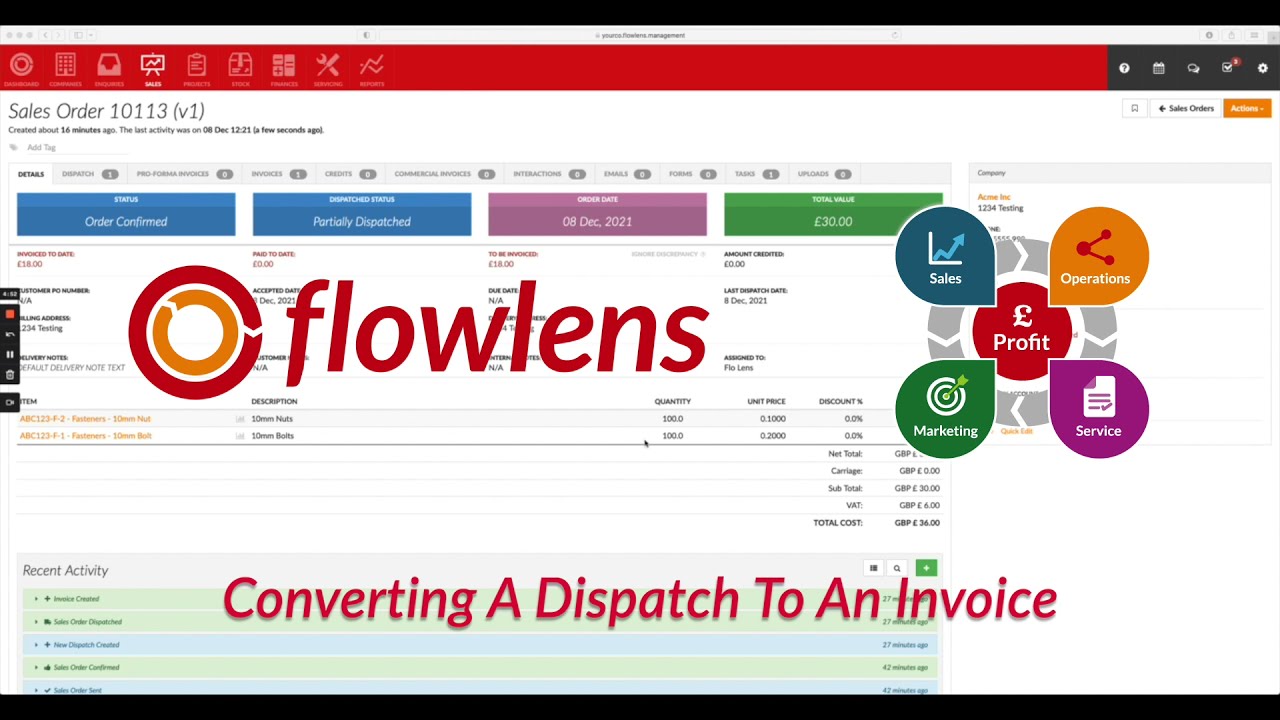
The desktop experience is where FlowLens shines. The interface is clean, well-organised, and logically laid out. Navigation flows naturally from one section to another, whether you are moving from a customer inquiry to a quote to a purchase order to dispatch. Several users describe the layout as intuitive enough that new team members pick it up quickly without needing extensive training.
The mobile experience is more limited, and this is something users have noted. The apps cover core functionality but lack some of the depth available on the desktop version. For field service teams or warehouse staff who need quick access to job cards or stock information on the go, the apps are functional, but anyone expecting the full desktop feature set on their phone may find it a bit lean.
Performance-wise, FlowLens holds up well as a cloud platform. Being hosted rather than on-premise means the team behind it handles infrastructure, uptime, and security patches. The system is regularly updated and new features are released in response to customer feedback over time.
One small note: some users mention that the email integration, while functional, routes outgoing emails through a FlowLens mailbox rather than your own business domain. This can occasionally cause confusion for customers who receive an order confirmation from an unfamiliar-looking address. It is a minor point but worth knowing about.
FlowLens Pricing in 2026
FlowLens uses a custom pricing model, which means you will not find a fixed price on a public pricing page. Instead, you request a quote based on your team size, the plan you choose, and your specific requirements. What we do know is that pricing starts from around £39 per user per month, making it competitive for what it includes.
There are three main plan tiers:
- Get Started: Designed for smaller manufacturers or teams just beginning to formalise their operations. It covers the core features needed to manage stock, sales, and basic production.
- Scale Production: A mid-tier plan for growing businesses that need more advanced production planning, multi-level BOMs, and deeper inventory management.
- Unify Operations: The full package for businesses that want to bring everything together, including multi-site operations, deeper reporting, and full integration with accounting platforms.
A free trial is available, which is worth taking advantage of before committing. FlowLens also offers a free demo where a member of the team will walk you through the platform in the context of your own business, which is more useful than a generic product tour.
In terms of value, the feedback from users is consistent: for what it covers, FlowLens is well-priced compared to alternatives like Salesforce or larger enterprise ERP systems. Multiple reviewers who came from Salesforce or manual spreadsheet setups specifically commented on how much more relevant and affordable FlowLens felt for a manufacturing business of their size.
User Experience: What People Actually Say
The user feedback for FlowLens across Capterra, G2, GetApp, and Software Advice is genuinely positive, and what stands out is how consistent the themes are. Reviewers are not just ticking boxes; they are describing real changes to how their businesses run.
The most frequently mentioned benefit is visibility. Businesses describe going from a situation where tracking an order meant opening multiple spreadsheets and sending a chain of internal emails, to having everything available in one screen with a clear view of where every job or order stands. For manufacturing teams, that kind of transparency is not a nice-to-have. It is the difference between reacting to problems and preventing them.
Customer support is another area where FlowLens consistently scores well. Users mention the team being available, responsive, and genuinely engaged with feedback. The company has a clear pattern of taking customer requests and incorporating them into the development roadmap when there is broad appeal, which creates a sense of partnership rather than a vendor relationship.
On the flip side, the mobile experience is the most cited area for improvement. The reporting tools, while useful, have also been described as solid but not exceptional in terms of advanced analytics. If your business runs heavily on custom data analysis and visualisation, you may find yourself pulling data into another tool for deeper reporting.
For the audience FlowLens targets, which is typically a team of between 5 and 50 people in a manufacturing or dealership environment, the experience is genuinely well-suited. It does not try to be everything to every business. It tries to be exactly the right tool for this specific type of business, and by most accounts, it succeeds.
Pros and Cons
What Works Well
- Designed specifically for SME equipment manufacturers and dealers, not a generic tool retrofitted for the industry
- Clean, intuitive interface that new team members pick up quickly
- Strong accounting integrations with Xero, QuickBooks, and Sage 50
- Excellent customer support with responsive team and real development responsiveness to feedback
- Handles complex manufacturing needs: serial tracking, batch tracking, BOMs, multi-site stock
- Competitive pricing with a free trial available
Areas for Improvement
- Mobile app is functional but does not match the depth of the desktop platform
- Reporting tools are solid but lack advanced analytics or custom visualisation features
- Outgoing emails route through a FlowLens mailbox, which can occasionally confuse end customers
- Cost prices require manual updates in some configurations
FlowLens FAQs in 2026
Based on what people are actually searching and asking about FlowLens right now, here are the answers to the most common questions.
1. What exactly is FlowLens used for?
FlowLens is a cloud-based MRP and CRM platform built for small and mid-sized equipment manufacturers and dealers. Businesses use it to manage the full cycle of operations: from capturing an initial customer inquiry, through quoting, production, stock management, purchasing, dispatch, invoicing, and after-sales service. It replaces the need for disconnected spreadsheets and separate systems by bringing everything into one platform.
2. Who is FlowLens best suited for?
FlowLens is specifically built for businesses in sectors like industrial machinery, electrical equipment, materials handling, and automotive that make or service equipment and need both manufacturing and dealer management in one place. It tends to work best for companies with teams of roughly 5 to 50 people who need more than a basic accounting tool but do not want the complexity or cost of a large enterprise ERP system.
3. How much does FlowLens cost in 2026?
Pricing starts from around £39 per user per month, though the final cost depends on your team size and the plan you choose. FlowLens has three pricing tiers: Get Started, Scale Production, and Unify Operations. Each is customised to the business, so you will need to request a quote directly. A free trial is available and the company also offers a free personalised demo.
4. Does FlowLens have an AI feature?
FlowLens does not market itself as an AI product in the conventional sense. However, it does include intelligent automation features such as automatic stock shortfall identification, demand forecasting, and real-time analytics. These tools do a lot of the heavy lifting that businesses would otherwise do manually. As of 2026, the company is known to be developing its capabilities further in this area as part of ongoing product development.
5. Is FlowLens easy to log in to and get started with?
Yes. The login process is secure and simple, with multi-factor authentication supported as standard. Onboarding is supported through live training, video guides, documentation, and a hands-on implementation process that includes data migration support. User reviews consistently praise the onboarding experience and the helpfulness of the support team during the setup phase.
6. Does FlowLens have a mobile app?
Yes, FlowLens has apps available for iPhone, iPad, and Android. The mobile apps cover the core features of the platform, making it possible to access job cards, stock information, and customer records on the go. That said, the mobile experience is not a full replica of the desktop version. Some users have noted that certain features and settings are easier to work with on a desktop or laptop.
7. What accounting software does FlowLens integrate with?
FlowLens integrates directly with Xero, QuickBooks Online, Sage 50, and KashFlow for accounting. It also connects with Mailchimp for email marketing. Users who work with Xero in particular describe the integration as seamless, with invoices flowing automatically between FlowLens and their accounting platform without manual entry. This alone has been cited by multiple users as one of the biggest time-savers the platform delivers.
8. How does FlowLens compare to Salesforce or other CRM tools?
This one comes up a lot, particularly from businesses that have previously used Salesforce and found it too expensive and too complicated for a manufacturing environment. FlowLens is more focused and more affordable for the manufacturing and dealership niche. It trades the broad customisation of something like Salesforce for a tighter, more relevant feature set that covers the specific needs of manufacturers and equipment dealers. For the right business, that trade is very much worth making.
9. Is there customer support available and how responsive is it?
Customer support is one of the most praised aspects of FlowLens across review platforms. The team is reachable by phone, email, live chat, and an online contact form. Training is included with purchase on most plans, and additional support is available as needed. A consistent theme in user reviews is that the support team goes beyond just answering questions and actively engages with feedback to help shape future development.
10. Is FlowLens worth it for a small manufacturing business in 2026?
Based on the evidence available, yes. If your business is in the equipment manufacturing or dealership space and you are currently managing operations through spreadsheets, separate systems, or a general CRM that was not built for manufacturing, FlowLens offers a meaningful upgrade at a price point that does not require an enterprise budget. The platform does what it promises for the audience it targets, and the support behind it is solid enough that you are not left to figure things out alone.
Nubia Magazine Verdict
FlowLens is a genuinely solid platform for the business it was built for. It is not trying to be everything to everyone, and that focus is actually one of its strengths. If you are running a small or mid-sized manufacturing or equipment dealership business and you are ready to bring your operations into one coherent system, FlowLens is absolutely worth a serious look in 2026.
The 4.3 out of 5 rating from our team reflects a platform that delivers real value, with strong usability, excellent customer support, and an integration suite that handles the accounting side cleanly. The areas that hold it back slightly include a mobile app that still has room to grow and reporting tools that could be more advanced for data-heavy users. Neither of these are dealbreakers for the typical FlowLens customer.
For businesses coming from spreadsheets, disconnected systems, or an enterprise tool that is too broad and too expensive, FlowLens hits the mark.
Related Posts


0 Comments
Join the discussion and share your thoughts
No Comments Yet
Be the first to share your thoughts on this article!