Top 10 Best Visual Low-Code Backend Platforms In The World 2026

Table of Contents
Building modern backend systems traditionally requires deep expertise in programming languages, server architecture, and API design. The rise of visual low-code backend platforms has changed that equation, allowing teams to model data, orchestrate workflows, and deploy services using graphical interfaces. For organizations looking to accelerate development while maintaining production-grade reliability, these platforms represent a significant shift in how backend infrastructure gets built. Our team evaluated dozens of platforms based on enterprise adoption, integration depth, scalability, and visual development capabilities to identify the ten that stand out most in 2026.
How We Made Our Picks
We assessed each platform against five core criteria: the breadth and maturity of visual backend modeling tools, enterprise governance and security features, integration capabilities with existing systems, scalability for production workloads, and the size and activity of the developer ecosystem. Analyst reports from Gartner and Forrester informed our rankings, as did publicly reported revenue figures, customer counts, and user adoption statistics. Platforms that support both citizen developers and professional engineers ranked higher than those targeting only one audience. We prioritized platforms with proven track records in mission-critical deployments over newer entrants with limited production references.
The Top 10 Best Visual Low-Code Backend Platforms In The World 2026:
1. OutSystems
OutSystems has maintained its position as a Gartner Magic Quadrant Leader for Enterprise Low-Code Application Platforms for six consecutive years, from 2019 through 2024. That consistent analyst recognition reflects a platform built specifically for complex backend logic at enterprise scale. The visual development environment lets teams design data models, business processes, and server-side logic without switching to traditional coding, though professional developers can extend functionality when needed.
The platform integrates deeply with SAP, Salesforce, and legacy databases, making it a practical choice for organizations running heterogeneous enterprise stacks. Toyota, Schneider Electric, and Logitech use OutSystems for large internal systems that handle mission-critical operations. Both cloud and on-premise deployment options are available, with pricing starting in the mid-five figures annually as of 2024. Built-in CI/CD and monitoring tools reduce the operational overhead that typically accompanies enterprise backend projects. For organizations that need a visual backend platform capable of handling complex, high-stakes workloads, OutSystems remains the benchmark.
2. Mendix (Siemens Mendix)
Siemens reported that Mendix had over 4,000 enterprise customers and more than 300,000 developers by 2024. The platform centers on model-driven visual development, letting teams define domain models, microservices, and workflows through graphical editors that generate production-ready services. This approach makes Mendix particularly strong for organizations standardizing on containerized backends, as it offers robust multi-cloud and Kubernetes support.
Both citizen developers and professional engineers find value in Mendix. The platform includes versioning, collaboration features, and Git integration that satisfy professional development workflows. Industry-specific templates for banking, manufacturing, and insurance accelerate backend-heavy use cases like core system modernization and customer portals. Mendix consistently places alongside OutSystems in Gartner Magic Quadrant evaluations, though its microservice orientation gives it a slight edge for teams building distributed backend architectures.
3. Microsoft Power Apps (with Power Automate and Dataverse)
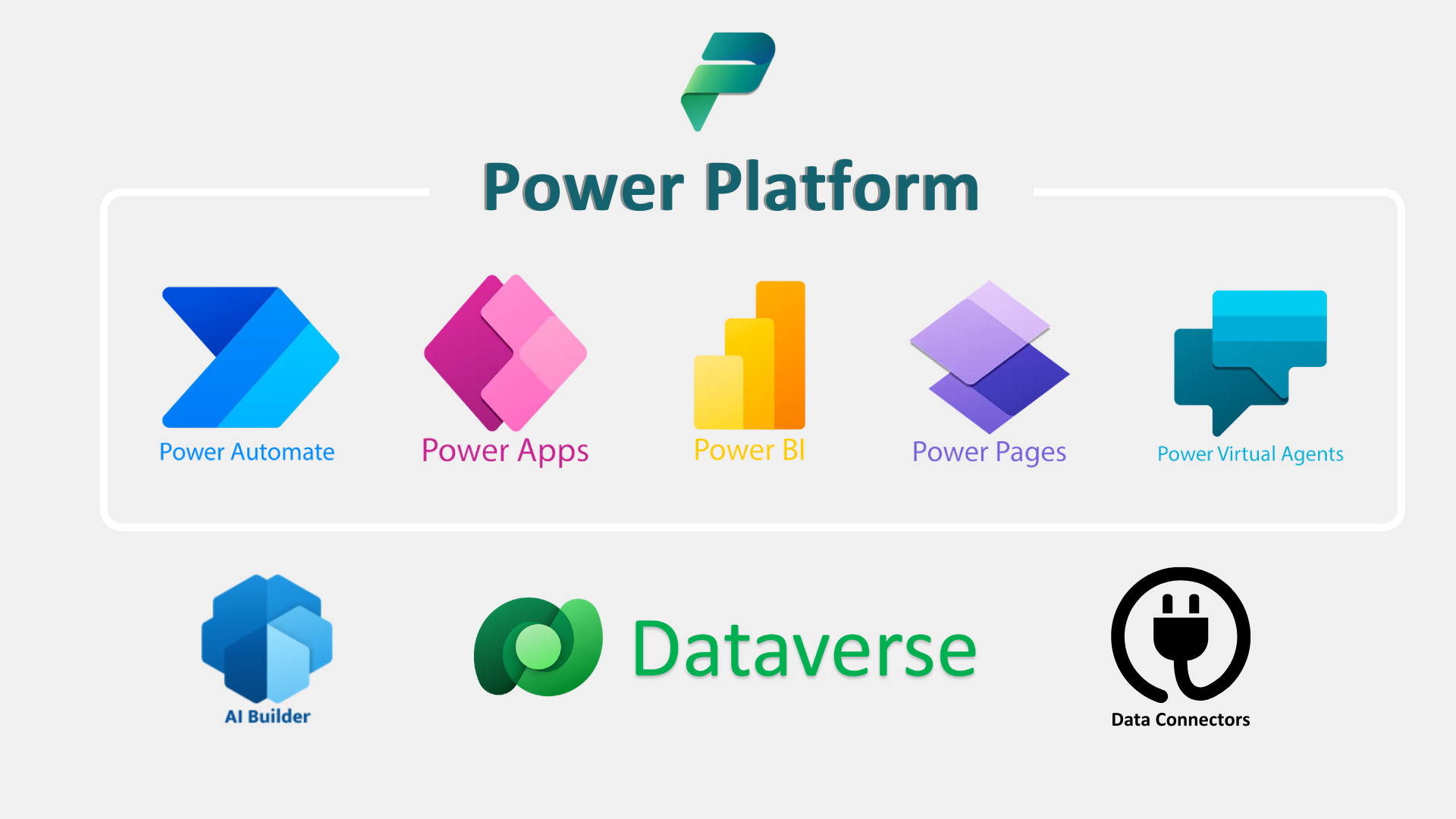
Microsoft reported over 10 million monthly active users for its Power Platform in its FY2024 earnings. Power Apps, when combined with Dataverse for data backend and Power Automate for workflow orchestration, creates a visual low-code backend stack deeply embedded in the Microsoft 365 and Azure ecosystems. Dataverse provides a visual data modeler and security model, while Power Automate enables drag-and-drop construction of server-side workflows and API connections across hundreds of prebuilt connectors.
Professional developers can extend backends using Azure Functions, Logic Apps, and AI Builder, bridging the gap between visual development and custom code. Licensing follows a per-user or per-app model, with published prices in the tens of dollars per user per month as of 2024. The massive installed base gives Power Apps a network effect advantage, though the platform is somewhat more constrained than OutSystems or Mendix for cross-cloud scenarios. For organizations already invested in Microsoft infrastructure, this is the most natural visual backend choice.
4. Salesforce Lightning Platform (including Flow and Heroku integration)
Salesforce reported over $34 billion in revenue in FY2024, with its Platform and Other segments growing faster than the core CRM business. The Lightning Platform provides visual tools for defining data models, automations, and backend logic on top of the Salesforce database. Administrators and developers can create objects, relationships, validation rules, and server-side logic using Flow and Process Builder without writing traditional Apex code, though that option remains available for complex requirements.
Salesforce Flow orchestrates backend business processes across CRM, external APIs, and custom applications, making it popular for complex enterprise workflows. Integration options like MuleSoft and Heroku allow organizations to extend these visual backends into hybrid and microservice architectures. The platform is one of the most widely deployed visual backend environments globally, but its strengths are most pronounced within the Salesforce ecosystem. Organizations without Salesforce investments will find more platform-agnostic options higher on this list.
5. ServiceNow App Engine
ServiceNow surpassed $8.6 billion in revenue in 2023, with a significant portion tied to its Now Platform and App Engine. The App Engine enables visual creation of data tables, workflows, and business rules geared toward IT service management, HR, and operations. Flow Designer provides drag-and-drop orchestration of backend processes, approvals, and integrations with systems like Active Directory, configuration management databases, and ticketing tools.
App Engine Studio offers guided low-code development for internal applications that share a common backend infrastructure including logging, security, and role-based access. Large enterprises increasingly use ServiceNow to replace legacy ticketing and workflow backends, consolidating multiple systems onto a single platform. The specialization in IT and operations backends gives ServiceNow a clear focus, though it is less suited for general-purpose application backends compared to platforms ranked higher on this list.
6. Appian
Appian reported over $540 million in total revenue for 2023, with a strong emphasis on low-code automation and case management. The platform provides a visual designer for data structures, business processes, and rules that deploy as backend services. Appian excels in case management, complex workflows, and compliance-heavy backend systems in government, financial services, and healthcare sectors.
The records and data fabric layer unifies multiple data sources into a virtual data model, reducing the need to replicate data across systems. Appian supports cloud and self-managed deployments and integrates with robotic process automation and AI modules for backend process automation. The platform's specialization in process-centric backends earns it consistent recognition in analyst reports for low-code and business process management, though it is less commonly used for broad general-purpose backend development than OutSystems or Mendix.
7. Oracle APEX (Oracle Application Express)
Oracle reports more than 500,000 developers using APEX and thousands of production applications running on Oracle Database as of 2023. APEX is a low-code development environment tightly coupled to Oracle Database, enabling visual definition of data models, business logic, and REST APIs. Developers use declarative wizards and page designers to build backend-centric applications such as data entry systems, reporting dashboards, and administrative tools.
The platform can be deployed on Oracle Cloud, on-premise, or in hybrid environments, making it attractive for organizations with existing Oracle infrastructure. Built-in security, performance optimization, and multi-tenant capabilities operate at the database level. APEX's strength and maturity for database-driven backends within Oracle shops are undeniable, but its tight dependency on Oracle Database makes it more niche compared with higher-ranked, cloud-agnostic platforms.
8. Google AppSheet
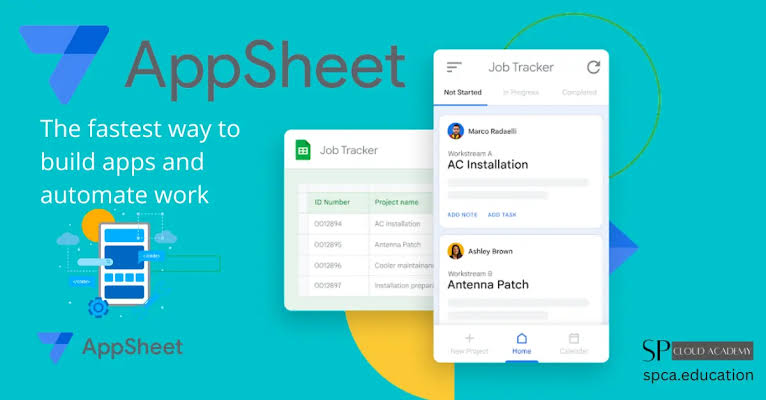
Google reported over 4.5 million AppSheet app users as of 2023, following its acquisition of the platform in 2020. AppSheet lets users visually model data and backend logic starting from spreadsheets, databases, or Google Cloud data sources. The platform automatically generates backend CRUD operations and workflows from data schemas, plus role-based access and offline support for mobile clients.
Integration with Google Workspace, BigQuery, and other Google Cloud services makes AppSheet suitable for operational backends in small to mid-sized businesses. AppSheet Automation provides visual bots and rules that run server-side. The platform is extremely accessible and strong for data-centric backends, especially in Google ecosystems, but it lacks some of the deep enterprise governance and complex backend modeling features found in higher-ranked platforms.
9. WSO2 Choreo
WSO2 reports thousands of organizations adopting its API and integration products, and positioned Choreo as its flagship cloud-native integration and low-code platform by 2023-2024. Choreo is a visual cloud-native platform for building APIs, integrations, and serverless backends. It offers low-code and pro-code interfaces for modeling microservices, event flows, and API compositions, deploying them on managed Kubernetes infrastructure.
The platform emphasizes observability, API management, and secure integration with SaaS and on-premise systems, making it suited for modern integration backends. Choreo layers a graphical flow editor over the Ballerina programming language for more advanced developers. Its strong specialization in API-driven backends and cloud-native operations earns it a place on this list, but its relative youth and smaller installed base keep it below more established enterprise low-code platforms.
10. n8n (Self-Hostable Workflow Automation and Backend Orchestration)
n8n reported over 5 million Docker pulls and hundreds of community-maintained integrations by 2024. This open-source, node-based visual automation tool is used by many teams to orchestrate backend workflows, API calls, and data pipelines with minimal code. Users build backend flows through a visual editor that connects triggers, function nodes, and integrations to services like databases, queues, and SaaS APIs, then deploy self-hosted or on n8n cloud.
The platform supports custom JavaScript in function nodes and can run as part of a microservice architecture, effectively acting as a low-code backend orchestrator. Its fair-code license and self-hosting option are especially attractive for privacy-sensitive organizations. While n8n is not a full application platform like OutSystems or Mendix, its flexibility, open-source model, and strong backend orchestration capabilities earn it a spot on this list. Limited governance and application-lifecycle features keep it at the lower end of the top 10.
Visual low-code backend platforms have matured significantly, with enterprise-grade options now capable of handling complex, mission-critical workloads. The right choice depends on an organization's existing infrastructure, team composition, and specific backend requirements. For most enterprises, the platforms ranked in the top five offer the best combination of visual development power, scalability, and integration breadth as we move through 2026.
Related Posts



0 Comments
Join the discussion and share your thoughts
No Comments Yet
Be the first to share your thoughts on this article!