Top 10 Best AI Ticketing Systems In The World 2026

Table of Contents
The customer service landscape has undergone a fundamental shift. What was once a manual, ticket-by-ticket operation is now driven by artificial intelligence that can predict, route, and resolve issues before a human agent ever touches a keyboard. In 2026, AI ticketing systems are no longer a luxury for forward-thinking companies; they are a baseline expectation for any organization that values efficiency and customer satisfaction.
To build this ranking, we weighed criteria across several dimensions. We looked at core AI capabilities, including autonomous resolution rates, sentiment analysis, and intelligent routing. We factored in user satisfaction scores from platforms like G2 and Capterra, pricing transparency and total cost of ownership, and the breadth of integration ecosystems. We also considered real-world user feedback on implementation complexity and ongoing administration. The result is a list of ten systems that represent the best of what AI ticketing has to offer in 2026, from enterprise behemoths to niche specialists.
These Are The Top 10 Best AI Ticketing Systems 2026:
1. Zendesk
Zendesk remains the dominant force in AI ticketing, and for good reason. The platform offers omnichannel ticketing that unifies email, live chat, and voice into a single queue, supported by AI agents capable of autonomous tier-1 resolution and an AI Copilot that assists human agents in real time. With ratings between 4.3 and 4.6 out of 5 across major review platforms, Zendesk consistently earns high marks for its breadth of features.
However, the cost picture is more complex than the base plans suggest. While plans start at $55 per agent per month, the total bill can compound significantly when adding AI, voice, workforce management, and analytics add-ons. Some users also report that the interface feels dated compared to newer competitors and that Zendesk's own support can be slow for critical issues. The platform requires a dedicated administrator to manage complex workflows effectively. For organizations that can absorb the total cost and administrative overhead, Zendesk delivers a comprehensive AI ticketing experience that few can match.
2. Intercom (Fin AI Agent)
Intercom's Fin AI agent has carved out a commanding position in real-time conversational support. Fin can operate as a standalone chatbot or integrate with any existing help desk system, making it a flexible choice for teams that want to layer AI onto their current infrastructure. The platform's sentiment-based satisfaction scoring analyzes conversations to gauge customer sentiment in real time, while its coaching feature identifies potentially unhelpful responses for team training.
Fin trains on multiple data sources, including websites, files, FAQs, and previous interactions, allowing it to provide accurate, context-aware responses. The platform excels at live chat interactions but is less suited for organizations that need traditional email-based ticketing workflows. For companies whose primary customer interaction channel is chat, Intercom's Fin is arguably the best AI ticketing system available in 2026.
3. Salesforce Service Cloud (Einstein AI)
Salesforce Service Cloud combines enterprise-grade CRM capabilities with Einstein AI for intelligent routing, recommendations, and autonomous resolution. The platform earns a 4.4 out of 5 rating on G2 and benefits from unified data across Sales Cloud and Marketing Cloud, giving support teams a 360-degree view of every customer. The Einstein Trust Layer is a standout feature for regulated industries, providing AI security that ensures sensitive data remains protected.
The trade-off is complexity. The platform's flexibility increases implementation and administration demands, with reviewers cautioning that customizations sometimes require significant technical knowledge. Advanced configurations can take months to implement. For large enterprises with dedicated Salesforce teams, the investment pays off in powerful, customized AI ticketing. For smaller organizations, the overhead may outweigh the benefits.
4. Freshdesk
Freshdesk offers AI capabilities at a price point that makes it the best value play in the market. Starting at $15 per agent per month when billed annually, with the Freddy AI Copilot add-on at roughly $29 per agent per month, the platform delivers solid functionality at a fraction of enterprise costs. It earns a 4.5 out of 5 rating on G2 and provides strong omnichannel support across email, chat, phone, and social media.
The compromise is in automation depth. While Freshdesk delivers reliable AI assistance, users can expect 20 to 30 percent automation rates rather than the 70 percent or more achievable with premium platforms. This makes Freshdesk ideal for budget-conscious teams that can accept moderate AI automation levels while still getting a robust, user-friendly ticketing system.
5. Zoho Desk
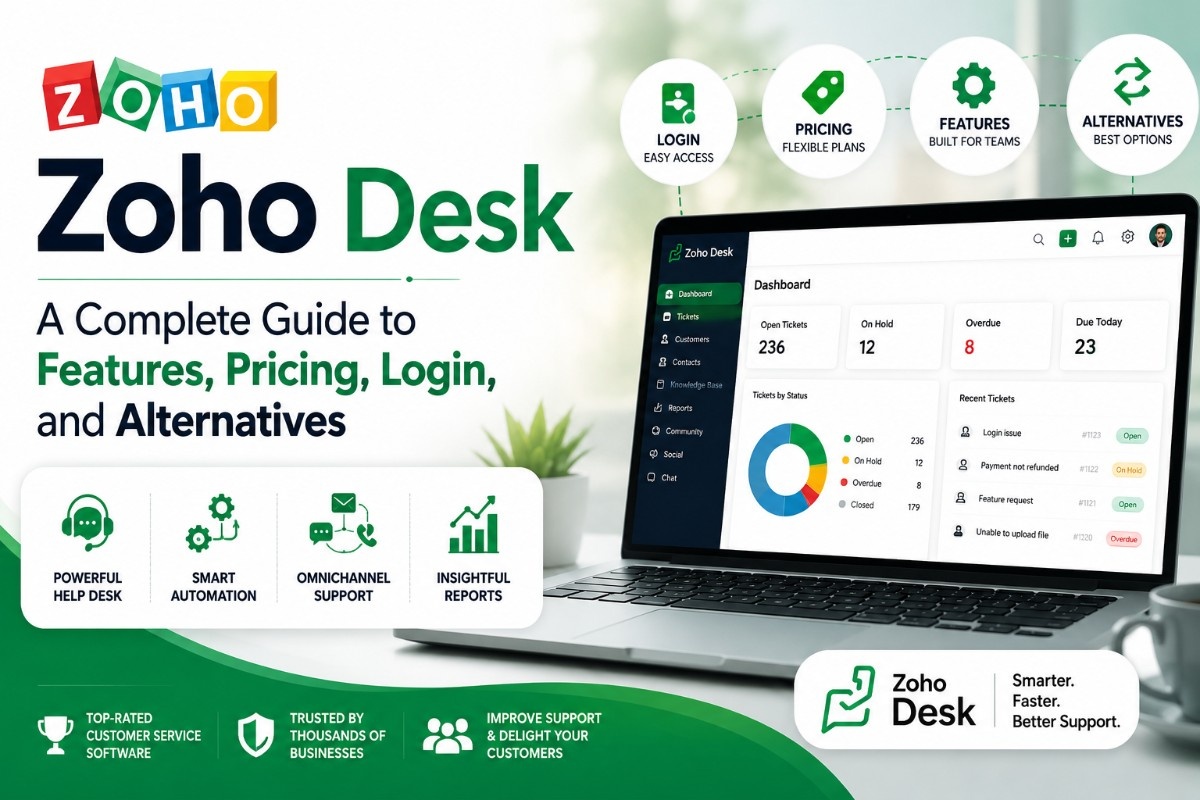
Zoho Desk is the most affordable AI ticketing system with genuine workflow capabilities. Starting at $14 per agent per month for the Standard plan, the platform includes SLA management, multi-channel intake, and process automation powered by the Zia AI assistant. It earns a 4.4 out of 5 rating on G2 and offers an answer bot and AI support assistant that add automation to an already strong omnichannel help desk.
For teams already using Zoho CRM or Zoho One, native integration compounds the value significantly. However, more advanced ITSM workflows are limited compared to purpose-built platforms, and some users note that the free edition covers only very small teams. For budget-conscious organizations that need real AI capabilities, Zoho Desk delivers impressive functionality at the lowest price point in this ranking.
6. Jira Service Management
Jira Service Management is the top choice for engineering-led IT departments. Starting at $19 per agent per month for the Starter plan and earning a 4.4 out of 5 rating on G2, the platform offers deep integration with Jira Software, Confluence, and the broader Atlassian ecosystem. It provides ITIL-aligned service management with AI-powered automation and intelligent routing that developers and IT professionals find intuitive.
The platform excels for teams already using Atlassian products, creating a seamless workflow from development to support. The downside is complexity for non-technical teams. Jira Service Management's strength lies in its developer-friendly workflows and robust project management capabilities, but it requires technical familiarity to configure and maintain effectively.
7. ServiceNow
ServiceNow is the premier enterprise ITSM platform, earning a 4.6 out of 5 rating on G2. The platform offers comprehensive ITIL-aligned workflows, AI-powered automation, and cross-functional service management that can handle the most complex enterprise requirements. The Freddy AI Copilot add-on provides intelligent assistance at $29 per agent per month.
G2 reviewers praise the modern interface, configurability, and strong integration ecosystem. However, advanced features like analytics and AI sit behind higher tiers, and the jump from the Growth plan at $49 per agent per month to the Pro plan at $99 per agent per month is significant. AI features require additional add-on costs. For large enterprises with the budget and dedicated administration teams, ServiceNow delivers unmatched depth and customization.
8. Help Scout
Help Scout takes a measured approach to AI, positioning it primarily as an assistant rather than an autonomous resolver. Core AI features include AI Answers for straightforward questions, AI Drafts for generating response suggestions, AI Summarize for condensing conversation threads into bullet points, and AI Assist for tone adjustment, grammar fixes, and message translation.
This approach makes Help Scout ideal for teams new to AI or concerned about maintaining service quality during implementation. The platform lacks the autonomous resolution capabilities of more advanced AI ticketing systems, but it provides a gentle on-ramp to AI-powered support that helps teams build confidence and competence before moving to more aggressive automation.
9. Pylon
Pylon is designed specifically for B2B support teams, managing omnichannel interactions across Discord, Slack, email, chat, and more. The platform offers AI Agents and Assistants that automate busywork and unify context from all support conversations, enabling teams to act on customer signals in real time.
Pylon's strength lies in its ability to handle the complex, multi-channel nature of B2B support, particularly for companies using modern communication tools like Slack and Discord for customer interactions. For B2B organizations that need to manage support across these channels, Pylon offers a purpose-built solution that general-purpose ticketing systems struggle to replicate.
10. Gorgias
Gorgias is the only AI ticketing system built specifically for e-commerce customer support. Its deep Shopify integration allows agents to see order data, issue refunds, create returns, and cancel orders without leaving the ticket. The platform's ticket-volume pricing model, rather than per-agent pricing, is a structural advantage for operations with seasonal swings in headcount.
The e-commerce focus is both Gorgias's strength and its limitation. It is excellent for merchants but irrelevant for everyone else. The platform requires a Shopify store to function effectively, making it a specialized tool for a specific market. For direct-to-consumer e-commerce brands, however, Gorgias delivers an AI ticketing experience that is tightly integrated with the workflows that matter most.
In 2026, the best AI ticketing system depends entirely on an organization's specific needs, budget, and technical sophistication. The platforms in this ranking represent the spectrum of what is available, from enterprise giants to niche specialists, and each offers a distinct approach to using AI to transform customer support.
Related Posts

0 Comments
Join the discussion and share your thoughts
No Comments Yet
Be the first to share your thoughts on this article!