Top 10 Best MailChimp Apps In The World 2026

Table of Contents
Mailchimp has long been a household name in email marketing, but as businesses grow, many find themselves searching for more specialized tools. Whether you need deeper e-commerce integrations, more affordable pricing, or advanced automation, the landscape of email marketing platforms has shifted dramatically by 2026. Our editors have evaluated dozens of platforms to find the best Mailchimp alternatives available this year. Below, we break down the top 10 options that offer superior features, better value, or both.
How We Made Our Picks
To compile this list, our team analyzed platforms based on e-commerce integration depth, automation capabilities, pricing transparency, user sentiment across G2, Capterra, and Trustpilot, and deliverability rates. We prioritized tools that fill specific gaps left by Mailchimp, such as advanced segmentation, multi-channel support, and scalable pricing. Each entry was tested for real-world performance, and we weighed feedback from active users in forums and review sites. The result is a curated list of the strongest contenders for 2026.
The Top 10 Best MailChimp Apps In 2026:
1. Omnisend
Omnisend was built from the ground up for e-commerce, making it the top choice for online retailers in 2026. Its entire workflow library is designed around the online shopping lifecycle, with pre-built automations for cart abandonment, post-purchase sequences, product recommendations, and browse abandonment. Unlike many tools that added e-commerce features as an afterthought, Omnisend integrates deeply with Shopify, BigCommerce, WooCommerce, and Magento. Every feature is available on every tier with no artificial feature gates, which means you get the full suite regardless of your plan. In independent testing, Omnisend won the title of "Best Email Marketing for E-Commerce" in 2026, and its 24/7 support averages a 4-minute response time. For merchants who live and die by their email revenue, this platform is the clear leader.
2. Klaviyo
Klaviyo remains the default choice for many scaling direct-to-consumer brands, and for good reason. Its segmentation engine updates in real time as customers browse, buy, and churn, allowing marketers to build campaigns around every purchase signal. The platform offers extremely granular segmentation based on individual products and customer behavior, which is ideal for brands with large catalogs. Klaviyo holds strong ratings on G2 (4.6/5) and Capterra (4.6/5), and pricing starts at $20 per month for 500 contacts. However, its Trustpilot score sits at a low 2.1 out of 5, reflecting persistent customer service complaints. As your list grows, costs can escalate quickly, which is something to watch for. But for e-commerce brands that need real-time data driving every campaign, Klaviyo is hard to beat.
3. ActiveCampaign
ActiveCampaign is the go-to platform for businesses that need advanced automations and behavior-based campaigns. It functions as a powerful all-in-one system with dynamic automations, CRM actions, and complex cross-channel workflows that work together seamlessly. The platform excels at building customer journeys with conditional logic and branching automation paths, which is a significant upgrade over Mailchimp's more linear approach. ActiveCampaign also includes AI-assisted marketing capabilities that help optimize send times and content. It is best suited for experienced marketers, e-commerce brands, SaaS teams, and businesses with defined funnels that require stronger segmentation. If your campaigns rely on nuanced triggers and multi-step sequences, this is the tool to consider.
4. Constant Contact
Constant Contact has been operating since 1995, making it one of the oldest and most reliable email marketing platforms still active. Its core strengths include a massive template library, a intuitive drag-and-drop editor, and phone support on every plan, which is rare among competitors. The platform also offers unique event management and ticketing features, making it a strong choice for organizations that host webinars, workshops, or live events. In 2026, Constant Contact added an AI content generator that writes email copy from talking points and an AI template library where you can type a description (such as "a minimalist newsletter for a coffee shop") and receive a matching design instantly. Pricing for 10,000 contacts runs $195 per month, which is competitive for the feature set. It is a solid, no-surprises option for small to mid-sized businesses.
5. MailerLite
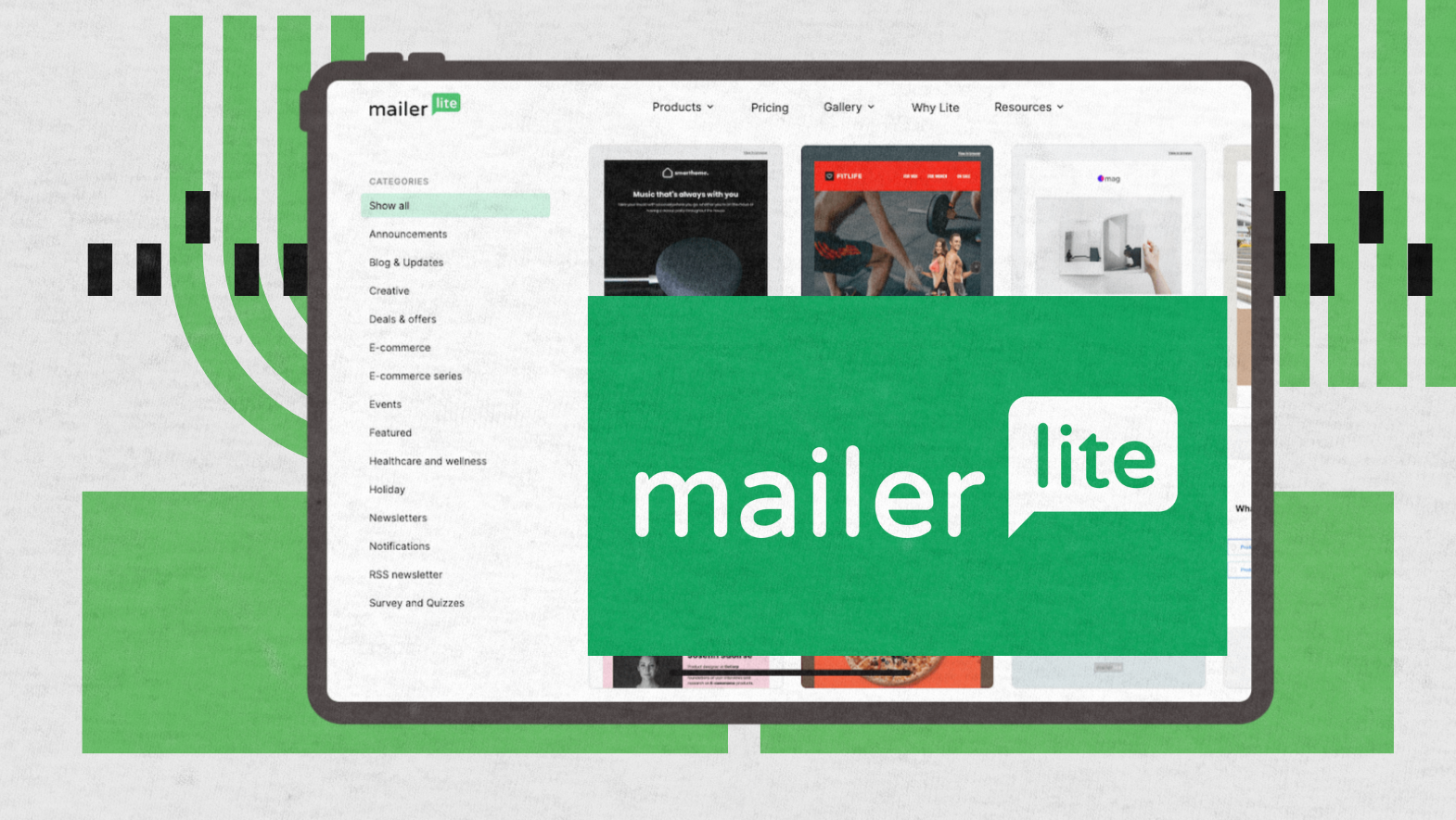
MailerLite is the minimalist's dream: a clean interface with essential features and transparent pricing that offers what Mailchimp should have been. The platform is simple, affordable, and powerful enough for most use cases. Its free plan supports up to 1,000 subscribers with 12,000 monthly emails, making it one of the most generous free tiers available. MailerLite excels at newsletters, landing pages, popups, and simple automations without overwhelming users with unnecessary complexity. User ratings are consistently strong, with an overall score of 4.5 out of 5, a G2 rating of 4.6/5, a Trustpilot score of 4.3/5, and a Capterra rating of 4.7/5. Pricing starts at just $10 per month for 500 contacts. For bloggers, freelancers, and small businesses that want a straightforward tool that just works, MailerLite is an excellent choice.
6. Brevo (formerly Sendinblue)
Brevo uses a unique pricing model based primarily on email volume rather than subscriber count, which makes it ideal for businesses that send fewer emails to larger lists. The platform offers strong multi-channel communication, including email, SMS, and push notifications, all managed from a single interface. Brevo's AI features handle subject line generation, send-time optimization, and content creation, which can save significant time. A real-world example illustrates the value: a SaaS startup with 8,000 contacts could pay just $25 per month for Brevo versus $180 per month with Mailchimp for equivalent functionality. Paid plans start at $9 per month for 500 contacts and 5,000 emails, and the free plan offers 300 emails per day for up to 2,000 contacts. For budget-conscious teams that need flexibility, Brevo is a strong contender.
7. GetResponse
GetResponse is the Swiss Army knife of email marketing, bundling standard campaigns, automation, built-in webinar hosting, a website builder, landing pages, sales funnels, and e-commerce tools into a single platform. No other major email platform offers native webinar hosting, which makes GetResponse uniquely valuable for educators, coaches, and businesses that use live events as part of their marketing strategy. Two standout features include "Perfect Timing," which analyzes subscriber behavior to send emails at each individual's optimal open time, and "Time Travel," which delivers campaigns at the same local time across different time zones. This all-in-one approach eliminates the need for multiple separate tools, streamlining your tech stack. If you value consolidation and unique features, GetResponse is worth a close look.
8. Moosend
Moosend is a budget-friendly email marketing platform that delivers essential features expected from larger systems at a fraction of the cost. Its drag-and-drop builder, basic automation workflows, list segmentation, and reporting make it especially attractive for small businesses or marketers new to email campaigns. The platform is often cheaper than Mailchimp for small lists, which appeals to startups and solopreneurs. However, there are trade-offs. Moosend operates on shared infrastructure at entry-tier levels, and it does not enforce domain authentication during onboarding. This means inbox placement is more sensitive to the sender's domain reputation, which can affect deliverability. For users who prioritize cost above all else and are willing to manage their sending reputation carefully, Moosend is a viable option.
9. AWeber
AWeber lays claim to inventing the email autoresponder and maintains a strong foothold in small business email marketing by keeping things simple. The platform offers more than 600 email templates, compared to Mailchimp's 250-plus, and includes features like Smart Designer and Canva integration for easy content creation. Pricing starts at $14.99 per month for 500 contacts, which is competitive. However, AWeber's deliverability is scored lower than Mailchimp's, at 83.1 percent versus 89.5 percent according to independent tests. Its automation builder also lacks branching and conditional logic, making it better suited for straightforward newsletter campaigns rather than complex customer journeys. For businesses that need a reliable, no-fuss tool for regular broadcasts, AWeber remains a solid choice.
10. Maropost Marketing Cloud
Maropost Marketing Cloud is designed for mid-market e-commerce and retail merchants who have outgrown "starter kit" platforms like Mailchimp. Where Mailchimp is praised for basic newsletters, Maropost supports large-scale email and multichannel marketing with deeper automation and better scalability. The platform is known for achieving 98 percent-plus deliverability, which is among the highest in the industry, and includes strong compliance features. Its eRFM reporting segments customers by value and engagement, allowing for highly personalized, retention-driving campaigns. This makes Maropost a strong choice for growing e-commerce brands that need enterprise-level capabilities without the enterprise-level price tag. It is a serious tool for serious operators.
Choosing the right Mailchimp alternative in 2026 depends on your specific needs. E-commerce brands should prioritize Omnisend or Klaviyo. Marketers who need advanced automation will find ActiveCampaign indispensable. Budget-conscious users have strong options in MailerLite and Brevo. And for those who want an all-in-one platform with unique features like webinar hosting, GetResponse stands alone. Evaluate your list size, budget, and automation requirements carefully before making a switch. The right tool can transform your email marketing from a cost center into a revenue driver.
Related Posts

2 Comments
Join the discussion and share your thoughts