Top 10 Best Postman alternatives In The World 2026

Table of Contents
For years, Postman has been the default tool for API development and testing. But as of 2026, the ecosystem has shifted significantly. Developers and teams are increasingly seeking Postman alternatives that offer better performance, stronger privacy, more modern protocols, or simply a lighter footprint. Our analysis of the current market, based on user sentiment, feature sets, and community adoption, reveals a clear hierarchy of tools that are challenging Postman's dominance. Here are the top 10 best Postman alternatives available today.
How We Ranked These
To build this list, we evaluated each tool across several key dimensions: protocol support (REST, GraphQL, gRPC, WebSockets), licensing model (open-source vs. proprietary), pricing, offline capabilities, team collaboration features, and overall user experience. We weighed community metrics like GitHub stars and user reviews alongside professional assessments from industry analysts. The final ranking prioritizes tools that offer the best balance of power, flexibility, and value for modern API workflows in 2026.
The Top 10 Best Postman Alternatives In 2026:
1. Insomnia
Insomnia remains the most widely adopted Postman alternative, and for good reason. Originally created in 2014 by Gregory Schier and later acquired by Kong, it has matured into a polished, feature-rich API client. It supports REST, GraphQL, gRPC, and WebSockets natively, making it more versatile than Postman for teams working with modern protocols. The interface is notably cleaner and less cluttered than Postman's, which many developers cite as a primary reason for switching.
Insomnia offers built-in schema explorers, environment management, a robust plugin system, and Git sync capabilities. The core app is free, while advanced team features require paid plans starting at $5 per user per month. With a user satisfaction rating of 4.5 out of 5, it ranks first because it provides the closest feature parity to Postman while maintaining an open-source core and superior tooling for GraphQL development.
2. Bruno
Bruno has rapidly emerged as the leading filesystem-first API client. Its defining characteristic is that it stores all API collections as plain text files in the project repository, enabling seamless Git version control. This approach addresses two of the biggest complaints about Postman: mandatory cloud sync and account creation. Bruno works completely offline with no account required, and it is 100% free and open-source under the MIT license.
The tool uses its own Bru markup language to describe API requests and supports REST, GraphQL, environment variables, and basic scripting. With over 17,000 GitHub stars, Bruno has generated significant community momentum. It ranks second because of its revolutionary approach to treating API requests as code, though its relative youth means some workflows are still maturing compared to more established tools.
3. Hoppscotch
Hoppscotch is the premier browser-based API client that requires zero installation. It works entirely online or can be self-hosted for teams that need more control. Originally created as a lightweight alternative to Postman, it supports REST, GraphQL, WebSocket, Server-Sent Events, and MQTT protocols through an intuitive web interface. The tool offers collection management, environment variables, automated testing, and CI/CD integration.
For developers who value accessibility and zero-friction setup, Hoppscotch is unmatched. It is 100% free and open-source under the MIT license. A paid enterprise tier adds team collaboration features. It ranks third because of its convenience, though it lacks the offline capability and desktop-native performance of competitors like Insomnia and Bruno.
4. Apidog
Apidog distinguishes itself as a design-first API development platform. It synchronizes API specifications throughout the entire development lifecycle, from design and testing to documentation and mocking. This means changes made in one area automatically propagate to others, reducing the disconnect that often plagues API projects. It supports OpenAPI, REST, and GraphQL.
Features include powerful request chaining, environment management, a built-in GraphQL query editor, Git sync, and a robust plugin system. Unlike Postman, which offers design-first features as an afterthought, Apidog truly lives up to its approach, making it easy to stay synced with API specs throughout the workflow. A free tier is available, with paid plans starting at $10 per month. It ranks fourth because of its comprehensive all-in-one approach for full-cycle API teams, though its learning curve is steeper than simpler alternatives.
5. HTTPie
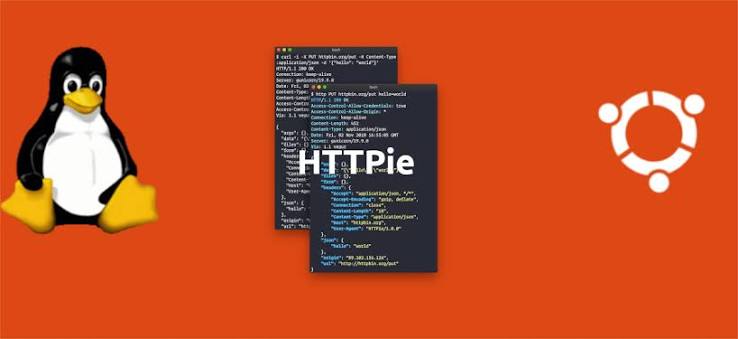
HTTPie offers a unique dual-interface approach with both a powerful command-line tool and a modern desktop GUI application. The CLI version is open-source under the BSD-3 license and is beloved by developers who prefer terminal-based workflows. The desktop app provides a sleek, modern interface for visual API testing. Together, they support REST and GraphQL protocols with features like request building, collection management, environment variables, and CI/CD integration.
With over 35,000 GitHub stars on its CLI tool, HTTPie has a strong community following. It ranks fifth because of its exceptional CLI experience and clean desktop UI, though the proprietary nature of its desktop app limits community contributions compared to fully open-source alternatives.
6. Thunder Client
Thunder Client is a minimalist REST API client built as a native Visual Studio Code extension. This allows developers to test APIs directly within their editor without switching applications. It supports REST and GraphQL with features like environment variables, collection management, and basic automated testing. With over 1,000,000 installs, it has proven popular among VS Code users.
Its key advantage is seamless integration with the VS Code ecosystem. However, it lacks collaboration features and is limited to VS Code users, which restricts its appeal. It ranks sixth because of its unparalleled convenience for VS Code users, but its platform limitation and fewer features compared to dedicated tools hold it back.
7. RapidAPI (Nokia API Hub)
RapidAPI, now known as Nokia API Hub, functions as both an API marketplace and testing client. It provides developers with a hosted playground for evaluating and consuming third-party APIs. The platform offers authentication handling, sample requests, code snippet generation, and interactive documentation with execution capabilities. It supports REST and GraphQL, and features a marketplace with over 40,000 APIs.
This tool is particularly useful for teams that consume multiple external APIs, as it provides a centralized hub for discovery and testing. A free tier with API call limits is available, with paid plans based on usage. It ranks seventh because of its unique API marketplace value, though it is not designed for testing local APIs or serving as a primary daily API client.
8. SoapUI
SoapUI is the veteran API testing tool, having been in development for over two decades. It specializes in both REST and SOAP API testing with advanced functional and load testing capabilities. Features include performance testing, API simulation, mocking, and automated test suites with CI/CD integration. It is particularly strong for enterprise teams needing deep, protocol-level testing with support for security testing and data-driven testing.
SoapUI is open-source under the LGPL license, with a paid Pro version available. It ranks eighth because of its unmatched SOAP support and enterprise testing capabilities, though its interface feels dated compared to modern alternatives like Insomnia or Bruno.
9. Karate
Karate is a comprehensive API test automation framework that goes beyond simple request testing. Developed by Intuit, it offers a domain-specific language (DSL) inspired by Cucumber for creating readable, maintainable test scripts. It supports REST, GraphQL, and even UI automation through a single unified framework, making it unique among API testing tools.
Karate excels at performance testing, test data management, and CI/CD integration, with the ability to generate tests from real traffic. It is open-source under the MIT license and has over 18,000 GitHub stars. It ranks ninth because of its unique DSL approach and comprehensive testing capabilities, though it is more of a testing framework than a simple API client.
10. Yaak
Yaak is the newest addition to the API client landscape, created in 2024 by Gregory Schier, the original developer of Insomnia. It combines Git-friendly file storage with the conveniences of an app database, offering response history, faster search, and per-workspace file sync options. Yaak supports REST, GraphQL, gRPC, WebSocket, and Server-Sent Events with a clean, modern interface that prioritizes offline functionality and privacy.
It is licensed under the MIT license, supports paid commercial use, works offline, and requires no account. It ranks tenth because of its promising feature set and pedigree from the original Insomnia creator, though it is still early in its adoption cycle compared to more established alternatives.
The API client landscape in 2026 offers more choice than ever. Whether you prioritize offline functionality, Git-native workflows, or protocol versatility, there is a Postman alternative that fits your needs. For most teams, Insomnia remains the strongest all-around choice, but the rise of tools like Bruno and Yaak signals a clear shift toward developer-first, filesystem-based approaches.
Related Posts

1 Comment
Join the discussion and share your thoughts