Top 10 Oldest Flags In The World 2026


Table of Contents
Flags are more than just pieces of fabric. They are living symbols of national identity, carrying centuries of history, struggle, and pride. While many nations have modernized their banners, a select few have kept their flags virtually unchanged for hundreds of years. This ranking takes into account the continuous use of a flag as a national or state symbol, the documented historical record of its design, and the traditional origin stories that give each flag its unique character. We looked at heraldic evidence, royal decrees, and battle accounts to determine which flags have the longest uninterrupted history as recognizable national emblems. Here are the ten oldest flags in the world that are still flown today.
The List Of The Top 10 Oldest Flags In The World 2026:
1. Denmark
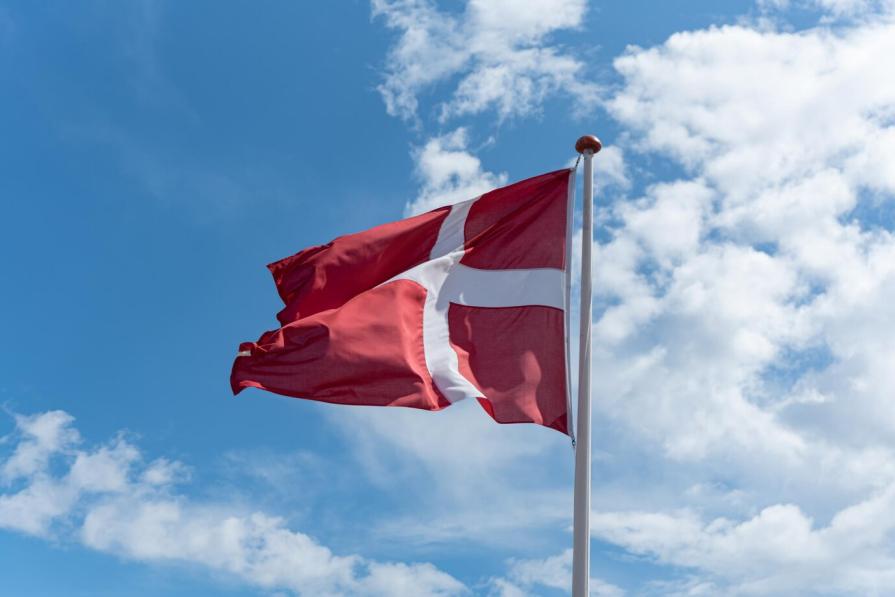
The Dannebrog is widely accepted by historians and vexillologists as the oldest continuously used national flag in the world. According to legend, the red banner with a white Scandinavian cross fell from the sky during the Battle of Lyndanisse in 1219, inspiring King Valdemar II to victory. While this story is more myth than documented fact, the flag's historical record is remarkably solid. The Dannebrog appears in the Gelre Armorial, a 14th-century heraldic manuscript, and was used consistently by Danish monarchs throughout the medieval period. By 1748, the design was formally codified by royal decree as the official national flag. Its red field and white cross have remained essentially unchanged for over 800 years, making it the benchmark against which all other national flags are measured.
2. Scotland
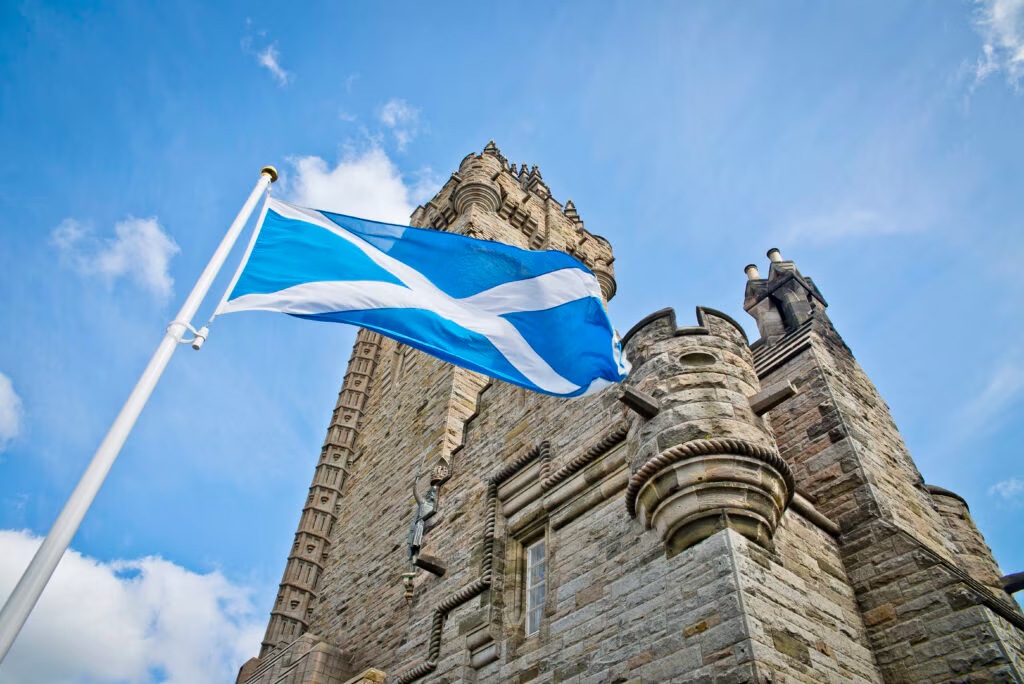
The Scottish Saltire, featuring a white diagonal cross on a blue field, has one of the most romantic origin stories in heraldry. Tradition holds that in 832, during a battle near Athelstaneford, a white cross appeared in the sky against a blue background, signaling a victory for the Picts and Scots against the Angles. The flag's documented history is almost as impressive. By 1542, the saltire was firmly established as a national emblem of Scotland, appearing on coins, seals, and military banners. The flag has been in continuous use since at least the 16th century and remains a powerful symbol of Scottish identity. Though its legendary origin predates the Dannebrog, the documentary evidence for the Saltire is slightly later, which is why it ranks second.
3. Austria
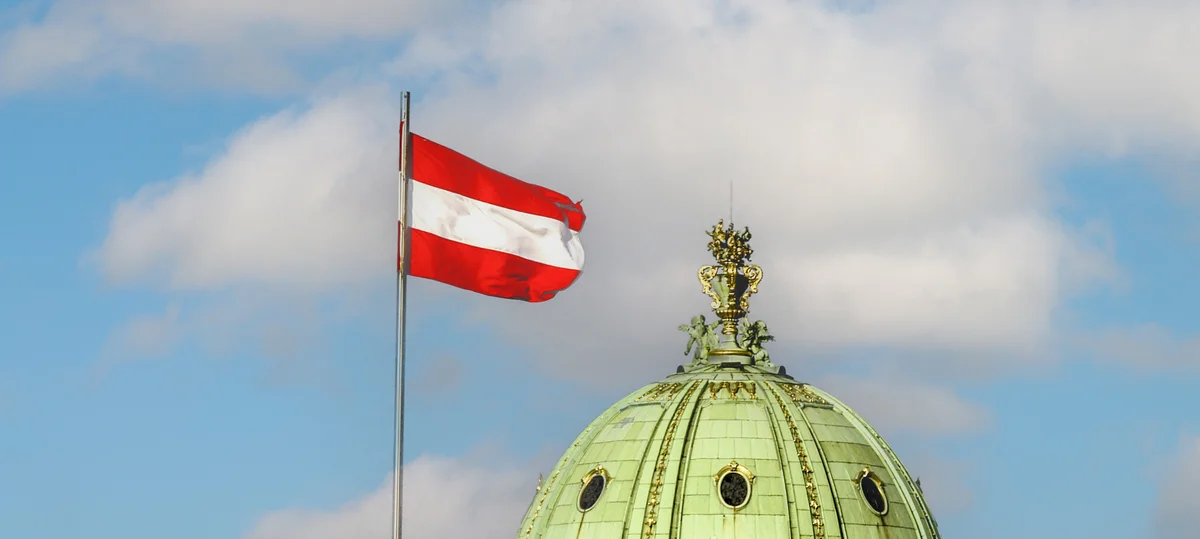
The red-white-red triband of Austria traces its lineage back to the medieval Bindenschild, a coat of arms used by the Babenberg dukes in the early 13th century. Seals and banners from the 1230s already display these colors, and the Habsburgs later adopted them as a dynastic symbol for their vast territories. Austrian troops and ships carried flags in these colors for centuries, giving the design one of the longest heraldic traditions of any national flag. The modern national flag, adopted in 1918 and readopted in 1945, is a direct continuation of this medieval color scheme. While the flag was formalized as a national symbol only in the modern era, the underlying colors and their association with Austrian lands date back nearly 800 years.
4. Netherlands
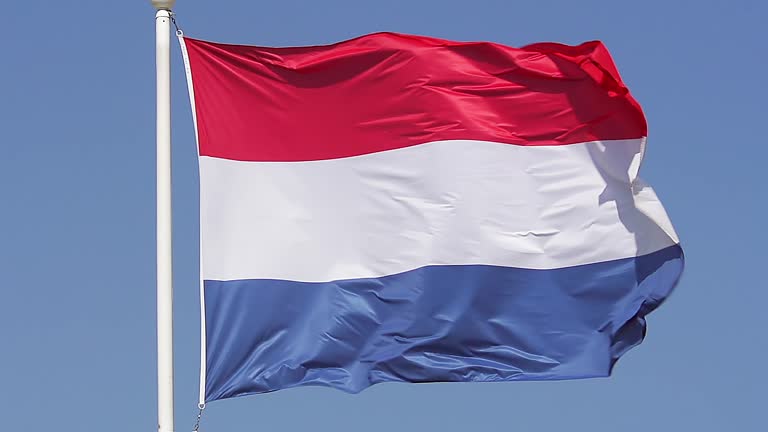
The Dutch tricolor has its roots in the late 16th century, during the Eighty Years' War against Spanish rule. The original "Prince's Flag" featured orange, white, and blue horizontal stripes, representing William of Orange and the Dutch resistance. By the early 17th century, the orange had gradually been replaced by red, creating the familiar red-white-blue design. The flag became a powerful symbol of the Dutch Republic's maritime power and national identity. Queen Wilhelmina's decree of February 19, 1937, formally fixed the red-white-blue tricolor as the national flag. Despite the relatively late codification, the flag's continuous symbolic use since the 1570s places it among the oldest national flags still in use.
5. Switzerland

The Swiss flag, a white upright cross on a red square field, has medieval origins that predate the modern Swiss state. Swiss troops used a white cross as a battle sign as early as 1339 at the Battle of Laupen. By the late Middle Ages, the cross had become a core symbol of the Old Swiss Confederacy. After the creation of the federal state in 1848, the red field with a white cross was formalized as the national flag, with its square proportions codified in 1889. The emblem's roots stretch back over 600 years, making it one of the oldest continuously used national symbols in Europe, even if its modern standardized design is relatively recent.
6. Sweden
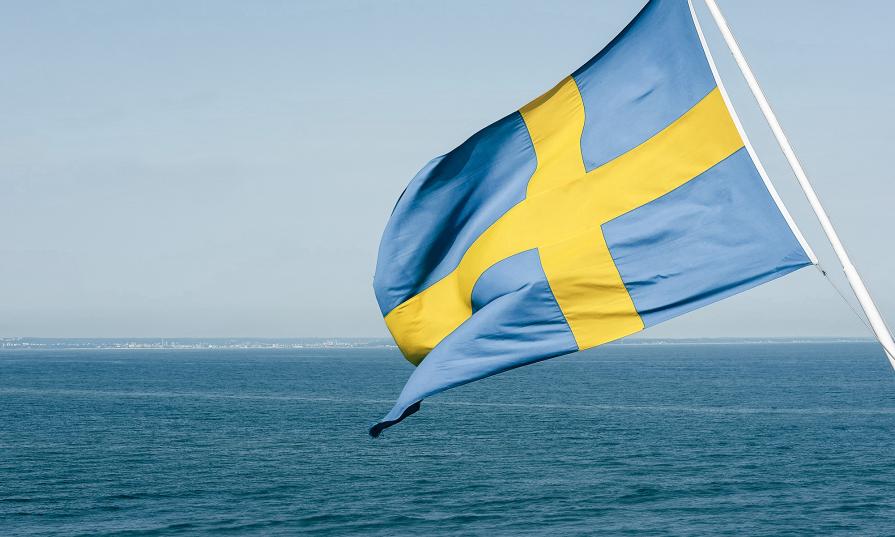
The Swedish flag, a yellow Scandinavian cross on a blue field, draws its colors from the Swedish coat of arms, which has been documented since the 13th and 14th centuries. Cross flags in these colors were used on Swedish ships and forts by the 1500s, and by the early modern era the design was clearly associated with Swedish sovereignty. The current legal definition of the flag dates from the 1906 Flag Law, but this law preserved the long-standing cross and colors that had been in use for centuries. Sweden's flag is older than many realize, with a continuous heraldic tradition that places it just behind the other medieval Scandinavian flags.
7. United Kingdom
The Union Flag, commonly known as the Union Jack, was first created in 1606 by royal proclamation to symbolize the union of England and Scotland under King James VI and I. The design combined the crosses of Saint George (England) and Saint Andrew (Scotland) for use at sea and on royal ships. Following the 1801 Act of Union with Ireland, the cross of Saint Patrick was added, creating the modern Union Flag. The flag has served as the national flag of the United Kingdom for over 400 years and has been the template for numerous colonial and commonwealth ensigns. While its initial creation in 1606 gives it an early-modern origin, it is still younger than the medieval-derived flags that rank above it.
8. United States
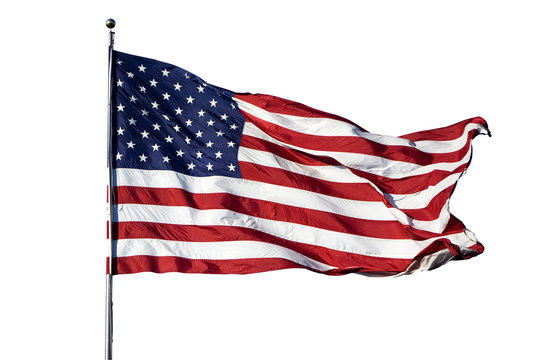
The Stars and Stripes was born during the American Revolution. The first national flag resolution was passed on June 14, 1777, establishing a design of 13 stripes and 13 stars representing the original colonies. The flag has evolved over time, with the number of stars increasing as new states joined the union, but the core concept of a star-spangled banner with red and white stripes has remained stable since 1777. The current 50-star layout, adopted on July 4, 1960, is the longest-used version in U.S. history. As a continuously evolving but uninterrupted national flag tradition dating back to the late 18th century, the American flag is older than most modern tricolors and republican flags worldwide.
9. France
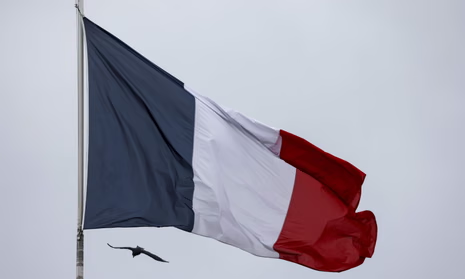
The French Tricolore grew out of revolutionary symbolism in 1789, combining Parisian blue and red with royal white in cockades and banners. A vertical blue-white-red flag was in national use by 1790 and became firmly associated with the French Republic and later the constitutional monarchy. After the July Revolution of 1830, the tricolor was definitively restored as the national flag, and it has remained so through multiple republics and regimes. It is one of the earliest and most iconic modern tricolors, and its influence on flag design around the world is immeasurable. Despite its revolutionary origins, the French flag's continuous use since the late 18th century places it among the oldest national flags still in use.
10. Japan

The Hinomaru, a red sun disk centered on a white field, draws on centuries of Japanese tradition. Sun disc motifs have been used as Japanese symbols since at least the 12th century, appearing on war banners, fans, and ships during the Tokugawa (Edo) period. In 1870, the Meiji government designated the Hinomaru as the national flag for merchant vessels, and it gradually evolved into general national usage. The 1999 Law Regarding the National Flag and Anthem legally codified it as the official state flag. While the symbol itself is ancient, the flag's clear, continuous role as a national flag dates from the late 19th century. This makes it historically significant yet younger in formal national-flag status than the other entries on this list.
Related Posts



2 Comments
Join the discussion and share your thoughts