Top 10 Best Business Intelligence Tools In The World 2026

Table of Contents
The business intelligence (BI) landscape has never been more dynamic. As organizations of all sizes race to become truly data-driven, the tools they choose to analyze, visualize, and act on information have become central to their strategy. We evaluated the top BI platforms based on a combination of enterprise adoption rates, market share among first-time buyers, depth of features, ecosystem integration, and overall user satisfaction as reported in 2025 and 2026 industry data. This ranking reflects which tools are not just popular, but which ones are actually delivering measurable business value in the current market. Here is our definitive list of the top 10 best business intelligence tools in the world for 2026.
These Are The List Of The Top 10 Best Business Intelligence Tools In The World 2026
1. Microsoft Power BI
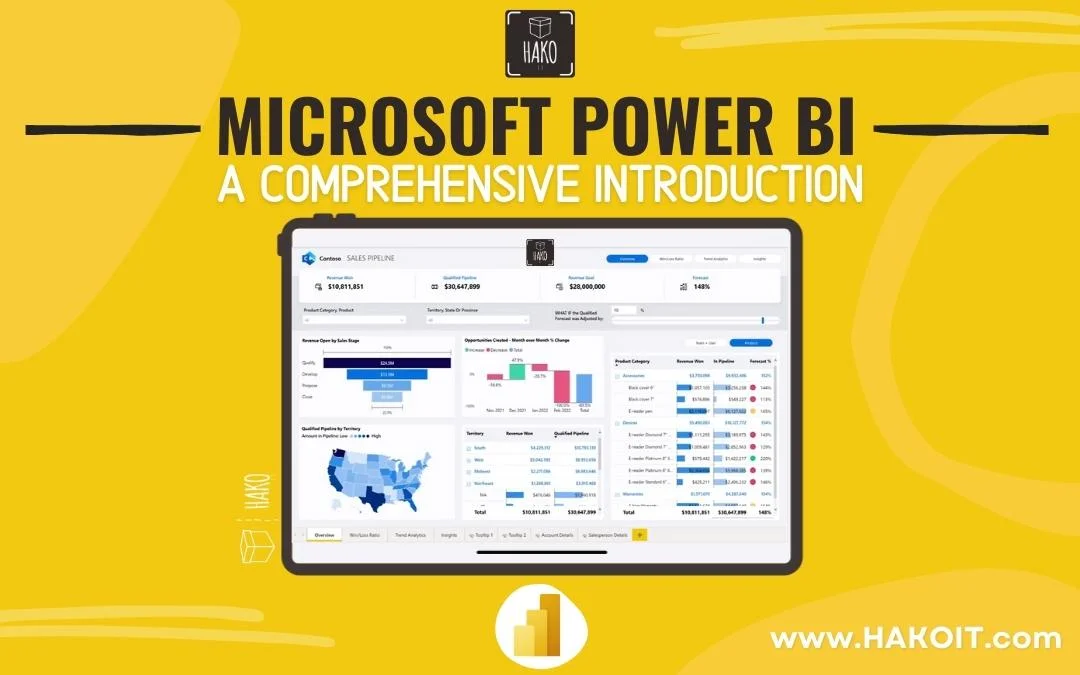
Microsoft Power BI holds a commanding position in the enterprise BI market. According to 2025-2026 enterprise segment data, Power BI boasts approximately 97% penetration among Fortune 500 companies and captures about 25% of first-time BI adopters worldwide. This dominance stems from its deep integration with the Microsoft 365, Azure, and Teams ecosystems, making it the default choice for organizations already invested in Microsoft infrastructure. The platform offers self-service analytics, AI-powered insights, and natural language querying that allows non-technical users to build and share dashboards quickly. Power BI's aggressive pricing model, which includes a free desktop version and low-cost Pro licenses, has driven adoption across both small businesses and large enterprises. Continuous feature updates, strong governance capabilities, and support for hundreds of data sources further solidify its market leadership. Multiple 2025-2026 industry reports list Power BI as the dominant BI platform in enterprises and one of the fastest-growing BI products globally in terms of adoption and usage.
2. Tableau (Salesforce Tableau)
Tableau remains the most widely used BI vendor by overall footprint as of mid-2026, holding around 32% of first-time BI adopter share. The platform is legendary for its powerful, highly interactive visual analytics and intuitive drag-and-drop interface, enabling business users to explore complex datasets without writing code. Since its acquisition by Salesforce, Tableau has integrated tightly with the Salesforce Data Cloud and CRM, strengthening its role in customer and revenue analytics. It supports a wide range of data sources, offers robust live-connect and in-memory capabilities, and is widely used in data-driven organizations for advanced dashboards and data storytelling. Tableau also benefits from a strong community, extensive training resources, and a mature ecosystem of extensions. While Power BI edges it out in enterprise penetration and growth momentum, Tableau remains the gold standard for visual analytics and is the most-used BI vendor globally by overall footprint in 2026.
3. Qlik Sense
Qlik Sense is consistently recognized in 2025-2026 industry comparisons as a top-tier enterprise BI and analytics platform, best known for its associative data engine. Unlike traditional SQL-based tools, Qlik's associative analytics engine lets users freely explore data relationships, surfacing connections that might otherwise remain hidden. The platform supports governed self-service analytics, embedded analytics, and both on-premises and SaaS deployment, making it particularly attractive for highly regulated industries. Qlik's strong data integration capabilities, enhanced by its acquisition of Attunity, allow it to handle complex, multi-source data models that are common in large enterprises with sophisticated data environments. Advanced features like augmented analytics and AI-driven insights further enhance its analytical power. Qlik Sense is consistently cited alongside Power BI and Tableau as a core enterprise BI leader, particularly for organizations that value associative data modeling and hybrid deployment capabilities.
4. Looker (Google Cloud Looker)
Looker, now part of Google Cloud, is frequently listed in 2025-2026 reports as a leader in semantic-model-driven BI and embedded analytics. The platform centers on a semantic modeling layer called LookML, which defines business metrics once and reuses them across all dashboards, ensuring consistent definitions across the entire organization. This approach is particularly valuable for companies that need a single source of truth for key performance indicators. Looker excels at embedded analytics, allowing companies to build data applications and embed dashboards into both internal tools and customer-facing products. Its deep integration with BigQuery and other Google Cloud services makes it especially attractive for cloud-native and data-app-centric companies. Looker also supports governed self-service and API-driven customization for developers. In 2026, it is regarded as a top choice for organizations prioritizing governed semantic layers and embedded analytics, though its more technical modeling approach keeps it slightly behind Power BI and Tableau in broad business-user adoption.
5. SAP Analytics Cloud (SAC)
SAP Analytics Cloud is the primary BI and planning platform for tens of thousands of SAP customers worldwide, and it is frequently cited as a leading BI tool in 2026 enterprise guides. SAC unifies business intelligence, planning, and predictive analytics in a single SaaS platform that is tightly integrated with SAP S/4HANA, BW/4HANA, and other SAP applications. This integration is invaluable for large enterprises that need end-to-end performance management, including financial planning, forecasting, and analytics all in one environment. The platform includes smart insights and predictive features that leverage machine learning to assist with forecasting and anomaly detection. SAC's strong security, governance, and compliance capabilities align with the needs of global enterprises operating in regulated industries. It ranks fifth because it is the default strategic BI and planning solution for SAP-centric enterprises and is prominent in 2026 leading BI tools lists, but its adoption is more concentrated among SAP customers compared with higher-ranked, more ecosystem-agnostic tools.
6. Domo

Domo is identified among the top 5 enterprise BI platforms in 2026, particularly for executive dashboards and mobile-first analytics. This cloud-native BI platform focuses on end-to-end data workflows, from connectors and ETL to interactive dashboards, and is designed for business executives and front-line teams. Domo offers more than a thousand pre-built connectors, strong data app capabilities, and a user-friendly interface that non-technical users can navigate easily. The platform's mobile app and real-time alerting make it especially popular for C-level dashboards and operational monitoring. Domo also supports low-code Domo Apps, which allow organizations to build custom data applications on top of their analytics. It ranks sixth because it is recognized as a leader for executive-level, mobile, and real-time cloud BI in 2026 enterprise assessments, though it trails Power BI, Tableau, Qlik, Looker, and SAP Analytics Cloud in overall market penetration.
7. MicroStrategy

MicroStrategy is one of the longest-standing BI vendors and is widely cited in 2025-2026 comparisons as best-in-class for enterprise-grade governance and large-scale deployments. The platform provides a robust, highly scalable BI environment that emphasizes centralized governance, security, and performance for very large datasets. MicroStrategy supports pixel-perfect reporting, advanced analytics, and strong mobile BI, including custom mobile apps with offline capabilities. One of its standout features is HyperIntelligence, which surfaces contextual insights directly in other applications, such as email or web pages, via small cards. The platform's open architecture allows integration with a wide variety of data sources and enterprise systems. MicroStrategy remains a go-to platform for highly governed, large-scale enterprise BI, especially in regulated industries, but it has a smaller share of new cloud-native deployments compared with the higher-ranked, more modern SaaS tools.
8. ThoughtSpot

ThoughtSpot is frequently highlighted in 2025-2026 industry content as a leader in search-driven and AI-augmented BI, positioned as a key alternative to Power BI and Tableau. The platform focuses on search-based analytics: users type questions in natural language and the system returns charts and insights, dramatically lowering the barrier for non-technical users. ThoughtSpot provides a strong cloud-native architecture with live connections to modern data warehouses such as Snowflake, BigQuery, and Databricks. Its AI features automatically surface relevant insights without users needing to know what to look for. The platform also embeds analytics into applications and supports collaborative data storytelling. Its Liveboard dashboards are optimized for interactive, ad-hoc exploration rather than static reports. ThoughtSpot ranks eighth because it is a top innovator in AI and search-driven BI and a prominent alternative to traditional dashboard tools in 2026, though its overall market share and installed base are still smaller than the established leaders.
9. Metabase

Metabase holds about 10% of first-time BI adopter share in 2026, making it a major open-source BI entrant. This open-source BI and analytics platform offers a simple interface for querying data, building dashboards, and scheduling reports without requiring SQL for basic questions. Organizations can deploy Metabase on-premises or in their own cloud, which is attractive for cost control and data governance. It integrates with popular relational databases and warehouses and has gained strong traction among startups and mid-size companies seeking an affordable BI stack. Paid enterprise editions add features like single sign-on, audit logs, and advanced permissions. Metabase ranks ninth because 2026 adoption data shows it as a significant choice for first-time BI buyers, especially in the open-source and SMB segments, but it lacks the breadth of advanced enterprise features and ecosystem integration of higher-ranked tools.
10. Hex
Hex accounts for roughly 10% of first-time BI adopter share in 2026, particularly among data-science-oriented teams. Hex is a modern analytics and BI platform designed for data teams, combining notebooks, SQL, and drag-and-drop components to build interactive data apps and dashboards. It allows analysts to write Python or SQL, then turn those analyses into shareable, interactive documents for business users, effectively bridging the gap between notebooks and traditional BI dashboards. Hex is cloud-native, integrates with modern data warehouses, and emphasizes collaboration, versioning, and reproducible workflows. Its positioning is especially strong in organizations that have mature data teams and need both exploratory analysis and polished presentations. Hex ranks tenth because it is a fast-growing, modern BI and data-app platform with notable adoption in 2026 first-time buyer data, but its focus on analytics teams and relatively young ecosystem keep it behind more broadly adopted, general-purpose BI leaders.
Selecting the right BI tool for your organization depends on your specific needs, existing technology stack, and the technical sophistication of your users. For organizations already in the Microsoft ecosystem, Power BI remains the obvious choice. For those prioritizing visual analytics and data storytelling, Tableau is unmatched. Companies with complex data relationships should evaluate Qlik Sense, while cloud-native organizations may find Looker or ThoughtSpot to be the best fit. The open-source options, Metabase and Hex, offer compelling alternatives for budget-conscious teams or those with strong data engineering capabilities. Whatever your choice, the BI tools available in 2026 are more powerful, more accessible, and more integrated than ever before.
Related Posts




0 Comments
Join the discussion and share your thoughts
No Comments Yet
Be the first to share your thoughts on this article!