Top 10 Best Generative Engine Optimization Tools In The World 2026

Table of Contents
In 2026, the way people find information has fundamentally changed. Generative AI systems - from ChatGPT and Gemini to Perplexity and Claude - now answer queries directly, often without listing traditional blue links. For brands, this creates a new imperative: being cited accurately and prominently in these AI-generated responses. This practice is called generative engine optimization (GEO), and it has quickly become one of the most important disciplines in digital marketing.
As an established publication tracking the evolution of search technology, we have analyzed the market to identify the top 10 best generative engine optimization tools in the world for 2026. These platforms vary widely in their approach, from enterprise-scale analytics to lightweight monitoring for small teams. What unites them is a shared focus on helping brands understand and improve their visibility in the new AI-powered search ecosystem.
How We Made Our Picks
Our evaluation considered several factors that matter most to organizations investing in GEO. We weighed platform maturity and funding levels, as these indicate a tool's likely longevity and development pace. We examined the breadth of generative engines each tool monitors, from ChatGPT to emerging models. User sentiment from agency and in-house SEO teams informed our assessment of practical utility. We also looked at unique differentiators - features like hallucination detection, content workflow integration, and experimental optimization capabilities. The rankings below reflect a balanced view of market presence, functional depth, and real-world applicability as of early 2026.
The Top 10 Best Generative Engine Optimization Tools In The World 2026:
1. Evertune
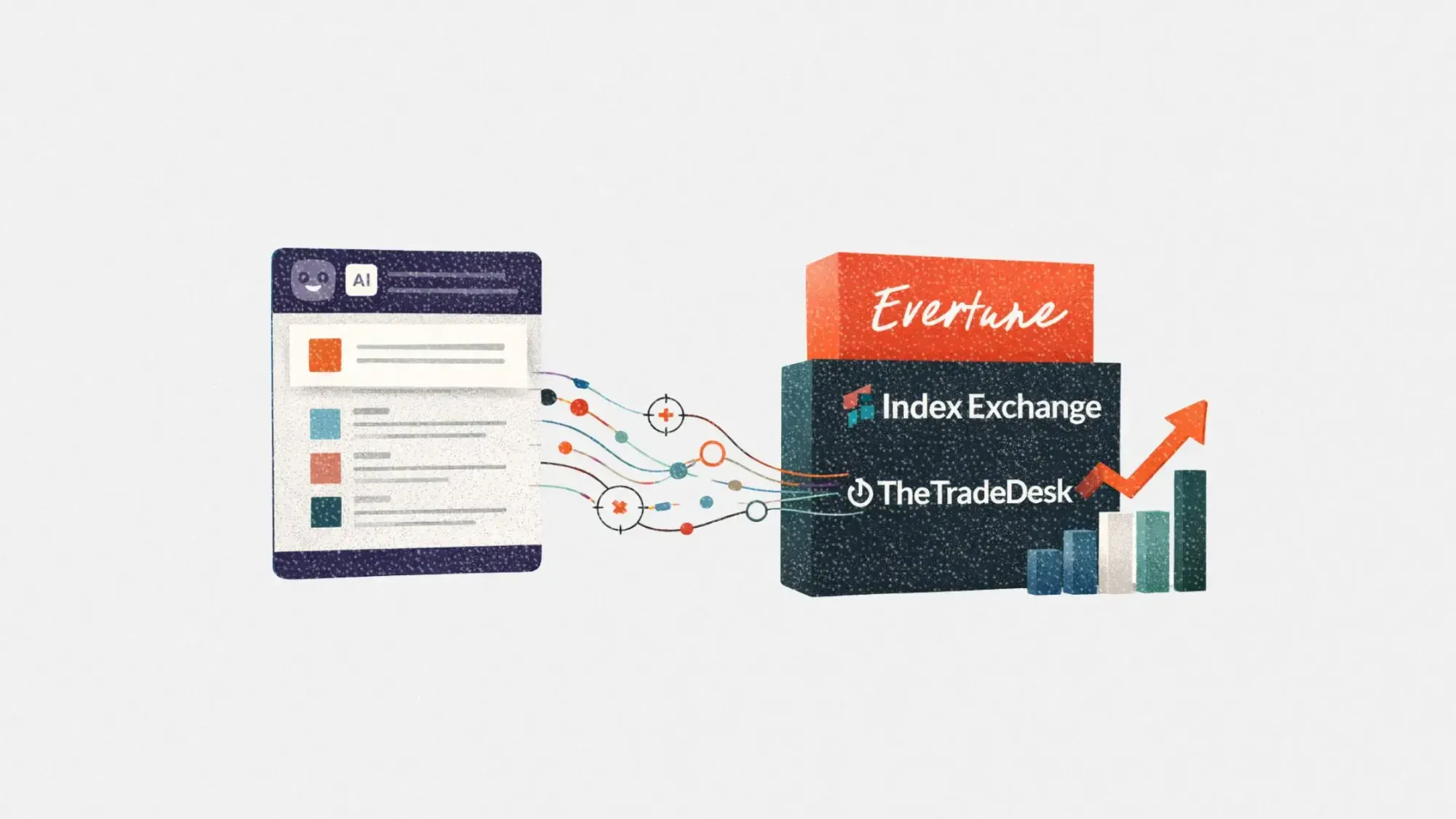
Evertune sits at the top of our list because it combines substantial financial backing with a mature, analytics-heavy approach to GEO. The company raised $19 million in Series A funding in August 2025, giving it resources to build out its platform well ahead of many competitors. According to its 2026 platform documentation, Evertune processes over 1 million prompts per month for individual enterprise brands, providing statistically significant tracking across a wide range of queries.
What sets Evertune apart is its focus on source influence analytics. Rather than simply reporting whether a brand appears in AI answers, it measures how often that brand is surfaced and in what context. The platform offers base model API access, allowing teams to test across different AI systems directly. For larger marketing teams that need reliable, repeatable data to justify GEO investments, Evertune provides the analytical rigor that smaller tools cannot match. Its maturity in the 2026 landscape makes it the clear market leader.
2. AthenaHQ
AthenaHQ has established itself as one of the most consistently recommended platforms in industry roundups for 2026. It is positioned primarily as an AI visibility monitoring tool, with particular strength in tracking how brands appear across multiple generative answer systems. The platform's competitive benchmarking capabilities allow teams to see not just their own performance but how they compare to rivals in AI-generated responses.
What makes AthenaHQ particularly valuable is its broad ecosystem coverage. In a market where different AI models produce different results for the same query, having a single tool that monitors across ChatGPT, Gemini, Perplexity, and others is essential. Teams using AthenaHQ report that its dashboards provide clear, actionable data that can be shared with stakeholders who may not be deeply technical. Its consistent placement near the top of independent rankings reflects genuine utility for organizations serious about AI search performance.
3. Otterly AI
Otterly AI occupies a unique position in the GEO market as a bootstrapped company that has built a loyal following through accessibility and focused functionality. Its low entry price point makes it the most attractive option for smaller teams, agencies, and organizations that want to begin their GEO journey without committing to enterprise-level pricing. Despite its lower cost, Otterly AI covers the core use cases that matter most: tracking prompts, monitoring citations, and measuring AI visibility across generative engines.
The platform is widely referenced in GEO communities for its practical approach. Rather than overwhelming users with data, Otterly AI presents clear metrics on how often a brand appears in AI answers and which sources the AI systems are citing. For teams that need to prove the value of GEO investment to skeptical leadership, this simplicity is an advantage. Otterly AI proves that effective GEO monitoring does not require a six-figure annual contract.
4. Scrunch AI

Scrunch AI addresses perhaps the most anxiety-inducing problem in generative search: what happens when AI systems get your brand wrong. The platform's standout feature is hallucination and misinformation detection, which identifies when AI-generated answers misrepresent a brand, cite inaccurate information, or fabricate claims. In a landscape where a single AI hallucination can damage brand perception, this capability is increasingly essential.
Like Evertune, Scrunch AI raised $19 million in Series A funding, signaling strong investor confidence in its approach. The platform combines traditional visibility tracking with this brand-safety functionality, creating a dual-purpose tool that both measures performance and protects reputation. For industries where accuracy matters most - healthcare, finance, legal - Scrunch AI's detection capabilities make it a critical part of the GEO toolkit. Its funding level also suggests active product development that will likely expand its feature set throughout 2026.
5. Rankscale AI
Rankscale AI appears in multiple 2026 GEO platform rankings as a dedicated optimization tool, distinct from the broader analytics platforms higher on this list. Its positioning suggests a product built specifically for measuring and improving brand visibility across generative engines, rather than simply reporting on current performance. Teams using Rankscale AI can identify citation gaps - places where a brand should appear in AI answers but does not - and uncover prompt opportunities for improving visibility.
The tool is particularly useful for organizations that have moved beyond basic monitoring and want to actively optimize their AI search presence. While Rankscale AI has less publicly visible scale than the top four platforms, its specialized focus makes it a valuable addition to the GEO technology stack. For teams that treat GEO as an ongoing optimization discipline rather than a reporting exercise, Rankscale AI provides the tactical capabilities needed to drive improvement.
6. AirOps
AirOps takes a different approach to GEO by connecting insights directly to content production workflows. With $60 million in total funding, including a $40 million Series B round in November 2025, AirOps has the financial resources to build a comprehensive platform that goes beyond analytics. Rather than only tracking AI visibility, it helps teams operationalize content optimization at scale, turning GEO insights into actual content changes.
This workflow integration is AirOps's key differentiator. Marketing teams can use the platform to identify content gaps, generate optimization recommendations, and then execute those changes through integrated content tools. For organizations that have large content libraries needing GEO optimization, this end-to-end approach saves significant time. AirOps ranks slightly lower than pure GEO analytics platforms because its scope is broader, but for teams focused on execution, it is arguably more valuable than a monitoring-only tool.
7. Goodie
Goodie represents the newer generation of GEO tools built specifically for the current AI search environment. Founded in 2023 and bootstrapped, the platform focuses on brand alerts and practical AI search monitoring without the complexity of enterprise suites. Goodie is designed for teams that want to know when and how they are mentioned in AI outputs, with notification systems that alert users to significant changes in visibility.
The platform's lighter weight is a feature, not a bug. For organizations that do not need the full analytical depth of an Evertune or AthenaHQ, Goodie provides a focused, affordable option. Its brand alert functionality is particularly useful for PR and communications teams who need to respond quickly to AI-generated content that mentions their organization. While Goodie lacks the scale and feature depth of higher-ranked platforms, its modern design and practical focus make it a strong choice for teams getting started with GEO.
8. Peec AI

Peec AI enters the GEO market with significant financial backing, having raised $29.1 million in Series A funding in November 2025. The platform is explicitly listed among top 2026 GEO tools and is described as offering affordable structured reporting for AI visibility analysis. This reporting orientation makes Peec AI particularly practical for agencies and in-house SEO teams that need to produce regular, repeatable reports for clients or stakeholders.
The platform's structured approach means that teams can run the same analysis week after week, tracking changes in AI visibility over time. This consistency is valuable for measuring the impact of GEO optimization efforts. Peec AI's substantial funding also suggests that the company has resources for continued development and customer support. Its differentiation is narrower than the top tools on this list, but for organizations that prioritize reliable, repeatable reporting, Peec AI is a credible and well-capitalized option.
9. XFunnel
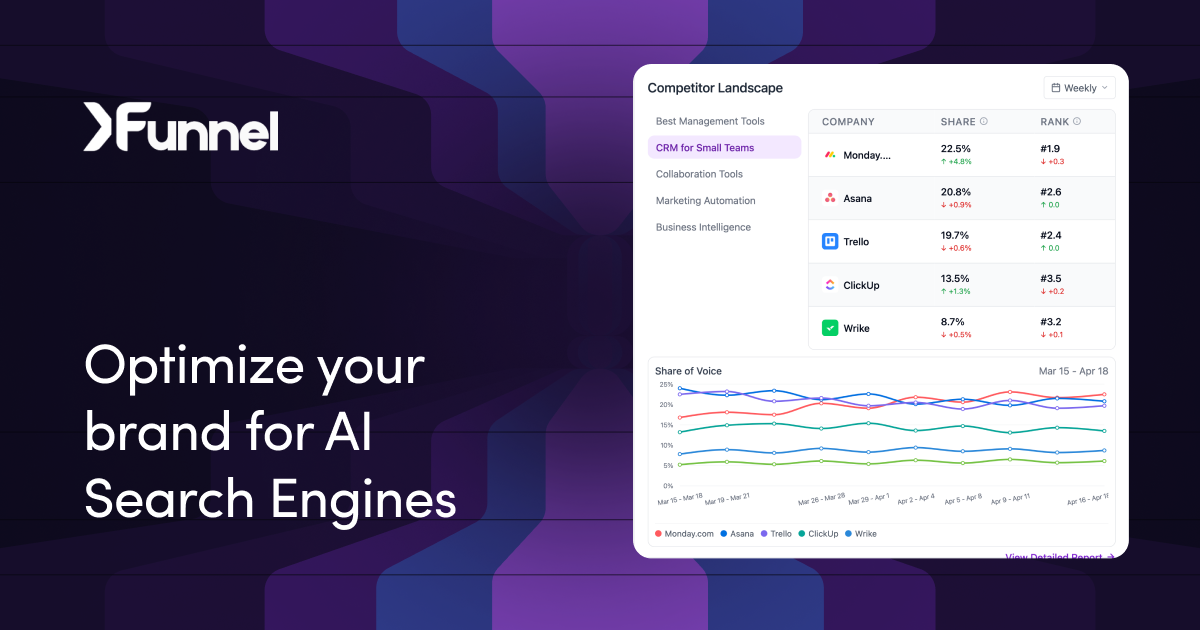
XFunnel earns its place on this list through strategic validation: HubSpot acquired the company in October 2025, signaling that one of the largest marketing technology platforms sees significant value in its approach. XFunnel's main differentiator is content optimization experiments, which allow teams to test changes and measure their impact on AI visibility. This experimental orientation makes it more execution-focused than many tracking-only tools.
The acquisition by HubSpot also means that XFunnel's capabilities are likely to be integrated into a broader marketing platform, potentially making GEO optimization accessible to a much wider audience. For now, XFunnel stands out as a tool that helps teams move from observation to action, testing what actually improves their presence in AI-generated answers. Its ranking reflects its promise and strategic validation, balanced against the fact that it is newer to the dedicated GEO category than the standalone leaders.
10. Bluefish
Bluefish rounds out our list with a focus on operational visibility and team workflows. The platform has raised $24 million in funding and offers integrations with Google Analytics 4 and Slack, making it easier to connect AI search insights to broader analytics and internal communication. These integrations are essential for teams that want GEO data to inform decisions beyond just the SEO department.
Bluefish's GA4 integration allows teams to correlate AI visibility changes with website traffic patterns, providing a more complete picture of how generative search affects overall performance. The Slack integration means that alerts about visibility changes can reach the right people quickly. While Bluefish is less prominent in GEO-focused rankings than the higher entries, its emphasis on practical implementation and cross-team workflows makes it a valuable tool for organizations that want GEO data to drive real decisions. Its meaningful funding level also indicates ongoing development and support.
Related Posts


0 Comments
Join the discussion and share your thoughts
No Comments Yet
Be the first to share your thoughts on this article!