Top 10 Best Vibe Coding Tools In The World 2026

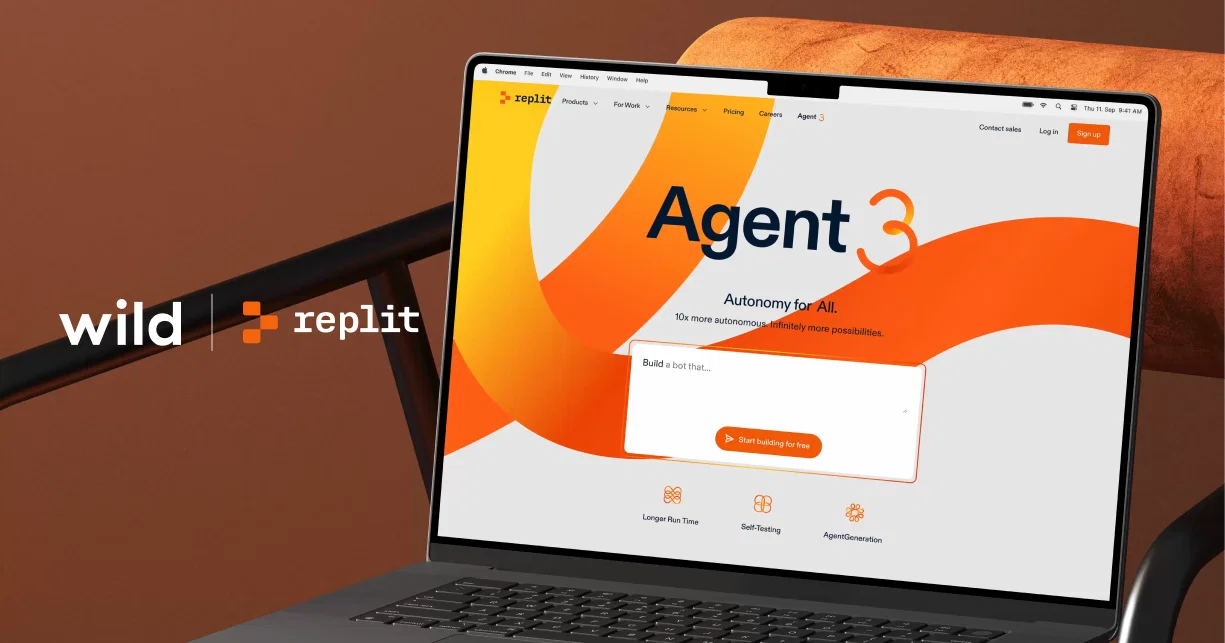
Table of Contents
The term "vibe coding" has settled into the developer lexicon as a legitimate workflow, not a passing fad. By mid-2026, the tools that enable developers to describe applications in natural language and watch them materialize have matured significantly. Some now rival junior engineers in output quality. Others remain best suited for prototypes that never see production.
We evaluated dozens of platforms through hands-on testing, developer surveys, and comparative benchmarks conducted through June 2026. The following ten tools represent the strongest options available today, ranked by overall capability, code quality, production readiness, and value for different use cases.
Our Selection Process
We ranked these tools based on five weighted factors: code quality and production readiness (30%), iteration speed and developer experience (25%), feature depth and ecosystem integration (20%), pricing and accessibility (15%), and community support and documentation (10%). Scores were drawn from hands-on testing, published benchmarks from independent reviewers, and aggregated user sentiment across developer forums and professional networks as of June 2026.
The List Of The Top 10 Best Vibe Coding Tools In 2026:
1. Claude Code

Anthropic's Claude Code sits at the top of the 2026 rankings with an overall score of 9/10 and a perfect 10/10 for code quality. This terminal-based coding agent runs directly in the command line with full file system access, meaning it can read entire codebases, execute commands, run test suites, and autonomously iterate on failures without requiring the developer to switch contexts.
What separates Claude Code from the rest is its 1 million token context window. That capacity allows it to retain project context across entire multi-hour sessions, making it uniquely suited for complex full-stack applications where dependencies span dozens of files. Its production readiness score of 9/10 and error handling rating of 9/10 outpace every competitor in our testing.
Pricing is usage-based, typically running $5 to $50 per month depending on volume. The trade-off is that Claude Code requires comfort with the command line. Developers who prefer graphical interfaces will find the learning curve steeper than tools like Cursor or Lovable.
2. Cursor
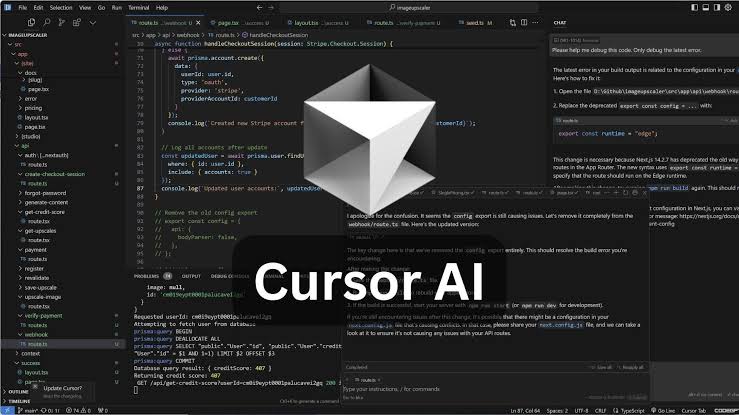
Cursor has become the corporate standard for AI-assisted development, reaching $2 billion in annual recurring revenue by early 2026. More than half of Fortune 500 companies now have active Cursor deployments. The VS Code-based IDE earned an 8/10 overall score in our testing.
The Composer 2 feature, released in March 2026, enables simultaneous multi-file edits across up to 12 endpoints. That capability alone makes Cursor the strongest option for refactoring existing codebases. Its multi-model routing system allows developers to assign Claude Opus 4.7 for architecture decisions, GPT-5.5 for general coding tasks, and Gemini for cheap pass-through work, all within the same editor window.
The Pro plan costs $20 per month. Cursor's main drawbacks are a steeper learning curve for its advanced features and occasional performance degradation on very large monorepos. For teams already embedded in the VS Code ecosystem, however, there is no smoother transition.
3. Replit Agent
Replit Agent offers the most complete all-in-one development environment available today. It runs entirely in the browser with built-in hosting, deployment, and collaboration features. No local setup is required. For students, hackathon participants, and developers who need to validate an idea quickly, that convenience is hard to beat.
Pricing runs $15 to $25 per month. Replit provides autoscale deployments and shareable links for team review, which makes it popular for educational settings and rapid prototyping. The platform scored 5/10 overall in our testing, with code quality also at 5/10.
The limitations become apparent under heavier usage. We observed Replit taking approximately 15 minutes to build identical UIs that competitors generated in under two minutes. Heavy usage also becomes expensive quickly, and the platform offers less control over infrastructure than terminal-based tools. Replit is best for quick concept tests, not production systems.
4. Lovable
Lovable has grown to nearly 8 million users since launching in 2023, processing more than 100,000 new products daily. It converts natural language descriptions into working web applications with polished front-end generation and strong security features. The platform scored 6/10 overall in our evaluation.
What makes Lovable stand out is its chat-based iteration model combined with visual editing capabilities. Non-technical builders can describe what they want, see a working application, and refine it through conversation. The React code it generates is cleaner than what Bolt.new produces.
The $25 per month starting price is reasonable for the value. However, Lovable struggles with complex functionality and backend flexibility. Its opinionated Supabase integration limits customization for advanced use cases, and developers who need fine-grained control over their stack will find the platform constraining.
5. v0 by Vercel
Vercel's v0 specializes in UI component generation with automatic deployment to Vercel's infrastructure. It received a 7/10 overall score and an 8/10 for code quality, making it one of the stronger technical options on this list.
v0 provides full-fledged project management with automatic deploys, detailed logging, and analytics. For developers who want a technical interface for rapid front-end prototyping and design-to-code workflows, it is an excellent choice. The seamless Next.js integration means applications built in v0 deploy with minimal friction.
Pricing ranges from free to $20-30 per month. The platform scores lower on error handling (6/10) and is best suited for developers rather than non-technical builders. If you are comfortable with React and want to iterate on UI components quickly, v0 is among the best options available.
6. Bolt.new
Bolt.new is the speed champion for rapid prototyping. It offers the fastest path from idea to deployed application among all tools we tested, supporting multiple frameworks with minimal setup requirements. The platform scored 5/10 overall.
For quick MVPs and proof-of-concepts, Bolt.new is unmatched. The friction is low, the iteration loop is tight, and you can go from a blank browser tab to a working application in minutes. Pricing runs $20 to $25 per month.
The trade-off for that speed is depth. Bolt.new generates shallow integrations and basic security features. Its code quality ratings are the lowest among major platforms, with 4/10 for both error handling and security. The code it produces is not production-ready for business-critical applications. Bolt.new is a prototyping tool, not a development environment.
7. Windsurf

Windsurf, developed by Cognition, is designed for large-scale projects with enterprise-grade code management capabilities. It earned a 7/10 overall score and an 8/10 for code quality, with strong iteration speed ratings (8/10) and deployment features.
The key differentiator is Windsurf's pairing with Cognition's Devin agent. This combination offers the most hands-off vibe coding experience available. Developers assign work and review results rather than driving each step of the process. For teams managing complex codebases with multiple contributors, this workflow can significantly reduce context-switching overhead.
Pricing is $15 to $20 per month. Windsurf scores lower on error handling (7/10) and security (7/10) compared to top-tier tools like Claude Code or Cursor. The enterprise features also come with a learning curve that casual users may find frustrating.
8. OpenAI Codex
OpenAI Codex has evolved significantly from its original incarnation as a coding agent. It is now a proper vibe-coding environment with parallel agents, skills, memory, and tighter continuity across the app, CLI, IDE extension, and cloud. For technical founders and product-minded developers, it belongs near the top of the rankings.
Codex is part of the ChatGPT subscription, which means its pricing is bundled rather than standalone. The browser-assisted frontend work and richer file previews make it more accessible than terminal-only alternatives. The multi-agent workspace allows for parallel task execution that can significantly speed up development workflows.
The main limitation is that Codex remains a consumer-grade tool without enterprise security or governance features. Its integration with ChatGPT also means it lacks standalone pricing flexibility, which can be a problem for teams that want to budget AI coding costs separately.
9. GitHub Copilot
GitHub Copilot is the most accessible AI coding assistant on the market, with deep GitHub integration, policy controls, audit logs, and IP protection for enterprise teams. More than 19,000 businesses use Copilot Business. The platform offers multi-model support including Claude, GPT, and Gemini, plus workspace agent mode for multi-file edits.
Pricing runs $10 to $39 per user per month. For teams already embedded in the GitHub ecosystem, Copilot is the natural choice. The integration with pull requests, issues, and Actions creates a seamless workflow that other tools struggle to match.
However, as of May 2026, GitHub paused new sign-ups for Pro and Pro+ tiers, creating uncertainty for individual developers. The usage-based billing model that starts in June 2026 introduces cost unpredictability that enterprise teams will need to budget for carefully.
10. Base44
Base44 has emerged as a dark horse in the 2026 vibe coding landscape. Multiple independent YouTube reviewers have ranked it number one in side-by-side comparisons, citing the fastest build times, cleanest output with zero errors, and most polished results across every test category.
The platform's built-in backend features give it a major advantage over other no-code tools. Non-technical builders can create production-ready applications without piecing together separate frontend and backend solutions. The output quality is consistently high, and the iteration speed is impressive for a newer entrant.
Base44 is still a young platform with less established community support and fewer enterprise features compared to competitors like Replit or Lovable. For individual developers and small teams who want the most polished output with minimal effort, however, it is worth serious consideration.
The best vibe coding tool in 2026 depends entirely on what you are building and who is building it. For professional developers working on complex production systems, Claude Code and Cursor remain the clear leaders. For non-technical founders who want to ship applications without writing code, Lovable and Base44 offer the most complete experiences. For rapid prototyping and hackathons, Bolt.new and Replit are hard to beat on speed.
Related Posts

2 Comments
Join the discussion and share your thoughts