Top 10 Best 3D Cad Softwares In 2026

Table of Contents
The 3D CAD software market in 2026 is more diverse than ever, with tools ranging from free open-source platforms to enterprise-grade suites costing thousands per year. Choosing the right one depends on your industry, budget, and workflow requirements. We evaluated dozens of applications based on parametric modeling capabilities, assembly handling, simulation tools, user reviews from Gartner Peer Insights, pricing models, and learning curves. This ranking also considers recent major updates, including FreeCAD's 1.1 release and the continued evolution of cloud-native platforms like Onshape. Below are the ten best 3D CAD software options available in 2026, ranked from industry-standard workhorses to specialized design tools.
These Are The Top 10 Best 3D Cad Softwares In 2026:
1. Dassault Systèmes SOLIDWORKS
SOLIDWORKS remains the benchmark for parametric mechanical engineering software, particularly in automotive, aerospace, and product design. The 2026 Standard edition costs $2,820 per year, with Professional at $3,456 and Premium at $4,716. It holds a 4.3 out of 5 rating on Gartner Peer Insights from over 1,000 reviews, reflecting its dominance in the market. The software handles assemblies of 1,000 or more parts with advanced sheet metal, weldments, and simulation tools. Its third-party ecosystem is the largest in the CAD industry, offering thousands of plugins, libraries, and add-ons for specialized tasks.
However, SOLIDWORKS has notable weaknesses. Its rigid constraint-based modeling can cause cascading errors when design changes propagate through complex feature trees, sometimes requiring days to resolve in large assemblies. The software runs exclusively on Windows and has a steep learning curve that can take months to overcome. For teams already invested in the SOLIDWORKS ecosystem, the tool is unmatched, but newcomers should consider the total cost of training and potential productivity loss during the learning phase.
2. Autodesk Fusion 360

Fusion 360 is the most popular cloud-based CAD platform, combining parametric modeling, CAM, and simulation in a single subscription. The commercial tier costs between $57 and $85 per month, while a free tier is available for hobbyists and startups with genuine functionality out of the box. It holds a 4.4 out of 5 rating on Gartner Peer Insights. The software runs on Mac, Windows, and web browsers with cloud storage and collaboration features, making it ideal for product design and 3D printing workflows. Its PCB component library integration is solid, and the learning curve is moderate compared to desktop-only alternatives.
The free tier provides real value for makers and small teams, though advanced simulation and manufacturing features require paid tiers. Fusion 360's cloud dependency can be a drawback for users with unreliable internet connections or strict data security requirements. For product designers and engineers working on single parts or moderate assemblies, Fusion 360 offers the best balance of capability, price, and accessibility in 2026.
3. PTC Creo
PTC Creo is a high-end parametric CAD platform designed for complex assemblies and generative design workflows. Licenses start at roughly $1,450 each, and the software holds a 4.2 out of 5 rating on Gartner Peer Insights. Creo serves industries from automotive to medical devices, offering both parametric and direct modeling, finite element analysis, and advanced configuration management for large-scale product development. Its integration options support interoperability with other engineering and enterprise software systems, addressing the need for efficiency throughout the development lifecycle.
The steep learning curve and premium pricing position Creo as a tool for experienced engineers at enterprise organizations. Companies already using PTC's Windchill PLM system will find Creo's integration seamless, but smaller teams may struggle with the upfront investment and training requirements. For organizations designing complex assemblies with strict regulatory requirements, Creo's capabilities justify its cost.
4. Autodesk Inventor
Autodesk Inventor costs $2,585 per year or $320 per month and is best suited for experienced mechanical engineers working on complex assemblies and manufacturing-focused workflows. It integrates seamlessly with other Autodesk products like AutoCAD and Vault, offering a comprehensive workflow solution for prototyping and production processes. Inventor features advanced parametric capabilities and fair PCB integration, but has a steep learning curve and no free maker tier.
Inventor is the natural next step for users whose assemblies have outgrown Fusion 360's capabilities. The software excels at large assembly management and manufacturing documentation, making it a strong choice for mechanical engineering firms. However, the lack of a free tier and the requirement for an Autodesk ecosystem investment can be barriers for smaller shops.
5. Onshape
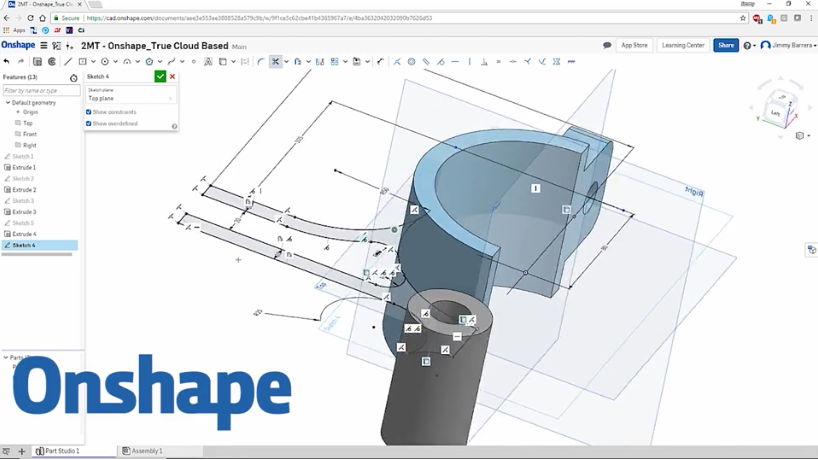
Developed by the co-founders of SOLIDWORKS, Onshape is the leading browser-based CAD platform enabling simultaneous multi-user editing, version control, and real-time design reviews across any device. The professional tier costs $1,500 per year per user, and a free tier is available with limited functionality and public project visibility. Its parametric modeling capabilities rival desktop alternatives while offering superior integrated PDM functionality and mobile compatibility for design reviews from smartphones.
Onshape's cloud architecture eliminates file management issues and allows teams to collaborate without installing software. The free tier offers genuine functionality but limits projects to public visibility, which can be a concern for proprietary work. For distributed teams that need real-time collaboration and version control, Onshape is the strongest option in 2026.
6. Siemens NX
Siemens NX starts at roughly $190 per month and holds a 4.4 out of 5 rating on Gartner Peer Insights. It is one of the most comprehensive and powerful CAD/CAM/CAE platforms available, widely used in aerospace, automotive, and heavy machinery industries. The software offers advanced surface modeling, synchronous technology combining direct and parametric modeling, and integrated simulation capabilities. NX scales from individual designers to enterprise deployments with thousands of users, featuring robust data management and multi-CAD interoperability.
Its high cost and steep learning curve limit adoption to large engineering organizations with complex product development needs. For companies already using Siemens Teamcenter PLM, NX provides unmatched integration. Smaller firms should consider whether they truly need NX's depth or if a more accessible tool like Fusion 360 would suffice.
7. SketchUp
SketchUp is a push-pull modeler popular in architecture, interior design, and quick concept visualization. The free web version still exists, while the Go tier costs $129 per year and Pro costs $399 per year. It holds a 4.3 out of 5 rating on Gartner Peer Insights from 52 ratings. Its intuitive interface and component libraries make it accessible for beginners, while extensions enable rendering, animation, and 3D printing export.
SketchUp is better suited for visualization than precise mechanical parts. Exported geometry often requires repair for non-manifold issues before 3D printing. The Pro version is required for DWG import and export and advanced features. For architects and interior designers, SketchUp remains an excellent tool, but mechanical engineers should look elsewhere for production-grade modeling.
8. FreeCAD
FreeCAD is the strongest fully free parametric CAD software, with version 1.1 released in March 2026. This release finally fixed the long-standing toponaming problem that previously broke models when editing early features. The software runs on Windows, macOS, and Linux, and offers a modular workbench system, Python scripting for customization, and dedicated Mesh and 3D-printing workbenches for checking and repairing geometry.
FreeCAD runs offline with no document caps, no account, and no revenue limit, exporting STEP, STL, and 3MF formats. Its interface is busier and the learning curve steeper than commercial alternatives, requiring at least 8GB of RAM for comfortable use. For users on a tight budget or those who need cross-platform support, FreeCAD in 2026 is finally a viable option for serious parametric modeling.
9. CATIA (Dassault Systèmes)
CATIA starts at $2,268 per quarter for the Mechanical Designer package and holds a 4.4 out of 5 rating on Gartner Peer Insights. It is the premier high-end CAD platform for aerospace and automotive industries, known for handling the most complex geometric designs and surface modeling requirements. The software offers advanced 3D geometry use cases including lattice design, generative simulation, and an AI assistant, with full parametric and surface modeling capabilities.
CATIA's steep price tag and learning curve, combined with demanding hardware requirements, position it as an enterprise-only solution. According to Formlabs' analysis, it scores highest among all CAD software for surface modeling, scalability, and advanced features. Only organizations designing aircraft, automobiles, or similarly complex products will find CATIA's cost justifiable.
10. Rhinoceros 3D (Rhino) + Grasshopper
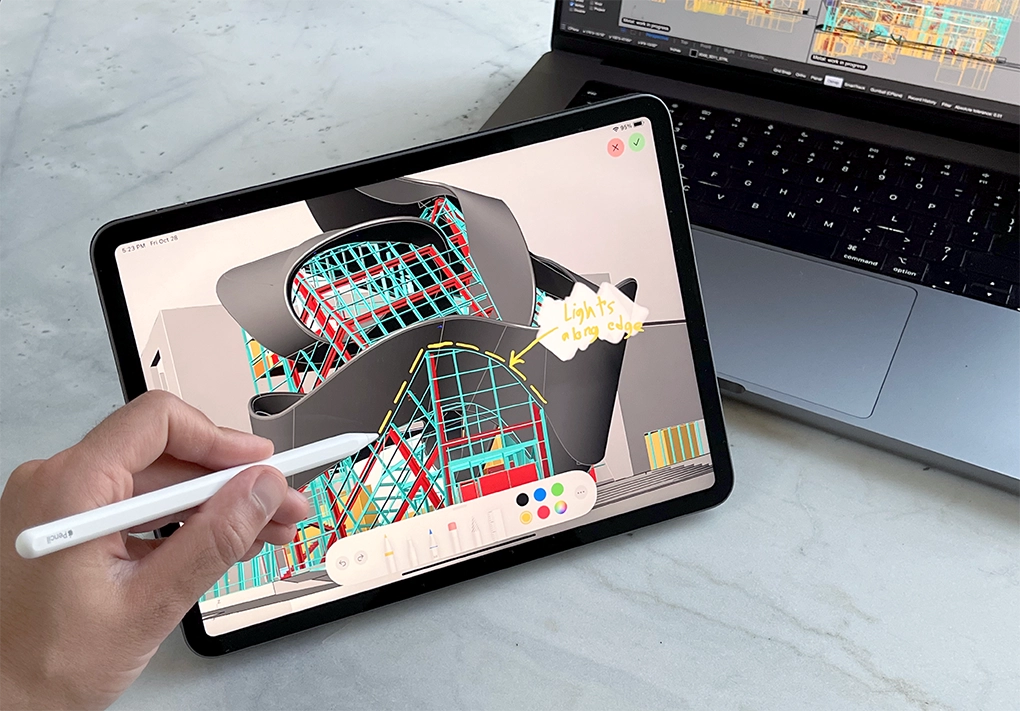
Rhino costs $995 for a one-time commercial license and $195 for an educational license, running on both Windows and Mac. It excels at organic, free-form NURBS surface modeling that traditional parametric CAD struggles with, making it popular among product designers, architects, and jewelry designers. Its Grasshopper plugin provides a node-based visual scripting environment for generative design, parametric patterns, and complex simulations through dozens of community plugins.
Rhino's one-time perpetual licensing model is increasingly rare in the CAD industry. However, Grasshopper models often require substantial rework before being 3D printable. The software is not designed for dimensioned mechanical assemblies but excels at stylish parts and prototypes. For designers who need free-form surface modeling without monthly subscriptions, Rhino remains the best choice in 2026.
We considered several factors when building this ranking, including parametric modeling strength, assembly handling, simulation capabilities, user satisfaction metrics from Gartner Peer Insights, pricing models, and learning curves. The best 3D CAD software in 2026 depends on your specific needs. SOLIDWORKS and Inventor remain the top choices for traditional mechanical engineering. Fusion 360 and Onshape lead in cloud-based collaboration. CATIA and Siemens NX dominate enterprise aerospace and automotive work. FreeCAD offers the best free parametric option. Rhino and SketchUp serve specialized design and visualization needs.
Before committing to any platform, we recommend testing free trials or free tiers. Most commercial CAD vendors offer 30-day trials, and both FreeCAD and the free tiers of Fusion 360 and Onshape provide genuine functionality for evaluation. The CAD market in 2026 offers more choice than ever, but the right tool is the one that matches your project complexity, team size, and budget.
Related Posts




3 Comments
Join the discussion and share your thoughts