Top 10 Best Smartphone Brands In Japan 2026

Table of Contents
Japan's smartphone market is one of the most distinctive in the world, and the top 10 best smartphone brands in Japan in 2026 reflect a landscape where a single company commands nearly two-thirds of all mobile traffic while domestic manufacturers fight for survival in narrow, highly specialized niches. According to StatCounter, Apple held a 64.74% mobile vendor market share in Japan as of August 2026, a level of dominance unmatched in any other major developed economy. That leaves every other brand, from Google to Sony to Kyocera, competing for the remaining third of a market that shipped tens of millions of devices in the past year.
To build this ranking, we weighed vendor market share data from StatCounter and Counterpoint Research, model-level sales performance in Q2 2026, annual unit volumes where available, carrier distribution strength, and each brand's strategic position within Japan's unique ecosystem. We also factored in recognition from industry bodies such as the BCN AWARD 2026, which draws on point-of-sale data from retailers across the country, and the Spherical Insights Japan Smartphone Market Report, which identifies the key companies shaping domestic demand. Brands with strong FeliCa and Osaifu-Keitai integration, established carrier relationships with NTT Docomo, KDDI (au), and SoftBank, and a clear identity in the Japanese market ranked higher than those with a purely global footprint. The result is a list that captures not just who sells the most phones in Japan, but who actually matters to Japanese buyers in 2026.
These Are The Top 10 Best Smartphone Brands In Japan 2026:
1. Apple (iPhone)
No other brand comes close to Apple's grip on the Japanese smartphone market. StatCounter put Apple's mobile vendor share at 64.74% in August 2026, and Counterpoint Research's Q2 2026 model data shows the scale of that dominance: the iPhone 17 5G was Japan's single best-selling smartphone with 26% of model sales, the iPhone 17E 5G followed at 20%, and the iPhone 16 5G took fourth place at 5%. Three Apple devices in the top five is not an anomaly in Japan. It has become the baseline.
The structural reasons run deeper than brand loyalty. Japanese carriers NTT Docomo, KDDI (au), and SoftBank have built their flagship subscription tiers around iPhone promotions for well over a decade, and Apple's deep FeliCa integration means Apple Pay Suica works natively on every modern iPhone. For commuters in Tokyo, Osaka, and Nagoya, that transit functionality is not a nice-to-have feature. It is the reason many users never seriously consider switching. Apple has also benefited from Japan's relatively slow move away from physical SIM cards, though eSIM adoption accelerated through 2025 and 2026.
Pricing remains high, and the yen's weakness against the dollar through 2025 pushed Japanese iPhone prices to some of the highest levels in Asia. Even so, carrier trade-in programs and the popularity of older-generation models like the iPhone 16 5G keep the ecosystem accessible. Apple's share dipped slightly from its 2023 peak but has stabilized above 60%, a figure no competitor has approached in the modern smartphone era.
2. Google (Pixel)
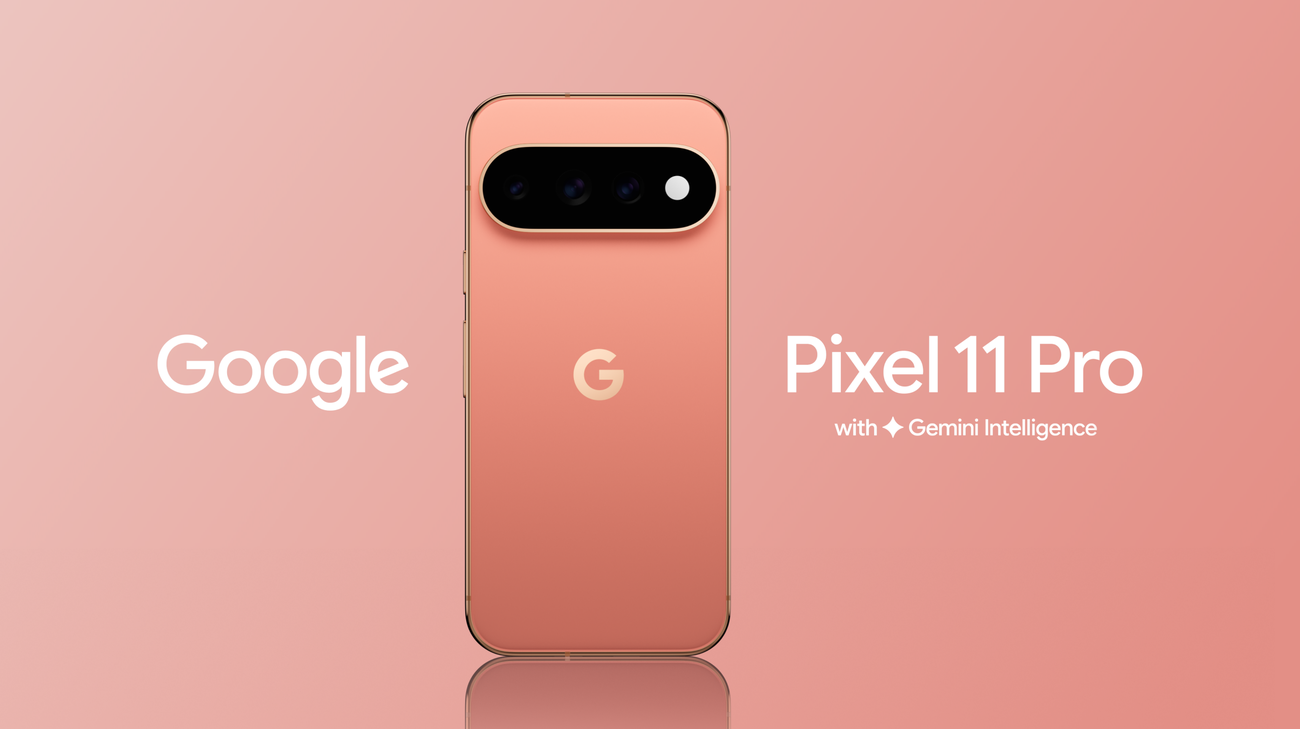
Google has done what no Android manufacturer before it managed in Japan: build a genuine consumer brand rather than a carrier afterthought. StatCounter recorded a 9.33% mobile vendor share for Google in August 2026, making it the country's leading Android vendor by a comfortable margin. The Pixel 10a 5G ranked third among all smartphone models in Q2 2026 with 7% sales share, according to Counterpoint Research, the highest placement of any non-Apple device.
The Pixel's appeal in Japan rests on two pillars. The first is camera performance. Global Brands Magazine's 2026 rankings gave Google a 9.6/10 camera score, and the computational photography pipeline remains the reference point for night shots, portrait processing, and video stabilization. Japanese consumers, who have historically gravitated toward strong mobile photography, have responded accordingly. The second is software. Google's commitment to seven years of OS and security updates on recent Pixel devices stands out in a market where carrier-sold Android phones have often been abandoned after two years.
Google's distribution strategy also matured. The company sells directly through the Google Store Japan, maintains strong carrier partnerships, and has expanded its physical retail presence in Tokyo and Osaka. The Pixel 10a's mid-range pricing undercuts flagship iPhones while offering most of the AI features Google promotes heavily, including on-device translation and call screening tools that work well with Japanese-language input.
3. Samsung (Galaxy)
Samsung's 5.01% vendor share in August 2026, per StatCounter, understates its strategic importance in Japan. The company was named the leading Android vendor in Japan for 2025 at the BCN AWARD 2026, an honor based on actual point-of-sale data from retailers nationwide rather than shipment estimates. That recognition reflects steady, grinding progress in a market where Samsung spent years as a marginal player.
The Galaxy A25 Japan 5G ranked fifth among best-selling models in Q2 2026 with 4% sales share, according to Counterpoint Research. That mid-range positioning is deliberate. Samsung has largely ceded the premium tier to Apple and Google in Japan, focusing instead on value-focused buyers who want solid hardware without flagship pricing. The Galaxy A series delivers capable cameras, long battery life, and Samsung's One UI software layer, which has been localized with Japanese carrier features including FeliCa support.
Globally, Samsung remains a heavyweight. The company led Q1 2026 smartphone shipments with roughly 21.2% share and ranked second in Q4 2025 with 17% year-over-year shipment growth. In Japan, its foldable Galaxy Z Flip line has found a modest but real audience among users who want a compact device with a large inner display, though it faces direct competition from Motorola's Razr series.
4. Xiaomi
Xiaomi holds 3.94% mobile vendor share in Japan as of August 2026, according to StatCounter, placing it fourth overall and second among Android brands behind Google. The company's Japanese push has been aggressive, built around carrier partnerships and its Redmi lineup, including models like the Redmi 15C 5G that compete hard on price-to-spec ratio.
Globally, Xiaomi is the world's third-largest smartphone brand with 11.5% shipment share in Q1 2026 per IDC. But the company has hit turbulence. IDC data shows an 11% year-over-year shipment decline in Q4 2025 and a steep 26% drop in Q2 2026, driven by rising memory costs and weakness in the entry-to-mid-tier segments that form Xiaomi's core. Those pressures matter in Japan, where Xiaomi's appeal is concentrated in the budget tier.
Xiaomi's Japanese strategy leans on ecosystem selling. The company promotes its smart home devices, wearables, and accessories alongside phones, aiming to replicate the cross-category loyalty that has worked in China and India. Whether that approach translates in a market as brand-conscious as Japan remains an open question, but the company's willingness to invest in carrier relationships and localized marketing has kept it ahead of most other Chinese entrants.
5. Sony (Xperia)
Sony is Japan's flagship domestic smartphone brand, and its 3.21% market share in August 2026, per StatCounter, represents a niche carved out with intent rather than a failure to compete at scale. Sony Group Corp., founded in 1946 and headquartered in Tokyo, produces the Xperia line, including the Xperia 1 VII, Xperia 5 VI, and Xperia 10 VII. The Xperia 1 VII launched in 2026 as the company's flagship for creative professionals.
The Xperia identity is unmistakable. The 21:9 cinema-style display, pro-grade manual camera controls co-developed with Sony's Alpha camera division, and the retention of a 3.5mm headphone jack set Xperia phones apart from nearly everything else on the market. Sony records roughly 4 million annual units globally, a figure that keeps the brand visible internationally but reflects its deliberate retreat from mass-market competition.
In Japan, Xperia devices sell primarily through NTT Docomo and KDDI, with a loyal base of content creators, photographers, and audio enthusiasts. Sony has leaned into that audience with features like high-resolution audio support, microSD expansion, and compatibility with its professional imaging workflow tools. The strategy works precisely because it does not try to beat Apple at its own game.
6. Sharp (AQUOS)
Sharp is one of Japan's most enduring domestic smartphone makers, and its AQUOS line continues to serve a customer base that values hardware engineering over software ecosystems. Industry tallies for 2026 put Sharp's annual smartphone output at roughly 3.2 million units, a figure that keeps it consistently listed among the key companies in the Japan smartphone market alongside Apple, Samsung, Sony, Fujitsu, Kyocera, Xiaomi, and Huawei by the Spherical Insights Japan Smartphone Market Report.
Sharp's differentiation comes from display technology. Its IGZO panels offer power efficiency advantages that translate into longer battery life, and the company has experimented with ultra-compact form factors that appeal to users who find modern flagship phones unwieldy. FeliCa NFC integration is mature and deeply integrated with Japanese payment and transit systems, a requirement for any brand serious about the domestic market.
Sharp's position differs from Sony's. Where Sony targets creative professionals, Sharp serves practical buyers: people who want a reliable Japanese-made phone with excellent battery life, solid build quality, and no learning curve. That audience is aging, and Sharp has not solved the question of how to attract younger users, but its installed base and carrier relationships remain substantial.
7. Kyocera

Kyocera survived Japan's brutal smartphone consolidation by doing something almost no other manufacturer attempted: abandoning the consumer mainstream entirely and building phones for people whose lives depend on device durability. The TORQUE series, including the latest TORQUE G07, emphasizes extreme toughness, water resistance, and outdoor functionality. Kyocera states the G07 passed a record number of durability tests for the series.
The DuraForce Pro 6, sold primarily through enterprise and carrier channels, undergoes IP69K high-pressure water testing. These are not luxury gadgets. They are professional safety equipment, purchased by construction firms, delivery companies, logistics operators, emergency responders, military users, and outdoor adventurers who need a phone that survives drops, dust, submersion, and temperature extremes.
That focus has given Kyocera a defensible position. Rugged phone buyers are not swayed by camera megapixel counts or display refresh rates. They care about whether the device will still work after a fall from scaffolding or a shift in heavy rain. Kyocera's engineering reputation in that segment is strong, and its devices carry certifications that mainstream phones rarely pursue. The trade-off is that Kyocera has effectively exited the consumer upgrade cycle, which limits growth but also insulates it from the brutal competition that killed off other Japanese brands.
8. Fujitsu (Arrows)
Fujitsu's Arrows line occupies a space that most global smartphone brands ignore entirely: senior-friendly simplicity and compact design. The Fujitsu Arrows We2 topped a November 2025 ranking of the best mini smartphones from Japan, a niche recognition that reflects the company's deliberate focus on users who value reliability and practicality over marketing hype.
Unlike Kyocera's rugged strategy, Fujitsu has built its remaining smartphone business around ease of use. Large text options, simplified interfaces, physical button support, and compact dimensions that fit comfortably in smaller hands or pockets are consistent themes across the Arrows lineup. Fujitsu is listed among the key companies in the Japan smartphone market by Spherical Insights, and its devices sell primarily through NTT Docomo, which has historically been the carrier most focused on older subscribers.
Fujitsu's survival is notable precisely because so many Japanese smartphone brands disappeared. NEC, Panasonic, Toshiba, and others exited the market entirely as Apple's share grew. Fujitsu stayed because it found a customer segment that the global giants do not serve well. That segment is not growing quickly, but it is loyal and largely immune to flagship launch cycles.
9. Rakuten Mobile (Rakuten Hand / Rakuten Mini)
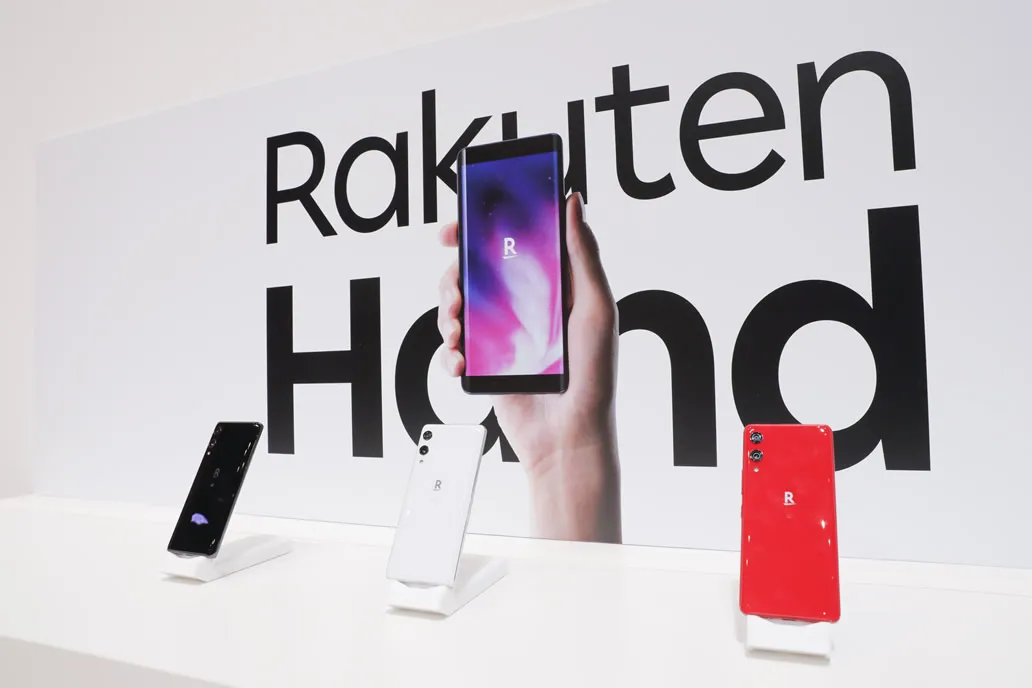
Rakuten Mobile is Japan's fourth licensed mobile network operator and the first built entirely on cloud-native Open RAN architecture. The company serves 2.2% of Japan's mobile contracts as of 2026, a small share that nonetheless makes it the only new MNO to successfully launch in Japan in decades. Beyond connectivity, Rakuten manufactures its own ultra-compact devices, and they are genuinely unusual.
The Rakuten Mini weighs just 79 grams, making it one of the lightest smartphones ever produced. It packs a 1,250 mAh battery and a Snapdragon 439 chip, specifications that would be laughable in a flagship but make sense for a device designed as a secondary phone or a minimalist alternative. The Rakuten Hand steps up to a 2,750 mAh battery, OLED display, in-display fingerprint reader, and a 64MP main camera, offering a more conventional experience in a still-compact frame.
Rakuten's pricing is its sharpest weapon. The Rakuten SAIKYO Plan starts at ¥880 per month, roughly $5.70 USD, for 3 GB of data plus unlimited calls. The company is also the only MNO offering fully remote eSIM provisioning for foreign passports, a feature that has made it popular among expatriates and frequent visitors. The catch is coverage. Rakuten's network reached roughly 70% population coverage as of March 2026, with rural gaps that remain a real limitation for anyone traveling outside major metropolitan areas.
10. Motorola (Lenovo)
Motorola maintains a smaller, channel-driven presence in Japan, but its global scale and foldable lineup keep it relevant. The company is owned by Lenovo Group, founded in 1984 and headquartered in Hong Kong and Morrisville, North Carolina. Its Japanese lineup includes the Motorola Edge 70, Moto G Power 2026, Motorola Razr 60 Ultra, and Motorola Razr 60, sold primarily through carrier and retail partnerships rather than direct-to-consumer channels.
The Razr series is Motorola's most interesting play in Japan. Foldable phones remain a niche category, but the Razr 60 Ultra competes directly with Samsung's Galaxy Z Flip line, offering a different take on the flip form factor with a large external display and a design that echoes the original Razr's cultural cachet. Global Brands Magazine's 2026 rankings scored Motorola 8.4/10, positioning it as a value option for buyers who want solid hardware without flagship pricing.
Motorola is a top-5 smartphone brand in North America and Latin America, where its mid-range Moto G devices sell in enormous volumes. Japan is a different story. The market's carrier-led distribution, high brand loyalty, and Apple dominance make it difficult for any brand without deep local investment to gain ground. Motorola's presence is real but modest, sustained by foldable curiosity and budget buyers rather than mainstream adoption.
Related Posts


3 Comments
Join the discussion and share your thoughts