Top 10 Best Engineering Companies In Germany 2026

Table of Contents
Germany's engineering sector remains the backbone of Europe's largest economy, and the top 10 best engineering companies in Germany in 2026 reflect a mix of global conglomerates, specialized automotive suppliers, and nimble consultancies. To build this ranking, we weighed annual revenue, employee headcount, market capitalization, and the breadth of each firm's engineering portfolio. We also factored in how central each company is to sectors like automation, energy transition, mobility, and industrial infrastructure. Revenue figures come from company reports and databases including Ecommerce Germany's top 100 German companies list and CompanyData's engineering sector directory. Where a company operates across multiple divisions, we assessed the engineering-specific share of its business rather than treating it as a generic industrial holding.
The result is a list that spans from Munich's Siemens AG, with nearly $92 billion in revenue, down to mid-sized consultancies handling complex infrastructure projects worldwide. Some entries are household names. Others are quiet specialists that keep factories, pipelines, and power grids running. All ten play a role in keeping Germany's engineering reputation intact.
The List Of The Top 10 Best Engineering Companies In Germany 2026:
1. Siemens AG
Siemens AG is the largest pure-play engineering and industrial technology company in Germany. Headquartered in Munich and Berlin, the company posted $91.84 billion in revenue in 2026, with a market capitalization of $245.69 billion and a Forbes valuation of $148.2 billion. It ranks #7 among all German companies by revenue and #6 on the Forbes Global 2000 list for Germany.
The company's engineering focus covers automation, digitalization, electrification, and smart infrastructure. Its factory automation division supplies control systems to manufacturers worldwide, while its smart infrastructure arm handles building technology and grid management. Siemens has spent the past decade shifting from heavy hardware toward software-driven industrial engineering, particularly through its Xcelerator platform and digital twin technology.
What separates Siemens from its peers is scale. No other German engineering firm comes close to its revenue in the industrial technology space. Rivals like ABB and Schneider Electric compete in specific segments, but Siemens operates across nearly every engineering vertical simultaneously, from rail systems to medical imaging through its former Healthineers unit.
2. Robert Bosch GmbH
Robert Bosch GmbH is the largest private employer among German engineering firms, with 429,416 employees globally and $99.02 billion in revenue. Headquartered in Stuttgart, Bosch is technically larger than Siemens by revenue, though its business spans consumer goods and appliances alongside its core engineering operations.
Bosch's engineering divisions drive innovation in autonomous driving, industrial automation, and the Internet of Things. The company is one of the world's largest automotive suppliers, providing powertrain systems, sensors, and software to nearly every major automaker. Its mobility solutions segment alone accounts for a substantial share of group revenue.
Unlike publicly traded competitors, Bosch remains majority-owned by the Robert Bosch Stiftung, a charitable foundation. That structure lets the company invest heavily in long-horizon research without quarterly earnings pressure. Bosch spends roughly 10 percent of its revenue on R&D, a figure that places it among the top corporate research spenders in Europe.
3. Thyssenkrupp AG
Thyssenkrupp AG is a diversified industrial engineering conglomerate based in Essen, with $37.04 billion in revenue and $33.3 billion in total assets. The company ranks #21 among German companies by revenue and #32 on the Forbes Global 2000 list.
Its engineering operations span steel production, elevators, automotive components, and multi-sector plant construction. The elevator division, TK Elevator, was sold to Advent and Cinven in 2020, but Thyssenkrupp retains significant engineering interests in materials services and industrial solutions. One standout subsidiary is Thyssenkrupp Nucera AG, which generated $983.7 million in revenue with 1,095 employees and specializes in green hydrogen electrolysis technology.
Thyssenkrupp has faced pressure in recent years from cheap steel imports and the global shift away from traditional manufacturing. Its pivot toward hydrogen and green industrial processes represents one of the more ambitious engineering transitions in Germany's industrial base.
4. Hochtief AG
Hochtief AG is Germany's largest construction and engineering services company, headquartered in Essen. With $44.11 billion in revenue, it ranks #17 among German companies, ahead of many automotive and energy firms.
The company operates globally through subsidiaries including Turner in the United States, CIMIC in Australia, and Hochtief Projektentwicklung. Its engineering project management covers airports, tunnels, bridges, and large-scale industrial facilities. Hochtief's involvement in public-private infrastructure partnerships has made it a major player in markets where governments need private engineering expertise.
What makes Hochtief unusual among German engineering firms is its geographic spread. A significant portion of revenue comes from outside Europe, particularly from North American and Asia-Pacific construction markets. That diversification has helped insulate it from Germany's slower infrastructure spending cycles.
5. Siemens Energy AG
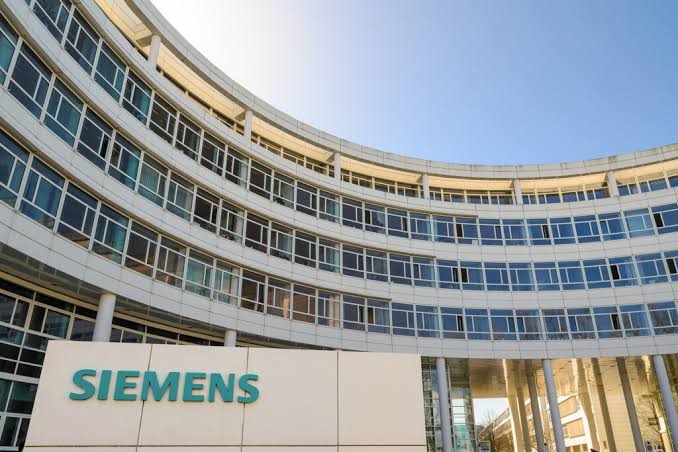
Siemens Energy AG was spun off from Siemens AG in 2020 and now stands as a major energy technology engineering company. Headquartered in Munich, it generated $45.86 billion in revenue in 2026, ranking #15 among all German companies.
The company specializes in power generation, transmission, and renewable energy engineering. Its portfolio includes gas turbines, grid technology, hydrogen solutions, and wind power through Siemens Gamesa. Siemens Energy is central to Germany's energy transition, supplying equipment for offshore wind farms and grid modernization projects across Europe.
The wind turbine business has been a financial drag in recent years, with Siemens Gamesa reporting losses tied to manufacturing defects and supply chain issues. Despite those challenges, the company's gas turbine and grid divisions remain profitable and technically dominant in their markets.
6. TÜV SÜD Industrie Service GmbH
TÜV SÜD Industrie Service GmbH is one of Germany's leading engineering inspection, certification, and technical advisory firms. Based in Munich, the company reported $776.9 million in revenue with 6,402 employees. It was founded in 2009 as part of the broader TÜV SÜD group.
Its engineering services cover safety engineering, industrial inspection, and compliance across energy, manufacturing, and infrastructure sectors. If a power plant needs certification or a factory requires safety audits, TÜV SÜD is often the firm called in. The company operates in the testing, inspection, and certification market, a segment that has grown steadily as regulations tighten across Europe.
What sets TÜV SÜD apart from larger competitors is its focus on regulatory compliance rather than product development. The firm doesn't build turbines or vehicles. It ensures the companies that do meet safety and environmental standards, which makes it a gatekeeper for German industrial quality.
7. Ferchau GmbH
Ferchau GmbH, headquartered in Gummersbach, is one of Germany's largest engineering services providers with 6,504 employees and $717.05 million in revenue. The company was founded in 2021 through a restructuring of the Ferchau Engineering group.
Ferchau specializes in engineering consulting, IT services, and technical staffing for automotive, aerospace, and industrial clients. Its services cover design engineering, simulation, testing, and project management across the entire product development lifecycle. Major OEMs and suppliers rely on Ferchau to supplement their in-house engineering teams during peak development periods.
The company maintains a network of engineering centers across Germany, which gives it the flexibility to deploy teams to client sites on short notice. That model has proven resilient even as automakers cut permanent engineering staff.
8. EDAG Engineering GmbH
EDAG Engineering GmbH is a globally recognized engineering services provider specializing in automotive and mobility engineering. Headquartered in Wiesbaden, the company reported $688.5 million in revenue with 5,221 employees. It was founded in 2015 as a carve-out of the larger EDAG Group.
EDAG offers vehicle development, smart factory solutions, and software engineering. The company is known for complete vehicle engineering, from concept through production, serving major automotive OEMs worldwide. Its expertise extends to lightweight design, electromobility, and autonomous driving technologies.
Among German engineering service firms, EDAG has one of the strongest reputations for full-vehicle development. When an automaker needs a prototype built or a new platform engineered, EDAG is frequently on the shortlist. The company also operates in China and the United States, giving it access to the world's largest automotive markets.
9. Drees & Sommer SE

Drees & Sommer SE, based in Stuttgart, is a leading European engineering and consulting firm for construction, real estate, and infrastructure projects. With $721.2 million in revenue and 5,238 employees, it was founded in 1970 and has grown into one of the largest independent engineering consultancies in Germany.
The company provides project management, engineering consulting, and sustainability advisory services. It pioneered green building and energy-efficient construction engineering in Germany, long before sustainability became a mainstream corporate priority. Its expertise spans digital planning through BIM, smart buildings, and industrial facility engineering.
Drees & Sommer's client list includes major real estate developers, industrial companies, and public sector organizations. The firm has been particularly active in Germany's push to retrofit older buildings for energy efficiency, a market that has expanded significantly as EU climate regulations take effect.
10. ILF Consulting Engineers
ILF Consulting Engineers is an international engineering and consulting firm headquartered in Munich. Founded in 1967, the company employs between 1,001 and 5,000 people and specializes in complex industrial and infrastructure projects.
ILF provides design, planning, project management, and construction supervision across energy, water, transportation, and sustainable industry sectors. The firm is known for large-scale pipeline engineering, oil and gas facilities, and renewable energy projects globally. Its work often takes place in challenging environments, from mountain pipelines in the Alps to desert infrastructure in the Middle East.
As an independent consultancy, ILF doesn't manufacture equipment or sell proprietary technology. Its value lies in engineering judgment and project oversight, which keeps it in demand for projects where clients need impartial technical advice. The firm's long track record in pipeline and energy infrastructure makes it one of Germany's most experienced engineering consultancies.
Related Posts

3 Comments
Join the discussion and share your thoughts