Top 10 Best Personal Training Fitness Apps In 2026

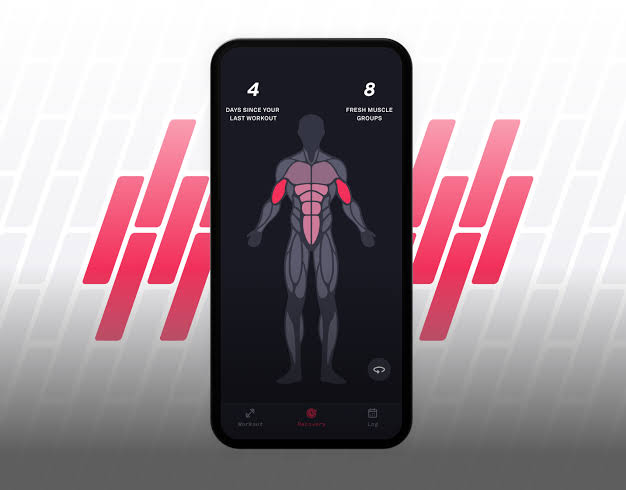
Table of Contents
The best personal training fitness apps in 2026 split into two clear camps: platforms that connect you with a real, certified human coach, and AI-driven systems that program your workouts from logged data. We ranked all ten options below on coaching quality, programming depth, price-to-value, and how well each app adapts to your actual performance over time.
To build this list, we reviewed the major 2026 roundups, including "Top 10 Best Personal Trainer App Lists in 2026," "15 Best Personal Trainer Apps of 2026," and "Best Fitness Apps with Real Personal Trainers in 2026." We weighed four factors: whether coaching comes from a live human or an algorithm, how much hands-on feedback members actually receive, pricing across tiers, and consistency of results reported by reviewers. Apps with real trainers ranked higher when they delivered genuine accountability. AI apps earned their spots by proving their programming holds up over months of use, not just the first week. Pricing reflects 2026 reporting and may vary by region and promotional offers.
Here Are The Top 10 Best Personal Training Fitness Apps In 2026:
1. Future Personal Training
Future created the digital personal training category, and in 2026 it still sets the benchmark. Every subscriber gets matched with a certified human coach who builds customized workout plans and monitors daily activity through a connected Apple Watch. That watch link matters: your coach sees whether you actually moved yesterday before writing today's session.
At roughly $199 per month, Future is the most expensive app on this list. The integration list justifies some of that. The app syncs with gym equipment, Apple Health, and wearables, and coaches message members regularly to adjust programming based on performance and recovery data. This is asynchronous coaching done properly, with a real person reading your numbers.
Nearly every 2026 roundup of apps with real trainers cites Future as the standard. The trade-off is simple. You pay premium prices for best-in-class accountability, and if you don't use the coach messaging, you're burning money.
2. Caliber Strength Training
Caliber takes the opposite approach to Future on price and lands almost as high on results. The app pairs evidence-based strength programming with optional one-on-one human coaching, and its tiers run from about $19 to $200+ per month. That range means a beginner can start with structured plans and workout logging for cheap, then add direct coach feedback, form review, and nutrition guidance when they're ready.
Lifters gravitate to Caliber because it's built around progressive overload rather than generic workout videos. The free tier alone offers solid workout logging and plan generation, which is rare among strength apps. In 2026 reviews, beginners learning compound lifts consistently single out the data-driven approach as the reason they stuck with it.
Caliber appears alongside Future in most 2026 comparisons of strength-focused coaching apps. For anyone whose goals live in the squat rack, it's the stronger pick of the two.
3. Trainwell (formerly CoPilot)
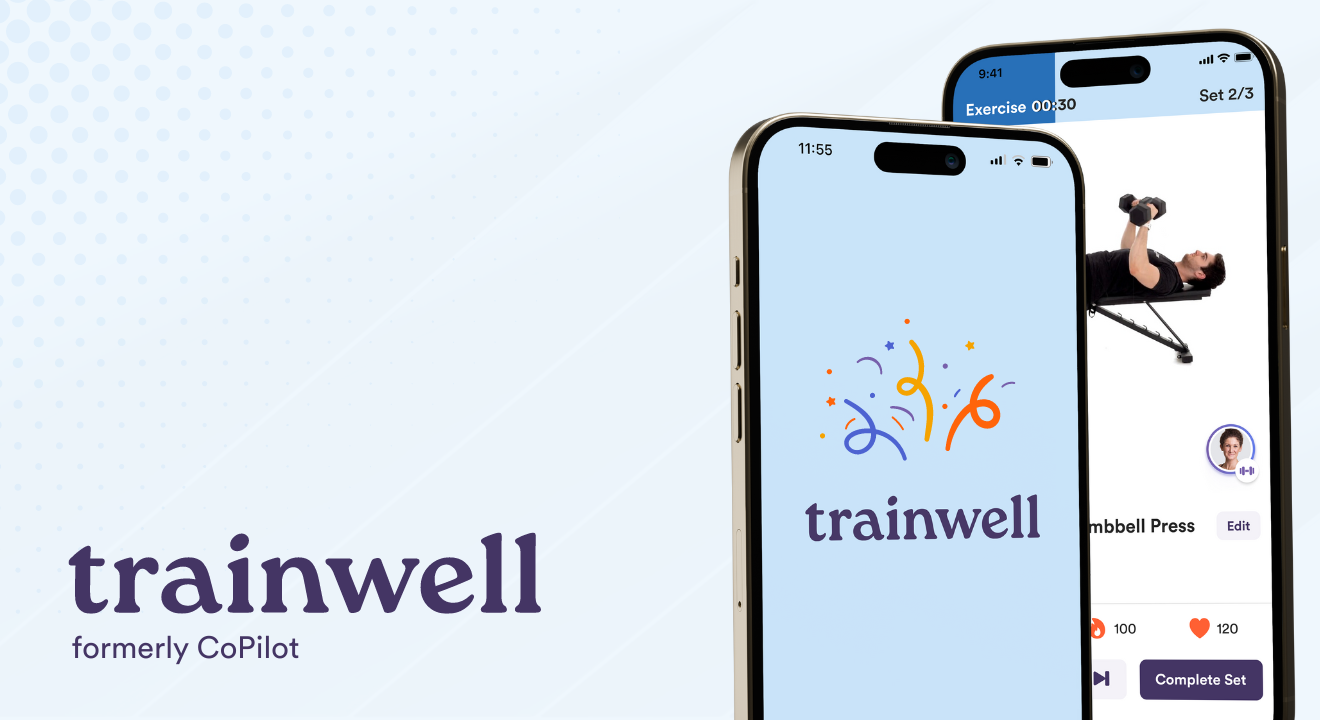
Trainwell rebranded from CoPilot and kept the model that made it popular: a dedicated personal trainer, weekly workout plans, in-app video form feedback, and ongoing chat support. Pricing runs about $99 to $149 per month, positioning it as the affordable alternative to Future without giving up real-human coaching.
The form feedback is the differentiator. Members film exercises, trainers review the video, and corrections come back in the app. That loop matters most for people training at home without a spotter or a mirror at the right angle. Programming is equipment-aware, so it adapts whether you have a full gym or a pair of dumbbells.
2026 reviews praise trainer quality and responsiveness specifically, which is the right thing to measure. A coaching app lives or dies on whether your trainer replies by Tuesday when you asked on Monday.
4. Fitbod
Fitbod is the leading AI strength-programming app, and its algorithm has had years to mature. At about $12.99 per month or $79.99 per year, it builds and adjusts workouts from your logged lifts, recovery status, and available equipment. Every session adapts based on what you actually did last time, including muscle-recovery tracking so you're not hammering the same groups back to back.
Exercise demonstrations and Apple Watch integration round out the package, and it works equally well for home and commercial-gym users. The value proposition is hard to argue with: a fraction of human-coaching prices for programming that adjusts itself.
What Fitbod can't do is watch your form or tell you to push harder. It's the most-recommended AI programming app in 2026 fitness roundups, but it's a tool for self-directed lifters, not a replacement for a coach.
5. Ladder
Ladder sits between AI apps and one-on-one coaching at about $29.99 per month. You join a team, follow structured programs designed by coaches, and get community accountability plus coach interaction along the way. Programs cover strength, hypertrophy, and performance goals, with progressive overload built into every plan and video demonstrations for each movement.
The team format is the hook. Training alongside a group in-app creates the kind of social pressure that keeps people showing up on low-motivation days, and it costs a fraction of dedicated 1:1 coaching. 2026 guides regularly place Ladder among the best apps blending real coaching with app convenience.
If you want structure and a squad more than a personal trainer reading your data, this is the pick.
6. Kickoff

Kickoff is the only app on this list delivering actual live personal training sessions over video. For roughly $95 to $150 per month, members get a dedicated trainer, scheduled live sessions, daily workout plans, habit coaching, and chat support between workouts.
That live component changes the experience. A trainer watching you in real time can correct a movement mid-rep, adjust the session on the spot, and hold you to a schedule in a way asynchronous apps can't replicate. It bridges the gap between in-person training and app-based programs, which is exactly the gap most people fall into when gym trainer costs climb past $60 per session.
Kickoff shows up in 2026 comparisons of apps with real personal trainers as the top live-coaching option. The catch is scheduling. You need to show up at a set time, same as any real training appointment.
7. Nike Training Club
Nike Training Club is free with a Nike membership, and it's the best free fitness app of 2026 by a wide margin. The library holds 200+ coach-led workouts across strength, yoga, HIIT, and mobility, plus multi-week guided programs from Nike master trainers and Apple Watch support.
Production quality rivals paid apps. Video demonstrations are clean, programming is structured, and the wellness content extends beyond workouts into recovery and mindset. Reviewers consistently name it the top free option in 2026 rankings, and it's not close.
What you give up is personalization. There's no coach reading your data and no algorithm adjusting your plan. For self-motivated users who just want excellent programming at zero cost, nothing beats it.
8. Peloton App
The Peloton App brings instructor-led strength, cardio, yoga, and outdoor training to people who don't own Peloton equipment, at about $12.99 per month on the App One tier. Thousands of live and on-demand classes sit alongside structured multi-week programs, and the "Programs" feature functions like a personal training plan, guiding users through progressive strength and fitness goals.
Class variety and production quality remain unmatched at this price. Live class schedules add a real-time energy that recorded sessions can't match, and the instructor roster is deep enough that you'll find someone whose coaching style clicks.
It's not personalized training in the strict sense. Nobody is writing a plan for your body. But if structured programs plus world-class instructors count as personal training for your purposes, Peloton delivers more content per dollar than almost anything else in 2026.
9. Freeletics
Freeletics has been a fixture in best-app rankings for years, and its AI "Coach" remains one of the most affordable adaptive systems available. Annual pricing runs about $34.99 to $79.99 depending on tier, and the coach generates and continuously adapts training plans based on your feedback, performance, and goals across both bodyweight and gym-based programming.
Exercise videos, progress tracking, and a large community round out the package. The feedback loop is the core mechanic: you rate sessions, the algorithm adjusts difficulty and volume, and the plan evolves. It's a proven system with a long track record, and the annual pricing makes it one of the cheapest AI-coached options on the market.
Freeletics suits people who train inconsistently and want a plan that forgives gaps without falling apart. It won't match a human coach for accountability, but at this price, few users expect it to.
10. Joggo
Joggo closes the list as the best specialized running-coach app. At about $9.99 per month or $59.99 per year, it generates personalized running and walking plans based on your fitness level, goals, and current pace, with in-app coach messaging and meal-planning features included.
For users whose primary training goal is running-based fitness rather than strength, Joggo fits better than any lifting-focused app here. Plans progress sensibly from beginner to intermediate distances, and 2026 running-app rankings frequently name it among the best for that range.
The nutrition guidance is a bonus most competitors charge extra for. If you're training for a first 10K or rebuilding a running habit, Joggo delivers coach-style structure at the lowest entry price on this list.
The decision comes down to what you're actually paying for. Human coaching from Future, Trainwell, Caliber, or Kickoff buys accountability and adaptation, and the price gap between them reflects how much live interaction you get. Kickoff's scheduled video sessions cost more than Trainwell's asynchronous chat for exactly that reason.
AI apps like Fitbod, Freeletics, and Joggo cost a fraction as much and adapt well to logged data, but they can't see your form or notice you've been skipping leg day. Free options like Nike Training Club and low-cost platforms like Peloton work best for self-directed users who need good programming, not a coach.
Our recommendation: if accountability is your problem, pay for a human. If programming is your problem, an AI app at $13 a month solves it. And if you're not sure which problem you have, start with Nike Training Club for free and find out.
Related Posts
0 Comments
Join the discussion and share your thoughts
No Comments Yet
Be the first to share your thoughts on this article!