Top 10 Best Digital Twin Platforms In The World 2026

Table of Contents
Digital twin platforms have moved from pilot projects to production infrastructure, and the vendor field has consolidated around a handful of names that enterprises actually trust at scale. Our ranking of the top 10 best digital twin platforms in the world for 2026 draws on vendor disclosures, independent 2026 comparisons from ReliaMag, Reality Atlas, Telco Magazine, LinkedIn, Digetiers, and CTO Magazine, plus our own analysis of deployment models and pricing transparency. The list spans full-lifecycle industrial suites, physics simulation engines, cloud-native IoT graphs, and specialized XR studios, because no single platform covers every use case.
How We Ranked These
We weighed four factors: breadth of twin coverage (product, production, and performance twins), independent 2026 rankings from named analyst and industry sources, deployment flexibility across cloud, on-premise, and hybrid environments, and depth of vertical specialization. Pricing transparency and interoperability, particularly support for OpenUSD and open data standards, broke ties. Vendors that only cover one layer of the twin stack ranked below those offering end-to-end lifecycle support, and services-led studios ranked below product platforms unless their specialization was unmatched.
Here Are Top 10 Best Digital Twin Platforms In The World 2026:
1. Siemens Xcelerator
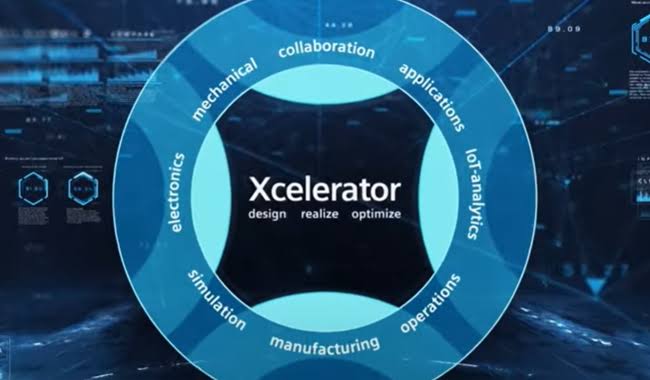
Siemens Xcelerator is the most complete enterprise digital twin platform available in 2026, and it holds the top spot on our list because no competitor matches its lifecycle coverage. The platform merges hardware, software, and digital services into one interoperable stack, and it is the only offering that natively supports product twins through CAD and PLM, production twins through factory simulation, and performance twins through live operational optimization, all within a single industrial architecture.
Deployment flexibility matters here. Siemens Xcelerator runs on-premise or as cloud SaaS, which suits telecoms operators, manufacturers, and critical infrastructure owners with strict data residency rules. Operators use it to model energy consumption, environmental conditions, and equipment status in real time. ReliaMag named it the number one pick for comprehensive digital twin platforms in 2026, and LinkedIn's Top 10 Digital Twin Platforms list ranked it first as well. For organizations running multi-year digital transformation programs, the single-vendor lifecycle argument is hard to beat.
2. NVIDIA Omniverse
NVIDIA Omniverse owns the real-time rendering and simulation layer that high-fidelity twins increasingly depend on. Built on OpenUSD (Universal Scene Description), the platform enables physically accurate, interoperable facility twins that multiple teams and tools can work on simultaneously, which solves a collaboration problem that has plagued industrial simulation for years.
Reality Atlas ranked Omniverse second among top digital twin development platforms in 2026. Its strongest use cases are industrial simulation, robotics training environments, and factory-scale modeling. NVIDIA's Clara platform extends the same AI infrastructure into healthcare digital twins. The trade-off is structural: Omniverse is a platform layer, not a full lifecycle suite, so enterprises still need data infrastructure and asset management around it. When photorealistic, physics-accurate real-time rendering at scale is the requirement, though, this is the platform of choice.
3. Microsoft Azure Digital Twins
Microsoft Azure Digital Twins provides the graph-based data infrastructure to represent assets, spaces, and processes at scale, paired with Microsoft Mesh for extended reality collaboration. Telco Magazine ranked it the number one digital twin vendor in 2026, and the reasoning is straightforward: it is best-in-class for cloud-native IoT environment graphs and enterprise integration.
One detail sets Azure apart from nearly every competitor. It publishes consumption-based pricing, which makes cost modeling transparent in a market where most vendors quote custom enterprise agreements. Organizations can model entire buildings, networks, and process environments as live digital graphs, then scale globally on Azure's cloud footprint. Microsoft, founded in 1975 and led by CEO Satya Nadella, has turned that footprint into a genuine advantage for large-scale enterprise IoT deployments and hybrid work environments. For buyers who need transparency and scale, Azure is the default answer.
4. Bentley Systems iTwin Platform
Bentley iTwin dominates civil engineering, utilities, and transportation. The platform specializes in infrastructure twins for bridges, rail networks, water systems, and roadways, where the twin must align with real-world geospatial and engineering data across asset lifecycles that stretch for decades.
ReliaMag named it "Best for Infrastructure and Built-World Digital Twins" in 2026, and Reality Atlas placed it fourth overall. Bentley's deep heritage in infrastructure engineering software gives iTwin credibility that general-purpose platforms cannot manufacture, particularly with owner-operators managing built-world assets. Any AEC firm or utility building a twin of physical infrastructure should start here. The scope is narrower than the industrial platforms above it, but within that scope, the depth is unmatched.
5. Ansys Twin Builder
Ansys is the global standard for physics-based engineering simulation, modeling structural mechanics, fluid dynamics, thermal behavior, electromagnetics, and materials science with a precision no other vendor matches. Twin Builder lets engineers create reduced-order models (ROMs) that run alongside operating assets, predicting wear and failure based on physical stress rather than historical data patterns alone.
That distinction matters in safety-critical environments. Aerospace, automotive, energy, and high-tech manufacturing operations cannot rely on machine learning alone to guarantee reliability, and Ansys fills that gap. Digetiers ranked it tenth among top digital twin companies and fourth among enterprise platforms in 2026. Its open architecture integrates with IoT platforms for real-time validation. The honest caveat: Ansys functions as an engineering toolchain rather than a full enterprise twin platform, so it typically sits alongside a broader data infrastructure layer.
6. Dassault Systemes 3DEXPERIENCE / SIMULIA

Dassault Systemes' 3DEXPERIENCE platform, powered by the SIMULIA simulation suite, is a powerhouse for engineers who need high-fidelity multi-physics simulation across automotive, aerospace, and industrial domains. SIMULIA delivers finite element analysis and full lifecycle coverage, mirroring complex real-world behaviors while integrating tightly with Dassault's broader CAD and PLM tools. CTO Magazine named SIMULIA "Best for multi-physics simulation," and LinkedIn ranked 3DEXPERIENCE second in its 2026 Top 10 Digital Twin Platforms list.
The trade-offs are real and worth stating plainly. Cost runs high, and the learning curve is steep for non-technical users, which is why cloud-native rivals have gained ground in organizations without deep simulation expertise. For teams that need scalable twins going deep into physics-driven simulation, though, few platforms compete on depth.
7. PTC ThingWorx
ThingWorx is a purpose-built IIoT platform for connecting product and process twins to live sensor data from industrial equipment. Its ThingModel abstraction language lets manufacturers represent physical assets, processes, and their relationships in a structured way that scales across factories and product lines.
Deployment runs on-premise or in the cloud, which suits industrial environments with strict data governance requirements. ReliaMag named it "Best for IIoT-connected product and process twins" in 2026. ThingWorx is particularly strong in heavy industries where asset-centric analytics matter more than photorealistic visualization. It is less adaptable for non-industrial use cases than the platforms ranked above it, but as an IIoT twin backbone for manufacturing, it holds up well against anything in the category.
8. Unity Technologies
Unity is the real-time 3D engine behind many of the most interactive digital twin applications in production today. Best known as a game engine, its industrial adoption has surged as organizations discovered it delivers interactive 3D performance that rigid simulation software cannot match.
Developers use Unity to build interactive factory floor walkthroughs, training simulations, spatial data visualizations, and immersive operational interfaces running on headsets, large-format displays, and mobile devices. Reality Atlas ranked it ninth among top digital twin development companies in 2026. The limitation is structural: Unity is a development engine, not a turnkey platform with built-in data infrastructure. When a twin must be experienced rather than just calculated, it remains the go-to choice.
9. Treeview

Treeview operates differently from every other entry on this list. It is a spatial computing and digital twin studio, ranked number one digital twin development studio by Reality Atlas in 2026, that builds enterprise XR digital twins deployable across every major headset platform, including Quest, HoloLens, and Vision Pro.
Rather than selling software licenses, Treeview delivers custom-built immersive twins for enterprise clients. That services model makes it the top-ranked development partner when organizations need bespoke XR twin experiences rather than off-the-shelf tooling. The studio also publishes industry research, including a 2026 ranking of top digital twin companies in healthcare. Treeview complements rather than replaces the platform vendors above it, but for cross-platform headset support and custom immersive work, no one else on this list matches its specialization.
10. Nokia AVA Network Twin
Nokia's AVA platform introduces digital twin functionality deeply integrated into its network management suite, creating a living replica of an entire mobile network for optimization and predictive maintenance. Telco Magazine featured it in its Top 10 Digital Twin Vendors list for 2026.
Operators use the AVA Network Twin to validate network changes before deployment, ensure quality of experience, and accelerate new service rollouts. Nokia's heritage in telecom infrastructure gives it operational insight that general-purpose platforms lack, positioning AVA as the bridge for service providers migrating toward autonomous, self-optimizing networks and future 6G architectures. Applicability is limited to network operators rather than general enterprise use, but within telecommunications, it is the definitive vertical specialist.
Related Posts




0 Comments
Join the discussion and share your thoughts
No Comments Yet
Be the first to share your thoughts on this article!