Top 10 Best Cyber Security Companies In USA 2026

Table of Contents
The cyber security landscape in the United States has never been more crowded, nor more critical. As organizations face an accelerating wave of AI-powered attacks, ransomware campaigns, and nation-state intrusions, the choice of security vendor has become a board-level decision. This ranking of the top 10 cyber security companies in the USA for 2026 takes into account Gartner Magic Quadrant positioning, market capitalization, reported revenue figures, enterprise adoption rates, and the breadth of platform capabilities as of late 2025. We weighed criteria like customer count, peer review scores, and each vendor's ability to address the shift toward zero-trust and cloud-native architectures.
What emerged is a list dominated by platform players who can unify protection across networks, endpoints, clouds, and identities. The days of buying point solutions from dozens of vendors are fading. Enterprises now want consolidated platforms that share threat intelligence and automate response. The companies below have positioned themselves to meet that demand, though they approach it from very different angles: some from the network edge, others from the endpoint, and a few from the identity layer.
These Are The Top 10 Best Cyber Security Companies In USA 2026:
1. Palo Alto Networks
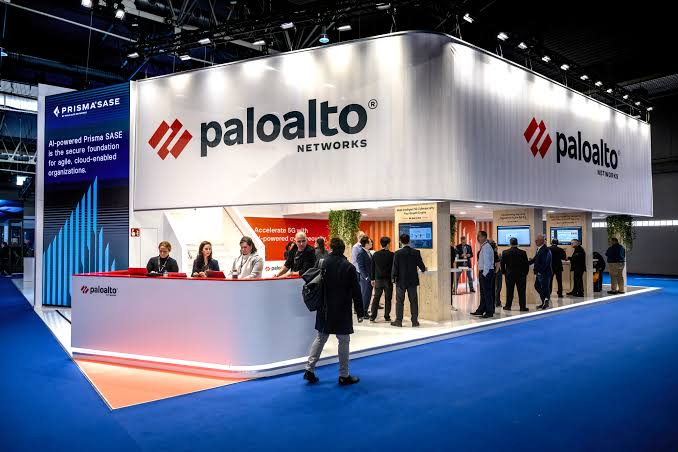
Palo Alto Networks sits at the top of this ranking for good reason. Founded in 2005 and headquartered in Santa Clara, California, the company has evolved from a next-generation firewall pioneer into the broadest security platform vendor in the industry. Its portfolio now spans Prisma Cloud for cloud security, Cortex XDR for extended detection and response, and a growing suite of AI-driven security operations tools.
The company's customer base is staggering: more than 80,000 enterprise customers, including most of the Fortune 100 and a large share of the Global 2000. Palo Alto Networks consistently leads Gartner's Magic Quadrant for Network Firewalls, and its Gartner Peer Insights score sits at a strong 4.6 out of 5. What separates Palo Alto from its competitors is the integration across its platform. Threat intelligence gathered at the network layer informs endpoint detection, while cloud security policies can be enforced consistently across hybrid environments.
In 2025, the company doubled down on its Precision AI strategy, embedding machine learning and deep learning models directly into its security operating platform. This allows customers to automate threat prevention in real time rather than relying on signature updates. For large enterprises that need defense-in-depth without managing a dozen separate consoles, Palo Alto remains the default choice.
2. CrowdStrike
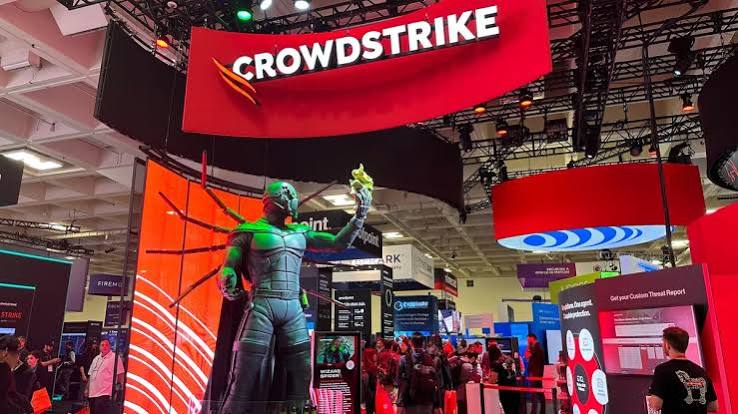
CrowdStrike has redefined endpoint security since its founding in 2011 by George Kurtz, Dmitri Alperovitch, and Gregg Marston. The company's Falcon platform operates entirely in the cloud, which means deployment takes minutes rather than weeks. There is no hardware to rack and no on-premises server to maintain. That architecture has proven enormously popular, propelling CrowdStrike's market capitalization past $60 billion in 2025.
The Falcon platform processes trillions of events daily, using AI-powered behavioral analytics to detect threats that signature-based tools miss. CrowdStrike's threat intelligence team is widely regarded as among the best in the world, frequently credited with identifying major nation-state hacking groups before they launch their most damaging attacks. The company's ransomware protection capabilities are particularly strong, with automated rollback features that can restore affected systems to their pre-attack state.
CrowdStrike holds the highest Gartner Peer Insights score among major security vendors at 4.7 out of 5, a reflection of strong customer satisfaction across both mid-market and enterprise segments. The company has also expanded well beyond endpoint detection and response into identity protection, cloud security, and next-generation SIEM with its Charlotte AI assistant. For organizations that want a cloud-native approach to security, CrowdStrike is the benchmark.
3. Fortinet
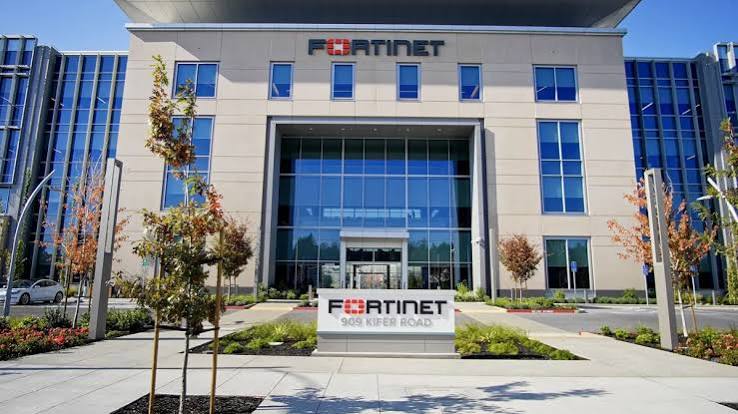
Fortinet may not have the name recognition of some Silicon Valley peers, but its reach is enormous. Founded in 2000 and headquartered in Sunnyvale, California, the company serves more than 700,000 customers worldwide, a figure that dwarfs most competitors. Fortinet's Security Fabric architecture integrates more than 50 individual products into a unified platform spanning network, endpoint, and cloud security.
The company's core strength remains network security, particularly its FortiGate firewalls, which combine intrusion prevention, SD-WAN, and secure access service edge (SASE) capabilities. Fortinet has also become a major player in operational technology security, protecting industrial control systems in manufacturing, energy, and utilities. Revenue exceeded $5.5 billion in fiscal year 2024, and the company continues to grow at a healthy clip.
What makes Fortinet particularly attractive is its price-performance ratio. The company delivers enterprise-grade security at price points that work for small and mid-sized businesses, not just large corporations. This has allowed Fortinet to build a massive channel ecosystem of managed security service providers who deploy and manage Fortinet solutions on behalf of their clients. For organizations with distributed workforces and branch offices, Fortinet's integrated approach reduces complexity and cost.
4. Microsoft Security
Microsoft Security has become the fastest-growing major cybersecurity vendor in the world, and its scale is almost impossible to overstate. The company's security business generated more than $20 billion in annual revenue in fiscal year 2024, serving over 600,000 enterprise customers. Microsoft employs more than 4,000 security professionals dedicated to threat research, detection, and response.
The portfolio is comprehensive. Microsoft Defender provides endpoint protection across Windows, macOS, Linux, iOS, and Android devices. Microsoft Sentinel offers cloud-native SIEM and SOAR capabilities. Microsoft Entra ID (formerly Azure Active Directory) handles identity and access management, while Azure security services protect cloud workloads. Because Microsoft's products are already deployed across the vast majority of enterprise environments, customers can often activate security capabilities without deploying new agents or infrastructure.
Microsoft's strength lies in identity security and cloud workload protection. As organizations move applications to Azure and adopt Microsoft 365, the security controls are already integrated. The company has also invested heavily in AI-driven security operations, with tools like Security Copilot that help analysts investigate incidents faster. For organizations deeply invested in the Microsoft ecosystem, the security platform is a natural fit, though some customers express concerns about vendor lock-in and the complexity of licensing.
5. Check Point Software Technologies
Check Point Software Technologies is one of the oldest companies on this list, founded in 1993 and headquartered in San Jose, California. The company essentially invented the modern firewall and has maintained its position as a top-tier network threat prevention provider for over three decades. Its Infinity Architecture delivers a prevention-first security model that emphasizes stopping attacks before they execute, rather than detecting them after the fact.
The company serves more than 100,000 enterprise customers and maintains one of the most comprehensive threat intelligence databases in the industry. Check Point's research division, Check Point Research, publishes widely cited threat reports and has been instrumental in exposing major cyber attacks and vulnerabilities. The company's Gartner Peer Insights score stands at 4.5 out of 5.
Check Point is particularly strong in regulated industries such as healthcare, finance, and government. These sectors face compliance requirements that demand robust, auditable security controls, and Check Point's solutions are designed with those needs in mind. The company's Harmony platform extends protection to remote users and mobile devices, addressing the challenges of hybrid work. While Check Point has faced increased competition from cloud-native challengers, its prevention-first approach and deep expertise in threat intelligence keep it among the most trusted names in enterprise security.
6. Zscaler
Zscaler, founded in 2007 and headquartered in San Jose, California, has become the leading provider of cloud-native zero-trust security. The company's Security Service Edge (SSE) platform operates from more than 150 data centers worldwide, processing over 500 billion transactions daily. More than 40% of the Fortune 500 are Zscaler customers, and the company's market capitalization has exceeded $30 billion.
The core of Zscaler's offering is the Zero Trust Exchange, an architecture that connects users to applications based on identity and context rather than network location. There is no traditional VPN and no direct access to the corporate network. Instead, all traffic is routed through Zscaler's cloud, where security policies are enforced consistently regardless of where the user or the application resides. This approach has proven particularly valuable as organizations have adopted cloud-first architectures and distributed workforces.
Zscaler has expanded well beyond its original web security roots. The company now offers Zscaler Private Access for internal application connectivity, Zscaler Internet Access for web filtering, and Cloud Protection for securing workloads in public cloud environments. In 2025, Zscaler introduced new AI-powered capabilities for data protection and threat detection, using machine learning to identify sensitive data and anomalous behavior. For enterprises that have committed to a zero-trust architecture, Zscaler is often the foundational piece.
7. Cisco Security
Cisco Security leverages the networking giant's ubiquitous presence in enterprise infrastructure. Headquartered in San Jose, California, Cisco provides security solutions to more than 50,000 customers, including most of the Fortune 500. The company's security business generates over $5 billion in annual revenue, making it one of the largest security vendors in the world.
Cisco's SecureX platform delivers cross-domain integration, using the company's deep visibility into network traffic to provide context and control across the entire IT infrastructure. Because Cisco switches, routers, and wireless access points are already deployed in most enterprise networks, the company can embed security directly into the network fabric. This approach provides visibility that standalone security vendors cannot match.
In 2025, Cisco announced new AI-driven capabilities across its Cisco Security Cloud at the RSA Conference, focusing on defending against AI-powered threats and strengthening protection across hybrid and multicloud environments. The company has also invested heavily in SASE, combining its networking strengths with cloud-delivered security services. Cisco's acquisition of Splunk, completed in 2024, has further strengthened its observability and security operations capabilities, allowing customers to correlate security events with application performance data. For organizations that want security tightly integrated with their network infrastructure, Cisco remains a compelling choice.
8. SentinelOne
SentinelOne, founded in 2013 and headquartered in Mountain View, California, represents the next generation of autonomous security. The company's Singularity Platform uses patented AI models to identify and eliminate threats on its own, without requiring human intervention. This autonomous approach covers endpoints, cloud workloads, and identities, making SentinelOne one of the most comprehensive self-healing security platforms available.
The company has grown to serve more than 11,500 enterprise customers, with revenue exceeding $620 million in fiscal year 2025. SentinelOne's Gartner Peer Insights score stands at 4.6 out of 5, reflecting strong customer satisfaction with the platform's effectiveness and ease of use. The Singularity Platform extends to Kubernetes clusters, virtual machines, and on-premises data centers, providing consistent protection across diverse environments.
What distinguishes SentinelOne is its focus on autonomous response. When the platform detects a threat, it can automatically contain the affected endpoint, terminate malicious processes, and roll back files to their pre-attack state. This reduces the burden on security operations teams, who are often overwhelmed by alert fatigue. SentinelOne has also developed strong capabilities in ransomware defense, using behavioral analysis to stop encryption attempts before they cause damage. For organizations with limited security staff, SentinelOne's autonomous approach is particularly valuable.
9. Cloudflare

Cloudflare operates one of the world's largest and most distributed edge networks, providing security and performance services for websites and applications. Founded in 2010 and headquartered in San Francisco, the company protects more than 20% of all web traffic globally. Its network spans more than 275 edge locations and processes over 60 million HTTP requests per second.
Cloudflare's security capabilities are built into its content delivery network, which means attacks are stopped at the edge before they reach customer infrastructure. The company specializes in DDoS protection, API security, zero-trust access, and application protection. Cloudflare's massive network absorbs and mitigates some of the largest distributed denial-of-service attacks ever recorded, often without customers noticing any impact.
The company's Zero Trust platform, Cloudflare Access, has seen particularly strong adoption as organizations move away from traditional VPN solutions. Cloudflare One, the company's SASE platform, combines Zero Trust network access with secure web gateway capabilities. In 2025, Cloudflare introduced new AI security features designed to protect machine learning models and AI applications from attacks, including prompt injection and model extraction. For organizations that need high-performance security at the network edge, Cloudflare offers a unique combination of scale and simplicity.
10. Okta
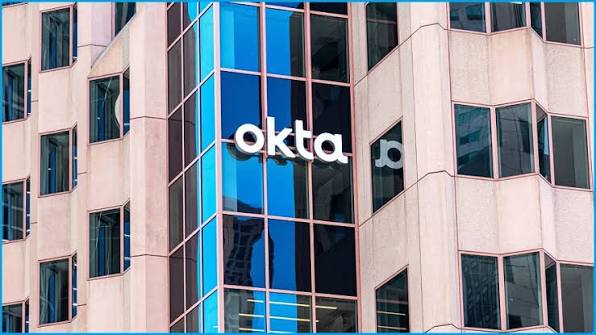
Okta rounds out the top ten as the market leader in identity and access management. Founded in 2009 and headquartered in San Francisco, the company's Identity Cloud serves more than 18,000 enterprise customers, managing over 300 million user identities. Okta provides secure authentication, single sign-on, and access governance solutions, with more than 7,000 pre-built application integrations. The company generated $2.6 billion in revenue in fiscal year 2025.
Identity has become the foundational layer of modern zero-trust security architectures. The old perimeter-based approach assumed that anything inside the corporate network could be trusted. Zero-trust flips that assumption, requiring verification of every user and device attempting to access resources. Okta provides the identity verification layer that makes zero-trust models possible, confirming that users are who they claim to be and that they have appropriate access permissions.
Okta's Workforce Identity products handle employee authentication, while Customer Identity products manage authentication for end users of customer-facing applications. The company has also developed strong capabilities in identity governance, helping organizations manage access certifications and compliance requirements. Okta's acquisition of Auth0 in 2021 strengthened its customer identity offerings significantly. As organizations continue to adopt zero-trust architectures, Okta's identity platform has become essential infrastructure, though the company has faced scrutiny following a 2023 security incident that exposed the importance of securing the security vendors themselves.
The cyber security market in the United States continues to consolidate around platform vendors that can address multiple security domains with integrated solutions. Each company on this list approaches the challenge from a different angle, but they all share a commitment to helping organizations defend against increasingly sophisticated threats. As we move through 2026, the ability to leverage AI for both attack and defense will likely separate the leaders from the laggards. The companies ranked here have positioned themselves to remain at the forefront of that evolution.
Related Posts

2 Comments
Join the discussion and share your thoughts