Top 10 Best Pasta Brands In Italy 2026

Table of Contents
Italy produces roughly 3.5 million tonnes of pasta each year, according to data from the Italian pasta makers' association Unione Italiana Food, and the gap between a supermarket staple and a small-batch artisan product has never been wider. Our ranking of the best pasta brands in Italy for 2026 separates the two, placing the country's most respected family pasta houses alongside the large producers that still get the fundamentals right. The list draws on trade rankings, chef recommendations, and production data from mills and pasta makers across Tuscany, Campania, and Abruzzo.
The dividing line in Italian pasta is not region but method. Bronze dies and slow, low-temperature drying give pasta a rough, porous surface that grips sauce. Teflon dies and fast high-heat drying produce a smooth, cheaper product. Almost every brand below uses the former on at least its premium lines, and several use nothing else.
How We Ranked These
We weighed four factors: production method (bronze dies versus Teflon, drying time and temperature), reputation among chefs and specialty importers, certification status such as Pasta di Gragnano IGP, and availability to home cooks. Historical pedigree and family ownership carried weight, but a century-old name alone did not earn a place. We cross-referenced rankings from Vincenzo's Pasta Ranking, NoodleDex's 2026 brand guide, and several independent Italian pasta tier lists, then adjusted for how each brand actually performs in the kitchen.
The 10 Best Pasta Brands In Italy 2026:
1. Martelli
Martelli sits at the top of this list because no other producer in Italy matches its combination of scale discipline and craft. The family has run the operation in Lari, a hill town in Tuscany, since 1926, and still makes pasta in batches of roughly 1,000 kg per day. That is a rounding error next to Barilla's output, and it is the point.
Every shape passes through bronze dies, then dries at about 50°C for more than 50 hours. The result is a pale, chalky, almost sandpapery surface that holds ragù in a way smooth pasta cannot. The yellow-and-blue paper packaging has become a marker of serious kitchens, and the limited supply means restaurants and specialty shops often buy direct.
Food writers consistently name Martelli the finest artisanal pasta maker in Italy. Our view is that the spaghetti and penne rigate are the strongest expressions of the house style, though the maccheroni also earns its place. Buyers should expect to pay a premium and to find it in specialty grocers rather than supermarkets.
2. Faella
Faella comes from Gragnano, the Campanian town known across Italy as the "City of Pasta," where pasta-making has been a registered craft since the 19th century. The brand's recipe is deliberately minimal: durum wheat semolina and water, nothing else.
What separates Faella is texture. Bronze-die extrusion and slow low-temperature drying leave each piece with a rough, porous shell that absorbs sauce rather than sitting in it. Chefs and specialty importers repeatedly place Faella near the top of their rankings, and it functions as a benchmark for what Gragnano pasta should taste like. If you are comparing it against Martelli, the difference is regional character: Faella is firmer and more savory, Martelli more delicate.
3. Pastificio dei Campi
Traceability is Pastificio dei Campi's calling card. The Gragnano producer uses 100% Italian-grown durum wheat and runs a supply chain that lets buyers trace a bag of pasta back to the farm where the wheat was grown. That level of transparency is rare in the category.
The pasta itself is Pasta di Gragnano IGP certified and made with bronze dies and slow, low-temperature drying. The bite is firm and the surface rough enough for heavy sauces. High-end restaurants and specialty retailers favor the brand for exactly this consistency. Our assessment is that it is the most technically rigorous producer in the top three, even if it lacks Martelli's cult following.
4. Gentile
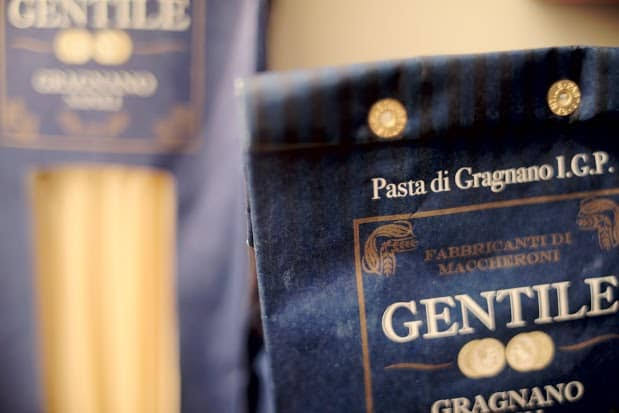
Gentile has been a family pasta house in Gragnano since 1876, which makes it one of the oldest continuously operating producers in the town. It holds Pasta di Gragnano IGP certification and uses bronze dies and slow drying across its range.
The texture is coarse and sauce-friendly, closer to Faella than to the smoother mass-market brands. Gentile is well known inside Italy and is now exported more widely, though it remains less famous abroad than its quality warrants. For anyone building a pantry around Gragnano pasta, it is a dependable second or third purchase alongside Faella and Pastificio dei Campi.
5. De Cecco
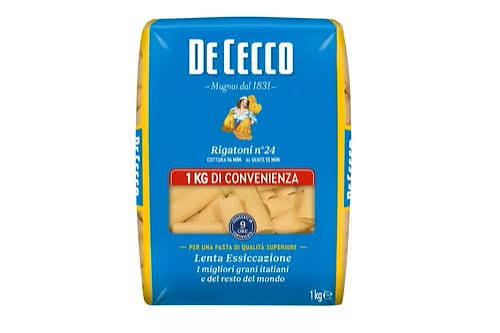
Founded in 1886 in Fara San Martino, a village in Abruzzo at the foot of the Majella mountains, De Cecco is one of Italy's largest pasta producers and exports to more than 60 countries. Scale usually means compromise. Here it mostly does not.
Many De Cecco lines use bronze dies and slow drying, giving a texture well above typical supermarket pasta. The brand is the standard recommendation among widely available Italian pastas, and for good reason: it is consistent, widely stocked, and priced reasonably. Our view is that De Cecco is the best bridge between artisan quality and everyday availability on this list. Home cooks who cannot find the top four will lose little by cooking De Cecco instead.
6. Rummo
Rummo has been family-run in Benevento since 1846, now across six generations, and its "Lenta Lavorazione" (slow processing) method has become a selling point in its own right. The approach uses bronze dies and extended drying to build a rough surface without the premium price of the Gragnano specialists.
In 2026 brand roundups, Rummo appears repeatedly as the top everyday Italian pick, balancing quality and cost better than almost any competitor. It is also one of the few major brands with a credible gluten-free line, which broadens its appeal. The spaghetti and rigatoni are the strongest shapes; the fusilli holds up well in baked dishes.
7. Garofalo
Garofalo dates to 1789, making it one of Gragnano's oldest pasta families. It holds Pasta di Gragnano IGP certification and produces its pasta with bronze dies and slow drying, giving the rough texture that holds sauces well.
What sets Garofalo apart is reach. It is widely available internationally, which means cooks outside Italy can buy genuine IGP Gragnano pasta without hunting through specialty shops. The brand appears frequently in "best Italian pasta" lists for exactly this reason. It is not the most exclusive name on this list, but it may be the most practical way to eat certified Gragnano pasta on a regular basis.
8. Voiello
Voiello was founded in 1877 in Torre Annunziata, near Naples, and built its reputation on bronze-die, slow-dried pasta. It is now owned by the Barilla group but has kept a distinct identity and a separate production approach from its parent.
The premium lines are the ones to buy. Italian rankings regularly praise Voiello for quality above standard supermarket pasta, and the bronze-die range delivers a texture close to the Gragnano artisans at a lower price. Our take is that Voiello is the smart choice for cooks who want Neapolitan character without paying artisan premiums, provided they check the packaging for the bronze-die lines rather than the standard ones.
9. Barilla
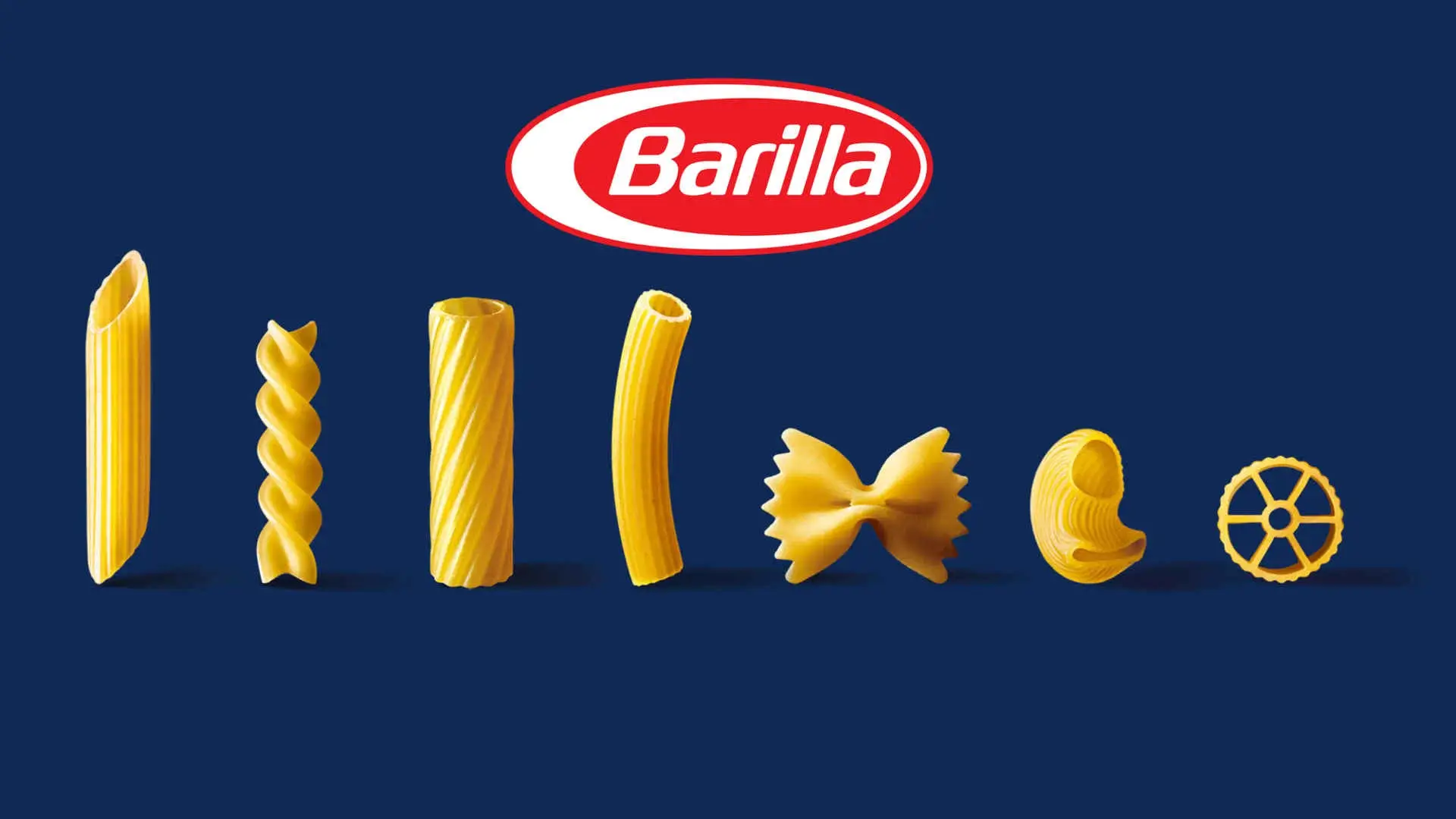
Barilla, founded in 1877 in Parma, is the most recognized Italian pasta brand in the world and is sold in more than 100 countries. It earns a place here on consistency and affordability rather than craft.
Mass-market production uses Teflon dies and faster drying than the artisan brands, which gives a smoother surface and less sauce grip. That is a real trade-off, and we would not pretend otherwise. But Barilla is reliable, cheap, and available almost everywhere, and 2026 brand roundups continue to recommend it as the dependable budget option. For weeknight cooking where cost and convenience matter, it does the job.
10. Delverde
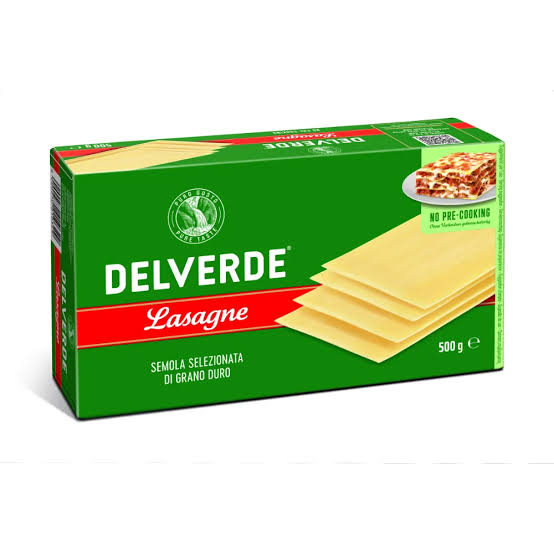
Delverde was founded in 1967 in Fara San Martino, Abruzzo, the same mountain village that produced De Cecco, and uses pure mountain spring water from the Verde River in its pasta. The recipe is 100% durum wheat semolina.
It is a mid-market brand rather than an artisan one, but the texture is good for the price and it is respected in both Italian supermarkets and export markets. Delverde rounds out the top ten as a solid, honest option: not a destination purchase, but a dependable one that outperforms its price bracket.
The best pasta brands in Italy for 2026 split cleanly into two groups: the small artisan houses such as Martelli, Faella, and Pastificio dei Campi, where craft and traceability justify the cost, and the larger producers such as De Cecco and Rummo, which deliver genuine quality at supermarket prices. Gragnano dominates the top half of this list, and that is no accident; the town's bronze-die tradition remains the gold standard for dried pasta.
Related Posts




0 Comments
Join the discussion and share your thoughts
No Comments Yet
Be the first to share your thoughts on this article!