Top 10 Best Chocolate Makers In Europe 2026

Table of Contents
European chocolate in 2026 is a story of two industries running in parallel. One is dominated by Swiss and Italian giants turning out chocolate at industrial scale and selling it in more than 100 countries. The other is a smaller, quieter world of bean-to-bar artisans who buy directly from growers and roast in-house. Our ranking of the best chocolate makers in Europe covers both, and it weighs heritage, scale, sourcing transparency, critical recognition and the verdict of the professionals who actually cook with the stuff.
To build this list, we looked at annual sales figures and global distribution reach, but we did not stop there. Award results from the International Chocolate Awards and the Academy of Chocolate carried real weight, as did critical guides such as Gault&Millau's 2026 Easter coverage. We also factored in how deeply each maker controls its supply chain, from farm partnerships to in-house roasting, and how the brand is regarded by pastry chefs and chocolatiers who use it as a working ingredient rather than a gift. No single criterion decides a position. A small Tuscan workshop and a Swiss group with CHF 5.5 billion in annual sales can both earn a place, for entirely different reasons.
What follows is not a price list or a shopping guide. It is an assessment of who is making the most consequential chocolate in Europe right now, from the company that invented modern smooth chocolate to the Portuguese maker that just won the continent's top artisan honor.
The 10 Best Chocolate Makers In Europe 2026:
1. Lindt & Sprüngli
No European chocolate maker matches Lindt & Sprüngli on the combination of age, scale and technical influence. The company was founded in Zurich in 1845, and in 1879 Rodolphe Lindt developed the conching process, the step that gave chocolate its smooth, melting texture. That single innovation underpins most of what the modern chocolate industry produces, and Lindt still trades on it.
Today the group reports roughly CHF 5.5 billion in annual sales and sells in over 120 countries, making it the world's leading premium chocolate manufacturer. Lindor truffles and Excellence bars are the flagship lines, but the corporate footprint is wider than most shoppers realize. Lindt owns Ghirardelli, Russell Stover and Caffarel, and it runs its own cocoa-buying and farming programs rather than leaving sourcing entirely to intermediaries.
The commercial logic is straightforward. Lindt sits at the top of European brand surveys year after year, in the same conversation as Toblerone and Godiva, while operating at a volume those brands cannot match. For a company founded by a confectioner in a Zurich backroom, the reach is remarkable.
2. Ferrero
Ferrero is Europe's biggest chocolate confectioner by revenue, with group sales of roughly €17 billion a year. The company started in 1946 in Alba, in the Piedmont region of Italy, when Pietro Ferrero began experimenting with a hazelnut and cocoa paste. That experiment became Nutella, and the family-owned business went on to create Ferrero Rocher, Kinder and Tic Tac.
Ferrero Rocher alone ranks among the best-selling pralines in the world. The group has expanded far beyond Italy, but production and corporate identity remain rooted there, and the Ferrero family still controls the company. Our placement at number two reflects a deliberate distinction: Ferrero is a mass-premium powerhouse rather than an artisan house. Its scale and brand recognition are unmatched in Italy, but the positioning is commercial rather than craft-driven.
3. Valrhona
Ask a French pastry chef which chocolate they trust and the answer is usually Valrhona. Founded in 1922 and based in Tain-l'Hermitage in the Rhône Valley, the company supplies roughly 80% of top French pastry chefs and thousands of professional kitchens worldwide. Its Guanaja and Caraïbe couvertures are industry standards, the kind of product that appears in recipe books by name.
Valrhona built its reputation on single-origin "Grand Cru" bars and unusually rigorous traceability. It was an early pioneer of cocoa-origin labeling, and it has run ethical sourcing partnerships in Madagascar and Venezuela for years. For home bakers, a Valrhona bar is expensive. For professionals, it is the reference point against which other couvertures are judged.
4. Pierre Marcolini
Pierre Marcolini won the World Pastry Championship in 1995, the same year he founded his company in Brussels. Three decades later, his boutiques operate in Brussels, Paris, London, Tokyo and beyond, and the brand appears routinely on lists of the world's best chocolatiers.
What separates Marcolini from most Belgian houses is his commitment to bean-to-bar production. He sources cocoa directly from growers and roasts in-house, which is rare at his commercial scale. His pralines and grand cru bars have collected numerous international awards, and the direct-trade model has influenced how other Belgian chocolatiers talk about sourcing. The result is artisan method delivered through an international retail network, a combination few competitors have managed.
5. Godiva
Godiva was founded in Brussels in 1926 by the Draps family and named after the legend of Lady Godiva. It became Belgium's most internationally recognized luxury chocolate brand and holds a Royal Warrant from the Belgian court, a distinction that still carries weight in European brand surveys.
The company now sells in over 100 countries through more than 500 boutiques, and ownership has passed to MBK Partners. That change matters for anyone judging the brand on craft grounds: production has shifted beyond Belgium, and Godiva's strength today lies in global prestige and heritage rather than Belgian-made artisan output. It remains a top-ranked Belgian brand in 2026 surveys, which says something about how durable the name has proved.
6. Amedei
Amedei is a small operation in Pontedera, Tuscany, founded in 1990, and it has spent three decades proving that scale is not the same as quality. The company is best known for its Porcelana bar, made from rare Venezuelan criollo beans, and its Chuao bar helped put Venezuelan cacao on the international map.
Amedei has repeatedly taken "Golden Bean" and top honors at the Academy of Chocolate, and it is widely cited among the world's finest chocolate makers despite its limited output. The business pioneered single-origin Italian chocolate at a time when most Italian confectioners were blending beans without much disclosure. Small-batch production means availability is inconsistent, and prices reflect the rarity of the raw material. Neither fact has dented its standing among connoisseurs.
7. Michel Cluizel
Based in Damville, Normandy, Michel Cluizel was founded in 1948 and remains one of the last independent French family chocolate makers. That independence is increasingly unusual in a sector where consolidation has swallowed most mid-sized producers.
Cluizel produces "Premier Cru de Plantation" chocolates from named estates in Madagascar, São Tomé and Venezuela, and the family controls the process from bean to bar. The company maintains its own plantation partnerships rather than buying through traders, which gives its bars a specificity that blends cannot replicate. Pastry chefs and connoisseurs favor the house for exactly this reason: the origin is traceable to a single estate, not a region.
8. Côte d'Or
Côte d'Or is Belgium's oldest major chocolate brand, created by Charles Neuhaus in 1883 and named after Ghana's Gold Coast. It played a genuine role in establishing Belgium's international chocolate reputation, and its elephant logo remains one of the most recognizable in European confectionery.
The brand is now part of Mondelez International, and its bars are among Belgium's best-selling. That mass-market strength cuts both ways. Côte d'Or ranks highly in 2026 Belgian brand roundups and has history that most competitors cannot claim, but multinational ownership means it is no longer an independent craft house. We include it for heritage and market presence, not for bean-to-bar credentials.
9. Feitoria do Cacao
Portugal's artisan chocolate scene has been building for years, and Feitoria do Cacao is its most visible success. The bean-to-bar maker was named the 2026 European winner at the International Chocolate Awards, the top honor for craftsmanship on the continent this year.
The company focuses on single-origin bars with meticulous control over fermentation and roasting, the two stages where careless producers lose most of a bean's potential. Its rapid rise signals that Portugal now belongs in conversations about European craft chocolate, alongside Belgium, France and Italy. For anyone tracking the next wave of artisan makers, this is the name to watch.
10. Chapon
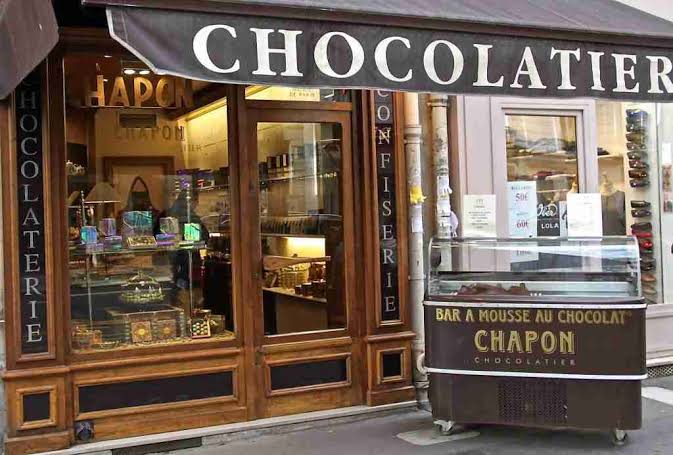
Paris-based Chapon rounds out our list on the strength of critical acclaim rather than volume. The house is led by chocolatier Patrice Chapon and was featured among France's best artisan chocolatiers in Gault&Millau's Easter 2026 guide, a recognition that carries real weight among French food critics.
Chapon works in a bean-to-bar mode and is known for its "Chaponie" creations and inventive seasonal collections built around single-origin cocoa. The approach keeps the brand in the elite tier of French artisans, though its footprint remains deliberately small. French critics return to Chapon because the seasonal work is genuinely original, not because the company chases scale.
The geographic spread of this list tells its own story. Switzerland and Italy hold the top three positions between them, France accounts for three makers, Belgium three more and Portugal one. That distribution reflects both history and current momentum: Belgium and Switzerland built the industrial chocolate trade, France nurtured the professional chef market, and Portugal represents the newest artisan wave.
Related Posts



0 Comments
Join the discussion and share your thoughts
No Comments Yet
Be the first to share your thoughts on this article!