Top 10 Best Robotics And Automation Companies In India 2026

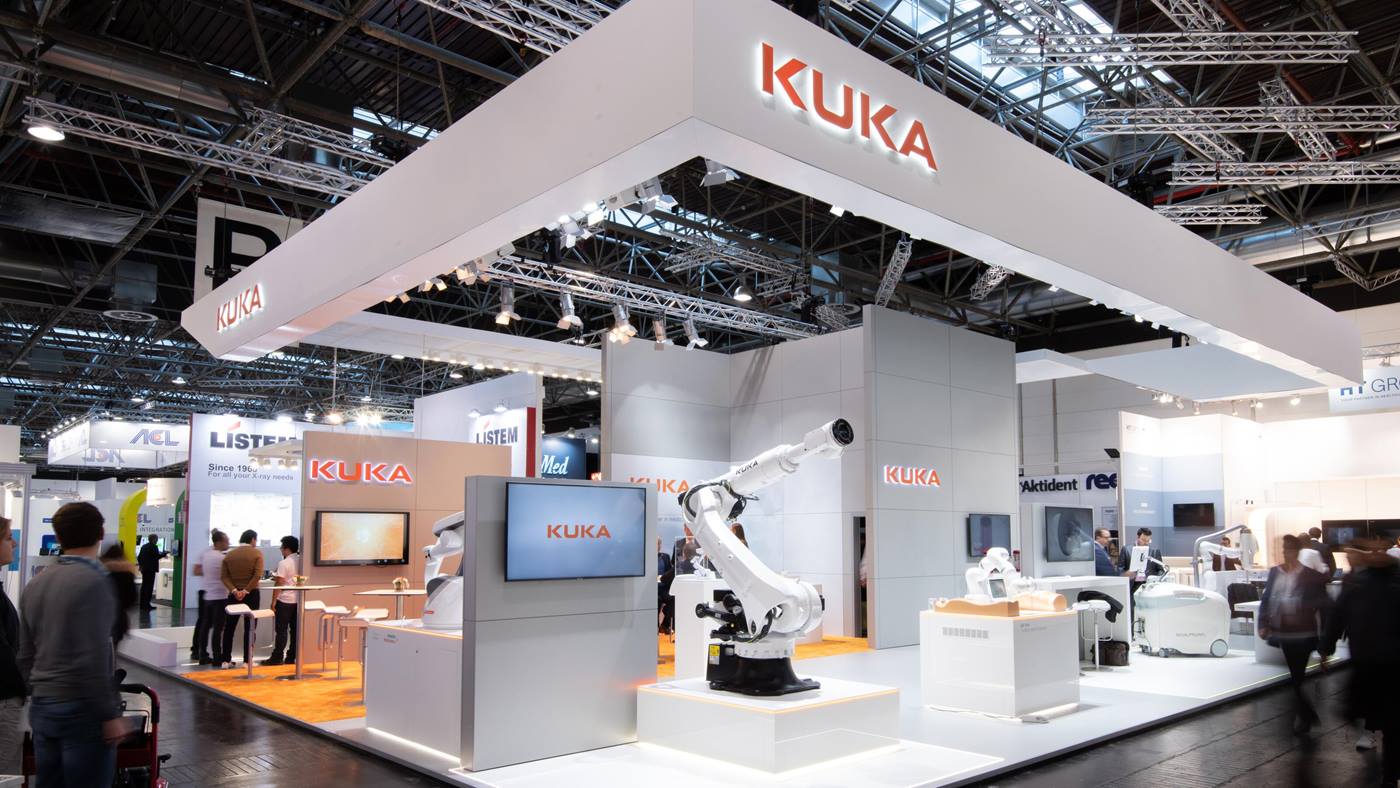
Table of Contents
India's robotics and automation sector has moved well past the pilot-project stage. According to MarketsandMarkets, the country's industrial robotics market reached USD 1.92 billion in 2026, driven by automotive manufacturing, electronics assembly, warehouse logistics, and a wave of greenfield factories from Foxconn and Tata Electronics. We ranked the ten most significant robotics and automation companies operating in India right now by weighing installed base and deployment scale, revenue and funding data, breadth of product lines, manufacturing sector reach, and relevance to India's fastest-growing industrial corridors. Global OEMs with deep local operations sit alongside homegrown startups in this list, and that mix tells the story of where Indian automation is heading.
These Are Top 10 Best Robotics And Automation Companies In India 2026:
1. ABB India Limited
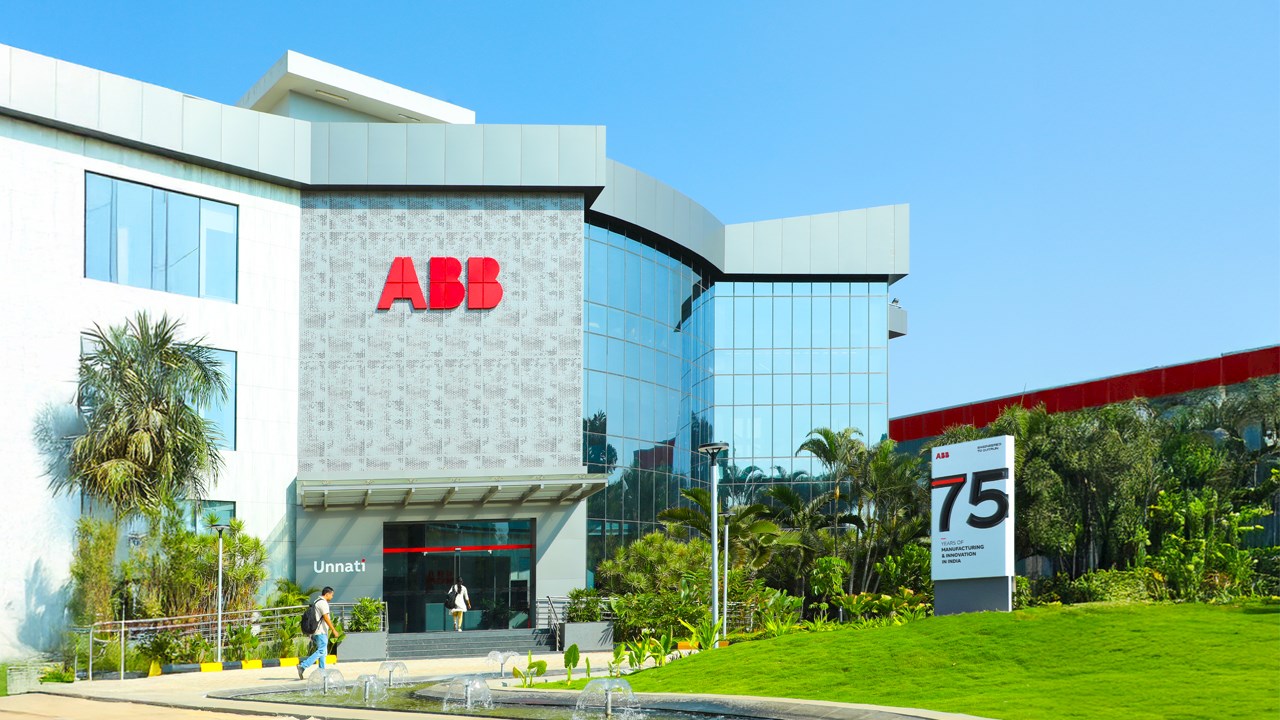
ABB India holds the top spot because no other company combines global robotics leadership with the local deployment depth ABB has built across Indian manufacturing. The company's robotics division serves automotive and EV component production, metals and mining, utilities, energy, and process industries, and its electrification and motion control arms feed directly into the same customer base.
What separates ABB from pure robot vendors is its industrial digitalization stack. Organizations integrating physical automation with digital monitoring and optimization increasingly buy robots and the software layer that tracks them from the same supplier, and ABB is one of the few players in India positioned to sell both. The company appears at or near the top of nearly every major market study on Indian industrial robotics, including the NextMSC India Industrial Robotics Market Report 2026 and MarketsandMarkets' India Industrial Robotics Market analysis. For manufacturers building out EV lines or modernizing legacy plants, ABB remains the default first call.
2. FANUC India Private Limited
The Japanese giant's Indian subsidiary is the global leader in robot installations, and its product cadence in 2026 shows why. The redesigned R-2000/E series covers payloads from 120 kg to 300 kg, aimed squarely at heavy automotive and general industry work. In April 2026, FANUC brought the CRX-3iA collaborative robot to India for lighter tasks and rapid redeployment on shared production floors.
FANUC's near-term growth in India is tied to two customers in particular. Foxconn's Tamil Nadu facilities and Tata Electronics' new greenfield plants in Hosur, Karnataka, and Dholera, Gujarat, are expected to procure significant robot volumes from global OEMs, and FANUC is positioned to capture a large share. The company's reputation for reliability and its dense service network give it an edge in high-uptime environments where a single hour of downtime carries real cost.
3. GreyOrange

Founded in India and now headquartered in the US, GreyOrange is the country's most prominent export in warehouse robotics. The company has deployed 15,000 robotic agents worldwide and raised over $200 million in funding from investors including Tiger Global, Mithril, and Blume Ventures. CB Insights pegged its 2022 revenue at $150 million, and a 2024 Blume company profile reported approximately $100 million.
GreyOrange keeps substantial engineering and operations offices in Bengaluru, Chennai, Hyderabad, and Mumbai, which matters for Indian customers who want local support on multi-site rollouts. Its fulfillment automation systems target e-commerce and third-party logistics operators handling high order volumes with shrinking labor availability. The company's trajectory reflects a broader pattern: Indian robotics talent building globally competitive products, then serving Indian warehouses from a position of scale.
4. Addverb Technologies Pvt. Ltd.
Reliance's $132 million investment in this Noida-based company, founded in 2016, remains one of the largest bets on Indian robotics to date. Addverb builds automated systems for intralogistics across warehouses, factories, and supply chains, and its robots now operate in more than 500 smart warehouses across 16 countries.
The product line is deliberately plug-and-play: autonomous mobile robots, sorting and picking robots, shuttle vehicles, and voice- and light-directed picking devices. Addverb runs what it describes as the world's largest mobile robot factory, and in 2024 it debuted India's first assistive dog robot, a signal of ambitions beyond warehouse floors. With more than 10 global offices, it has become the benchmark for Indian robotics companies selling into international markets from a domestic manufacturing base.
5. KUKA India Private Limited
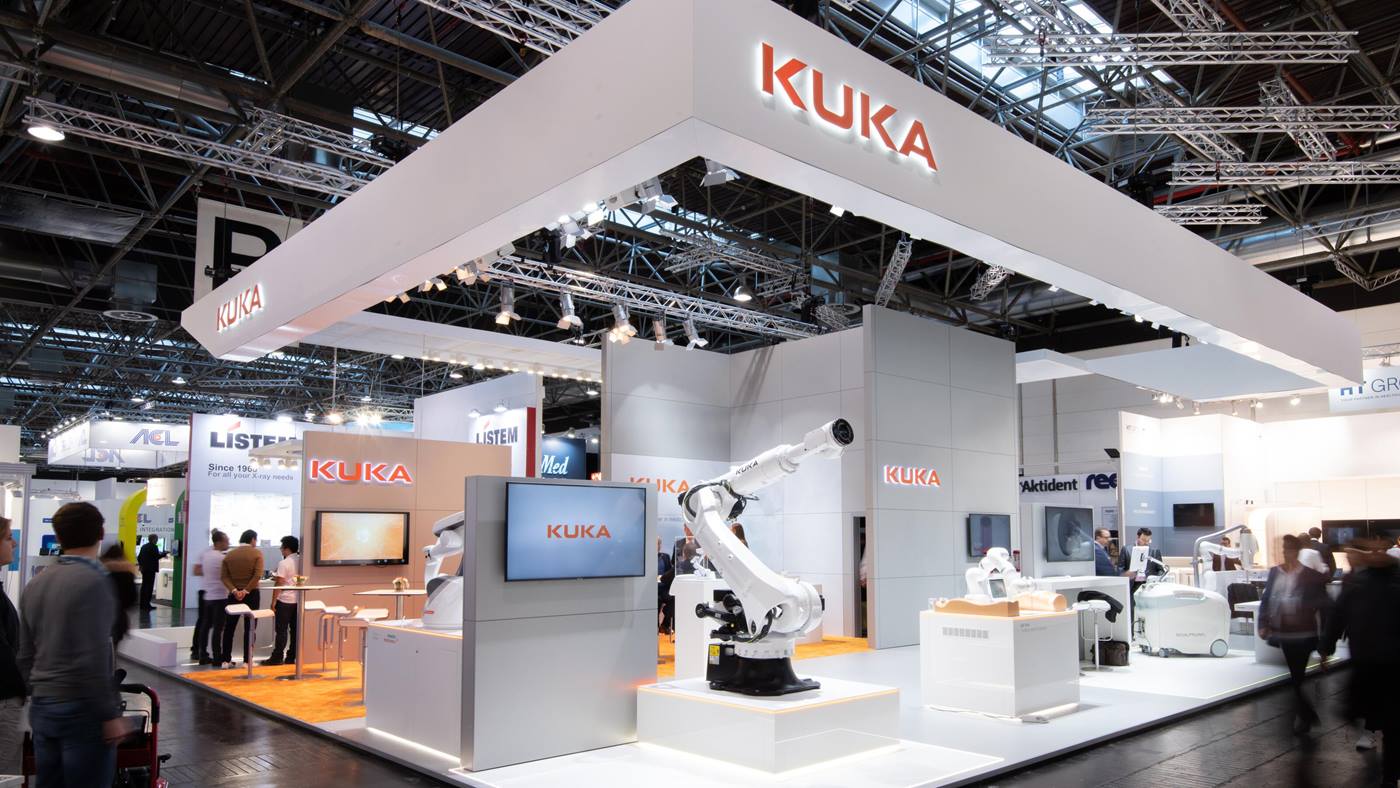
The German automation giant's Indian arm is consistently named among the key players in India's industrial robotics market alongside ABB, FANUC, and Yaskawa. KUKA's presence spans automotive, electronics, and general manufacturing automation, with an installed base concentrated in high-precision applications.
KUKA's 2026 outlook in India hinges on the same greenfield buildout driving FANUC's growth. The company is one of the global OEMs expected to supply significant robot volumes to Foxconn's Tamil Nadu facilities and Tata Electronics' factories in Hosur and Dholera. For Indian manufacturers whose processes were designed around European automation standards, KUKA's integration with those engineering workflows remains a practical advantage.
6. Yaskawa India Private Limited
Yaskawa Electric's Indian subsidiary ranks among the top five key players in India's industrial robotics market, per the NextMSC India Industrial Robotics Market Report 2026. The parent company is publicly traded and recognized globally for both robotics and motion control, and that dual strength carries into its Indian operations.
Yaskawa's installed base in India leans heavily on automotive and general industry automation, where motion control precision directly affects throughput and product quality. The company doesn't chase consumer-facing headlines the way some competitors do. Its position rests on decades of servo and drive technology that Indian manufacturers already specify into new lines, which makes Yaskawa a quiet but persistent force in the market.
7. Miko
Mumbai-based Miko is the outlier on this list: a consumer and education robotics company in a ranking dominated by industrial players. Founded in 2015, Miko builds AI-powered companion robots for children and has raised $34.35 million in Series B funding from IvyCap Ventures, Chiratae Ventures, YourNest, Alteria Capital, and iHeartMedia.
Per Tracxn data, Miko employed 477 people as of May 2026, making it India's leading consumer robotics company by headcount and funding. The company's bet is that emotional engagement, not just utility, drives consumer robotics adoption. That thesis faces real questions about retention and repeat purchase, but Miko's funding runway and brand recognition in the kids' tech segment give it room to test them.
8. Ati Robotics
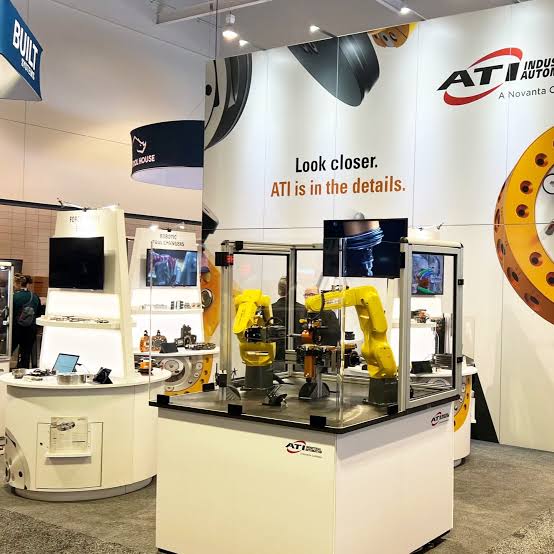
Bengaluru-based Ati Robotics, founded in 2017, specializes in autonomous mobile robots for factory applications. The company has raised $34.35 million in Series B funding according to CB Insights and Crunchbase, placing it among India's better-capitalized AMR specialists.
Factory AMRs represent a different challenge than warehouse robots. The environment is less structured, safety requirements are stricter, and integration with existing production equipment is more complex. Ati Robotics hires aggressively for AI/ML engineers, IoT engineers, and embedded systems engineers, which reflects where the technical difficulty actually sits: perception, fleet coordination, and reliable operation around human workers. For Indian manufacturers automating material movement between stations, Ati is one of the few domestic options built specifically for that job.
9. Genrobotics
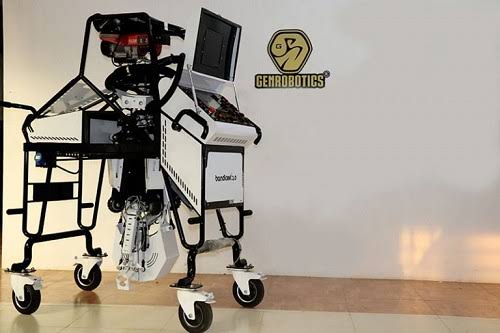
Thiruvananthapuram-based Genrobotics earned its place on this list by attacking a problem most robotics companies avoid entirely. The company is a pioneer in sanitation robotics, developing machines designed to eliminate manual scavenging, a practice that remains a serious safety and human rights challenge in India despite legal prohibitions.
Genrobotics is consistently listed among India's most significant robotics companies alongside GreyOrange, Miko, Ati Robotics, Unbox Robotics, and EyeROV. Its work demonstrates that Indian robotics innovation isn't confined to factory floors and fulfillment centers. Public health and municipal applications may never generate the revenue of automotive automation, but they carry social impact that few companies in this sector can match.
10. Unbox Robotics
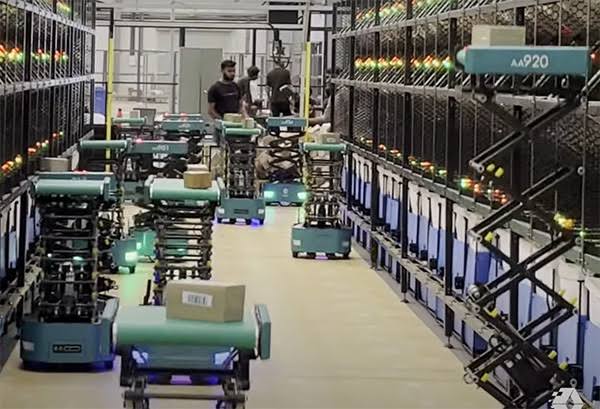
Pune-based Unbox Robotics specializes in warehouse sortation, and its compact, high-density systems are built for e-commerce and logistics operations where floor space is expensive and order volumes fluctuate. The company appears on F6S's list of top robotics companies in India and in HuntYourTribe's 2026 rankings.
Sortation sits at the center of the warehouse automation opportunity, which market analysts expect to be one of the largest growth segments in India through 2035. Unbox's bet is that smaller, denser sortation systems will win business that traditional conveyor-based installations can't serve economically. As Indian e-commerce continues to expand into tier-2 and tier-3 cities, that positioning could prove valuable.
Related Posts




2 Comments
Join the discussion and share your thoughts