Top 10 Best AI Recruiting Tools In The World 2026


Table of Contents
Recruiting has always been a numbers game. But in 2026, the numbers are being crunched by machines. The best AI recruiting tools in the world are no longer optional add-ons. They are the backbone of how talent teams find, engage, and hire candidates at scale. We have analyzed the market, reviewed independent expert rankings, and examined user adoption patterns to identify the top 10 platforms that define this space today.
These tools are not all the same. Some excel at sourcing passive candidates across the open web. Others focus on conversational screening for high-volume roles. A few aim to be the single system that replaces your entire tech stack. What unites them is a commitment to using artificial intelligence to reduce manual work, surface better candidates, and speed up time-to-hire. Below is our ranked list, built from 2026 data and expert consensus.
Our Selection Process
To build this ranking, we reviewed independent expert analyses from sources including People Managing People, Gem's 2026 guide to recruiting software, Greenhouse's top tools overview, and multiple staffing-agency reports. We weighed each platform on three primary factors: AI capability depth (how advanced and native the AI features are), breadth of adoption (how widely the tool is used across industries and company sizes), and independent ranking consensus (how often and how highly the tool appears in expert "best of" lists from 2026). We prioritized tools that demonstrate measurable impact on recruiter productivity and candidate quality.
The List Of The Top 10 Best AI Recruiting Tools In 2026:
1. Juicebox

Juicebox claims the top spot in our 2026 ranking because it has the strongest consensus leadership position among AI recruiting tools. People Managing People ranked it number one "Best for conversational AI sourcing" among 14 AI sourcing tools, and multiple expert roundups place it at the top. Juicebox is an AI-native recruiting platform that runs tailored candidate searches across multiple networks and automatically surfaces high-fit profiles for open roles in real time.
The platform specializes in conversational AI sourcing. Recruiters use chat-style workflows to refine role criteria, run attribute-based searches, and generate shortlists that can be pushed directly into an ATS or CRM. Juicebox also includes automated outreach sequences, candidate data enrichment, and analytics on pipeline performance. For teams that want to prioritize AI-led sourcing and workflow automation, Juicebox offers the most complete package in 2026.
2. Gem
Gem is a sourcing and recruiting CRM that uses AI to run high-volume outbound campaigns and track candidate touchpoints across email, LinkedIn, and other channels. It appears as a core vendor in several 2026 "top recruiting tools" and "top sourcing tools" lists, and it is singled out for best-in-class outbound automation. Gem's platform combines talent pipeline analytics, automated follow-ups, and forecasting, helping recruiters understand conversion rates and optimize hiring funnels.
The tool indexes large candidate datasets and supports AI-driven recommendations, allowing teams to identify prospect pools quickly and prioritize outreach based on past response behavior. In 2026, Gem is consistently described as a top tool for AI sourcing plus outreach automation, especially for scaling technology and high-growth companies. Its proven enterprise adoption and strong cross-source visibility justify its number two position.
3. HireEZ
HireEZ, formerly known as hiretual, ranks third because independent 2026 sourcing-tool reviews consistently place it at or near the top for AI-driven market research and cross-platform sourcing. The platform indexes hundreds of millions of profiles across 45-plus online networks, enabling recruiters to target passive candidates at scale. Its AI matches role requirements to candidate attributes, surfaces diversity talent, and provides market intelligence on talent supply and competitor hiring patterns.
HireEZ offers automated outreach, resume parsing, and analytics, and it is frequently used by enterprise talent acquisition teams building complex pipelines. 2026 buyer guides highlight its strength in market research and talent intelligence, making it a go-to solution for data-driven sourcing. While its focus is more specialized than some broader platforms, its depth in a critical area earns it a top-three ranking.
4. Findem
Findem is an AI talent intelligence and attribute-based sourcing platform that lets recruiters search for candidates using multi-dimensional attributes. Instead of simple keyword matches, Findem allows queries like "scaled a B2B SaaS team from Series B to IPO." Its engine combines public data, internal HR systems, and performance attributes to build highly targeted talent pools and support workforce planning scenarios.
Findem also provides diversity analytics, succession planning, and competitor headcount insights, making it useful for strategic HR and executive recruiting. In 2026 tool comparisons, it is highlighted for targeted talent search and advanced talent intelligence rather than just basic sourcing. It ranks fourth because it is a leading but slightly more niche platform focused on strategic talent intelligence rather than broad ATS or CRM functionality.
5. Paradox (Olivia)
Paradox, known for its conversational AI assistant Olivia, is commonly cited as the gold standard for high-volume conversational screening in 2026 staffing-agency reviews. Olivia automates top-of-funnel recruiting via SMS and web chat, handling candidate FAQs, basic screening questions, and automated interview scheduling. This dramatically reduces time-to-interview for hourly and frontline positions in retail, hospitality, and logistics.
Paradox integrates with ATS platforms, giving recruiters an always-on chatbot that can engage candidates 24/7 and move them through early funnel stages without manual intervention. It is widely adopted by large employers where speed and volume are critical. We place it at number five because it focuses mainly on the early funnel rather than full-stack recruiting, but its impact on high-volume hiring is unmatched.
6. Manatal
Manatal is a cloud-based ATS and CRM that embeds AI to recommend candidates, enrich profiles using social media data, and prioritize best fits for open roles. It emphasizes ease of use and lightweight workflows, making it attractive for small and mid-sized agencies needing AI help without complex configuration. Manatal supports multi-channel sourcing, pipeline tracking, and collaboration features in one platform, aiming to replace fragmented tech stacks.
Its AI suggestions and LinkedIn-centric sourcing tools are highlighted as key differentiators for non-enterprise teams. 2026 expert blogs position Manatal as a leading AI-enhanced ATS for agencies and smaller teams. Its narrower market focus and lighter feature set place it below the more broadly adopted enterprise tools but still solidly within the global top 10.
7. Loxo
Loxo is an AI-driven sourcing plus ATS/CRM platform built primarily for recruiting agencies that want to consolidate their stack into a single system. It provides automated candidate sourcing, email and phone data enrichment, AI ranking of candidates, and integrated pipeline management. Loxo's talent intelligence capabilities include scoring candidates against open roles and mining external databases for high-fit prospects.
The platform is often praised for its combination of sourcing, outreach, and ATS functionality in one interface, with flexible pricing tiers. 2026 reviews identify Loxo as the top AI sourcing and ATS option for agencies. However, its agency-centric positioning and slightly less mainstream brand recognition than Gem or HireEZ place it in the lower half of our top 10.
8. Ashby
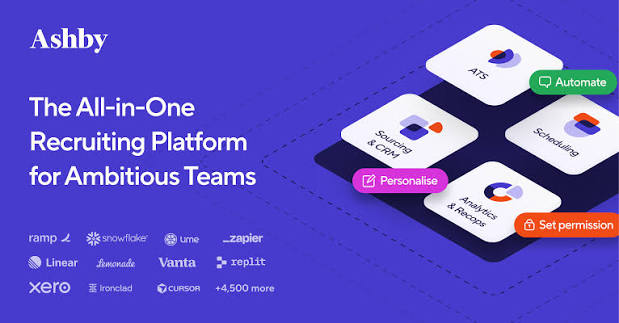
Ashby is an end-to-end recruiting platform that combines ATS workflows, CRM, sourcing, scheduling, and analytics in a single system. It invests heavily in automation and AI features, including intelligent scheduling, automated email sequences, and analytics that help recruiters identify bottlenecks and optimize pipelines. Ashby is popular with fast-growing technology companies that value modern UX and flexible configuration.
The platform is known for rapid shipping of new AI capabilities, and its integrated approach reduces the need for multiple point solutions, particularly for in-house recruiting teams. While Ashby is recognized as a modern, AI-forward full-stack recruiting platform in 2026 overviews, it has less specific AI sourcing and talent-intelligence acclaim than the higher-ranked tools. This results in a solid but not top-tier ranking in this AI-specific list.
9. Metaview
Metaview is an AI sourcing and interview intelligence platform that blends candidate discovery with automated interview capture and analysis. It records interviews with consent, transcribes them, and uses AI to summarize candidate responses and highlight strengths or concerns. This helps recruiters and hiring managers make more consistent decisions. On the sourcing side, Metaview integrates with existing systems to support AI-led talent discovery and screening.
The platform aims to create one continuous workflow from sourcing through interviews. Its free tier lowers the barrier to entry for teams experimenting with AI recruiting workflows. Metaview earns a spot in the top 10 for its unique combination of sourcing and interview intelligence, but its relative youth and narrower deployment base compared with higher-ranked tools place it near the end of the list.
10. Rebecca AI
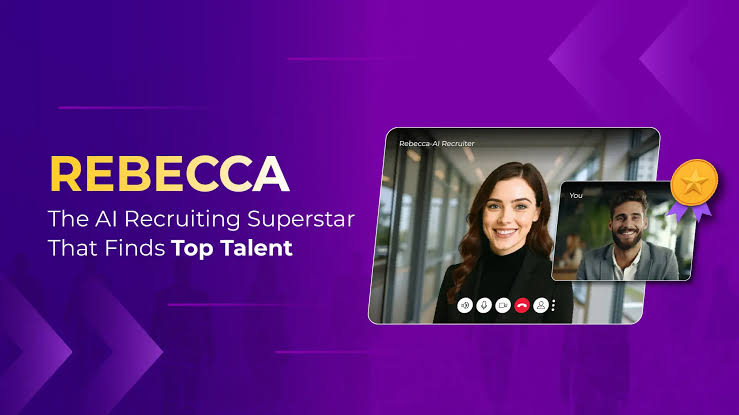
Rebecca AI is an AI hiring platform that connects candidate outreach, automated screening, interview scheduling, and scoring into one end-to-end workflow. It focuses on recruiting automation, using AI to rank candidates, pre-screen via questionnaires, and coordinate interview logistics without heavy manual input from recruiters. The tool is positioned as an all-in-one automation layer that can sit on top of existing ATS systems.
Rebecca AI speeds up time-to-hire while improving consistency in candidate evaluation. Its emphasis on continuous workflows and automation across the funnel distinguishes it from point solutions focused only on sourcing or chatbots. Rebecca AI is cited as a leading automation platform but appears in fewer broad industry rankings than the more established tools. This earns it a place in the global top 10 while keeping it at the number 10 position behind longer-standing, more widely reviewed vendors.
The AI recruiting tool market in 2026 is defined by specialization and integration. The best AI recruiting tools in the world are not one-size-fits-all. Juicebox leads for conversational AI sourcing. Gem dominates outbound automation. HireEZ owns market intelligence. Paradox owns the high-volume chatbot space. For talent teams evaluating these platforms, the key question is not which tool is best overall, but which tool best fits your specific hiring volume, role types, and workflow complexity.
Related Posts

0 Comments
Join the discussion and share your thoughts
No Comments Yet
Be the first to share your thoughts on this article!