Top 10 Best 6G Research Technologies In USA 2026

Table of Contents
The race to 6G is no longer a thought experiment. As of 2026, the top 6G research technologies in the USA span corporate R&D labs in San Diego, carrier engineering groups, academic testbeds in New York and Nebraska, and foundational technology tracks that will define how networks operate by 2030. We examined industry reports, company R&D disclosures, North American 6G research lab surveys, and US government and academic initiatives to build this ranking.
Our methodology weighed several factors. First, we looked at the depth of active 6G research programs, including patent portfolios and standardization participation through bodies like 3GPP. Second, we assessed US-based presence, whether that means headquarters, dedicated research sites, or testbed operations on American soil. Third, we considered influence on the broader US 6G ecosystem, from spectrum research to workforce development. Finally, we factored in how frequently each entity or technology track appears in major industry surveys and government-adjacent reporting on 6G advancement. The result is a mix of companies, universities, and technology categories that collectively represent where American 6G research stands in 2026.
Top 10 Best 6G Research Technologies In USA 2026:
1. Qualcomm
What gives Qualcomm outsized influence is its patent position. The company holds one of the largest 5G and 6G patent portfolios globally, and its leadership in 3GPP standardization means its research priorities often become industry priorities. Qualcomm's exploration of semantic communication and connected-intelligence concepts has appeared repeatedly in North American 6G research lab surveys.
The company's advanced coding research and joint communication-and-sensing work position it as both a technology developer and a standards shaper. For anyone tracking where US 6G innovation originates, Qualcomm is the starting point.
2. AT&T
AT&T is consistently named among the top US-headquartered companies driving 6G development. As one of the largest American carriers, its research programs carry weight that extends well beyond its own network.
The company's 6G work centers on network architecture, spectrum strategy, and future air interface design. AT&T's participation in 6G standards development gives it direct influence over how the technology gets commercialized domestically. Industry market reports on 6G consistently place AT&T in the top tier of US-based players, and its research investments reflect a long-term bet on American leadership in next-generation wireless.
3. T-Mobile US
T-Mobile US appears on lists of top 6G innovators largely because of its spectrum position and deployment experience. The carrier built the largest mid-band 5G network in the country, and that operational knowledge feeds directly into its 6G research.
US-based engineering teams at T-Mobile contribute to early 6G architecture studies and spectrum-sharing research. The company's practical experience with dense mid-band deployments gives it a testing ground that pure research labs lack. When 6G standards discussions turn to spectrum efficiency and real-world deployment scenarios, T-Mobile's data and engineering input carry real weight.
4. Nokia Bell Labs (US Research Sites)
Nokia is frequently ranked the top 6G company globally, and its Bell Labs research presence in the United States makes it a central player in the American ecosystem. Bell Labs US teams contribute to 6G network architecture, AI-native air interfaces, and joint communication-and-sensing research.
The organization's US-based researchers participate in standards development and testbed activity, bridging European and American 6G efforts. Nokia's work on AI-native network concepts has been cited in multiple North American lab surveys as a leading research direction. For a company headquartered in Finland, its American research footprint is substantial and growing.
5. Ericsson (US Research and D-15 Testbed)
Ericsson ranks second among top 6G companies globally, and its US research collaborations and testbed activity give it a strong American presence. The company's work on 6G radio, AI-native networks, and spectrum above 100 GHz sits at the center of US 6G experimentation.
Ericsson's testbed collaborations in the US, including work tied to the D-15 testbed environment, provide researchers with real-world validation for sub-THz and advanced radio concepts. Its research on spectrum bands above 100 GHz is particularly relevant as the industry looks beyond millimeter wave for future capacity. US-based teams contribute to both standards work and practical prototyping.
6. NYU Wireless / NYU Tandon
NYU Wireless stands as one of the most-cited academic 6G research centers in the United States. Based at NYU Tandon School of Engineering, the center built its reputation on foundational mmWave and sub-THz channel modeling that underpins virtually every 6G spectrum study conducted today.
The lab's propagation research has been referenced in North American 6G research lab surveys as essential groundwork for understanding how high-frequency signals behave in real environments. Its testbed facilities support both academic and industry research. For a generation of wireless engineers, NYU Wireless is where the theoretical meets the measurable.
7. University of Nebraska-Lincoln

The University of Nebraska-Lincoln appears in 2025-2026 reporting on US 6G advancement as part of the national effort to develop 6G technologies for adoption by 2030. Its programs focus on AI and 6G research alongside workforce development.
That workforce angle matters. As 6G moves from research to deployment, the industry will need engineers trained on next-generation concepts. Nebraska's participation in the broader US 6G race reflects a recognition that academic institutions outside the traditional coastal tech hubs have a role to play. The university's inclusion in recent AI and 6G advancement reports signals its growing profile in the national research conversation.
8. Joint Communication and Sensing (JCAS)
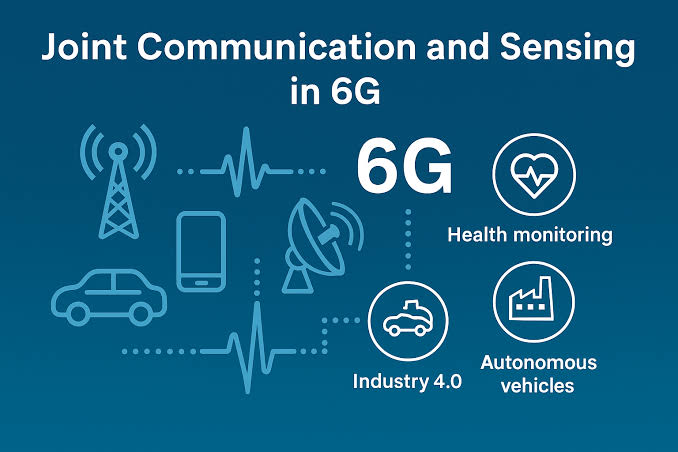
Joint communication and sensing is one of three game-changing 6G technologies identified in industry analyses, alongside AI-native networks and semantic communication. JCAS enables networks to both transmit data and sense the physical environment using the same signals.
US carriers and universities are actively researching JCAS for its potential to improve spectrum efficiency and open new sensing applications. Imagine a network that not only connects devices but also detects objects, monitors environments, and supports autonomous systems. That's the promise driving JCAS research across American labs and carrier innovation groups.
9. Semantic Communication and AI-Native Wireless Networks
Semantic communication and AI-native wireless networks represent a fundamental shift in how networks process and transmit information. Rather than sending raw bits, semantic communication aims to convey meaning, while AI-native design embeds intelligence throughout the network architecture.
North American 6G research labs surveyed list these as primary research areas, and the connected-intelligence concept has become a recurring theme in industry technology reports. US companies including Qualcomm and Nokia Bell Labs are active in this space, and academic institutions are contributing foundational research on how AI can optimize every layer of the network stack.
10. New Air Interface and Advanced Coding

New air interface designs and advanced coding form the foundational research layer for 6G. Planned advances target higher data rates, lower latency, and greater energy efficiency than 5G can deliver.
US companies and universities are contributing to standardization and prototyping efforts in this area, with performance goals tied to the roughly 2030 timeline for 6G commercialization. The air interface work underway today will determine what 6G networks can actually do, making it one of the most consequential research tracks in the American 6G portfolio.
The top 6G research technologies in the USA for 2026 reflect a collaborative ecosystem where corporate giants, carriers, and academic institutions each play distinct roles. Qualcomm leads on patents and standards, AT&T and T-Mobile bring deployment experience, Nokia and Ericsson contribute global research depth through US sites, and universities like NYU and Nebraska build the foundational knowledge and workforce that will carry the industry forward.
Related Posts


0 Comments
Join the discussion and share your thoughts
No Comments Yet
Be the first to share your thoughts on this article!