Battlecard Review 2026: Download, App, Template, Marketing & FAQs

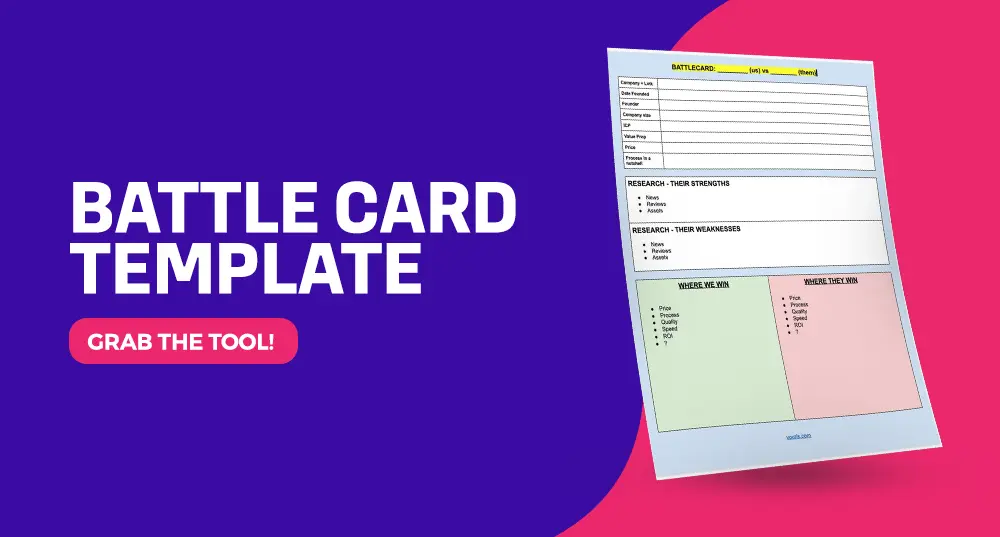
Table of Contents
Brand Profile at a Glance
BATTLECARD (NORTHR) – BRAND PROFILE | |
Product Name | Battlecard (by Northr) |
Official Website | battlecard.northr.ai |
Category | AI Sales Training / Competitive Intelligence / Sales Enablement |
Primary Use Case | AI-generated battlecards + voice-simulated sales roleplay |
Platforms | Web-based (browser); no dedicated mobile app as of 2026 |
Free Tier | Yes (1 competitor, no credit card required) |
Starter Plan | $49 per month |
Pro Plan | $99 per month (unlimited competitors) |
Enterprise / Team Plan | Custom pricing; includes team analytics and performance tracking |
Battlecard Generation Time | Approximately 60 seconds per competitor |
Languages Supported | Primarily English |
AI Voice Simulation | Yes (realistic AI buyer roleplay with scoring) |
API Access | Not publicly available as of 2026 |
CRM Integrations | Limited; not a native CRM tool |
Primary Competitors | Klue, Crayon, Kompyte, Second Nature, Mindtickle |
NUBIA MAGAZINE Rating | 2.5/5 |
Introduction
Every sales team eventually runs into the same wall. A rep is three minutes into a discovery call and the prospect drops a competitor name. The rep nods, says something vague about differentiation, and hopes to follow up later. The battlecard that could have helped is buried in a Google Drive folder nobody has touched in seven months. That is the problem Battlecard, built by Northr, is trying to fix.
Battlecard is a web-based AI sales training tool that does two things. First, it generates competitive battlecards from a competitor's URL in roughly 60 seconds. Second, it lets sales reps practice against a simulated AI buyer using those cards as the script. The idea is that reading a battlecard and actually using one under conversational pressure are very different skills, and the only way to close that gap is repetition before the real call happens.
We spent time looking at what Battlecard actually delivers, who it is built for, and where it falls short. This review reflects our honest assessment as of July 2026. The rating of 2.5 out of 5 is not a dismissal of the concept, which is genuinely useful. It reflects where the product sits today relative to what it promises and who it can realistically serve.
What is Battlecard?
Battlecard is a product from a company called Northr, operating under the domain battlecard.northr.ai. The tool sits in a growing category of AI-assisted sales enablement software, but its focus is narrower than most of its competitors. Where enterprise tools like Klue and Crayon try to be full competitive intelligence platforms with monitoring, alerts, and CRM integrations, Battlecard is primarily a card generation and practice tool.
The core workflow is simple. You describe your business, paste in a competitor's URL, and Battlecard generates a structured card covering the competitor's strengths, weaknesses, common objections they use, pricing posture, and suggested responses. You then use that card as the basis for a voice simulation where an AI buyer throws those objections at you and scores how well you handle them.
The positioning is aimed at small to mid-size sales teams, specifically teams in the 3 to 20 rep range that have outgrown doing competitive research manually in Google Docs but are not yet at the point where a $15,000 per year Klue contract makes sense. In that narrow band, Battlecard is genuinely trying to fill a real gap.
Battlecard Download: How to Access the Tool
There is no app download in the traditional sense. Battlecard is entirely web-based. You access it through a browser at battlecard.northr.ai. No installation is needed, and the free tier does not require a credit card or account creation to generate your first battlecard.
This is intentional. The no-friction entry point is one of the stronger design decisions the team has made. You land on the site, describe your business, paste a competitor URL, and you have a battlecard in about a minute. For a sales rep who wants to prep for a call that starts in ten minutes, that speed matters.
The downside of being purely web-based is that Battlecard does not integrate into the places where sales reps actually work. There is no Salesforce sidebar, no Slack bot, no HubSpot widget. This is a significant limitation given that industry data consistently shows battlecards stored in separate tools get used far less than those surfaced inside the rep's existing workflow. If your team lives in Salesforce and Slack, Battlecard requires them to open another tab and remember to do so.
There is also no mobile app. For reps who prep on the go, that gap is noticeable.
Battlecard Template: What Gets Generated
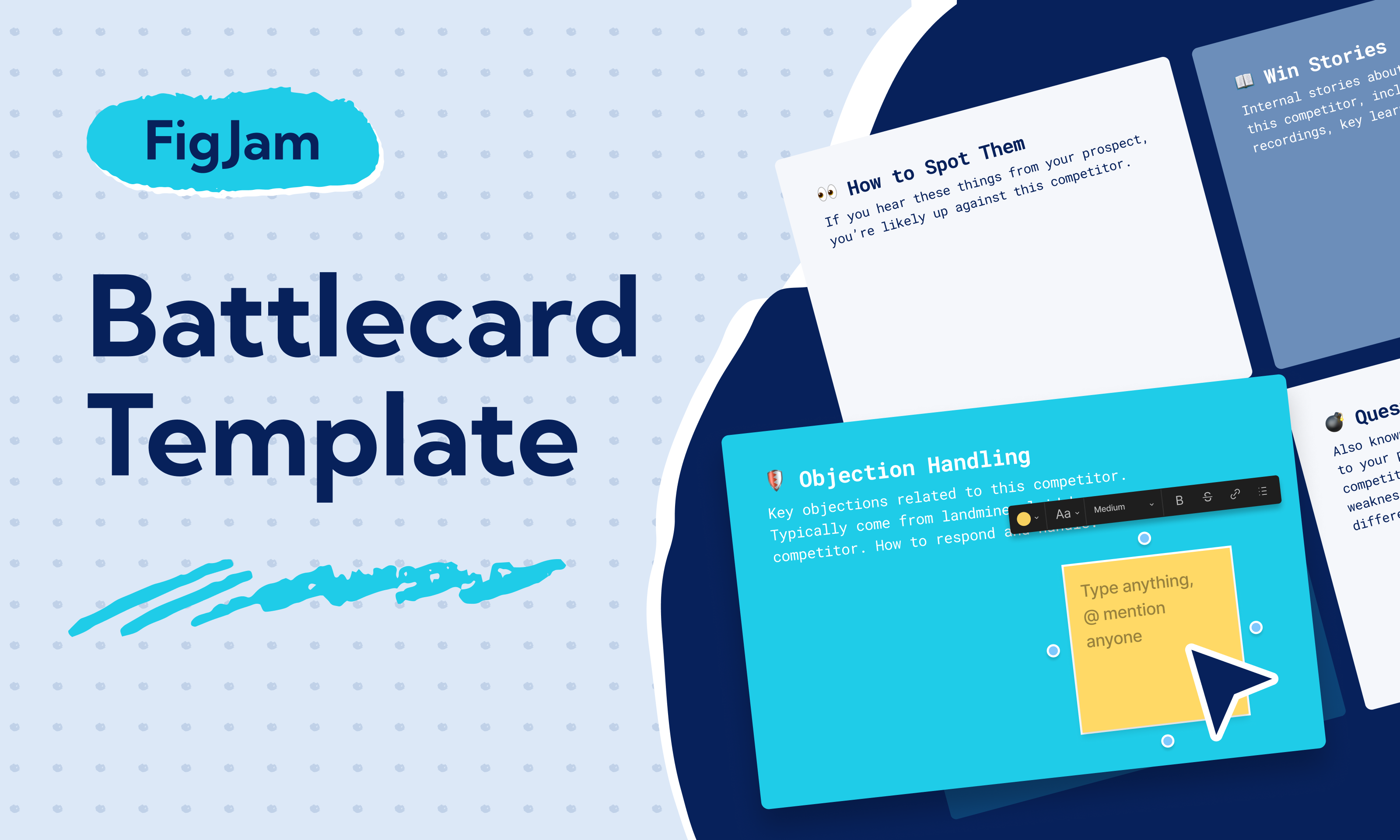
The battlecard that Battlecard generates follows a clean, practical structure. Each card covers the competitor's stated strengths (what they genuinely do well, which Battlecard presents honestly rather than dismissing), the competitor's weaknesses and where your product typically wins, a set of objection handlers covering the most common things a prospect might say when comparing you to that competitor, a pricing comparison section, and general positioning tactics.
The one-page format is the right call. Research on battlecard adoption consistently shows that length kills usage. A rep mid-call cannot scroll through a five-page document. Battlecard keeps the output tight and scannable.
Where the template falls down is depth. The cards are generated from publicly available web data, which means they reflect a competitor's marketing positioning rather than what competitors actually say on sales calls or what prospects genuinely believe about them. A PMM who has reviewed 50 loss interviews and six months of Gong call recordings builds a very different card than one derived from a company's homepage and their G2 profile. For a team that has no battlecards at all, AI-generated is a genuine improvement. For a team that wants nuanced, deal-specific intelligence, the template's ceiling shows quickly.
To be fair, Battlecard acknowledges this directly. The tool is not positioned as a replacement for deep competitive research. It is positioned as a fast starting point and a practice vehicle.
AI Sales Simulation: The Practice Layer
The simulation feature is where Battlecard differentiates itself most clearly from simply using ChatGPT to generate a battlecard. Once a card is created, you can run a voice simulation where an AI buyer takes on the role of a prospect who is evaluating your competitor. The AI uses the card data to select and deliver realistic objections, and it scores your responses.
The pitch is that practicing three or more sessions per week produces measurable improvement in competitive win rates. Battlecard cites figures of 25 to 30 percent improvement in competitive win rates and 40 to 60 percent faster ramp for new hires who practice regularly. These numbers come from broader industry research on sales simulation training and from Battlecard's own reporting. Independent third-party validation of those specific numbers for Battlecard's product is limited, which is worth noting.
The voice simulation itself is functional. The AI buyer sounds realistic enough to create some of the conversational pressure that a real call does, though experienced reps will notice the ceiling fairly quickly. The scenarios are good for drilling known objections. They are less useful for the unpredictable directions a real conversation takes. Think of it as a batting cage rather than a real game. The practice is real, the stakes are not.
One honest limitation is that the scoring rubric is not fully transparent to users. Knowing your response scored a 72 is less useful than knowing which specific elements raised or lowered that score. This is an area where the product could meaningfully improve with more granular feedback.
Battlecard's Marketing: What They Claim and What Holds Up
Battlecard markets itself primarily through a content-heavy blog at battlecard.northr.ai/blog. The blog covers competitive selling, battlecard best practices, comparisons between enterprise tools like Klue, Crayon, and Gong, and tutorials for the kinds of objections that come up in B2B sales. It is well-written content that ranks in searches about sales battlecards and competitive intelligence.
The marketing strategy is transparent and fairly effective. By publishing honest comparisons between tools that are more expensive than Battlecard, and positioning Battlecard as the right-sized option for small teams, Northr has built a funnel that attracts exactly the audience the product serves best.
What the marketing does not do well is address Battlecard's own limitations with equal honesty. The competitive comparison pages note that enterprise tools require more budget and dedicated staff, but the framing sometimes implies Battlecard's simpler approach is equivalent in output. It is not. Teams should understand they are getting a fast, accessible starting point, not a replacement for dedicated competitive intelligence work.
The free tier, requiring no credit card and producing a real battlecard for one competitor, is a genuinely good marketing decision and a product decision. It removes all friction from the first experience and lets the tool speak for itself.
User Experience: What Using Battlecard Actually Feels Like
The UI is clean and minimal. There is no clutter, no overwhelming dashboard with feature categories nobody asked for. You land on a simple input screen, you enter your details, and you are generating a card or running a simulation without any real learning curve.
For first-time users, particularly those who have never worked with a dedicated battlecard tool before, the experience feels genuinely impressive. Sixty seconds from a competitor URL to a formatted, usable card is not something manual workflows can compete with.
For more advanced users, the simplicity starts to feel like limitation. There is no tagging system for organizing cards across multiple competitors. There is no version history to track how a competitor's positioning has shifted. There are no automated alerts when a competitor you have a card for makes a meaningful change. The card you generate today will be the same card your rep pulls in three months unless someone manually regenerates it.
The simulation experience is similarly accessible but shallow. You pick a call type, select a buyer profile, choose a difficulty level, and begin. The AI buyer responds in text or voice and the conversation flows naturally enough for a training context. The drop-off happens when a rep tries to go deeper into an objection the AI was not pre-loaded to handle. The simulation stays within the boundaries of the card fairly rigidly.
Public reviews of Battlecard specifically are limited. The tool does not yet appear on G2 or Capterra with meaningful review volumes, which makes third-party validation difficult. The reviews that exist in independent comparison articles consistently describe it as a good option for small teams who need something quick and affordable, with the caveat that it is not a full competitive intelligence platform. That description matches what we found.
Battlecard Pricing in 2026
Battlecard runs on a three-tier model. The free tier covers one competitor with no credit card required, which is enough to evaluate whether the tool fits your workflow. The Starter plan runs $49 per month and expands access for small teams. The Pro plan at $99 per month offers unlimited competitor cards and the full training loop including simulation scoring and team features. Enterprise pricing is custom and includes analytics on who is practicing and whether it correlates with deal outcomes.
In the context of the competitive intelligence market, these prices are genuinely accessible. Klue and Crayon both start at $15,000 per year or more, require dedicated CI analysts to get full value, and are built for mid-market and enterprise organizations. Battlecard at $99 per month for unlimited cards is in a completely different budget category.
The catch is that you are also getting a completely different product. The price comparison only holds if your needs actually match what Battlecard delivers, which is speed and practice rather than ongoing intelligence monitoring.
For a 10-person sales team spending $99 per month and using it consistently, the value math works if the tool genuinely produces even one additional closed deal per month. Whether it does that depends entirely on how well the team adopts it, which brings us back to the integration limitation. Tools your reps have to proactively open tend to get used less than tools that surface in their existing flow.
Pros and Cons
What Works
Speed of card generation: 60 seconds from a competitor URL to a usable battlecard is genuinely fast and beats any manual process.
Frictionless free tier: No credit card, no lengthy sign-up. One competitor, full card. It is the right way to let the product prove itself.
AI voice simulation: The practice layer is a real differentiator from simply using ChatGPT or a template. Drilling objections before a live call matters.
Price point: At $49 to $99 per month, Battlecard sits in a space that enterprise tools simply do not reach. Small teams finally have an option.
Clean, simple UI: No learning curve, no overwhelming dashboard. You can be up and running in minutes.
What Does Not Work
No workflow integration: Without a Salesforce sidebar, Slack bot, or CRM plugin, reps have to remember to open another tab. Most will not do this consistently in the middle of a deal.
Card quality ceiling: Cards generated from public web data capture marketing positioning, not real sales intelligence. The depth gap versus manually curated cards is significant for experienced teams.
No competitive monitoring: Cards go stale. Battlecard does not alert you when a competitor changes pricing, launches a feature, or shifts their messaging. You have to regenerate manually.
No mobile app: In 2026, a sales tool without mobile access is a meaningful gap for reps who prep away from a desk.
Limited public reviews: The absence of substantial review volume on G2 or Capterra makes independent validation difficult. Teams are taking more on faith than they would with established tools.
Simulation scoring is opaque: A score without granular feedback on what specifically to improve has limited training value.
Frequently Asked Questions About Battlecard in 2026
1. What exactly is Battlecard and what does it do?
Battlecard is a web-based AI tool that helps sales reps prepare for competitive deals in two ways. First, it generates a structured competitive battlecard for any competitor in about 60 seconds by pulling public data from the competitor's website and other sources. The card covers the competitor's strengths, weaknesses, objection responses, pricing posture, and positioning tactics. Second, it lets reps practice using those cards by running voice-simulated conversations with an AI buyer that delivers the exact objections from the card. The idea is that knowing what to say and being able to say it under pressure are different skills, and the tool is built to develop both.
2. How do I download or access Battlecard?
Battlecard does not have a downloadable app. It is entirely web-based and accessed through a browser at battlecard.northr.ai. The free tier requires no account creation and no credit card. You describe your business, paste in a competitor URL, and the tool generates your first battlecard. For access to multiple competitors, team features, and unlimited simulation practice, you need to sign up for one of the paid plans. There is no desktop application and no mobile app as of mid 2026.
3. Is Battlecard free to use?
Yes, there is a free tier that covers one competitor with no credit card required. It generates a real battlecard and gives you access to the simulation feature so you can try the core experience before committing to a plan. The paid Starter plan runs $49 per month and expands capacity for small teams. The Pro plan at $99 per month includes unlimited competitor cards and the full training and scoring loop. Enterprise pricing is negotiated directly with the Northr team and includes team-level analytics and reporting.
4. How accurate are Battlecard's AI-generated battlecards?
The cards are generated from publicly available web data, which means they reflect what a competitor says about themselves in their marketing materials, not necessarily what prospects believe or what comes up most often in real sales conversations. For a team with no battlecards at all, AI-generated cards are a significant improvement over going into a competitive call empty-handed. For teams with experienced product marketers who have access to win/loss data and call recordings, the AI cards will feel surface-level. The accuracy of the positioning is good enough for general competitive prep but should be supplemented with real internal intelligence as the team matures. Cards should also be regenerated regularly since they do not update automatically when competitors change their pricing or messaging.
5. Can Battlecard integrate with Salesforce, HubSpot, or Slack?
Not natively, as of 2026. Battlecard does not offer built-in integrations with Salesforce, HubSpot, Slack, or other CRM and communication platforms. This is one of the more significant limitations for teams that want competitive intelligence surfaced in the flow of their existing work. The workaround most teams use is treating Battlecard as a pre-call prep tool rather than an in-call resource, which reduces its value during live conversations. Northr has published blog content about building a custom workflow that connects Battlecard with HubSpot using tools like OpenClaw, but that requires technical setup beyond what most sales teams will do themselves.
6. How does Battlecard compare to Klue, Crayon, or Kompyte?
Battlecard and tools like Klue, Crayon, and Kompyte serve genuinely different needs and sit in very different price ranges. Klue and Crayon are full competitive intelligence platforms that continuously monitor competitor websites, social media, job postings, and review sites, then surface alerts to CI teams who curate and distribute battlecards across the organization. Both start at roughly $15,000 per year and assume a dedicated competitive intelligence analyst to get full value. Battlecard at $49 to $99 per month generates cards on demand from public data and adds a simulation practice layer that the enterprise tools do not offer. For a 10-person sales team, Battlecard is the realistic option. For a 200-person sales org with a dedicated enablement team, Klue or Crayon is the right investment. The two categories are complements, not direct replacements.
7. Does Battlecard work for industries outside of tech sales?
The tool is designed primarily around B2B SaaS sales scenarios, and the AI buyer simulations and sample objections reflect that context. Teams in industries with very different sales dynamics, such as financial services, real estate, manufacturing, or healthcare, may find the simulation scenarios feel generic or misaligned with how their actual prospects speak. The card generation can be applied to any competitor with a public web presence, so the research piece is broadly applicable. The practice and scoring layer is where industry specificity matters most, and Battlecard does not yet offer deep customization for industries outside of software sales.
8. Who is Battlecard actually built for?
The honest answer is small to mid-size B2B sales teams, roughly 3 to 20 reps, who face a handful of recurring competitors, have no existing battlecard program, and need something affordable and fast to get started. If your reps regularly get caught flat when a prospect names a competitor, and your current solution is a stale Google Doc or nothing at all, Battlecard solves a real problem at a price that fits. If you already have a competitive intelligence function, a PMM who owns battlecards, or an existing tech stack that includes Klue or Crayon, Battlecard adds limited incremental value. The tool is also worth evaluating for individual reps who want to self-prep before competitive calls without waiting on their enablement team.
Nubia Magazine Verdict
Battlecard earns a 2.5 out of 5 from NUBIA MAGAZINE. That score reflects a tool with a genuinely good idea at its center that is not yet fully realized in execution.
The core concept works. Sales reps do not fail competitive deals because they lack access to information. They fail because they cannot retrieve and use that information under conversational pressure. Battlecard is one of the few tools in this space that addresses both the information gap and the practice gap together, and it does so at a price point that makes it accessible to teams that enterprise platforms have priced out.
What pulls the rating down is the gap between what the tool promises and what it delivers in real workflow conditions. Cards that do not update automatically go stale, which is exactly the problem that kills battlecard programs. A tool with no CRM integration, no mobile app, and no Slack presence requires reps to remember to use it, and the data on how often that actually happens is not encouraging. The simulation scoring, while a genuine differentiator, does not yet provide the feedback granularity that would make it a meaningful coaching tool.
For a small sales team with no existing competitive enablement and a tight budget, Battlecard is worth trying. The free tier costs nothing and takes minutes to evaluate. If the card quality meets your needs and your team adopts the pre-call prep habit, the $49 to $99 monthly investment can pay off. Go in with realistic expectations about what the tool is: a fast card generator and a practice environment, not a competitive intelligence platform.
If you are a larger team or one that needs ongoing monitoring, automated updates, and deep CRM integration, Battlecard is a stepping stone at best. Start here and migrate when the need outgrows the tool.
Related Posts



0 Comments
Join the discussion and share your thoughts
No Comments Yet
Be the first to share your thoughts on this article!