Top 10 Best Ride Hailing Apps In The World 2026


Table of Contents
The ride-hailing industry has grown into a $188 billion global market, with roughly 120 million ride requests placed every day and more than 2.5 billion people having used a ride-hailing service in the past year. What started as a smartphone convenience has become essential urban infrastructure, shaping how cities move and how workers earn.
This ranking synthesizes data from industry reports, market analyses, and platform statistics to identify the ten most significant ride-hailing applications worldwide. We weighed criteria including global reach, trip volume, revenue, fleet innovation, and regional dominance. Some of these platforms are household names in the West; others command enormous markets that rarely make headlines in American or European tech press. All ten are shaping the future of urban mobility in their own way.
The List Of The Top 10 Best Ride Hailing Apps In 2026:
1. Uber
Uber remains the undisputed global leader in ride-hailing. The company operates in more than 70 countries and over 10,000 cities, with $43.8 billion in gross bookings recorded in 2024 and a global market share that exceeds 30%. The platform pioneered the gig-economy ride-hailing model in 2009 and has since diversified into food delivery through Uber Eats, freight logistics, and autonomous vehicle partnerships.
Uber has been aggressive about expansion into emerging markets. In May 2026, the company announced extensions into rapidly developing urban areas across India and Latin America, responding to rising urban mobility demand in those regions. The company is also investing heavily in electric vehicle integration and autonomous driving technology through its partnership with Waymo in select US markets.
What keeps Uber at the top is not just scale but adaptability. The company has weathered regulatory battles, driver classification lawsuits, and public relations crises, yet it continues to set the standard for what a global ride-hailing operation looks like.
2. DiDi Chuxing
DiDi is the world's largest ride-hailing company by trip volume, processing more than 30 million rides daily across China, Latin America, Eastern Europe, and Oceania. Founded in 2012 as a taxi-hailing service in China, DiDi absorbed its main domestic competitors and now operates in more than 14 countries.
The company leads the industry in electric vehicle adoption. DiDi has acquired over 250,000 EVs for its fleet, a figure that represents more than 1% of the entire global EV fleet. Around 40% of its premium fleet now runs on hybrid or fully electric powertrains. This commitment to electrification gives DiDi a significant operational advantage in markets where fuel costs and emissions regulations are tightening.
DiDi's safety infrastructure is among the most advanced in the industry. AI-powered monitoring tracks both driver and passenger behavior during rides, and a one-tap emergency assistance feature is built directly into the core app. Services range from private rides and carpooling to chauffeur services and bus routes.
3. Grab

Grab is Southeast Asia's leading ride-hailing platform and one of the region's most important technology companies. With more than 350 million downloads and over 40 million annual transacting users, Grab operates across Singapore, Malaysia, Indonesia, Thailand, Vietnam, the Philippines, Cambodia, and Myanmar.
The platform functions as a super app, integrating ride-hailing with food delivery, digital payments, and financial services. In markets where smartphone-based mobility is the primary transportation mode, this ecosystem approach has made Grab indispensable. The company also offers a per-trip carbon dashboard, letting users track their environmental impact with each ride.
Grab has strengthened its position following the resolution of its legal challenges, and analysts note its reinforced Southeast Asia position and growth focus. The company's multi-service model has made it the dominant player in one of the world's fastest-growing ride-hailing regions.
4. Bolt
Bolt, the Estonian ride-hailing platform founded in 2013, has grown into Europe's leading challenger to Uber. The company operates across 35+ countries in Europe, Africa, and the Middle East, serving more than 200 million users. Notably, Bolt has achieved carbon-negative status, meaning it removes more carbon from the atmosphere than it emits across its operations.
Bolt has expanded well beyond ride-hailing into micromobility, offering e-scooters and e-bikes in dozens of cities, plus food delivery through Bolt Food. This comprehensive urban mobility ecosystem has helped the company compete effectively against better-funded rivals.
Bolt's aggressive pricing strategy and driver-friendly commission structures have allowed it to gain significant market share in price-sensitive markets across Central and Eastern Europe, Africa, and the Middle East. In many of these regions, Bolt is not the alternative to Uber; it is the default choice.
5. inDrive

inDrive stands apart from every other platform on this list because of its unique peer-to-peer pricing system. Instead of accepting a fare set by an algorithm, passengers and drivers negotiate directly. This model has proven highly successful in developing markets across Latin America, Asia, Africa, and the Middle East.
Founded in 2012 by Arsen Tomsky, inDrive has raised $537 million from investors including General Catalyst, Insight Partners, and Bond. The company operates in more than 45 countries and was ranked the most popular ride-hailing app in countries including Egypt, Angola, Botswana, Zimbabwe, Nicaragua, and Panama.
The flexibility and cost-effectiveness of inDrive's model make it particularly well-suited to markets where fixed pricing structures fail to reflect local economic realities. The company has continued to grow geographically while incorporating new technology into its digital mobility platform.
6. Ola Cabs
Ola is India's dominant ride-hailing platform, responsible for approximately 50% of all rides in the country. The company serves more than 250 million users across 250+ Indian cities, and its vehicle range is uniquely adapted to Indian market conditions, offering auto-rickshaws, bikes, and shared rides alongside standard cars.
In 2024, Ola made a significant operational change, replacing its commission model with a flat daily driver fee of $0.80. This shift improved driver availability more than percentage-based structures had managed, addressing one of the industry's persistent challenges: keeping drivers on the platform.
Sister company Ola Electric is India's best-selling EV two-wheeler brand, deploying 10,000 electric two-wheelers quarterly. Ola also operates in the UK, Australia, and New Zealand. Key features include the Ola Money in-app wallet, ride-sharing, outstation and rental rides, and an SOS emergency button.
7. Lyft
Lyft remains Uber's primary competitor in North America, responsible for approximately 20% of US ride-hailing volume. The company operates across more than 600 cities in the United States and select Canadian cities, with over 40 million active riders annually.
Lyft has focused on differentiation through driver-friendly policies, including in-app tipping and a loyalty program for frequent riders. The company has been expanding its EV fleet and has partnered with autonomous vehicle companies to prepare for the future of self-driving ride-hailing.
Lyft's commitment to transparent pricing and its "Round Up & Donate" program have helped maintain customer loyalty in its core markets. While it trails Uber significantly in market share, Lyft's focus on the North American market allows it to compete effectively on service quality and driver relations.
8. Yandex Go / Yango
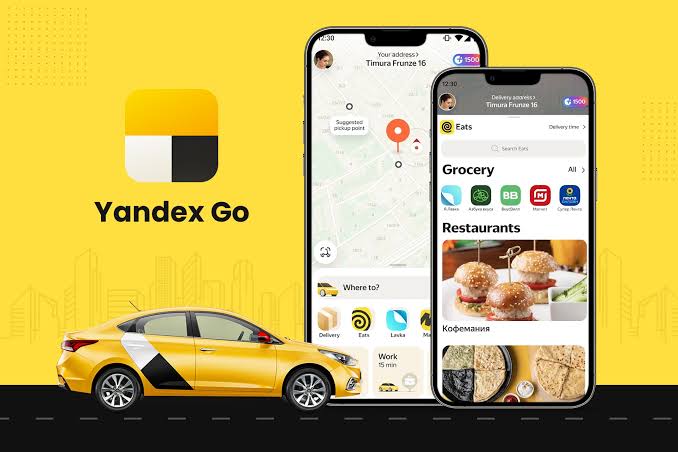
Yandex Go, rebranded as Yango in 2022 to distance itself from the Yandex parent company amid sanctions complications, built what many consider the finest mapping and routing technology in the Russian-speaking world. For those geographies, it is potentially superior to Google Maps.
The platform operates across Russia and CIS countries and has expanded into 20+ countries across Europe, Africa, and the Middle East, including Cameroon, Côte d'Ivoire, DR Congo, and Zambia. The platform serves more than 100 million users.
Yango's product quality remains consistent even as the geopolitical context complicates international operations. The platform's technology stack includes advanced routing algorithms and AI-driven demand prediction, making it the dominant ride-hailing provider across vast swaths of Eurasia and increasingly in African markets.
9. Gojek
Gojek, Indonesia's homegrown ride-hailing giant, has positioned itself as a comprehensive super app offering more than 20 services, ranging from ride-hailing and food delivery to payments, logistics, and lifestyle services. The platform is the most popular ride-hailing app in Indonesia, with 190+ million users and 2+ million driver partners across Southeast Asia.
Gojek's two-wheeler-first approach, built around ojek motorcycle taxis, made it uniquely suited to Southeast Asian urban environments with heavy traffic congestion. This focus on two-wheelers allowed Gojek to serve customers in ways that four-wheel-based platforms could not match in dense, congested cities.
Following its merger with Tokopedia in 2021 to form GoTo Group, the company has continued to expand its ecosystem, making it the dominant mobility player in one of the world's most populous regions.
10. Careem

Careem is building the "Everything App" for the Middle East, simplifying daily tasks like transportation, food ordering, and payments into one mobile experience. Founded in 2012 in Dubai, the company was acquired by Uber in 2020 for $3.1 billion but continues to operate as a distinct brand under Uber's ownership.
Careem operates in more than 100 cities across 10+ Middle Eastern, African, and South Asian countries. It is the most popular ride-hailing app in Pakistan, Saudi Arabia, and the UAE, and has expanded into Egypt, Jordan, Morocco, and other regional markets.
The platform's super-app strategy consolidates ride-sharing, food delivery, and digital finance services. Significant investment from STV, Coatue, Mercedes-Benz Group AG, and Rakuten totals $771.7 million. Careem's deep understanding of Middle Eastern market dynamics, including cash payment options and female driver initiatives, has made it the regional leader.
The ride-hailing market continues to evolve rapidly. Electric vehicle adoption is accelerating across the board, with DiDi and Ola Electric leading the charge. Autonomous vehicle partnerships are becoming standard practice, with Uber and Lyft both positioning themselves for a self-driving future. And the super-app model, pioneered by Grab and Gojek, is spreading to other regions through platforms like Careem.
What is striking about this list is how regional the industry remains. Uber dominates globally, but local champions like Ola in India, Gojek in Indonesia, and Careem in the Middle East have proven that deep local knowledge can compete effectively against global scale. The negotiation model of inDrive shows that pricing innovation can disrupt even well-established markets.
Related Posts



1 Comment
Join the discussion and share your thoughts