Top 10 Best Meeting Recording Apps In The World 2026

Table of Contents
To compile this ranking of the best meeting recording apps for 2026, we evaluated dozens of tools across several key dimensions: transcription accuracy and speed, language support, integration ecosystems, pricing and free-tier value, privacy and bot visibility, and suitability for specific use cases like sales coaching, global teams, or asynchronous communication. We weighed user sentiment from professional forums, independent benchmark data from speech recognition leaderboards, and feature comparisons from industry analysts. The result is a list that prioritizes real-world utility over marketing claims, with each app earning its place for distinct strengths rather than a one-size-fits-all score.
The Top 10 Best Meeting Recording Apps In 2026:
1. Granola
Granola has redefined what a meeting recording app can be by eliminating the most persistent friction point: the visible bot. Unlike every other major tool on this list, Granola does not join meetings as a participant. Instead, it captures audio locally on the user's Mac, processing everything through the Universal-3 Pro Streaming model. This approach means no announcement, no awkward "a bot has joined" notification, and no risk of participant behavior shifting when they know they are being recorded.
The practical implications are significant. Consultants running sensitive strategy sessions, executives discussing confidential financials, and therapists conducting sessions all need candor that a visible recording bot can destroy. Granola preserves that candor while still producing structured notes and action items after the call. Its transcription latency is the lowest we have tested, thanks to its top ranking on the Hugging Face Open ASR Leaderboard for real-time performance. The app offers a three-month free trial, after which it costs approximately $18 per month. The trade-off is that it is Mac-native only, which limits its reach in Windows-heavy organizations.
2. Fathom
Fathom offers the most aggressive free tier in the meeting recording space: unlimited recording and transcription with no meeting caps. Most competitors in this category limit free users to between 5 and 25 meetings per month before forcing a paid upgrade. Fathom simply does not impose that ceiling, making it the obvious starting point for anyone who wants to test AI notetaking without committing financially.
Beyond the free tier, Fathom provides AI-generated summaries, action items, and a Chrome extension that works across Zoom, Google Meet, and Microsoft Teams. For sales teams, the paid plans starting at $18 per month unlock CRM integrations with Salesforce and HubSpot, along with custom templates and team collaboration features. The catch is that Fathom's bot is visible to all meeting participants, which may influence how freely people speak. For internal team meetings where recording is standard practice, this is rarely an issue. For external client calls, it can be a consideration.
3. Fireflies.ai
Fireflies.ai is the volume leader in the general-purpose meeting recording category, and its integration ecosystem is the broadest of any tool we evaluated. It connects with more than 50 tools including Salesforce, HubSpot, Slack, Asana, and Notion, making it the default choice for organizations that want meeting data flowing directly into their existing workflows. The app joins meetings across Zoom, Google Meet, Teams, Webex, and RingCentral, transcribing calls and generating structured summaries with action items.
The standout feature is "AskFred," a chatbot that lets users query past meetings in natural language. "What was the agreed timeline for the Q3 launch?" returns a precise answer drawn from the relevant transcript. For sales teams, the CRM write-back capability automatically logs call notes and next steps into Salesforce or HubSpot, eliminating manual data entry. Fireflies supports more than 100 languages, which is exceptional for global teams. However, the company faces a pending BIPA class action lawsuit over recording consent practices in Illinois, a significant concern for organizations with compliance requirements. The free tier is capped at a limited number of meetings, with paid plans starting at $18 per month.
4. Otter.ai
Otter.ai remains the most recognized name in AI meeting transcription, and for good reason. Its real-time live captions are a genuine differentiator: meeting participants can view and edit the transcript collaboratively during the call, which turns the transcription into a living document rather than a static record. The "Ask Otter" feature enables natural language queries across past meeting transcripts, similar to Fireflies' AskFred.
But Otter has some notable limitations. It supports only three languages: English, Spanish, and French. For any organization operating in German, Japanese, Mandarin, Portuguese, or dozens of other languages, Otter is simply not viable as a primary tool. The Pro plan was recently reduced from 6,000 to 1,200 minutes per month at the same $16.99 price point, a significant devaluation that has frustrated long-time users. More concerning is an unresolved federal class action alleging that Otter records participants who never consented to being recorded. For client-facing meetings where trust and transparency are paramount, this legal exposure is a serious consideration.
5. Notta
Notta is the best option we have found for organizations with genuinely global teams. It supports transcription in more than 40 languages with instant translation to 42 additional languages, meaning a meeting conducted in Japanese can produce notes in English, Spanish, and German simultaneously. This multilingual capability is not a secondary feature; it is the core value proposition.
The Business plan includes both audio and video recording, which is less common than it should be in this category. Many tools record audio only, leaving teams without visual context. Notta also provides flexible export options including TXT, Word, PDF, and SRT formats, making it easy to integrate meeting records into existing documentation workflows. It integrates with Zoom, Google Meet, and Teams. For distributed international teams where language barriers are a daily reality, Notta's accent handling and translation accuracy make it a practical choice that few competitors match.
6. Sembly AI
Sembly AI positions itself as a smart meeting assistant built for global enterprises, and its strength lies in handling mixed-language conversations. If a meeting includes participants speaking English, Spanish, and Mandarin, Sembly can produce transcripts in more than 40 languages, preserving the original language of each speaker while making the record accessible to everyone.
The app joins meetings across Zoom, Google Meet, Teams, and Webex, automatically recording, transcribing, and generating intelligent notes. Sembly is enterprise-focused in its pricing, which means it is less suitable for individual users or small teams on tight budgets. But for large organizations operating across multiple regions with diverse language requirements, Sembly's ability to handle multilingual environments without breaking down is a genuine competitive advantage. The tool also generates structured summaries and action items, though its integration ecosystem is narrower than Fireflies' or Fathom's.
7. Krisp
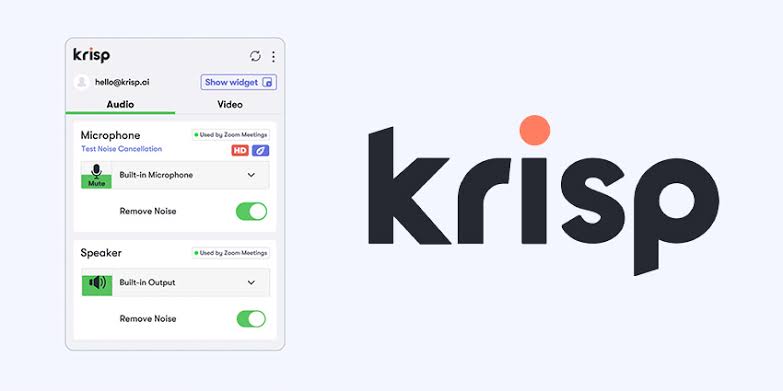
Krisp occupies a unique position in this list because it solves two problems at once: meeting recording and noise cancellation. The app captures audio locally without joining as a participant, which means no visible bot and no impact on meeting dynamics. It then processes the audio through its on-device AI noise cancellation engine, removing background sounds like keyboard typing, street noise, or co-working chatter before they reach other participants.
For anyone who works from a coffee shop, a shared office, or a home with children or pets, Krisp's noise cancellation is transformative. It processes audio in real time on the device, which also means lower latency than cloud-based alternatives. Krisp supports more than 50 languages for transcription and generates summaries and action items from recorded meetings. Paid plans start at $8 per month, making it one of the most affordable options on this list. The trade-off is that Krisp is less focused on the post-meeting workflow features that tools like Fireflies and Fathom excel at, such as CRM integrations and team collaboration. It is best understood as a recording and noise-cancellation tool first, with AI notetaking as a secondary capability.
8. Grain
Grain takes a fundamentally different approach to meeting recording. Instead of producing long transcripts or summaries, it focuses on creating short, digestible video "highlights" from longer recordings. The app automatically captures meetings and transforms them into a searchable, collaborative library of moments rather than a wall of text.
This makes Grain particularly valuable for specific use cases. Sales coaching teams can pull out the exact 30-second segment where a rep handled an objection well. Product teams can capture customer feedback clips and share them directly with engineers. Stakeholders who missed a live call can watch the key moments in minutes rather than sitting through a full recording. Grain integrates with Zoom, Google Meet, and Teams. It is not the right tool for someone who wants a complete written transcript of every meeting. But for teams that communicate through video clips and prioritize asynchronous knowledge sharing, Grain is the most purpose-built option available.
9. tl;dv
tl;dv, which stands for "too long; didn't view," is built around a simple insight: most people will not watch a full meeting recording. The app solves this by automatically generating timestamped highlights and shareable video clips, allowing team members to jump to the specific moments that matter to them.
The clip-sharing feature is the core differentiator. A customer success manager can share a two-minute segment of a call where the client explicitly agreed to an upsell, attaching it directly to the CRM record. A product manager can clip a feature request and share it in Slack with the engineering team. tl;dv supports transcription in more than 30 languages and integrates with HubSpot and Salesforce. The free tier is available with capped meetings, making it accessible for teams that want to test the approach before committing. For distributed sales and customer success teams where async sharing of specific call moments is part of the daily workflow, tl;dv is a focused and effective tool.
10. Loom
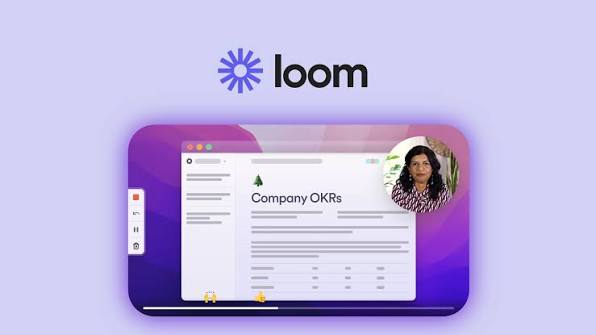
Loom is not a traditional meeting recording app, and it does not pretend to be. It is designed for asynchronous video messages and screen recordings, where a recorded video replaces a synchronous meeting entirely. Users can record their screen and camera simultaneously, share instantly via a link, and recipients can leave time-stamped comments and reactions.
For teams trying to reduce the volume of live meetings, Loom is a powerful complementary tool. A quick walkthrough, a status update, or a design review can be recorded in two minutes and consumed by the recipient whenever they have time, eliminating scheduling friction. Loom offers a free tier with limited recordings and a browser extension plus desktop app. It does not join live meetings, does not transcribe conversations, and does not generate AI summaries of discussions. But for the specific use case of replacing meetings with async video, it remains the most polished and widely adopted option. Organizations that pair Loom with a dedicated meeting recorder like Fathom or Granola get the best of both worlds: async communication for routine updates and AI notetaking for the meetings that still need to happen.
Related Posts


1 Comment
Join the discussion and share your thoughts