Top 10 Best Mobile Game Companies In The World 2026

Table of Contents
The best mobile game companies in the world generated tens of billions of dollars in 2024 and 2025, and the pecking order heading into 2026 is defined by a handful of publishers that control the biggest franchises on the planet. According to Sensor Tower estimates and company financial reports, Tencent Games alone pulled in roughly $8.2 billion in mobile game revenue in 2024, more than most rivals earn across all platforms combined. Our ranking weighs revenue scale, franchise durability, portfolio depth, and market momentum to identify the ten publishers shaping the global mobile market this year.
How We Ranked These
We built this list from published revenue figures, Sensor Tower and third-party tracking estimates, and company filings covering 2023 through 2025. Revenue scale carried the most weight, but we also factored in franchise longevity, portfolio breadth, and growth trajectory. A publisher with one record-breaking title ranked below one with five consistent earners, and recent consolidation deals influenced placement where they changed a company's competitive position. Rankings reflect the mobile business specifically, not parent-company revenue from console or PC.
Here Are The Top 10 Best Mobile Game Companies In The World 2026:
1. Tencent Games
No mobile publisher operates at Tencent's scale. The Shenzhen-based giant earned roughly $8.2 billion in mobile game revenue in 2024, and its flagship Honor of Kings has grossed more than $15 billion lifetime on its own. PUBG Mobile adds another multi-billion-dollar franchise to the ledger.
What separates Tencent from every other entry on this list is its ownership network. The company holds major stakes in Supercell, Riot Games, Epic Games, and Ubisoft, which means Tencent profits whether players are battling in Clash of Clans, competing in League of Legends: Wild Rift, or spending on Fortnite's mobile storefront. Its WeChat Mini Game ecosystem distributes thousands of third-party titles across China, giving Tencent a distribution channel that no Western publisher can replicate.
The revenue gap between Tencent and the rest of the field is enormous. No other mobile publisher comes close to its annual mobile take, and the company's stake in so many rival studios means its influence extends well beyond its own titles.
2. NetEase Games
China's second-largest game company booked more than $2.5 billion in mobile revenue in 2024 across a portfolio of over 100 games. NetEase built its fortune on Fantasy Westward Journey, one of the longest-running and highest-grossing mobile RPGs in China, and expanded globally with Identity V, Knives Out, and Harry Potter: Magic Awakened.
The company's in-house studio network is among the most prolific in the industry, and its overseas expansion accelerated sharply in 2024 and 2025 as NetEase opened and acquired studios across North America and Europe. Its partnership history with Blizzard ended in a 2023 split, but a subsequent reconciliation with Microsoft kept NetEase's access to major Western franchises intact.
NetEase's strength is diversification. Where Supercell bets on five games, NetEase spreads risk across dozens of live titles and genres, which keeps revenue steady even when individual games cool off.
3. Supercell
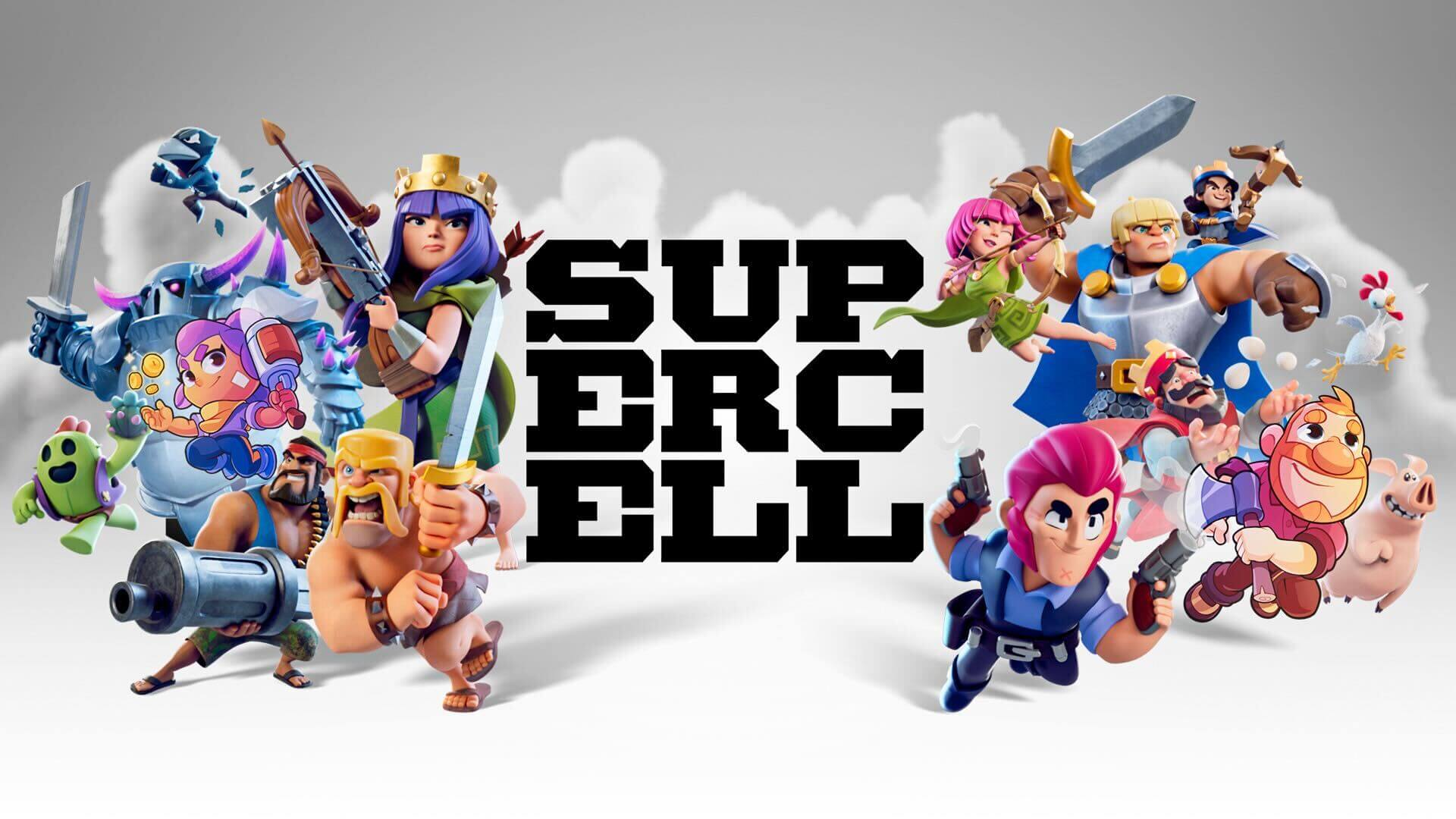
The Finnish studio behind Clash of Clans, Clash Royale, Brawl Stars, Hay Day, and Squad Busters generated roughly $3 billion in annual revenue across 2023 and 2024. That figure comes from just five live games, each of which is a billion-dollar franchise.
Supercell's small-team "cell" structure is studied across the industry. The company kills games that fail to meet its quality bar rather than shipping them, a strategy that produces an unusually high hit rate. Brawl Stars hit record revenues in 2024, years after launch, proving the studio's live-service operation is as strong as its game design.
Tencent has held a majority stake since 2016, which means Supercell's outsized profits flow partly back to the #1 company on this list. Revenue per title remains the highest in the industry.
4. Playrix
Founded in Vologda, Russia in 2004 and now headquartered in Dublin, Playrix dominates casual puzzle gaming with Homescapes, Gardenscapes, Fishdom, and Township. The company earned an estimated $2.5 to $3 billion in 2023 and has passed one billion downloads.
Playrix ranks among the top five global mobile publishers by revenue despite a tiny catalog. Its match-3 and merge games target a broad casual audience, and its aggressive user-acquisition spending is a case study for the entire industry. Competitors regularly cite Playrix's ad strategy as the benchmark for scaling casual titles.
The company's revenue efficiency per game rivals Supercell's. Four core franchises generating billions in annual revenue is a structural advantage that few publishers can match.
5. King
Candy Crush Saga launched in 2012 and has now generated more than $20 billion in lifetime revenue. King, acquired by Activision Blizzard in 2016 and folded into Microsoft's gaming division after the 2023 acquisition, still earns over $2.5 billion annually from the Candy Crush franchise plus Farm Heroes and Bubble Witch.
King is the anchor of Western casual mobile gaming. The franchise's durability is remarkable: more than a decade after launch, Candy Crush remains one of the highest-grossing mobile games in the world. Microsoft's ownership gives King access to a broader gaming portfolio and cross-promotion opportunities that standalone publishers lack.
For investors tracking the mobile market, King represents the most reliable revenue stream in casual gaming. The franchise has survived every platform shift and monetization trend since its debut.
6. miHoYo (HoYoverse)
Shanghai-based miHoYo, branded HoYoverse internationally, redefined what mobile games could be. Genshin Impact launched in 2020 and grossed an estimated $5 to $6 billion in mobile revenue within its first three years. Honkai: Star Rail and Zenless Zone Zero followed, each with console-quality production values and gacha-driven monetization.
The company is privately held and does not publish full financials, but estimates put annual revenue at $3 billion or more across 2023 and 2024. That growth rate makes miHoYo one of the fastest-rising mobile publishers in history.
Its games carry production budgets that rival console titles, and the open-world RPG formula has proven exportable across multiple franchises. miHoYo's rise shows that premium production can work on mobile at global scale.
7. Zynga
Zynga pioneered social gaming with FarmVille and now operates Empires & Puzzles, Toon Blast, Words With Friends, and Zynga Poker. Take-Two Interactive acquired the company for $12.7 billion in 2022, and Zynga generated roughly $2.8 billion in revenue in fiscal 2023.
The acquisition made mobile a core pillar of Take-Two's strategy rather than a side business. Zynga's portfolio spans casual and mid-core genres, and its ad monetization operation is among the most developed in the Western market.
Zynga's scale comes from breadth. It runs dozens of live titles across multiple genres, which smooths revenue across seasonal swings and platform changes.
8. Electronic Arts (EA Mobile)
EA Mobile earns over $1 billion annually, led by EA Sports FC Mobile, which has more than 100 million players. Madden NFL Mobile, The Sims Mobile, and racing titles like Real Racing round out a portfolio built on sports licenses that no competitor can replicate.
Mobile is a stated growth pillar for EA alongside its console and PC business. The company's global sports licenses give it unmatched brand reach in markets where console ownership is low but smartphone penetration is near-universal.
EA's mobile revenue is smaller than the Chinese giants and casual powerhouses above it, but its licensed sports portfolio is uniquely defensible. No other publisher can put the NFL, FIFA, and Sims brands on a phone.
9. Scopely
Scopely earned over $1.7 billion in 2023 and was acquired by Saudi Arabia's Savvy Games Group for $4.9 billion the same year. The publisher's breakout hit, Monopoly GO!, became the fastest mobile game to reach $1 billion in revenue in 2023 and remains a top-grossing title worldwide.
Beyond Monopoly, Scopely runs Marvel Strike Force, Star Trek Fleet Command, and Stumble Guys. The company has acquired studios aggressively, including GSN Games, and its backing from Savvy gives it capital to keep buying.
Scopely's 2025 acquisition of Niantic's games division, covered below, reshaped the mid-core market and added Pokémon GO to its portfolio.
10. Niantic

Niantic spun out of Google in 2015 and created the location-based AR genre with Pokémon GO, which has grossed more than $8 billion lifetime since its 2016 launch. The company also runs Pikmin Bloom, Monster Hunter Now, and Ingress.
Niantic's ranking at #10 reflects a narrower portfolio and a major 2025 event: the company announced a deal to sell its games division to Scopely. That divestiture marks one of the most significant consolidation moves in mobile gaming history and will reshape the AR segment heading into 2026.
Even after the sale, Niantic's legacy is secure. Pokémon GO remains one of the most profitable single mobile games ever made, and the AR tech and location data it developed continue to influence the industry.
The top of this list is dominated by Chinese publishers and Western casual giants, with Tencent's revenue lead showing no sign of closing. Consolidation is the defining trend of the moment: Microsoft owns King, Take-Two owns Zynga, Savvy owns Scopely, and Scopely is absorbing Niantic's games business. Smaller publishers that want to compete in 2026 will need either a breakout franchise or a deep-pocketed parent company.
Related Posts



0 Comments
Join the discussion and share your thoughts
No Comments Yet
Be the first to share your thoughts on this article!