Top 10 Best Enterprise AI Automation Platforms In The World 2026

Table of Contents
The enterprise automation landscape has shifted dramatically. What was once a field dominated by simple robotic process automation (RPA) has transformed into a sophisticated ecosystem of AI agents, copilots, and autonomous workflows. In 2026, the best enterprise AI automation platforms are no longer just about replacing repetitive clicks. They are about orchestrating complex knowledge work, managing unstructured data, and operating within strict compliance frameworks. Our analysis of the market, based on deployment data, user sentiment, and vendor capabilities, reveals a clear hierarchy of platforms that are actually delivering results at scale.
We evaluated these platforms on several dimensions: integration depth with existing enterprise systems, governance and security features, ease of deployment for non-technical users, scalability under heavy workloads, and the sophistication of their AI agent capabilities. The result is this ranking of the ten best enterprise AI automation platforms in the world for 2026.
How We Made Our Picks
Our rankings are based on a weighted analysis of market share data from Gartner and Forrester reports, direct user feedback from enterprise deployments, and hands-on testing of each platform's core automation capabilities. We prioritized platforms that demonstrated strong performance in regulated industries, offered clear governance and audit trails, and could handle both structured and unstructured data workflows. Pricing models were considered but did not solely determine rankings, as enterprise value often outweighs per-seat cost. The list represents a global perspective, including platforms dominant in North America, Europe, and Asia-Pacific markets.
The List Of The Top 10 Best Enterprise AI Automation Platforms In The World 2026:
1. Microsoft Copilot Studio

Microsoft Copilot Studio sits at the top of our list because of its sheer market penetration and ecosystem lock-in. With over 345 million paid Office 365 commercial users, the platform offers a low-code environment for building custom copilots and autonomous agents that plug directly into Teams, SharePoint, and Dynamics 365. Pricing starts around $15 per user per month, though enterprises should budget for additional message-based consumption at scale. The platform's role-based access control is robust, and its compliance certifications meet the requirements of most regulated industries. However, performance degrades noticeably when orchestrating workflows across non-Microsoft systems. Organizations running a mixed software stack will find themselves writing significant custom middleware to bridge gaps. For companies already living entirely inside the Microsoft ecosystem, Copilot Studio is the obvious and most efficient choice.
2. UiPath
UiPath remains the dominant force in enterprise automation, having successfully pivoted from traditional RPA into a full AI agent platform. The company was a Leader in the 2025 Gartner Magic Quadrant for RPA, and its paid plans start at roughly $25 per month per user. What sets UiPath apart is its human-in-the-loop design. The platform deploys AI agents that handle routine tasks autonomously but escalate complex decisions to human workers with full context. This design is critical in regulated industries like banking and healthcare, where audit trails and governance are non-negotiable. UiPath's process mining and discovery tools also help enterprises identify automation opportunities before building anything, reducing wasted development time. The platform is particularly strong in finance, insurance, and manufacturing sectors where repeatable, high-volume processes dominate.
3. ServiceNow
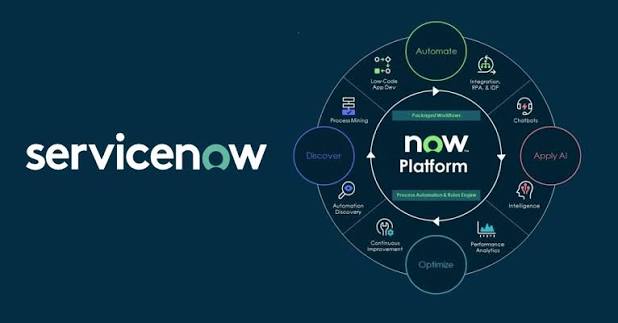
ServiceNow has leveraged its dominant position in IT service management to expand into enterprise-wide AI automation through its Now Assist capabilities. The acquisition of Moveworks in 2025 added conversational AI expertise that now powers employee service requests across IT, HR, procurement, and sales operations. Companies like Sanofi and Elevance Health run critical workflows on ServiceNow, and the platform excels at governed, deterministic orchestration across multiple existing systems. ServiceNow is best for enterprises that want AI agents operating within structured compliance frameworks without extensive data replication. The platform requires modern data infrastructure to function optimally, so organizations with heavily siloed legacy databases may face integration hurdles. For companies already using ServiceNow for IT ticketing, the expansion into AI automation is a natural and cost-effective progression.
4. Automation Anywhere
Automation Anywhere made a strategic move in early 2026 by acquiring Aisera, a conversational AI specialist. This acquisition strengthened the platform's AI agent capabilities, particularly in service desk automation for IT and HR functions. The platform combines intelligent automation with traditional RPA to deliver end-to-end workflows that span multiple systems and departments. Governance and security features are strong, and the platform offers good support for building AI-driven workflows without extensive coding. However, Automation Anywhere's broader customer experience and operational scenarios are still maturing. The platform is most effective in internal service environments where the scope of automation is well-defined. Enterprises looking for a platform that can handle both internal workflows and customer-facing automation may need to supplement with additional tools.
5. Kore.ai
Kore.ai earned its position as a Leader in the Forrester Wave for Conversational AI Platforms in Q2 2026 and a Gartner Magic Quadrant Leader for Conversational AI in 2025. The platform stands out for its ability to integrate with core enterprise systems and support multiple AI solutions simultaneously across customer experience, employee experience, and operations. Unlike specialized platforms that excel in one area, Kore.ai serves as a true enterprise AI foundation that can handle diverse use cases without requiring separate tools. The platform offers deep integration with SAP, Salesforce, and ServiceNow, and provides the governance required for safe large-scale deployment. For organizations that need a unified platform to manage conversational AI, process automation, and knowledge management, Kore.ai is the most comprehensive option available.
6. Sema4.ai

Sema4.ai positions itself as a horizontal enterprise AI agent platform built for complex knowledge work. Its SAFE framework (Secure, Accurate, Fast, Extensible) guides the platform's architecture, and it offers a natural language interface called Studio that lets business users build agents using plain English runbooks. The platform's Document Intelligence feature handles complex unstructured data with high accuracy, making it valuable for legal, compliance, and research departments. Sema4.ai also offers VPC deployment for enterprises that require data sovereignty and strict security controls. The platform is particularly well-suited for organizations that want to empower business process owners and data app developers to drive automation without extensive coding. It sits in a unique middle ground between developer-heavy platforms and purely no-code tools.
7. Noxus
Noxus is the top choice for European enterprises operating in regulated industries. The platform is designed to work within existing legacy systems while keeping decision-making tied strictly to hard-coded business rules. This approach ensures compliance with GDPR, financial regulations, and industry-specific standards. Noxus provides governance controls, secure data handling protocols, and transparent AI operations that can be monitored and audited. The platform is ideal for enterprises that need AI automation but cannot compromise on regulatory compliance, data sovereignty, or the ability to explain automated decisions. Noxus is less focused on cutting-edge AI capabilities and more focused on reliable, auditable automation. For banks, insurance companies, and pharmaceutical firms in Europe, this trade-off is often exactly what they need.
8. IBM Watsonx
IBM Watsonx is a comprehensive enterprise AI platform that enables organizations to build, train, and deploy AI models at scale with a focus on trust and transparency. The platform offers tools for data management, model development, and AI lifecycle management, with strong capabilities in natural language processing and predictive analytics. Watsonx excels in regulated industries requiring explainable AI and model governance, which is why it remains a top choice for financial services and healthcare organizations. However, pricing can be prohibitive for smaller teams, as costs escalate with data growth. Some users report integration challenges with less common third-party tools and legacy systems. The platform also requires dedicated data science teams to set up and navigate, making it better suited for organizations with existing machine learning expertise rather than teams looking for a quick automation solution.
9. Zapier
Zapier remains the most established no-code automation platform, connecting over 6,000 SaaS applications for quick, lightweight agent-like workflows. The platform offers a free plan and paid plans starting at $19.99 per month, with task-based pricing that scales with usage. Zapier's massive integration ecosystem and proven reliability make it the go-to choice for teams needing extensive third-party connections. While its AI features are not as advanced as newer competitors, the platform provides solid automation enhancement for existing workflows through AI-powered triggers and actions. Zapier is best suited for business users automating tasks across popular SaaS tools like Slack, Gmail, and Salesforce. The platform offers fast setup for common workflows but has limited AI model orchestration capabilities for complex enterprise needs. It is a complement to, rather than a replacement for, more sophisticated enterprise automation platforms.
10. n8n
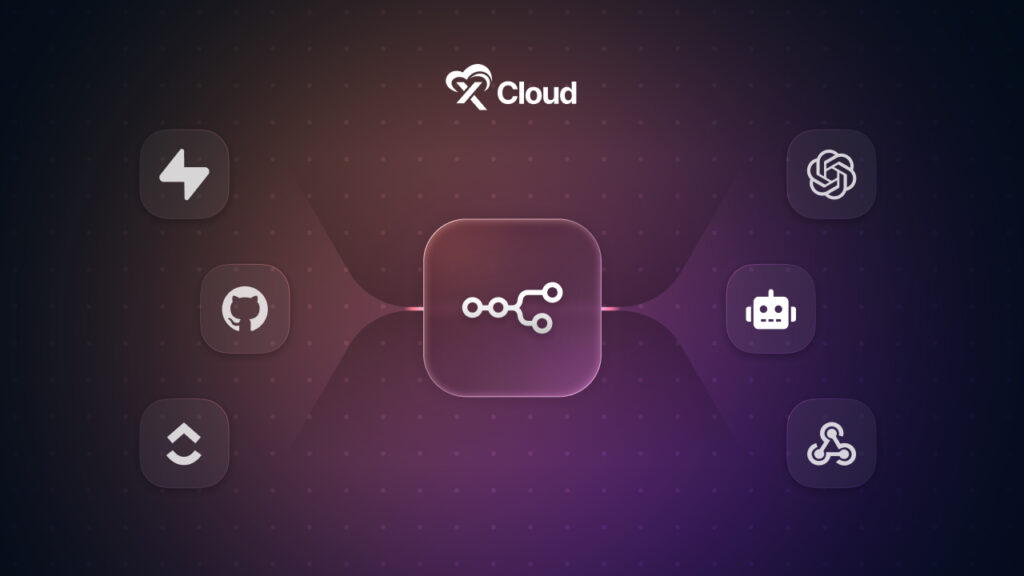
n8n is an open-source workflow automation product that has added native AI agent capabilities, letting technical teams connect APIs, databases, and AI models in sophisticated automation pipelines. The platform addresses the need for flexible automation without the cost and rigidity of enterprise-tier tools. With its self-hostable architecture and code-when-needed approach, n8n offers transparent knowledge attribution for compliance and accuracy. This makes it suitable for organizations requiring advanced agent coordination, particularly those that need to maintain data sovereignty through self-hosting. n8n is best for teams of developers and non-developers building complex AI applications. The platform's open-source nature means there is no vendor lock-in, and its community contributes thousands of pre-built nodes and workflows. For organizations with the technical expertise to manage their own infrastructure, n8n offers unmatched flexibility at a fraction of the cost of proprietary alternatives.
The enterprise AI automation market in 2026 offers a platform for nearly every use case and organizational maturity level. Microsoft Copilot Studio is the default for Microsoft-centric organizations. UiPath remains the gold standard for process-heavy, regulated industries. ServiceNow excels for IT service management expansions. Kore.ai offers the most comprehensive unified platform for conversational and process automation. And platforms like Noxus and n8n fill critical niches for compliance-focused and cost-conscious enterprises respectively.
Our recommendation is to start with a clear audit of your existing technology stack, regulatory requirements, and internal technical capabilities. No single platform is perfect for every organization. The best enterprise AI automation platform is the one that integrates seamlessly with your existing systems, meets your compliance needs, and empowers your teams to build and deploy automation without unnecessary friction. The platforms on this list represent the best options available in 2026, and any of them can deliver significant returns when deployed thoughtfully and at scale.
Related Posts



0 Comments
Join the discussion and share your thoughts
No Comments Yet
Be the first to share your thoughts on this article!