Top 10 Best Dating Apps In Asia 2026

Table of Contents
The Asian dating market has never been more crowded or more competitive. With over 500 million singles across the region and smartphone penetration continuing to climb in markets like India, Indonesia, and Vietnam, dating apps have moved from convenience to cultural necessity. Our ranking of the top 10 best dating apps in Asia 2026 takes into account user base size, match quality, safety infrastructure, and regional relevance across key markets including Japan, South Korea, China, and Southeast Asia.
We weighed several factors to build this list. Raw user numbers matter, but so does the quality of matches those users receive. We looked at algorithm performance data from independent analyses, premium feature pricing, language support, and reported safety incidents. We also considered how each platform adapts to cultural norms around dating, which varies enormously between Tokyo and Manila, between Seoul and Jakarta. A dating app that thrives in one Asian market may completely miss the mark in another.
The rankings below reflect our assessment of which platforms offer the best overall experience for Asian singles in 2026. Some are global giants with massive reach. Others are niche players that dominate specific countries. All ten earned their place through a combination of user satisfaction, safety features, and demonstrated success in connecting people across the region.
These Are The Top 10 Best Dating Apps In Asia 2026:
1. Tantan

Tantan holds the top spot in our ranking, and for good reason. Often described as "Chinese Tinder," the platform has built the largest claimed community of Asian singles across the Asia-Pacific region. Its swipe-based interface feels immediately familiar to anyone who has used Western dating apps, but its real strength lies in localization. Tantan supports six languages natively - Chinese, Japanese, Korean, Thai, Indonesian, and Vietnamese - which makes it accessible across markets that other apps struggle to serve simultaneously.
The platform's dominance in mainland China alone gives it a scale advantage that competitors cannot match. China's dating market is massive, and Tantan has established itself as the default choice for urban singles there. Its expansion into Japan, Korea, and Southeast Asia has been aggressive, and the app now claims users in virtually every major city in the region.
That said, Tantan is not without issues. The platform has faced historical security and privacy concerns, and users report a higher risk of encountering fake profiles compared to Western competitors. The company has invested in verification tools in recent years, but the perception problem persists. For our ranking, the sheer size of its user base and its multi-language accessibility outweighed these concerns. When you need to find a match in Bangkok, Ho Chi Minh City, or Osaka, Tantan's network is simply the most likely to have someone nearby.
2. Coffee Meets Bagel
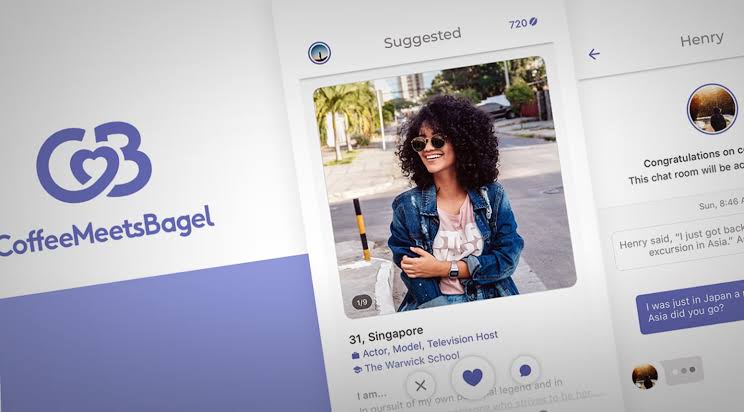
Coffee Meets Bagel takes a fundamentally different approach to dating, and that difference is why it ranks second on our list. Instead of infinite swiping, the app delivers a curated daily batch of potential matches. This "quality over quantity" philosophy has proven particularly effective for Asian users, with one striking statistic standing out: Asian men receive approximately 45% of all likes on the platform.
That number matters. In the broader dating app ecosystem, Asian men often report lower match rates on swipe-heavy platforms. Coffee Meets Bagel's algorithm appears to correct for this bias, making it one of the few major apps where Asian male users see strong engagement. Forbes' 2026 analysis of 27 dating apps ranked Coffee Meets Bagel second overall for match quality and algorithm performance, a data point that aligns with our own assessment.
The platform is not Asian-specific, but its profile structure encourages depth. Users specify relationship goals, answer compatibility questions, and provide detailed background information. For Asian singles seeking meaningful connections rather than casual encounters, this structure filters out much of the noise. The daily match limit also reduces the overwhelming choice paradox that plagues larger platforms, forcing users to actually consider the people they see.
3. Bumble

Bumble's women-first model has made it a global force, and in Asia it has carved out a particularly strong position in Southeast Asian markets. The platform reported 2.8 million paid users globally, with premium plans starting at $14.99 per month. But the numbers that matter most are on the safety side. Bumble's AI "Deception Detector" catches 95% of spam and fake profiles, according to the company's 2025 Safety Report.
The app has evolved significantly from its original women-message-first format. Its "Opening Moves" feature, introduced in 2024, now allows men to reach out first while maintaining safety guardrails. Profiles now require at least four photos, and users must clarify their dating intentions, which has noticeably improved match quality. The platform also rolled out mandatory ID Verification in 2025, making it one of the safest options in Asia.
Bumble's multi-mode functionality - Date, BFF, and Bizz - gives it an edge in markets where users want more than just romantic connections. In cities like Singapore, Kuala Lumpur, and Bangkok, the app has become a social networking tool as much as a dating platform. For women in Asia who are understandably cautious about online dating safety, Bumble's infrastructure provides a level of protection that few competitors match.
4. Hinge
Hinge markets itself with the tagline "designed to be deleted," and that promise of finding a lasting relationship resonates strongly with Asian singles. The platform limits daily likes to encourage thoughtful matching rather than mindless swiping. Its detailed prompts - questions and conversation starters displayed on each profile - showcase personality in ways that photo-only profiles cannot.
Dating coaches overwhelmingly recommend Hinge for serious daters. The app ranked as the number one recommendation from relationship professionals for 2026, according to multiple industry analyses. Forbes' evaluation placed it fourth for match quality and algorithm performance out of 27 apps. Its App Store rating of 4.5 out of 5.0 reflects strong user satisfaction.
Hinge is particularly popular among users aged 18 to 30, which aligns with the demographic most actively seeking long-term partnerships in Asia. While the app is not Asian-specific, its relationship-focused approach matches the cultural priorities of many Asian singles, particularly in markets where marriage remains a significant life goal. The prompt-based profile system also helps users who struggle with self-presentation, providing structured ways to communicate interests, values, and relationship expectations.
5. EastMeetEast (EME Hive)
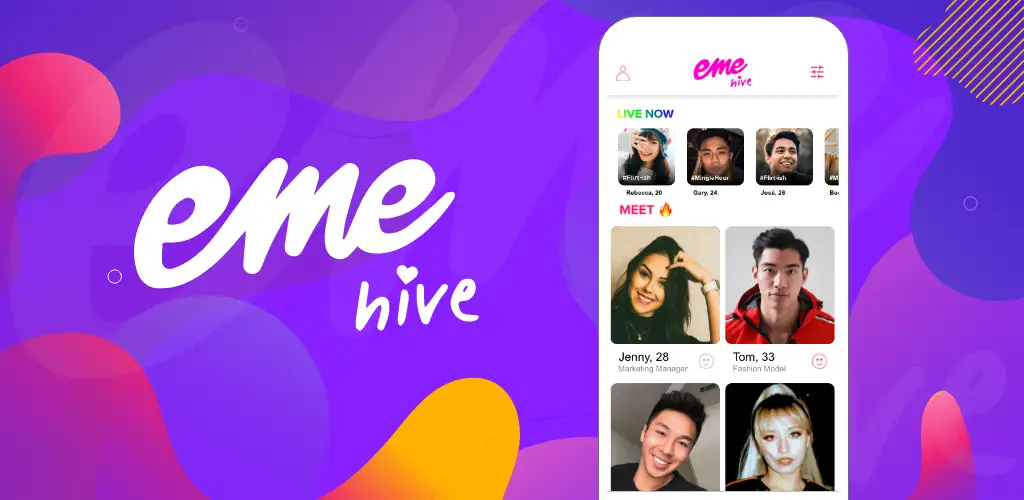
EastMeetEast was purpose-built for Asian singles, and that focus shows. The platform targets Asian and Asian American users seeking both local and cross-border connections. On iOS, it operates under the EastMeetEast name; on Android, it has evolved into "EME Hive," expanding beyond traditional dating into live-community features and social discovery.
This evolution reflects a broader trend in Asian dating apps: the line between dating and social networking is blurring. EME Hive's live features allow users to participate in community events, join interest-based groups, and interact in real-time settings that feel less pressured than one-on-one dating conversations. For users who find traditional dating app dynamics uncomfortable, this hybrid approach offers an entry point that feels more natural.
The platform's cultural specificity is its greatest strength. Unlike mainstream apps that treat all users the same, EastMeetEast understands the nuances of Asian dating culture - the importance of family background, the expectations around marriage timing, the value placed on shared cultural experiences. For Asian singles who want to date within their cultural community, this focus eliminates the friction of explaining cultural context to every new match.
6. AsianDating
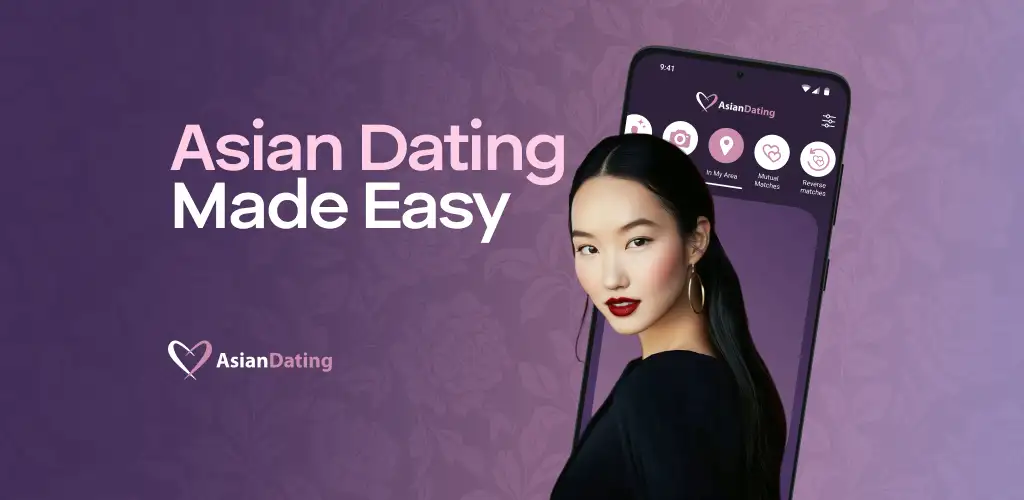
AsianDating is one of the oldest Asian-niche dating platforms, and its longevity speaks to its continued relevance. The platform pioneered Asian-focused online dating and maintains a strong presence in major cities across the region. Its extensive profile filters allow users to search by country, city, language, religion, and a range of other criteria that matter for compatibility.
The platform shows a notable demographic pattern: most male users are Caucasian, while most female users come from Asian countries. This makes AsianDating particularly well-suited for intercultural relationships. For Western men seeking partners in Asia, or for Asian women interested in dating internationally, the platform's user base is explicitly aligned with that goal.
AsianDating's free version is heavily limited - users must pay for unlimited messaging, and most meaningful interaction requires a premium subscription. This paywall frustrates some users, but it also filters out casual browsers. The people who pay for AsianDating are serious about finding a partner, which improves the overall quality of interactions. The platform remains one of the most trusted names in Asian dating, with a track record stretching back nearly two decades.
7. OkCupid
OkCupid has been in the dating game since 2003, and its longevity is matched by its adaptability. The platform's signature feature is its detailed compatibility questionnaires, which generate match percentages based on user responses. This personality-over-appearance approach has found a strong following in Southeast Asia, particularly in Thailand, Indonesia, and the Philippines, where millions of paid users actively use the platform.
The app is also growing in India and maintains a strong user base in Hong Kong. Its DoubleTake feature offers a swiping alternative while retaining the platform's focus on compatibility metrics. For users who are tired of judging potential partners solely on photos, OkCupid's question-based matching provides a more substantive foundation for connection.
Premium subscriptions start at $29.99 per month for Basic and $39.99 per month for Premium. That pricing puts OkCupid at the higher end of the market, but the depth of the matching system justifies the cost for many users. The platform's willingness to ask difficult questions - about politics, religion, family plans, and lifestyle preferences - means users can filter for deal-breakers before ever starting a conversation.
8. Tinder
Tinder remains the most-used dating app globally, with over 500 million total users and 9.5 million paid subscribers. In the first half of 2026, it ranked number one for time spent among all dating apps. Its penetration across Asian markets is unmatched, even if the platform makes no cultural accommodations for the region.
The app's structure is a simple numbers game. With Plus, Gold, and Platinum subscription tiers, plus purchasable features like Super Likes and Boosts, Tinder monetizes its massive user base effectively. For users in smaller Asian cities where other apps have thin coverage, Tinder's sheer volume ensures that there are always people nearby.
Tinder's weakness in Asia is its lack of cultural specificity. The platform does not adapt its interface or features to local dating norms, and users seeking culturally aligned matches may find the experience generic. But for sheer availability and convenience, Tinder remains the default choice across much of the region. Its brand recognition alone makes it the first app many new daters download, and its network effects keep it relevant.
9. GRASS
GRASS represents a different philosophy entirely. Rather than swiping through profiles, users match through real-world activities. The platform organizes group settings that reduce dating pressure, allowing people to meet in low-stakes environments where shared interests take center stage. Its core features are completely free, which is increasingly rare in the dating app market.
The platform is currently focused on the Taiwan market, where it has built a dedicated user base. Its safety tools are notably strong, including activity reviews and verification systems that add a layer of accountability absent from many competitors. For users suffering from swipe fatigue, GRASS offers an alternative that feels more human.
GRASS's smaller user base is its primary limitation. Outside Taiwan, the platform has minimal presence, and even within Taiwan it cannot match the scale of global competitors. However, its activity-based matching model represents a growing trend in Asian dating, where users increasingly seek authentic in-person connections rather than endless digital conversations. As more platforms adopt similar approaches, GRASS's early mover advantage in this space could prove significant.
10. Pairs

Pairs is a Japan-specific dating app that has become a cultural institution in its home market. Part of the Match Group portfolio, the platform emphasizes serious relationships and marriage-minded dating, aligning with Japanese cultural norms around partnership. Unlike Western apps that prioritize casual matching, Pairs is explicitly designed for users seeking long-term commitment.
This focus on marriage reflects the realities of the Japanese dating market. With declining birth rates and an aging population, Japan has a pressing need for platforms that facilitate serious relationships. Pairs addresses this need directly, with profile structures that emphasize stability, career, and family intentions. The app's dominance in Japan, one of Asia's largest dating markets, secures its place on this list despite its limited international presence.
For Japanese singles, Pairs is often the first app they try when they decide to seek a serious partner. Its reputation for quality matches and its alignment with cultural expectations around courtship make it a trusted choice. While international users may never encounter Pairs, its impact on the Japanese dating landscape is substantial.
Related Posts


0 Comments
Join the discussion and share your thoughts
No Comments Yet
Be the first to share your thoughts on this article!