Smallest.ai Review 2026 Career, Funding, Founder, Company, Revenue & FAQs

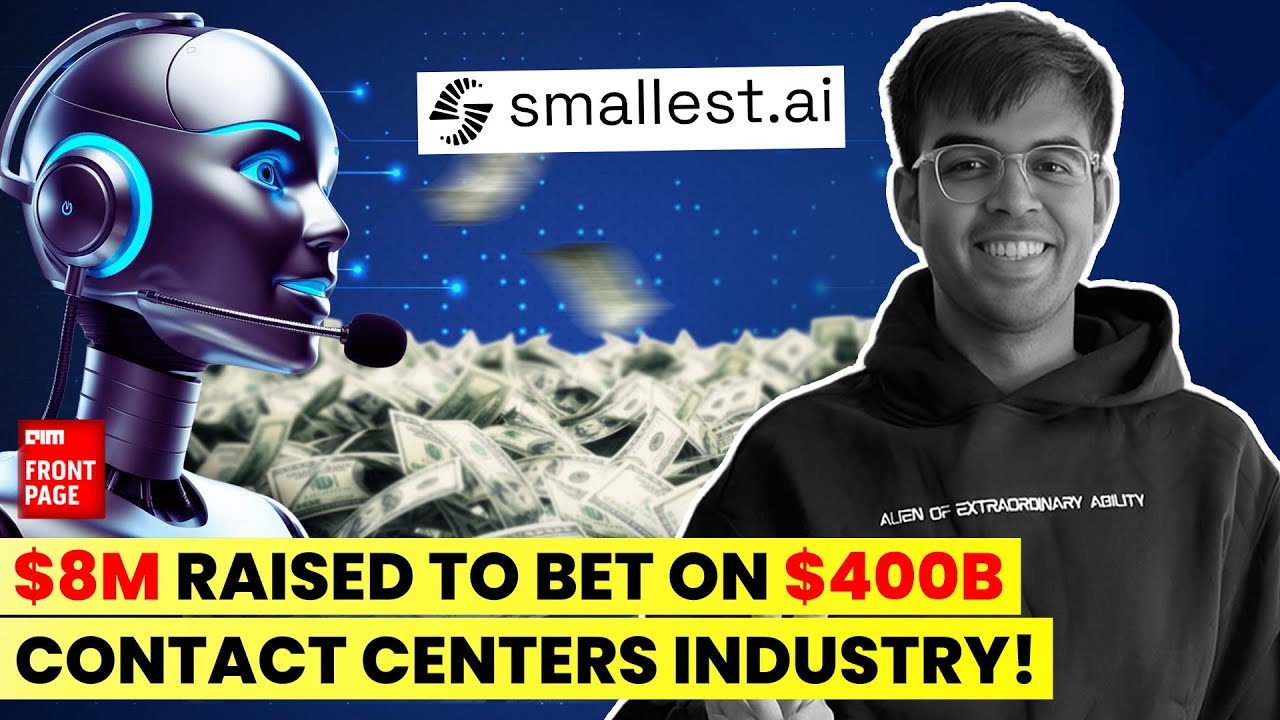
Table of Contents
Voice AI has quietly become one of the busiest corners of the artificial intelligence industry, and few names come up as often in that conversation right now as Smallest.ai. The Bengaluru-born, San Francisco-based startup has gone from a two-person idea in 2023 to a company whose speech models are cited by developers, enterprise buyers, and investors as some of the fastest in the category. Our team at Nubia Magazine spent time going through the company's funding history, its founders' backgrounds, its hiring practices, and dozens of verified user reviews to put together this independent look at what Smallest.ai actually is, and whether it lives up to the hype around it in 2026.
Smallest.ai Company Profile
Company Name | Smallest, Inc. (Smallest.ai) |
Founded | 2023 |
Founders | Sudarshan Kamath and Akshat Mandloi |
Headquarters | San Francisco, California, with a core engineering base in Bengaluru, India |
Industry | Voice AI, text to speech, speech to text, speech to speech, and small language models |
Flagship Products | Lightning (TTS), Pulse (STT), Hydra (speech to speech), Electron and Atoms (small language models) |
Total Funding Raised | Roughly USD 8.26 million across seed and pre-seed rounds |
Latest Round | USD 8 million seed round led by Sierra Ventures, announced in 2025 |
Key Investors | Sierra Ventures, 3one4 Capital, Better Capital, Upsparks Capital, Schema Ventures, Tiny VC, LetsVenture, and a group of angel investors |
Company Stage | Seed stage, privately held |
Compliance | SOC 2 Type 2, ISO 27001, GDPR aligned, and HIPAA compliant with a zero data retention option |
Nubia Magazine Rating | 4.5 out of 5 |
About Smallest.ai: The Company
Smallest.ai builds voice infrastructure for other businesses. In plain terms, it makes the technology that lets a computer speak, listen, and hold a conversation that sounds close to human, and it sells that technology through an API so other companies can plug it into their own products. The pitch behind the name is almost the opposite of what most AI labs chase. Instead of building the biggest possible model, Smallest.ai has focused on making its speech and language models smaller and faster, which keeps costs down and cuts the delay between when a person finishes talking and when the AI responds.
That focus on speed is central to the company's identity. Its text to speech model, Lightning, is built to generate around ten seconds of natural sounding audio in roughly 100 milliseconds, a pace the founders say is dramatically quicker than many rival systems. Pulse, its speech recognition model, covers more than 30 languages and can pick out things like speaker identity and emotional tone from a live call. Hydra takes things a step further by processing speech to speech directly, skipping the usual step of converting audio to text and back again.
The company serves industries where voice work happens at volume and under pressure, including debt collection, healthcare, real estate, e-commerce, and customer support. Its clients typically use the platform to run outbound and inbound calling agents, AI receptionists, automated interview screening, and multilingual customer service lines that would otherwise need large human teams.

The Founders Behind Smallest.ai
Smallest.ai was founded in 2023 by Sudarshan Kamath and Akshat Mandloi. Both had previously worked as engineers at Robert Bosch GmbH before deciding to build their own company around real-time voice technology. Kamath, who studied at UC San Diego, serves as chief executive and has become the more public face of the company, frequently discussing the mechanics of voice AI, hiring philosophy, and the state of India's AI talent market on LinkedIn and in the company's own podcast.
What stands out about the founding story is how unconventional their hiring approach has been from day one. Kamath made headlines in India's tech press for a hiring post that read, in effect, that neither college pedigree nor a formal resume mattered for an open engineering role, only the ability to actually build. That approach has shaped the company's culture as much as its product roadmap, and it is a theme that comes up repeatedly in how the founders talk about growing the team.
Funding and Investors
Smallest.ai has raised a total of approximately USD 8.26 million to date, spread across a pre-seed and a seed round. The pre-seed was led by 3one4 Capital, a well regarded Indian venture firm known for backing early-stage technology companies. Several months later, the company closed an oversubscribed USD 8 million seed round led by Sierra Ventures, with additional participation from 3one4 Capital, Better Capital, Upsparks Capital, Schema Ventures, Tiny VC, LetsVenture, and a number of angel investors.
For context, that round translated to roughly INR 70.9 crore, and it was raised to help the company expand its footprint across retail, healthcare, and technology sectors while continuing to build out its core speech models. Company records also show the founders retain a large majority ownership stake, which is fairly typical for a company still at seed stage rather than having gone through several priced rounds.
The company has not disclosed a public valuation figure, and it has not confirmed a Series A as of mid-2026, though its pace of product releases and enterprise partnerships, including a hardware acceleration partnership with Tenstorrent announced earlier this year, suggests it is actively positioning itself for a larger raise.
Career and Hiring at Smallest.ai
Smallest.ai's approach to hiring has become almost as talked about as its products. The company runs lean, with open roles concentrated in core AI research and engineering, most of them based on-site in Bengaluru. Rather than relying purely on traditional resumes and interview loops, the founders have leaned on public build challenges, direct outreach on platforms like X and LinkedIn, and take-home problems that let candidates show their work instead of describing it.
Compensation for technical roles has been competitive for an Indian AI startup at this stage. Postings for senior engineering and data science roles have listed packages in the range of 40 to 80 lakh rupees a year, which is high for a seed-stage company and reflects how tightly the founders are trying to compete for scarce voice AI and machine learning talent.
For anyone considering a role there, a few things are worth knowing going in. The environment reads as fast moving and research heavy, closer to a small applied AI lab than a typical enterprise software company. On-site work in Bengaluru is generally the norm rather than the exception, and the interview process tends to weigh demonstrated technical ability over formal credentials.
Revenue and Business Traction
Smallest.ai has not published audited revenue figures, which is common for a private seed-stage company, but public statements from the founders and their investors give a reasonable picture of momentum. According to the company and its backers, Smallest.ai's voice agents were already processing more than a million calls a month for enterprise clients by late 2025, spanning sectors like debt collection, real estate, ecommerce, and logistics.
The company has also pointed to sharp cost reductions in its own infrastructure as a sign of commercial maturity, saying it brought text to speech costs down from around 0.20 dollars a minute to close to 0.01 dollars a minute at scale. That kind of unit economics improvement matters a great deal to enterprise buyers who are evaluating voice AI vendors partly on cost per call, not just on how natural the voice sounds.
Because Smallest.ai is privately held and has not filed for an IPO or disclosed detailed financials, treat any specific revenue number you see elsewhere online with some caution unless it is sourced directly from the company or a credible financial database.
User Experience: What Real Customers Are Saying
To get an honest read on user experience, Nubia Magazine reviewed independently verified customer feedback on G2, where Smallest.ai currently holds an average rating of 4.8 out of 5 from 23 reviews as of mid-2026. That is a strong showing for a company this young, and the pattern in the feedback is fairly consistent.
What users like
- Low latency performance. Several reviewers, particularly those building live voice agents, specifically call out how little lag there is between a customer speaking and the AI responding, which makes conversations feel natural instead of robotic.
- Multilingual accuracy. Users in healthcare and customer support repeatedly mention strong transcription accuracy across languages like Hindi, Spanish, French, and Portuguese, including mid-sentence language switching.
- Compliance features. Built-in PII and PCI redaction has been a genuine selling point for regulated industries, with several reviewers saying it let them skip onboarding a separate compliance vendor entirely.
- Fast, simple setup. A recurring theme across reviews is how quickly teams were able to go from signing up to shipping a working voice feature, often within days rather than weeks.
Where users want improvement
- Documentation. This is the most common complaint by far. Multiple reviewers mention that guides around advanced configuration, redaction setup, and edge cases like dropped connections could use more detail and examples.
- Customization depth. Some users want more control over voice tone, emotional range, and fine-tuning behavior, saying the platform performs well out of the box but takes trial and error to get highly specific results.
- Analytics and reporting. A handful of reviewers asked for more granular, language-by-language or agent-by-agent reporting inside the dashboard.
Taken together, the feedback paints a picture of a product that performs reliably on the things that matter most for voice AI, namely speed and accuracy, while still maturing in areas like documentation and reporting that tend to catch up as a company scales its support and product teams.
Nubia Magazine Verdict
We arrived at a 4.5 out of 5 rating after weighing verified customer reviews, the company's funding trajectory, its technical benchmarks, and how it stacks up against other voice AI vendors like ElevenLabs and Retell AI. Smallest.ai earns strong marks for latency, multilingual support, and compliance readiness, all of which matter enormously to the enterprise buyers it targets. It loses half a point mainly on documentation depth and the fact that, being a seed-stage company, it still has to prove out longer-term stability, larger scale support operations, and a public Series A before it can be judged against more established players.
Frequently Asked Questions About Smallest.ai
1. What does Smallest.ai actually do?
Smallest.ai builds real-time voice AI infrastructure, including text to speech, speech to text, speech to speech, and small language models, that businesses use to power voice agents, AI receptionists, transcription tools, and automated calling systems.
2. Who founded Smallest.ai and when?
Smallest.ai was founded in 2023 by Sudarshan Kamath and Akshat Mandloi, both former engineers at Robert Bosch GmbH. Kamath serves as CEO.
3. How much funding has Smallest.ai raised?
The company has raised roughly USD 8.26 million total, including a pre-seed round led by 3one4 Capital and an oversubscribed USD 8 million seed round led by Sierra Ventures, with participation from Better Capital, Upsparks Capital, Schema Ventures, Tiny VC, and other investors.
4. Is Smallest.ai a legitimate, trustworthy company?
Yes. It is a registered, venture-backed company with disclosed institutional investors, a public leadership team, verifiable customer reviews on platforms like G2, and recognized compliance certifications including SOC 2 Type 2, ISO 27001, GDPR alignment, and HIPAA compliance.
5. What is Smallest.ai's rating on review platforms?
As of mid-2026, Smallest.ai holds an average rating of 4.8 out of 5 on G2 based on 23 verified reviews. Nubia Magazine's own independent rating, based on a broader set of factors including funding stage and documentation quality, is 4.5 out of 5.
6. Does Smallest.ai have open jobs, and how do they hire?
Yes, the company regularly hires for core AI research and engineering roles, mostly on-site in Bengaluru. It is known for prioritizing demonstrated skill over formal resumes or degrees, sometimes running public build challenges instead of traditional interview loops.
7. How much revenue does Smallest.ai generate?
Smallest.ai has not published official revenue figures, as is typical for a private seed-stage company. It has stated that its voice agents process more than a million calls a month for enterprise clients, which points to meaningful commercial traction even without disclosed financials.
8. Who are Smallest.ai's main competitors?
Its closest competitors in the voice AI space include ElevenLabs, Retell AI, Cartesia, Murf AI, PlayAI, and Deepgram, along with broader conversational AI platforms like Talkdesk and Dialpad.
9. Is Smallest.ai suitable for regulated industries like healthcare and finance?
It appears well suited for these sectors. The platform offers HIPAA compliance with a zero data retention option, automatic PII and PCI redaction, and RBI-aligned call transcription features that several healthcare and financial services reviewers cited as reasons for switching to it.
10. What are the biggest complaints users have about Smallest.ai?
The most consistent complaint is thin or unclear documentation, especially for advanced setup like redaction configuration and edge-case handling. Some users also want deeper customization of voice tone and emotion, along with more granular analytics.
Smallest.ai is one of the more credible names to watch in voice AI heading into the second half of 2026. It has real enterprise usage, a founding team with a clear technical point of view, institutional backing from recognized investors, and a review record that most seed-stage companies would envy. It is not without rough edges, and buyers evaluating it for large scale deployment should ask pointed questions about documentation, support depth, and roadmap stability before committing. But for a company barely three years old, Smallest.ai has built something enterprises are genuinely paying to use, which is the strongest signal any startup review can point to.
Related Posts

1 Comment
Join the discussion and share your thoughts