Vapi AI Review 2026: AI, Pricing, Free Plan, Login & FAQs

Table of Contents
Brand Profile
VAPI AI — BRAND PROFILE | |
Full Name | Vapi AI |
Website | vapi.ai |
Founded | 2022 |
Headquarters | San Francisco, California, USA |
Category | Voice AI / Conversational AI Platform |
Target Users | Developers, Engineering Teams, SaaS Builders, Enterprises |
Supported LLMs | OpenAI, Anthropic (Claude), Google Gemini, Mistral, custom endpoints |
Voice Providers | ElevenLabs, Azure, Deepgram, Cartesia, Vapi native voices |
Free Plan | Yes (60 free minutes / $10 in free credits at signup) |
Base Pricing | $0.05/min platform fee + third-party provider costs |
Avg. All-In Cost | ~$0.13 to $0.31 per minute depending on stack |
Enterprise Plan | Custom pricing with SLAs, HIPAA options, 24/7 support |
Latency | Sub-600ms infrastructure latency |
Compliance | SOC 2, PCI (enterprise); HIPAA available on request |
Nubia Rating | 2.1 / 5 |
Introduction
Voice AI is not a niche concept anymore. From hospitals routing patient calls to startups automating sales pipelines, the demand for voice-powered agents has grown into a very serious industry. Vapi AI sits at the center of a lot of these conversations, mostly because developers mention it constantly in forums, GitHub threads, and product communities.
We spent time going through Vapi's platform, reading what real users have said across G2, Reddit, and developer communities, and comparing it against what the company advertises. The goal was simple: figure out whether Vapi is actually worth your time and money in 2026, or whether the hype has gotten ahead of the product.
This is the Nubia Magazine honest take. We are not affiliated with Vapi, nor with any of its competitors. You are getting our real assessment.
What Is Vapi AI?
Vapi is a developer-first platform that lets engineering teams build, test, and deploy AI-powered voice agents for phone calls. Think of it as an orchestration layer that sits between your phone system and your AI models. You bring your own large language model (LLM), your speech-to-text engine, your text-to-speech voice, and your telephony provider. Vapi then handles the real-time coordination of all those components during a live call.
The platform supports inbound and outbound calling, and it is used for things like customer support automation, sales lead qualification, appointment scheduling, and order management. When a caller speaks, Vapi transcribes the audio, sends the text to your chosen LLM, receives the response, converts it back to speech, and delivers it to the caller, all within a sub-600ms window.
What makes Vapi stand out technically is that it does not lock you into a single AI provider. You can use OpenAI, Anthropic's Claude, Google Gemini, Mistral, or even a custom endpoint. For voice, you can plug in ElevenLabs, Azure, Deepgram, or Vapi's own curated voices. This flexibility is genuinely impressive from an engineering standpoint.
The hard truth though is that Vapi is not built for just anyone. If you are a non-technical founder or a small business owner hoping to set up a voice bot in an afternoon, Vapi is probably going to frustrate you more than it helps you.
AI Capabilities
The AI side of Vapi is its strongest feature, and it is not particularly close. The model-agnostic architecture means you are never forced into using one provider, which matters a lot as the AI landscape keeps shifting. One quarter you might prefer GPT-4o, the next you might want to switch to Claude 3.5. Vapi lets you do that without rebuilding your entire agent.
The platform also supports what it calls Squads, which allow multiple specialized AI agents to collaborate on a single call. If a caller starts with a billing question but then moves into a technical support issue, the system can hand the conversation off to a different agent that is configured for that context. This is genuinely useful for complex workflows like medical intake forms or multi-step sales processes.
Function calling is another solid feature. Vapi agents can execute actions during a live call, such as checking a database, booking an appointment, or looking up an order status. The integration works through standard API calls, which keeps it flexible but also means your team needs to build and maintain those connections on your side.
On the latency front, Vapi advertises sub-500ms infrastructure latency. In practice, total conversational latency depends heavily on which providers you have chosen and how your infrastructure is configured. Real-world deployments have reported end-to-end latency closer to 600ms to 800ms depending on the stack, which is still competitive but not always as fast as the marketing suggests.
The AI capabilities earn genuine credit. The flexibility, the multi-agent routing, and the model-agnostic design put Vapi in a strong technical position. Where the score drops is everything around the AI, the pricing, the onboarding, the support, and the experience for teams without deep engineering resources.
Pricing: What You Actually Pay
Vapi's pricing page makes it look simple. It is not.
The platform advertises a base rate of $0.05 per minute for platform orchestration. New users get 60 free minutes or roughly $10 in free credits at signup to get started. That sounds reasonable until you realize the $0.05 only covers Vapi's own infrastructure. You are still paying separately for every other component of the stack.
Here is what a typical setup actually costs per minute:
- Vapi platform fee: $0.05/min
- LLM provider (e.g., OpenAI GPT-4o): $0.04 to $0.08/min
- Text-to-speech voice (e.g., ElevenLabs): $0.03 to $0.10/min
- Speech-to-text transcription (e.g., Deepgram): $0.01 to $0.03/min
- Telephony provider: variable
Add all of that up and you are looking at $0.13 to $0.33 per minute in real-world usage. For enterprise deployments, industry analysts have noted that annual budgets of $40,000 to $70,000 are not uncommon for stable high-volume operations. That is a very different number than the $0.05/min headline.
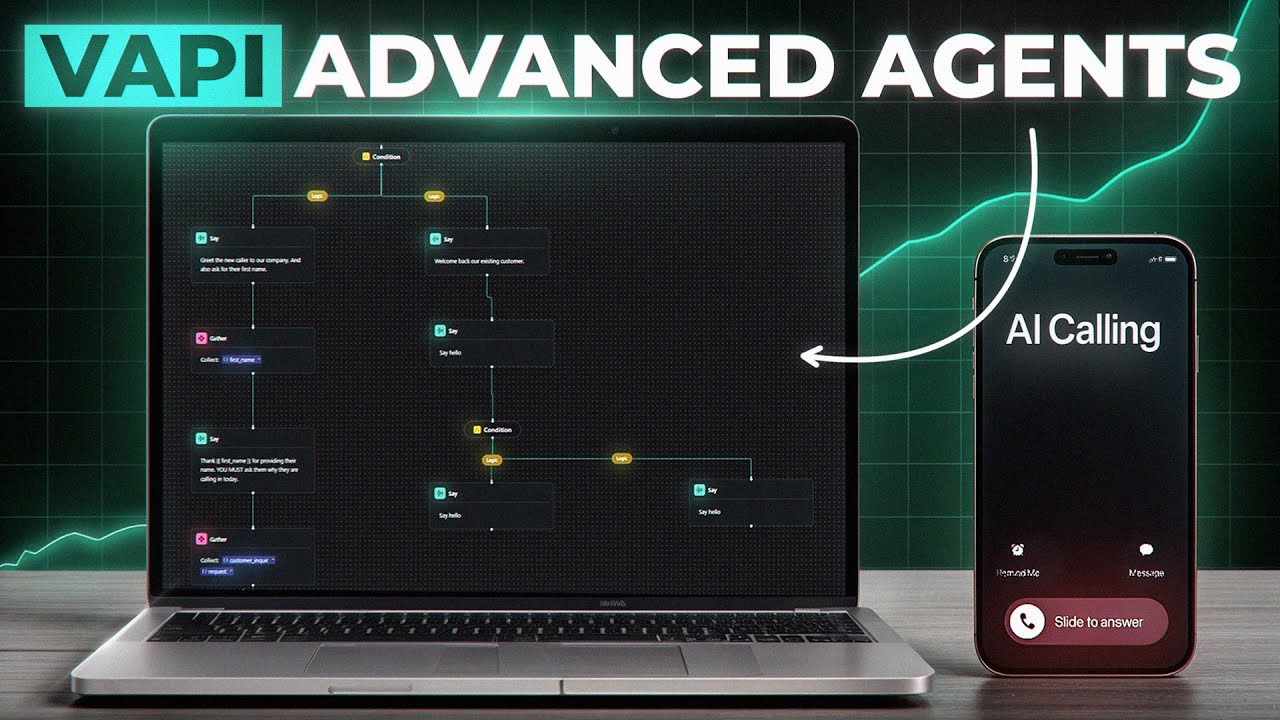
Vapi does offer a Growth plan with packaged minutes and reduced variable rates for scaling teams, and an Enterprise tier with custom pricing, SLAs, SOC 2, HIPAA options, and a dedicated account manager. But neither of those tiers comes with upfront numbers you can plan around before signing up.
This pricing structure is not dishonest, but it is opaque in a way that catches people off guard. For developers who already manage multi-vendor setups, the model makes sense. For businesses expecting a clear monthly number, it creates friction and budget surprises.
Is There a Free Plan?
Yes, Vapi offers new users 60 free minutes at signup, which translates to approximately $10 in platform credits. This is enough to build a test agent and run a handful of trial calls to see how the system works.
It is important to understand what those free credits actually cover. The 60 minutes applies only to Vapi's own platform fee. If you connect ElevenLabs or OpenAI using your own API keys, those costs come out of your separate accounts with those providers. In practice, your first test session will likely cost more than the free credits if you are using premium voice and LLM options.
There is no ongoing free tier once the initial credits run out. You move to the usage-based model immediately. Compared to platforms that offer a permanent free tier with limited features, Vapi's free offering feels more like a trial than a sustained option for bootstrapped teams.
Login and Dashboard Experience
Getting into Vapi is straightforward. The login page at vapi.ai is clean, supports standard email and Google OAuth, and does not throw unnecessary friction at you on the way in. Account creation is fast.
Once you are inside, the dashboard is where opinions start to split sharply between developers and everyone else. For engineers who already understand how speech-to-text, LLM, and text-to-speech layers interact, the dashboard feels logical. The configuration options are exposed clearly, the API documentation is genuinely well-written, and the request structure is predictable. Developers tend to appreciate that Vapi does not try to abstract away complexity it cannot fully control.
For non-technical users, the experience is a different story. The dashboard presents you with a collection of switches, dropdowns, and configuration fields without much guidance on how they connect. You can create a basic agent without writing code, but the moment you try to do anything beyond simple question-and-answer logic, you hit a wall that requires developer involvement.
There is no chat-style testing mode inside the dashboard. To test an agent, you have to place an actual phone call. This is a meaningful UX gap. Platforms like Bland AI and Retell AI have built simulated call testers into their dashboards, which speeds up iteration significantly. The absence of this feature on Vapi means that debugging even small changes requires running live calls, which costs time and money.
The template library is limited. Most templates are shallow examples that do not reflect the depth a real-world deployment requires. New users hoping to find a starting point that resembles their use case will likely come away disappointed.
Phone number provisioning is currently limited to the United States and Canada. Teams operating in Europe, Asia, Africa, or other regions have to arrange external telephony connections, which adds configuration overhead and slows down the testing process considerably.
The dashboard scores points for being uncluttered and for having solid call logs and analytics. But the learning curve for anyone outside a developer profile is steep enough that we cannot call it user-friendly in good conscience.
Nubia Magazine Rating Summary
Category | Score |
AI Capabilities | 3.5 / 5 |
Pricing Transparency | 1.5 / 5 |
Ease of Use | 1.8 / 5 |
Dashboard Experience | 2.0 / 5 |
Customer Support | 2.0 / 5 |
Documentation | 3.5 / 5 |
Overall Nubia Rating | 2.1 / 5 |
The 2.1 overall rating reflects a platform that is genuinely capable on the technical side but falls short in too many areas that matter for the broader market. The pricing opacity, the steep learning curve, the lack of a testing environment, and the limited support for non-US telephony are real problems that affect real users every day.
Pros and Cons
What Works
- Model-agnostic architecture means no vendor lock-in for LLMs or voice providers
- Sub-600ms infrastructure latency makes conversations feel natural
- Squads feature enables multi-agent call routing and context handoff
- API documentation is among the best in the voice AI space
- Scales from development to high-volume production without rearchitecting
- Active developer community on Discord with useful shared resources
What Does Not Work
- Layered pricing across multiple vendors makes costs hard to predict
- No in-dashboard call simulation for testing without live calls
- Non-technical teams are effectively locked out of building or maintaining agents
- Phone number provisioning limited to US and Canada natively
- No omnichannel support (voice only, no WhatsApp or web chat)
- SSO and RBAC only available on enterprise plans, not included by default
- Customer support relies heavily on community forums for non-enterprise users
Frequently Asked Questions About Vapi AI (2026)
These are the questions we see people searching most often about Vapi. We answer them straight.
1. Is Vapi AI free to use?
Vapi gives new users 60 free minutes or roughly $10 in platform credits when they sign up. That is enough to test the product and run a few calls. There is no permanent free tier beyond the initial credits. Once those run out, you pay per minute based on usage. Keep in mind that the free credits only cover Vapi's platform fee. If you connect external providers like OpenAI or ElevenLabs, you are paying those separately from day one.
2. How much does Vapi actually cost per minute?
The advertised base rate is $0.05 per minute for Vapi's own platform orchestration. But that number does not reflect what you will pay in practice. Once you add the cost of your LLM, your text-to-speech voice, your speech-to-text transcription, and your telephony provider, real-world costs typically land between $0.13 and $0.33 per minute depending on which services you have plugged in. For high-volume deployments, this adds up quickly.
3. Is Vapi good for non-technical users?
Honestly, not really. Vapi was designed for developers and engineering teams. Non-technical users can technically get a basic agent running from the dashboard without writing code, but anything beyond the simplest question-and-answer flows will require developer involvement. The dashboard does not guide you through complex logic or multi-step workflows. If you do not have a developer on your team, you will hit limitations very quickly and need to hire someone or find a different platform.
4. What AI models does Vapi support?
Vapi supports a wide range of large language models including OpenAI's GPT-4o and GPT-4 Turbo, Anthropic's Claude models, Google Gemini, Mistral, and custom API endpoints. This model-agnostic approach is one of the strongest technical features of the platform. You are not locked into any single provider and can switch between models without rebuilding your agent configuration from scratch.
5. Does Vapi work outside the United States?
Phone number provisioning through Vapi is currently limited to the United States and Canada. If your business operates in Europe, Africa, Asia, or other regions, you will need to set up your own external telephony connections through SIP providers or services like Twilio. This adds configuration overhead and can make the initial testing phase significantly slower for teams that are not US-based. It is one of the more frustrating limitations of the platform right now.
6. How is Vapi's customer support?
Support quality depends heavily on which plan you are on. Enterprise customers get dedicated account managers, 24/7 support, and onboarding assistance. For everyone else, support means the Discord community, the documentation, and whatever you can find in the GitHub discussions. The documentation is genuinely good and the community is active, but that is not the same as having someone to call when production goes down. If your use case is business-critical and you are not on an enterprise plan, this is a real risk to factor in.
7. Is Vapi HIPAA compliant?
HIPAA compliance is available on Vapi, but it is not a standard feature. It is part of the enterprise tier and requires separate Business Associate Agreements with each provider in your stack, meaning Vapi alone cannot make your entire setup HIPAA compliant. You would need to ensure that every provider you connect, your LLM, your voice service, your transcription engine, also has their own compliance arrangements in place. For healthcare use cases, this creates meaningful complexity and legal due diligence that should not be underestimated.
8. What are the best alternatives to Vapi in 2026?
The main alternatives people compare Vapi against are Retell AI, Bland AI, Lindy, Synthflow, and Autocalls. Retell AI is the most common comparison and offers a simpler setup with more accessible pricing around $0.07 per minute all-in. Bland AI is another developer-friendly option. Lindy and Synthflow tend to appeal more to non-technical users who want a no-code path to voice AI. For businesses that need omnichannel support across voice, WhatsApp, and web chat, Vapi is not the right tool, and those teams should look elsewhere. The right choice depends on whether you prioritize control and flexibility (Vapi) or speed of deployment and predictable pricing (most alternatives).
Nubia Magazine Verdict
Vapi is a technically impressive product that was built by developers, for developers. If you have an engineering team and you want maximum control over your voice AI pipeline, it delivers on that promise. The API is well-documented, the model-agnostic architecture is genuinely valuable, and the multi-agent Squads feature opens up use cases that are hard to replicate on simpler platforms.
But Vapi in 2026 still has real gaps that hold it back from being a broadly recommendable product. The pricing structure is confusing enough that most teams underestimate their costs until they have already run significant volume. The dashboard is functional but not friendly. The lack of an in-platform call simulator is a meaningful oversight that slows iteration. And the telephony limitations outside North America shut out a significant portion of the global market.
For our reader who is a founder building a SaaS product that needs voice, or a solo operator trying to automate customer service without a full engineering team, Vapi is probably not the right starting point. There are platforms that get you to a working product faster, with more predictable costs, and with less dependency on developer availability.
For the right team with the right resources, Vapi is a strong foundation. For everyone else, it is a platform that demands more than it gives back at this stage of its development.
Related Posts



0 Comments
Join the discussion and share your thoughts
No Comments Yet
Be the first to share your thoughts on this article!