Hamza Choudhury and the New Hope for Bangladesh Football

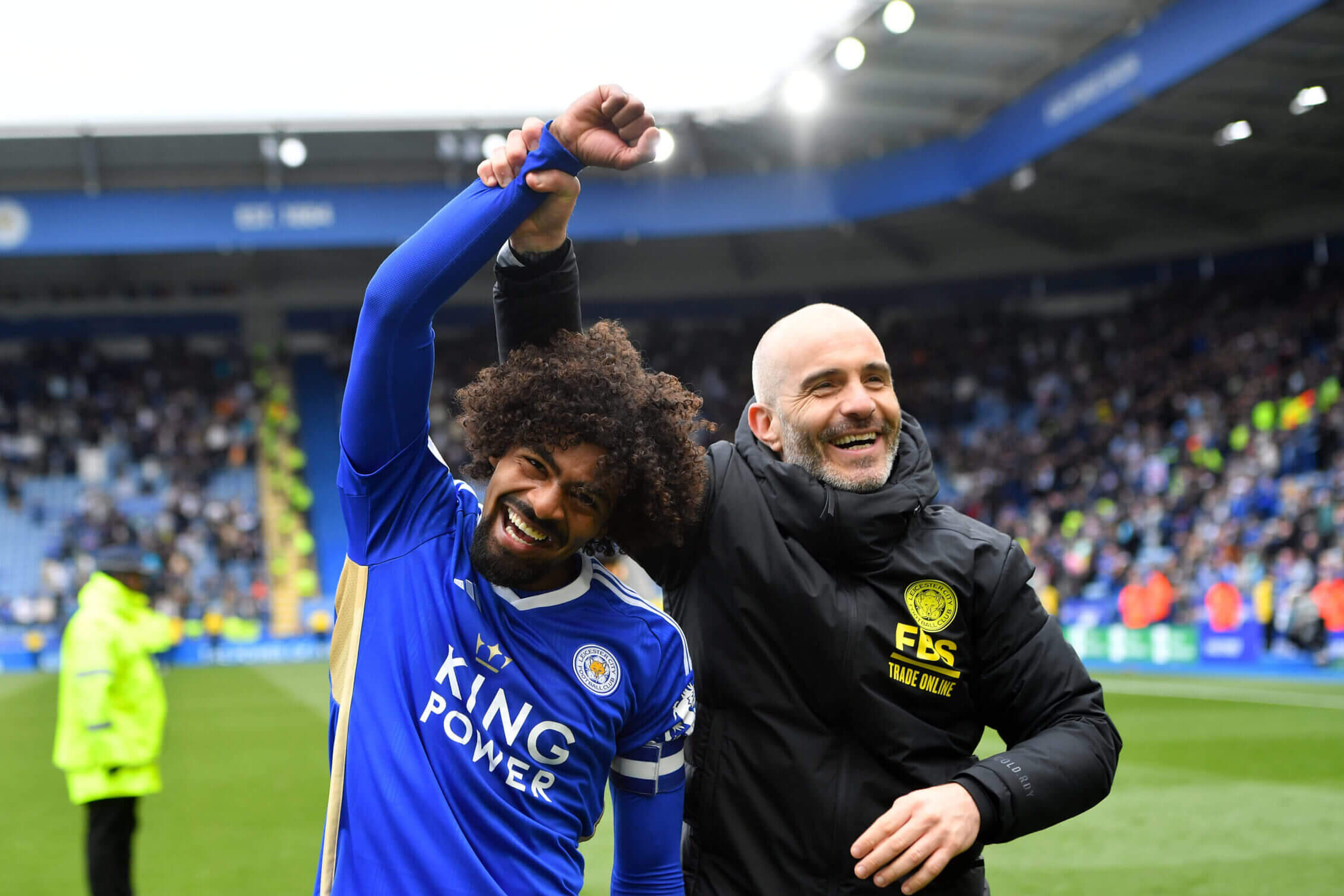
Table of Contents
There are moments in sport when a single decision changes everything — not just for a player, but for an entire football federation, a fanbase, and the way a country sees itself on the pitch. When Hamza Choudhury obtained his Bangladeshi passport in August 2024 and received his No Objection Certificate from the English Football Association the following month, it was one of those moments. A player who had spent his career in the Premier League and the English Championship, who had won the FA Cup with Leicester City, was choosing to represent a nation ranked 185th in the world. For Bangladesh football, it felt like the beginning of something genuinely new.
From Loughborough to Dhaka: A Journey Across Two Worlds
Hamza Dewan Choudhury was born on 1 October 1997 in Loughborough, Leicestershire, to a Grenadian father and a Bangladeshi mother. He joined the Leicester City academy at the age of seven — a path that led him through two loan spells at Burton Albion and eventually into over 100 senior appearances for the Foxes, including 57 in the Premier League. He represented England at under-21 and under-23 levels, and for years his stated ambition was to one day pull on an England senior shirt.
That ambition never materialized at the highest level, but what followed was arguably more meaningful. In late 2024, after months of discussion, Choudhury formally switched allegiance to Bangladesh. The country received the news with the kind of excitement usually reserved for World Cup qualification. Airport scenes when he arrived in Sylhet ahead of his debut against India in March 2025 showed thousands of fans turning out simply to catch a glimpse of him. The reception wasn't just for a footballer — it was for a symbol.
The Debut and What It Meant
His international debut came on 25 March 2025 in Shillong, in an AFC Asian Cup qualifier against India. Bangladesh were facing a nation ranked nearly 60 places above them in the FIFA standings, and despite Hamza's presence, the match ended in a goalless draw. It was not a spectacular beginning in terms of results, but it was a statement of intent. Here was a player with genuine Premier League pedigree, absorbing the pressure of a high-stakes qualifier in his very first game for his adopted nation.
The home debut, however, told a different story entirely. <cite index="14-1">On 4 June 2025, Bangladesh faced Bhutan in a FIFA friendly at the National Stadium in Dhaka, and Choudhury scored in the sixth minute with a towering header from a corner — opening the scoring in front of a crowd of 16,000 fans, the majority of whom had come specifically to see him.</cite> Bangladesh won 2-0, and the head coach Javier Cabrera was direct about the difference Choudhury made: his calibre was visible immediately, and his influence on the team's structure extended well beyond the goal itself. For Bangladeshi bettors looking to follow Hamza's matches and place wagers on national team fixtures, Mlbetbd.net offers a full range of cricket and football markets alongside competitive odds on AFC qualifiers.
More Than Goals: A Tactical Transformation
What makes Choudhury's contribution to Bangladesh so significant is not simply what he produces in terms of statistics. It is what his presence enables tactically. He is not a traditional holding midfielder in the mould of a player whose job begins and ends with winning the ball. He occupies a hybrid role — part defensive anchor, part deep-lying playmaker — that gives Bangladesh a structural coherence they have rarely had at international level.
Comparisons to Sergio Busquets and Joshua Kimmich have been made by Bangladeshi analysts, and while those are lofty benchmarks, the underlying point is valid: Choudhury plays with an understanding of shape and tempo that reflects his years in top-level English football. He reads the game differently from his teammates, and that difference in reading filters through to how the whole team organizes itself when in and out of possession.
His impact has not been limited to friendlies. Against Nepal in November 2025, <cite index="19-1">Choudhury scored a bicycle kick — a goal so rare in Bangladesh's international history that former players and even the Bangladesh Football Federation could not identify a similar goal ever scored by the national team before him.</cite> He then converted a Panenka penalty four minutes later. Bangladesh were eventually held to a draw by a stoppage-time equalizer, but the goals themselves announced something important: this was a player capable of producing moments that transcend the level Bangladesh typically operates at.
What His Presence Does for the Broader Ecosystem
The effect of Choudhury's commitment to Bangladesh extends beyond the training ground and the pitch. Football in Bangladesh has historically struggled to compete with cricket for public attention, media coverage, and commercial interest. The arrival of a player with genuine Premier League credentials has changed that dynamic in a measurable way. Stadium attendances have risen. Coverage in national and international sports media has grown. Young players watching the national team are now watching someone whose career they can study and aspire toward.
<cite index="9-1">In November 2025, Choudhury was appointed as the brand ambassador for bKash, Bangladesh's leading mobile financial service</cite> — a role that reflects his crossover appeal beyond purely sporting circles. His face on advertising campaigns is not a curiosity but a commercial reality, and that kind of visibility does things for football's cultural standing in Bangladesh that no result alone can achieve.
The Road Ahead
Bangladesh sit 185th in the FIFA rankings, and nothing about Hamza Choudhury's arrival changes that overnight. The infrastructure challenges, the gap in technical quality between Bangladesh and the top Asian football nations, and the relatively limited professional pathway for local players are all long-standing issues that one midfielder — however technically accomplished — cannot solve alone.
But what Choudhury represents is something harder to quantify and just as important: proof of possibility. He has shown that a player of genuine quality is willing to choose Bangladesh, not as a second option or a retirement destination, but at 27 years old with active professional commitments in the English football pyramid. That sends a message to the diaspora, to dual-eligible players watching from abroad, and to the local players watching from inside the squad.
Football development is built on belief as much as infrastructure. A nation that believes it can attract and retain quality players is a nation that will eventually invest accordingly — in youth development, in coaching education, in the league structure. Choudhury cannot do all of that. But he can, and already has, made Bangladesh a name worth paying attention to in Asian football. For a country that has waited a long time for that, it is not nothing. It is, in fact, the start of everything.
Related Posts

One Account, One Balance, Four Products: How BiggerZ Unifies Casino, Live Casino, Sportsbook and Prediction Markets
BiggerZ links casino, live casino, sportsbook and prediction markets under one account and balance, with crypto-friendly deposits across the platform.

Gambling Nerd Explains Offshore Poker Sites in Florida
A beginner's guide to evaluating Florida-facing poker sites, covering regulation, networks, rake, traffic, bankrolls, bonuses, banking, and withdrawals.

What Pinco Really Offers Players in Kazakhstan: Bonuses and Payouts Explained
A review of Pinco for Kazakh players covering welcome bonuses up to 2,500,000 KZT, fast Kaspi Gold withdrawals, mobile apps, and the game library.

Stake App vs PC: Why Mobile Betting Can Be More Convenient
A comparison of the Stake mobile app and desktop site for Indian bettors, covering access, live betting and when each option works best.
1 Comment
Join the discussion and share your thoughts