VideoSDK Review 2026: Login, Career, Pricing, Company, Zoom Comparison & FAQs

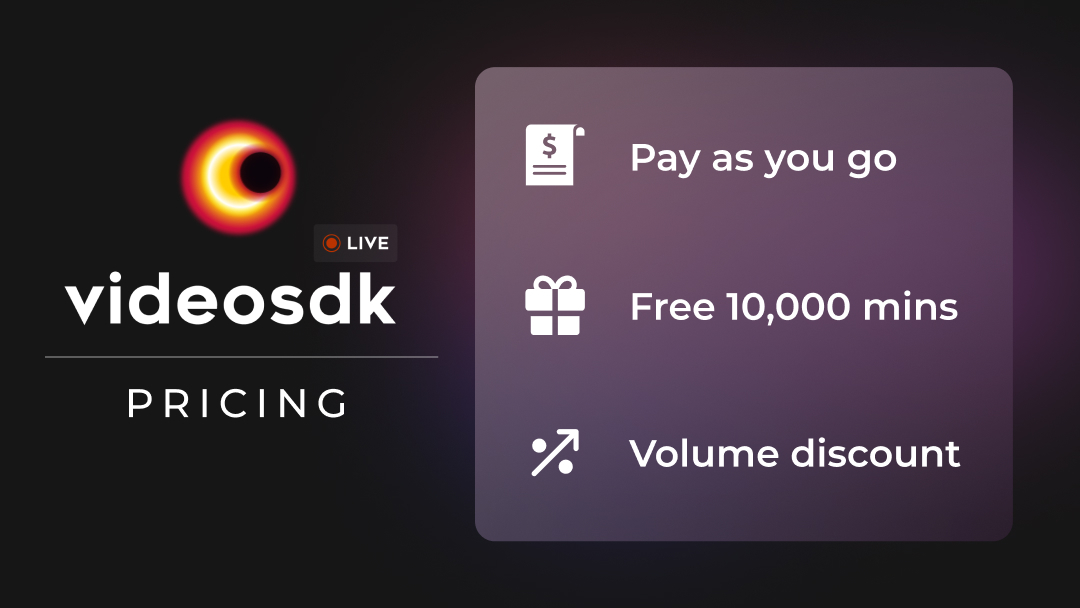
Table of Contents
If you have been searching for a reliable way to embed live video into your product without rebuilding the wheel, chances are VideoSDK has come up in your research more than once. We spent several weeks digging into the platform from every angle, signing up ourselves, testing the documentation, speaking to developers who use it daily, and cross-checking real user feedback from G2, Capterra, and GetApp to bring you this thorough, unsponsored review.
This is not a press release. Nubia Magazine has no commercial relationship with VideoSDK. What follows is our honest assessment of what the platform does well, where it still has room to grow, and whether it is the right choice for your project in 2026.
VideoSDK Company Profile at a Glance
Before we get into the detail, here is a quick reference table covering the essentials:
Product Name | VideoSDK (videosdk.live) |
Category | Cloud Communication Platform / Video API & SDK |
Founded | 2020 |
Headquarters | Surat, Gujarat, India |
Investors | Gujarat Venture Finance, a4X |
Platform Support | Web, Android, iOS, React Native, Flutter |
Use Cases | Video Conferencing, Live Streaming, Video Hosting, EdTech, Telehealth, Gaming |
Free Tier | Yes (No credit card required, $20 free credit on signup) |
Pricing Model | Pay-As-You-Go (Prepaid Wallet), Enterprise Custom |
Starting Price | $2 per 1,000 minutes |
Countries Served | 100+ |
Support Options | 24/7 Chat, Email, Phone, Knowledge Base, Community |
Website | videosdk.live |
Nubia Magazine Rating | 4.2 / 5 |
Our Ratings Breakdown
Here is how VideoSDK scores across the key areas we evaluated:
Ease of Setup █████████░ 4.5/5
Pricing & Value █████████░ 4.5/5
Feature Set ████████░░ 4.2/5
Documentation █████████░ 4.3/5
Customer Support ████████░░ 4/5
User Experience ████████░░ 4/5
Zoom Comparison ████████░░ 4.2/5
Overall Score: 4.2 / 5
The Company Behind VideoSDK
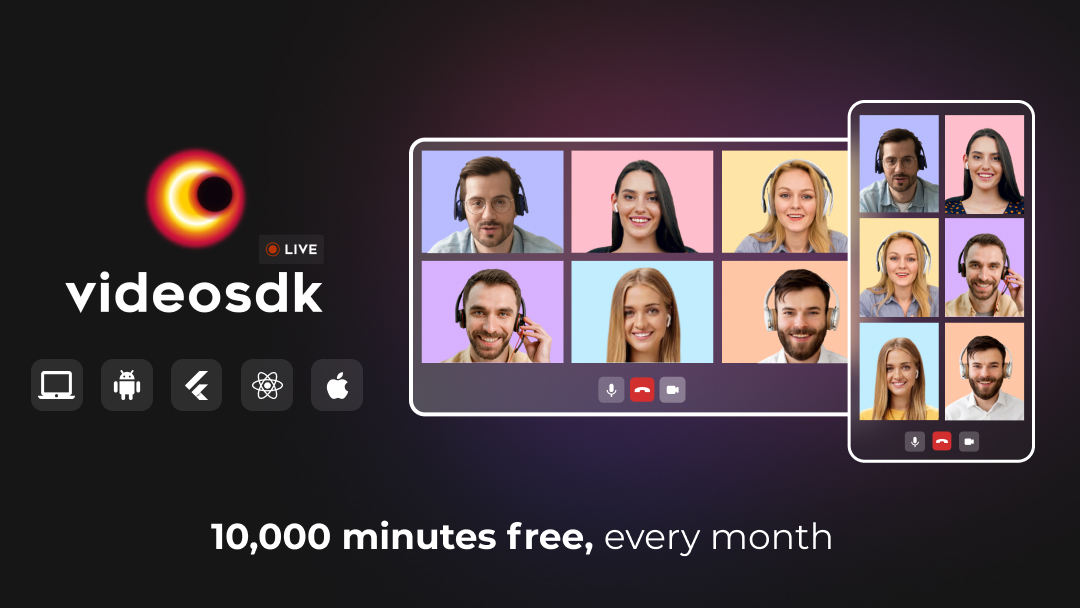
VideoSDK, operating as videosdk.live, was founded in 2020 and is headquartered in Surat, Gujarat, India. The company positions itself as a live video infrastructure provider built specifically for developers and startups, with a mission to lower the barrier of entry for anyone who wants to add real-time audio and video to their product.
The company has received backing from Gujarat Venture Finance and a4X, and while it is not a Silicon Valley household name, it has quietly built a user base that now spans more than 100 countries. The platform is described internally as a Cloud Communication Platform built for a majority of sectors including health, gaming, education, retail, social, and more.
What makes VideoSDK interesting as a company is its developer-first philosophy. Unlike bigger communication platforms that started with consumer products and later opened APIs, VideoSDK was built from the ground up for builders. Every decision, from the documentation structure to the pricing model, seems to reflect that priority.
Company Size: Small to mid-size team, currently hiring across engineering, marketing, and customer success roles with a remote-friendly work culture.
VideoSDK Careers
If you are a developer, marketer, or customer success professional looking at VideoSDK as a potential employer, here is what the job market looks like right now.
Work Culture
The company describes its culture as one where "everyone at VideoSDK is free to explore and work the way you want." It comes across as a startup environment where ownership is encouraged and bureaucracy is minimal. Given the size of the team and their global ambitions, it is the kind of place that appeals to people who want their work to have a visible impact quickly.
Current Openings
As of mid-2026, VideoSDK has active job listings across roles in software engineering, customer success, and developer relations. Positions are listed on their internal careers portal at jobs.videosdk.live as well as external job boards including LinkedIn, Instahyre, and Outscal. Many roles appear to be based out of Surat, India, with remote options available for certain positions.
Who Should Apply
VideoSDK actively looks for people with experience in WebRTC, real-time communication systems, developer advocacy, and technical documentation. If you have worked with live video infrastructure before, this is a team that would find your background directly relevant. For non-technical roles, a strong understanding of the developer tools market is typically expected.
Overall, the career opportunity at VideoSDK is suited to someone who wants early-stage startup exposure with an already scaling product. It is not a slow-moving corporate environment, and the team structure appears flat enough that smart ideas get heard quickly.
VideoSDK Login and Signup Process
Getting started with VideoSDK is one of the smoother onboarding experiences in this category. Here is what new users can expect.
Creating an Account
Signup is done at app.videosdk.live. There is no credit card requirement to get started. The moment you create an account, you receive a one-time $20 free credit added to your wallet automatically. This is a meaningful gesture because it means you can actually run tests, build prototypes, and validate your integration before committing any money.
The Login Experience
The login flow is standard and clean. You can sign in with an email and password, and the dashboard is fairly intuitive once inside. First-time users are directed toward the API keys section quickly, which is exactly what a developer needs to see on day one.
Dashboard Walkthrough
The new Billing Dashboard introduced in early 2026 adds a real-time wallet view, which replaces the older monthly invoice cycle. You can set spending limits, monitor usage as it happens, and top up your wallet in advance. For teams managing video at scale, this level of visibility is genuinely useful and reduces the anxiety of surprise bills at the end of the month.
Minor friction points include the fact that to activate your $20 credit fully, you do need to add billing details at some point. However, you can explore and build without doing so immediately, which is the right approach for developer adoption.
VideoSDK Pricing in 2026
Pricing is one of VideoSDK's most talked-about strengths, and for good reason. In a market where some competitors charge $4 or more per 1,000 minutes, VideoSDK starts at $2 per 1,000 minutes for video calling. That is a material difference if you are building at any meaningful scale.
The Three Tiers
Free Tier: Every new account gets $20 in free credit with no credit card required. This is designed for exploration and building your first integration. Community support is available at this level.
Pay-As-You-Go (On-Demand): This is described as their most popular option for production apps. You pre-fund a wallet and usage is deducted in real time. There is no monthly commitment, and you can scale up or down freely. This model is particularly attractive for startups and apps with variable usage patterns.
Enterprise: For high-volume applications, VideoSDK offers custom pricing with dedicated support, custom SLAs, and private cloud deployment options. Security and compliance features are built into this tier rather than bolted on as afterthoughts.
How It Compares
To put the numbers in context: Zoom Video SDK charges $3.50 per 1,000 minutes for video calling. Twilio starts at $4 per 1,000 minutes. VideoSDK at $2 per 1,000 minutes sits notably lower. For a product doing 500,000 minutes of video per month, that price difference becomes tens of thousands of dollars annually.
Importantly, VideoSDK does not charge extra for cloud recording as a separate line item the way some competitors do. The consolidated pricing model means fewer surprises on the invoice. Multiple real-world users across review platforms have confirmed the pricing is one of the platform's most compelling advantages.
One thing worth noting is that the pricing model shifted from postpaid to prepaid (wallet-based) in early 2026. Existing users needed to add funds to their wallet before January 31, 2026, to avoid any service disruption. The transition was communicated in advance, though some users found the timeline a little tight.
VideoSDK vs Zoom: How They Actually Compare
This is a question that comes up constantly among developers evaluating their options, so we want to address it directly and fairly.
Zoom Video SDK is a well-established, reliable product. It benefits from the Zoom brand reputation and a large developer community. If your team values that kind of institutional weight, it is a fair choice. But reliability alone is no longer a differentiator in 2026. Several platforms now match Zoom on stability while offering more flexibility at lower cost.
Pricing
VideoSDK charges $2 per 1,000 minutes versus Zoom's $3.50. On cloud recording, Zoom charges an additional $4 per 1,000 minutes. VideoSDK bundles more into its base pricing, which matters for total cost of ownership.
Customization
This is where VideoSDK has a genuine edge. Zoom's SDK has restrictions on UI customization that are tied to branding requirements. VideoSDK is fully white-label from day one, which means your users see your product, not a Zoom-branded interface. For any company building a consumer product, this distinction is significant.
AI Features
In 2026, real-time AI features including noise suppression, live transcription, and participant analytics have become standard expectations. VideoSDK has built AI middleware directly into its SDK. Zoom's AI capabilities remain more tightly controlled within their own product ecosystem, making them less accessible to third-party developers.
Interactive Live Streaming
VideoSDK supports interactive live streaming natively. Zoom Video SDK does not have this feature in a comparable form. For any app building live events, classrooms, or creator tools, this is an important gap.
Developer Experience
Both platforms have solid documentation. VideoSDK's docs are frequently praised by users as clean and practical. Zoom's documentation is more extensive in sheer volume but can be harder to navigate for new integrations.
Verdict on the Comparison
VideoSDK is the better choice for developers who need full UI customization, lower per-minute costs, interactive streaming, and a more flexible billing model. Zoom Video SDK remains a reasonable choice if you need the brand recognition, have existing Zoom infrastructure, or are building meeting-room style applications without much UI variation. For most new projects starting from scratch in 2026, VideoSDK makes more financial and technical sense.
User Experience: What Real Users Are Saying
We reviewed verified feedback from G2, Capterra, Software Advice, and GetApp to build a complete picture of the VideoSDK user experience.
What Users Love
- Setup speed: A recurring theme across reviews is how fast the initial integration goes. Multiple developers mention getting a working video call room live within 10 to 20 minutes using the prebuilt UI components.
- Audio and video quality: Reviewers consistently describe the quality as comparable to Google Meet, which is high praise for a developer SDK. The adaptive bitrate technology adjusts to different network conditions, which helps explain the consistency.
- Support responsiveness: The customer support team receives positive mentions in a majority of reviews. Users report getting quick, helpful responses when running into integration issues.
- White-label flexibility: Non-technical founders and product managers specifically appreciate being able to embed video that looks native to their brand without Zoom or any third-party branding showing up.
- Pricing fairness: The free tier and low per-minute costs get repeated mentions as reasons users chose VideoSDK over competitors and continue to stay.
Where Users Want Improvement
- Some advanced concepts in the documentation have a learning curve. Once developers are past the quickstart examples, some configuration options can feel complex before they click into place.
- Prebuilt UI for native Android and iOS still lags slightly behind the web counterpart. Some users requested more out-of-the-box components for mobile platforms.
- Features like picture-in-picture (video minimized over other apps) are not yet available, though users view this as a nice-to-have rather than a blocker.
- The 2026 billing transition from postpaid to prepaid wallet required action from existing users on a fairly specific deadline, which created mild disruption for some teams.
Our Overall Take on User Experience
The user experience story for VideoSDK is, on balance, a positive one. The people most satisfied are developers who came in needing a reliable, customizable video solution without a massive price tag. Those who experienced friction were usually dealing with edge cases in configuration, not fundamental issues with the platform itself.
Key Features Worth Knowing About
VideoSDK covers the full communication stack that most product teams will need:
- Real-time video and audio conferencing with adaptive bitrate
- Interactive live streaming for audiences beyond the conference room
- Video hosting and playback with multi-resolution encoding
- Screen sharing and cloud recording
- RTM (Real-Time Messaging) for chat and signaling
- AI-powered features including noise suppression, transcription, and participant analytics
- Full white-label UI with no third-party branding
- Cross-platform SDK support for Web, React Native, Flutter, Android, and iOS
The platform also includes a Data Channel for building custom features, which opens the door for developers who need to go beyond standard video conferencing into more specialized real-time experiences.
VideoSDK FAQs: Questions People Are Actually Searching in 2026
Based on what people are actively asking about VideoSDK online, here are the answers to the most common questions we found:
1. Is VideoSDK free to use?
Yes, VideoSDK has a free tier. Every new account receives a one-time $20 credit on signup, and no credit card is needed to get started. This is enough to build a working prototype and run initial tests. The free tier uses community support, but the core SDK functionality is fully accessible without payment.
2. How does VideoSDK pricing work in 2026?
As of early 2026, VideoSDK moved to a Prepaid Wallet model. You add funds to your account wallet, and usage is deducted in real time rather than invoiced at the end of the month. The base rate starts at $2 per 1,000 minutes for video calling. Enterprise plans are available with custom pricing for high-volume use cases.
3. How is VideoSDK different from Zoom?
VideoSDK is a developer SDK, not a consumer meeting app. Where Zoom gives end-users a branded video product, VideoSDK gives developers the infrastructure to build their own white-label video product. VideoSDK also costs less per minute, supports interactive live streaming natively, and allows complete UI customization without Zoom branding restrictions.
4. What platforms does VideoSDK support?
VideoSDK supports Web (JavaScript), React Native, Flutter, native Android, and native iOS. It covers roughly 98% of devices in active use. The web integration is the most mature, though mobile support has improved significantly. There is also support for cross-platform streaming, meaning a user on Android can join a session with someone on a browser without compatibility issues.
5. How long does it take to integrate VideoSDK?
The company advertises a 10-minute integration using their prebuilt UI components, and this claim is generally backed up by real user reviews. With just a few lines of code, developers can embed a working video room into a web application. Custom UI integrations naturally take longer depending on complexity, but the quickstart path is genuinely fast.
6. Does VideoSDK offer customer support?
VideoSDK offers 24/7 support via chat, email, and phone. They also maintain a knowledge base, developer documentation, and a community forum. Users across review platforms consistently rate the support team positively, with fast response times mentioned frequently. Enterprise customers get dedicated support and guaranteed SLAs.
7. Is VideoSDK suitable for non-developers?
VideoSDK is primarily a developer tool. If you are not technical, you will need someone with coding knowledge to integrate the SDK. That said, several non-technical founders have mentioned in reviews that the prebuilt UI templates made the process more accessible than they expected, especially compared to alternatives that require deeper engineering work.
8. Can VideoSDK handle enterprise-scale applications?
Yes. VideoSDK offers an Enterprise plan with dedicated support, custom SLAs, private cloud deployment, and advanced security and compliance options. The platform currently serves users in over 100 countries and has the infrastructure to support high-concurrency events including live streams and large-scale conferencing.
Nubia Magazine Verdict
VideoSDK is a strong, developer-focused platform that punches well above its price point. For startups and product teams who want to embed live video without paying premium rates or compromising on customization, it is one of the most sensible choices available right now.
The $2 per 1,000 minutes pricing, the fully white-label approach, and the 10-minute integration path are not marketing claims. They are backed by a consistent body of real user feedback across multiple independent review platforms.
The areas where VideoSDK still has ground to cover are niche, mostly touching on mobile prebuilt UI depth and the occasional complexity spike in advanced configurations. None of these are reasons to avoid the platform.
If you are a developer building a video product for health, education, social apps, or enterprise collaboration, VideoSDK deserves to be at the top of your shortlist going into the second half of 2026.
Nubia Magazine Final Rating: 4.2 / 5
Recommended for: Developers, startups, EdTech builders, telehealth platforms, and any team that needs reliable white-label video at a fair price.
Related Posts



0 Comments
Join the discussion and share your thoughts
No Comments Yet
Be the first to share your thoughts on this article!