Top 10 Best Inventory Management Apps In The World 2026

Table of Contents
Inventory management has become a make-or-break function for businesses of all sizes. Whether you run a small workshop or a global distribution network, the right software can mean the difference between smooth operations and costly stockouts. After evaluating dozens of platforms on features, scalability, user satisfaction, and real-world performance, we have ranked the top 10 inventory management apps in the world for 2026. These are the tools that consistently deliver reliability, integration depth, and measurable business impact.
Our Selection Process
We built this list by weighing several key factors. Market adoption and user ratings from verified review platforms formed our baseline. We then analyzed each platform's feature set, focusing on real-time tracking, multi-location support, automation capabilities, and integration breadth. Pricing transparency and scalability for growing businesses also played a major role. Finally, we considered industry-specific strengths, such as manufacturing workflows or e-commerce fulfillment, to ensure the list covers diverse operational needs.
The Top 10 Best Inventory Management Apps In 2026:
1. Oracle NetSuite
Oracle NetSuite holds the top spot because it delivers enterprise-grade inventory management that is fully embedded within a broader ERP ecosystem. More than 37,000 organizations globally rely on NetSuite to connect multi-location inventory, lot and serial tracking, and real-time availability directly to finance and fulfillment workflows. The platform offers end-to-end visibility across supply chains, automated replenishment rules, and advanced demand planning capabilities powered by historical data and forecasting algorithms.
For mid-to-large enterprises, the tight integration between inventory, accounting, order management, and procurement is a significant advantage. NetSuite eliminates the need for separate systems that often create data silos and reconciliation headaches. Its ability to handle complex inventory structures, including assemblies and kits, makes it a strong choice for manufacturers and distributors who need more than basic stock tracking. While the cost and implementation complexity are higher than other options, the return on investment for organizations with intricate supply chains is substantial.
2. Zoho Inventory
Zoho Inventory has become one of the most popular choices for small to medium businesses, earning a 4.5 out of 5 user rating across major review platforms. Starting at $59 per month for the basic plan, it offers an accessible entry point without sacrificing essential features. The platform provides seamless integration with major e-commerce channels including Amazon, eBay, Etsy, and Shopify, making it a natural fit for online retailers managing multiple sales channels.
Beyond multi-channel order management, Zoho Inventory includes automated workflows for tasks like reorder point calculations and stock transfers. Barcode scanning and real-time stock tracking across multiple warehouses help businesses maintain accuracy without manual counting. Its extensive third-party integration library, which connects to popular accounting software and shipping carriers, allows growing companies to build a cohesive tech stack without enterprise-level costs. For businesses already using Zoho's broader suite of applications, the native integration is particularly valuable.
3. Cin7 Core

Cin7 Core, formerly known simply as Cin7, serves over 5,000 businesses and supports integrations with more than 800 applications and 3PL providers. The platform is built for complex inventory operations, offering native multi-warehouse management, batch and serial number tracking, and purchase order workflows that include supplier performance visibility. These features make it especially strong for trade and distribution businesses that need to manage external suppliers, compare quotes, and handle multi-channel sales simultaneously.
What sets Cin7 Core apart is its ability to handle both B2B and B2C operations within a single system. Wholesalers can manage bulk orders and pricing tiers, while retailers can sync with e-commerce platforms and point-of-sale systems. The platform's reporting tools provide detailed insights into inventory turnover, margin analysis, and demand trends. For businesses that have outgrown basic inventory tools but are not ready for a full ERP implementation, Cin7 Core offers a balanced middle ground.
4. Katana
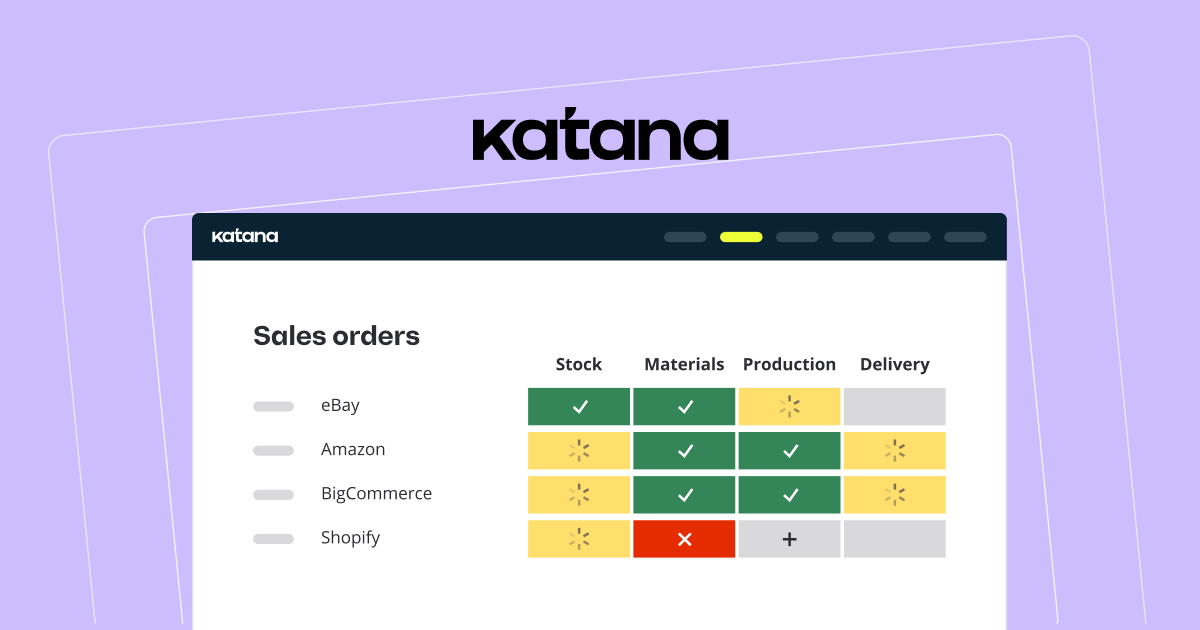
Katana earns a 4.6 out of 5 user rating and is designed specifically for manufacturers who operate make-to-order or make-to-stock workflows. Unlike general inventory tools that treat all stock the same, Katana allows teams to track raw materials, work-in-progress, and finished goods as separate categories. This distinction is critical for manufacturers who need visibility into production stages and material consumption.
The platform's Shop Floor App enables operators to log time and materials against specific tasks directly at workstations, providing live inventory visibility and full traceability from raw material receipt to finished product shipment. Katana also includes production scheduling, bill of materials management, and costing tools that help manufacturers understand their true production costs. For small to midsize manufacturing teams that need inventory, production, and costing in one unified system, Katana delivers a focused solution without the complexity of larger ERP platforms.
5. Odoo Inventory
Odoo Inventory is part of the broader Odoo ERP suite, which has over 7 million users globally. The platform starts at just $24.90 per month, making it one of the most affordable options for businesses that need robust inventory management. Its open-source foundation allows for extensive customization, and the modular design means companies can start with inventory management and add modules for accounting, manufacturing, CRM, or e-commerce as their needs grow.
Key features include barcode scanning, multi-warehouse management, automated replenishment rules, and IoT integration for real-time tracking. The platform's app marketplace offers hundreds of third-party modules that extend functionality even further. Odoo's flexibility makes it particularly attractive for businesses with unique workflows or those that want to avoid vendor lock-in. The trade-off is that customization often requires technical expertise or paid support, but for organizations willing to invest in setup, Odoo provides exceptional value.
6. Fishbowl Inventory
Fishbowl Inventory has served over 28,000 customers and is a leading choice for manufacturers and wholesalers who need advanced inventory capabilities. The platform offers work order management, bill of materials support, and lot tracking, features that are essential for businesses that assemble products or need to trace components through production. Barcode scanning, cycle counting, and real-time tracking across multiple locations help maintain accuracy even as inventory volumes grow.
Fishbowl's native integration with QuickBooks and Xero is a major selling point. Businesses already using these accounting platforms can add Fishbowl without disrupting their financial workflows. The system syncs inventory transactions directly to accounting records, eliminating double data entry and reducing errors. For manufacturers and wholesalers who need more robust inventory management than QuickBooks alone can provide, Fishbowl offers a proven upgrade path.
7. Sortly
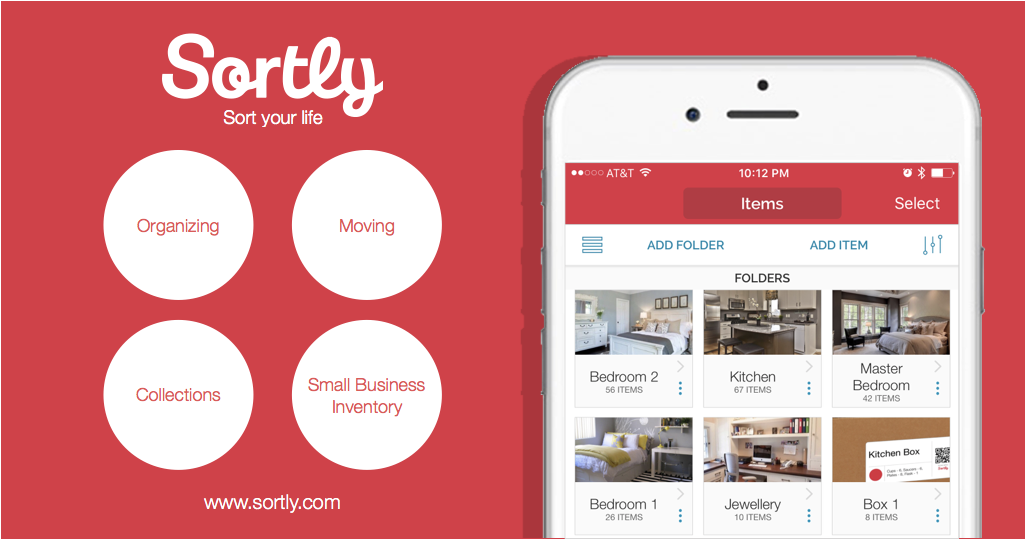
Sortly takes a visual approach to inventory management, earning a 4.5 out of 5 user rating. Starting at $35 per month with unlimited users on paid plans, it is designed for simplicity. Users can organize items with photos, QR codes, and customizable folders, making it easy to locate physical assets quickly. The platform is particularly popular among small businesses, healthcare facilities, and educational institutions that need straightforward tracking without complex ERP features.
Sortly offers real-time stock updates, low-stock alerts, and multi-location tracking, all presented in an intuitive interface that requires minimal training. For businesses upgrading from manual spreadsheets or paper-based systems, Sortly provides a gentle learning curve while still delivering essential inventory control. Its visual cataloging system is especially useful for organizations that manage diverse physical assets, from medical equipment to event supplies, where seeing an item's photo is faster than scanning a text description.
8. ShipStation
ShipStation processes over 5 million shipments monthly and integrates with more than 100 sales channels and carriers. While primarily known as a shipping solution, its inventory management capabilities have grown significantly. The platform syncs stock levels across sales channels to prevent overselling and reduce manual updates, a critical feature for e-commerce businesses that list products on multiple marketplaces.
ShipStation includes low-stock alerts, purchase order tools, lot tracking, and forecasting to help businesses stay organized and avoid stockouts. Its strength lies in combining inventory visibility with powerful shipping and logistics capabilities. Users can compare carrier rates, print labels in bulk, and automate fulfillment workflows from a single dashboard. For e-commerce businesses that prioritize order fulfillment speed and carrier rate comparison, ShipStation offers a streamlined solution that reduces the gap between inventory management and shipping execution.
9. GOIS (Global Order & Inventory System)

GOIS focuses on automation and simplicity, making it a strong choice for growing businesses in 2026. The platform supports barcode scanning, batch and serial tracking, and automated purchase orders triggered by real-time inventory levels. This automation reduces the manual effort required to maintain optimal stock levels and helps prevent both stockouts and overstock situations.
GOIS supports multi-location syncing and ensures accurate order fulfillment with minimum effort, particularly for scaling e-commerce operations or complex warehouse networks. The platform is designed for businesses transitioning from manual spreadsheets or entry-level tools, offering a straightforward upgrade path that does not require extensive training. Its emphasis on automation helps smaller teams maintain inventory accuracy without dedicating significant staff time to data entry.
10. Infraspeak

Infraspeak occupies a unique position on this list by combining inventory management with supplier collaboration, IoT integration, and AI-driven insights specifically for facility management and maintenance operations. Used by more than 180,000 buildings worldwide and recognized as a Verdantix Leader in Commercial Buildings CMMS, the platform handles purchase order workflows, supplier performance visibility, and quote comparison.
What makes Infraspeak stand out is its focus on managing external suppliers and complex maintenance inventories across large building portfolios. It tracks spare parts, tools, and consumables while integrating with preventive maintenance schedules and work order systems. For organizations managing multiple facilities, hotels, or commercial properties, Infraspeak provides a specialized solution that general inventory tools cannot match. Its IoT integration allows real-time monitoring of equipment and automatic reordering of consumables, further reducing manual oversight.
The best inventory management app for your organization depends on your specific operational needs. Manufacturers should prioritize platforms like Katana or Fishbowl that offer work-in-progress tracking and bill of materials support. E-commerce businesses will benefit from ShipStation or Zoho Inventory's deep channel integrations. Large enterprises with complex supply chains should evaluate Oracle NetSuite for its comprehensive ERP integration. Small teams upgrading from spreadsheets might find Sortly's visual approach most accessible.
Related Posts



0 Comments
Join the discussion and share your thoughts
No Comments Yet
Be the first to share your thoughts on this article!