Top 10 Best Next-Gen AI Production Tools In The World 2026

Table of Contents
The landscape of production AI has shifted from experimental chatbots to essential infrastructure. In 2026, organizations no longer ask whether to adopt AI tools but rather which ones will deliver the most reliable results for their specific workflows. To build this ranking, we evaluated tools across several criteria: breadth of use cases, depth of integration into existing work environments, performance benchmarks from independent evaluators like LMArena, and real-world adoption patterns among enterprise and professional teams. We prioritized tools that have demonstrated staying power and measurable productivity gains rather than hype. The result is a list of ten tools that represent the current state of the art for production-grade AI work.
The Top 10 Best Next-Gen AI Production Tools In The World 2026:
1. OpenAI ChatGPT
ChatGPT remains the most broadly adopted production AI tool on the market, and for good reason. Its GPT-4o multimodal model supports text, image, and voice interactions within a single workspace, which means users can draft documents, analyze uploaded images, generate code, and summarize lengthy reports without switching between separate applications. As of early 2026, the platform has built an extensive ecosystem of plugins, custom GPTs, and enterprise management features that make it a default starting point for teams across marketing, engineering, and operations. We rank it first because no other tool matches its combination of breadth, ecosystem momentum, and usefulness across the widest range of production tasks. For organizations that need one tool to handle everything from meeting notes to Python scripts, ChatGPT is the most practical choice.
2. Anthropic Claude
Claude has carved out a distinct reputation for high-quality writing and structured reasoning. In June 2026, Anthropic released new flagship tiers above Opus, and independent benchmarks from LMArena continued to place Claude at the top for nuanced language tasks. Where many AI assistants struggle with long-context coherence, Claude handles documents of tens of thousands of words while maintaining logical consistency and editorial precision. This makes it especially valuable for professional production environments that require editing, legal document review, policy analysis, or any workflow where accuracy and tone matter more than speed. We rank it second because for teams focused on high-quality written output and complex document workflows, Claude is currently the leading choice.
3. Google Gemini
Gemini benefits from what may be the most practical advantage in enterprise AI: deep integration with Google Workspace. For teams already operating in Gmail, Google Docs, Google Sheets, and Google Meet, Gemini accelerates writing, summarization, and task completion directly inside those familiar interfaces. It can draft an email from a prompt, generate a presentation outline from a spreadsheet, or summarize a long thread without leaving the inbox. Beyond productivity tasks, developers report that Gemini provides fast, context-aware code suggestions that integrate smoothly with Google's cloud services. We rank it third because its native integrations make it especially practical for enterprise and knowledge workers who are already embedded in the Google ecosystem.
4. GitHub Copilot
GitHub Copilot remains one of the most mature and widely trusted AI tools for software development. It operates directly inside the IDE, providing inline code autocomplete, function generation, and debugging suggestions that reduce boilerplate and accelerate development cycles. Developer surveys consistently place Copilot among the must-have tools for programming productivity, and its integration with GitHub's code review and project management features creates a seamless workflow. Unlike newer entrants that require context switching between chat interfaces and code editors, Copilot stays where developers work. We rank it fourth because it is one of the most workflow-native AI tools for production engineering teams, with years of refinement behind its suggestions.
5. Claude Code

While GitHub Copilot excels at inline autocomplete, Claude Code fills a different role: conversational coding assistance for complex tasks. Developer communities highlight Claude Code as especially useful for explaining errors, refactoring legacy code, and analyzing larger repositories where a simple autocomplete is insufficient. It can reason across multiple files, suggest architectural changes, and walk through debugging steps conversationally. Teams that handle large codebases or need to onboard new developers quickly find Claude Code valuable for reducing ramp-up time. We rank it fifth because it is more specialized than Copilot but highly effective for serious development workflows that require understanding context beyond the current file.
6. Canva AI
Canva AI has become a production favorite for teams that need fast visual content without a dedicated design department. Its Magic Write and Magic Design features allow users to generate branded templates, remove backgrounds, create captions, and produce social media graphics or presentation slides in minutes. The platform's AI understands brand guidelines and can maintain consistency across a team's output. For marketing teams, content creators, and operations staff who need visuals regularly, Canva AI reduces the bottleneck of waiting for design resources. We rank it sixth because it combines ease of use with broad real-world utility for content production, making professional-looking design accessible to non-designers.
7. Notion AI
Notion AI embeds artificial intelligence directly into the workspace where many teams already manage their documentation, meeting notes, project boards, and databases. Its AI features can summarize long notes, rewrite text for clarity, generate documents from prompts, and answer questions based on stored content. This makes it particularly effective for teams that want AI to enhance their existing knowledge management rather than requiring a separate tool. The advantage is contextual: because Notion AI has access to the team's own documents and databases, its answers are more relevant than a general-purpose chatbot. We rank it seventh because it is especially effective for teams that want AI embedded into everyday knowledge management without disrupting established workflows.
8. Perplexity
Perplexity occupies a unique position among production AI tools by combining generative answers with source attribution. For research workflows, this is a critical feature. Users can ask questions about current events, market trends, or technical topics and receive answers that include citations to specific sources, making verification straightforward. This design makes Perplexity especially useful for journalists, analysts, and researchers whose work depends on up-to-date information and the ability to trace claims back to their origins. While general chat tools can generate plausible-sounding but incorrect information, Perplexity's search-first approach reduces that risk. We rank it eighth because its research-focused design is more specialized than general chat tools but highly valuable for teams where accuracy and source verification are non-negotiable.
9. Zapier
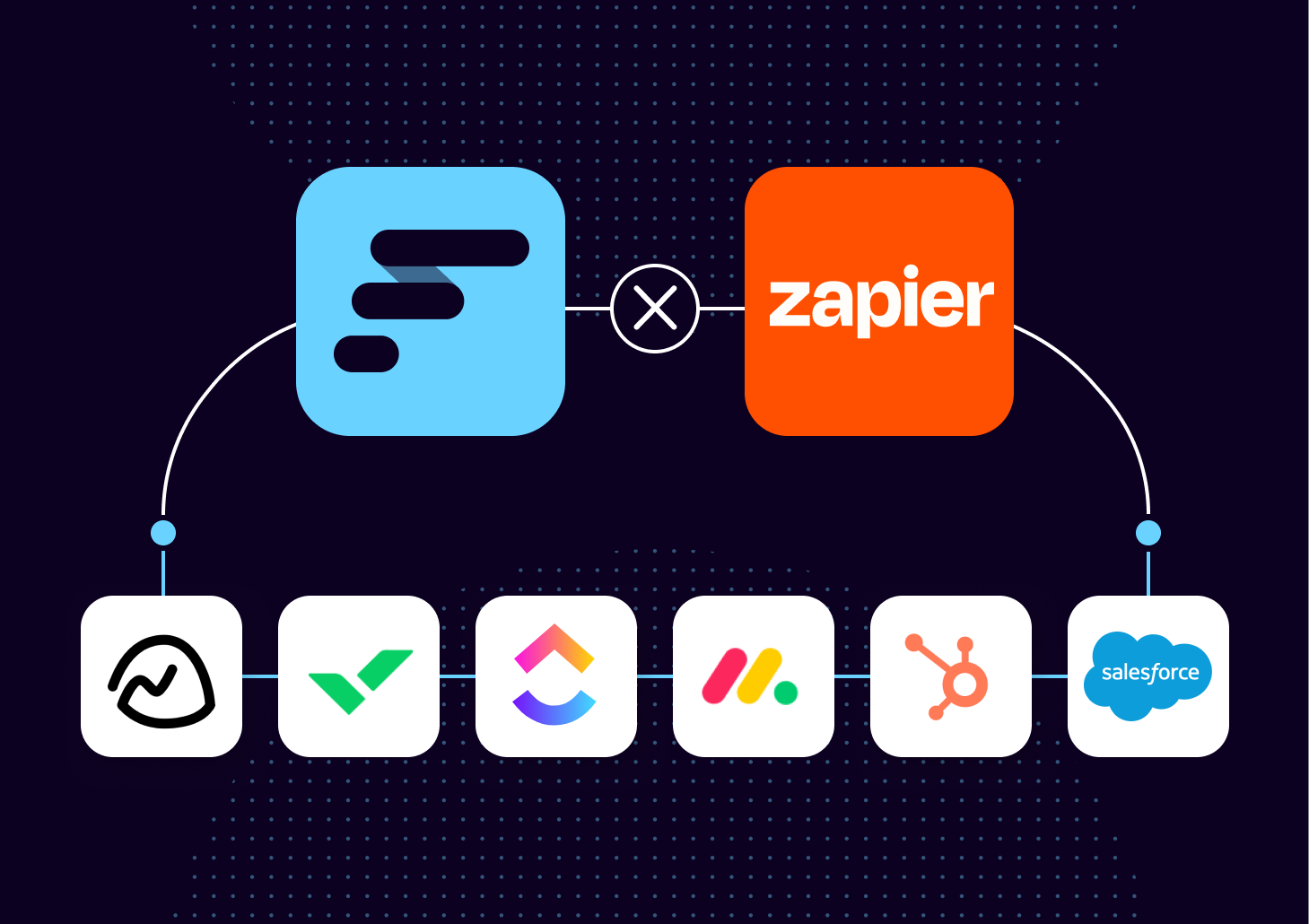
Zapier serves a different function from the other tools on this list: it connects AI outputs to business processes. In 2026, the platform supports automation across thousands of applications, turning one-off AI-assisted tasks into repeatable workflows. For example, a team can use Zapier to automatically save ChatGPT responses into a Google Sheet, send Slack notifications when Claude completes a document review, or trigger email campaigns based on Perplexity research results. This ability to chain AI tools together with existing business software is essential for scaling AI from individual assistance into operational systems. We rank it ninth because it is the bridge between AI tools and business processes, making automation practical for teams without dedicated engineering resources.
10. Julius AI
Julius AI addresses a specific production need: faster analysis of data without building full analytics pipelines. It is designed for users who have spreadsheets or datasets and want to ask questions, generate insights, and summarize findings quickly. Analysts, business teams, and students use it to explore data conversationally, producing charts and summaries that would otherwise require SQL queries or specialized tools. While it occupies a narrower production niche compared with the broader tools ranked above, within that niche it is highly useful. We rank it tenth because for teams that regularly work with data but lack dedicated data engineering resources, Julius AI provides a practical shortcut from raw numbers to actionable insights.
Related Posts



0 Comments
Join the discussion and share your thoughts
No Comments Yet
Be the first to share your thoughts on this article!