Top 10 Biggest Online Marketplaces In Australia 2026


Table of Contents
We built this ranking using marketplace traffic data from SimilarWeb and DropXL, combined with market projections from Statista and industry analyses from Dokan, CS-Cart, and OZZCA. Our criteria weighed monthly visitor numbers, marketplace model maturity, seller ecosystem strength, and each platform's strategic position within the Australian retail landscape as of early 2026. We prioritized platforms with verified Australian operations and meaningful local market share over global giants with only peripheral local presence.
The Top 10 Biggest Online Marketplaces In Australia 2026:
1. Amazon Australia
Amazon Australia has become the undisputed heavyweight of Australian e-commerce since its local launch in December 2017. The platform now attracts 56.2 million monthly visits, and Statista projects it will account for 20% of all Australian internet sales by the end of 2026. That trajectory matters because it signals a fundamental shift in how Australians shop online, not just a temporary spike in interest.
The marketplace operates a hybrid model, combining first-party retail with a thriving third-party seller ecosystem. Over 87% of its traffic comes from Australian visitors, which makes it genuinely local rather than a distant outpost of the US operation. Amazon's investment in local fulfillment centers has compressed delivery times dramatically, and Prime membership has created a loyal base of repeat customers across electronics, books, home goods, and everyday essentials.
For sellers, the appeal is straightforward: access to Amazon's logistics infrastructure and the largest online audience in the country. The trade-off is competition, which has intensified as more Australian businesses list on the platform. Still, for any brand looking to scale online sales in Australia, Amazon is now the default starting point.
2. eBay Australia
eBay has been part of Australian e-commerce since 1999, which makes it the elder statesman of this list. Globally, the platform draws 669 million monthly visitors, and while Australian-specific numbers are harder to isolate, the local site remains one of the country's most trusted marketplaces. Its longevity speaks to a durable model: auction-style and fixed-price listings give sellers flexibility, while buyer protection programs give shoppers confidence.
The fee structure is worth noting for sellers. Most categories carry a 13.4% final value fee plus a $0.30 AUD fixed charge per order, which is competitive against other major platforms. What really sets eBay apart in Australia is its community of small businesses and individual sellers, particularly active in electronics, fashion, collectibles, and automotive parts. The platform's International Shipping program has also helped Australian sellers reach buyers overseas, which remains a meaningful advantage for businesses looking beyond the domestic market.
eBay's resilience comes from its breadth. It handles new, used, and refurbished goods in a way that no other major marketplace does, and that versatility has kept it relevant through two decades of competitive pressure.
3. Catch

Catch, formerly Catch of the Day, is the pure-play Australian success story on this list. Wesfarmers acquired the platform in 2019, and that corporate backing has transformed what began as a daily deals site into one of Australia's most visited marketplace destinations. The platform runs on a marketplace model with hundreds of third-party sellers across home, fashion, beauty, electronics, and lifestyle categories.
The brand's DNA is value. Catch built its reputation on daily deals and aggressive pricing, and that positioning still defines the customer experience. Shoppers come to Catch hunting for bargains, and the platform delivers through a combination of flash sales, clearance events, and everyday low pricing from its seller network.
Wesfarmers' ownership brings logistical advantages that independent marketplaces struggle to match. Access to established supply chain networks and the broader retail ecosystem of one of Australia's largest conglomerates gives Catch operational muscle that its size alone would not justify.
4. Kogan
Kogan is the rare Australian company that has built a genuine multi-category retail empire from a standing start. Founded in 2006 by Ruslan Kogan, the company reported over 3 million customers and 5 million products sold in 2021, and it has only expanded since. The business operates as both a first-party retailer and a marketplace, allowing third-party sellers to list products while leveraging Kogan's established brand recognition.
Electronics and appliances remain the core, but Kogan has branched aggressively into travel, insurance, and financial services. That diversification is unusual for an online marketplace and reflects the company's willingness to chase margin wherever it exists. In New Zealand, Kogan operates under the Dick Smith brand, extending its regional footprint.
The platform's private-label electronics and white goods are particularly well known for aggressive pricing. For budget-conscious Australian consumers, Kogan has become the default alternative to premium brands, and for sellers, the marketplace offers access to a customer base that is actively shopping on price.
5. THE ICONIC

THE ICONIC is Australia's premier online fashion destination, carrying over 1,000 brands across clothing, footwear, accessories, and beauty. The platform has invested heavily in the technology that makes online fashion shopping less risky, including virtual fitting tools, detailed size guides, and a returns system that offers free returns within 30 days.
Logistics is where THE ICONIC differentiates itself. Same-day and next-day delivery in major metropolitan areas has set a benchmark that other Australian retailers have struggled to match. That speed matters in fashion, where impulse purchases and seasonal trends demand rapid fulfillment.
The marketplace model gives both established brands and emerging designers access to fashion-conscious Australian consumers. For smaller labels, THE ICONIC offers distribution reach that would be prohibitively expensive to build independently. For shoppers, it provides a curated selection that feels more edited than the sprawling catalogs of generalist marketplaces.
6. Bunnings Marketplace
Bunnings has translated its physical retail dominance into a growing online marketplace presence. Owned by Wesfarmers, the platform allows approved "Trusted Sellers" to list complementary products alongside Bunnings' own inventory. The focus is on home, garden, trade, and DIY categories, which aligns precisely with the brand's core strengths.
What makes Bunnings Marketplace interesting is its hybrid approach. The platform integrates with click-and-collect from over 300 physical stores nationwide, which means online orders can be fulfilled through the same infrastructure that serves Bunnings' massive store network. For a retailer with this much physical presence, the marketplace extends reach without cannibalizing store traffic.
Brand trust is the intangible asset here. Bunnings has spent decades building a reputation for reliability and range in hardware, and that trust transfers directly to the online marketplace. Sellers who secure a spot on the platform benefit from association with one of Australia's most respected retail brands.
7. Gumtree Australia
Gumtree Australia is the country's leading classifieds marketplace, pulling in 395,500 monthly visits with 80% of that traffic coming from Australian users. Owned by eBay Inc., Gumtree operates on a free-listing model for most categories, which makes it the natural home for peer-to-peer transactions.
The platform's strength is its hyper-local focus. Buyers and sellers operate within their communities, which suits categories like cars, furniture, electronics, and jobs. Annual revenue is estimated between $15-25 million, which is modest compared to the retail giants on this list, but Gumtree's role in the Australian marketplace ecosystem is distinct.
Gumtree is where Australians go to sell things they no longer need and find things they want at used prices. That circular economy function gives it a durability that trend-driven platforms lack. It does not compete with Amazon or Kogan on new goods; it owns the second-hand and classified space outright.
8. MyDeal
MyDeal has grown substantially since Woolworths Group acquired the platform, and it now operates as a significant player in Australian online retail. The platform handles all listings and presents products through a branded MyDeal storefront, while sellers manage their own order fulfillment. Categories span home, garden, electronics, and lifestyle products, with value pricing as the consistent theme.
The most distinctive feature of MyDeal is its financing program. The platform offers small business loans to sellers who need expansion capital, which is unique among Australian marketplaces. This creates a symbiotic relationship: MyDeal helps sellers grow, and those sellers generate more sales volume on the platform.
Woolworths' ownership brings credibility and resources, though MyDeal operates with a degree of independence that allows it to maintain its own identity. For sellers looking for a marketplace with corporate backing but less saturation than Amazon, MyDeal offers a viable middle path.
9. Etsy Australia
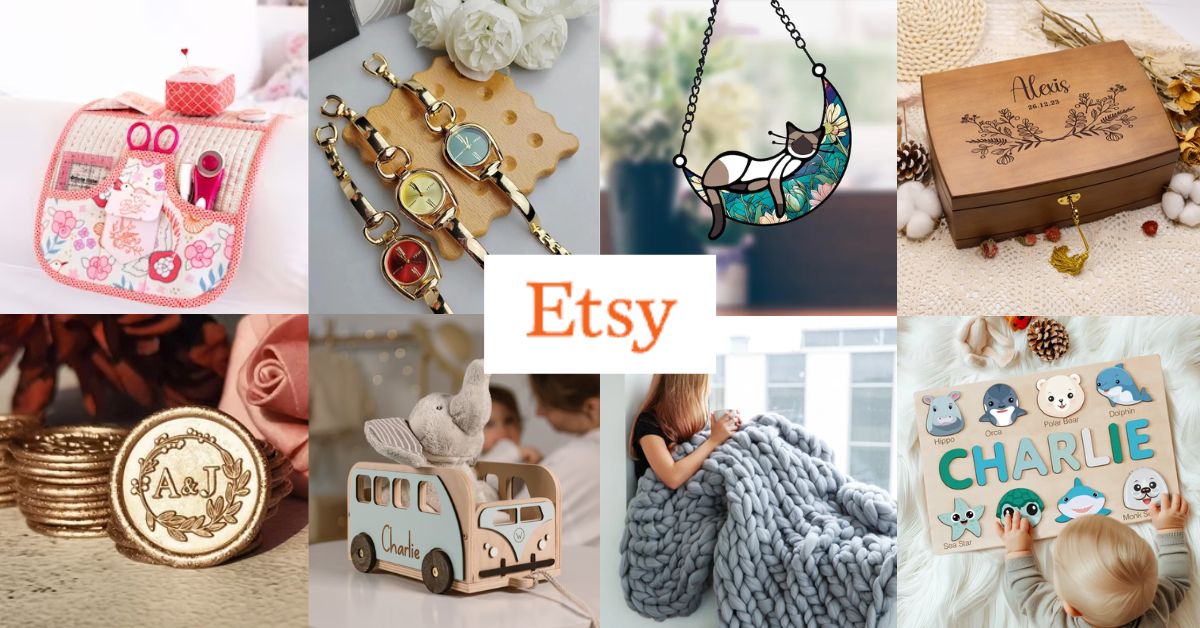
Etsy has carved out a specialized position in the Australian market as the go-to destination for handmade, vintage, and craft supplies. The platform draws 400 million monthly visitors globally and supports 7.5 million sellers worldwide, and Australian artisans are well represented among them.
The fee structure keeps barriers low. A $0.20 listing fee per item covers four months, with a 6.5% transaction fee on completed sales. That pricing model makes Etsy accessible for small creators who would struggle with the overhead of traditional retail or the competition of generalist marketplaces.
What Etsy offers Australian buyers is distinctiveness. The platform is designed for unique, creative products that do not exist on mainstream retail platforms, and that positioning has proven durable. For sellers, Etsy provides global reach without requiring them to build international logistics capabilities, since the platform's buyer base spans the world.
10. OZSale

OZSale operates a members-only fashion marketplace that serves over 1 million shoppers per month. It is the Australian counterpart of Malaysia's MySale, and its model is built around off-price inventory sales. Brands partner with OZSale to clear excess stock through limited-time sales events, and shoppers get access to premium products at discounted prices.
What distinguishes OZSale from other marketplaces is its curation. Unlike automated models where anyone can list, OZSale requires sellers to apply for partnership. That approval process ensures product quality and brand alignment, which protects the platform's positioning as a destination for premium goods at accessible prices.
The exclusivity model works. Established brands use OZSale to move inventory without damaging their regular price architecture, and shoppers return for the sense of discovery that comes from limited-time events. It is a different rhythm from the always-available catalogs of Amazon or eBay, and that difference is precisely the appeal.
The Australian online marketplace sector has matured considerably over the past decade. What began as a handful of local players has evolved into a competitive field that includes global giants, corporate-backed local platforms, and specialized niche operators. The rankings above reflect where the market stands today, but the dynamics are shifting continuously.
Related Posts


2 Comments
Join the discussion and share your thoughts