Top 10 Biggest Game Publishers In Japan 2026

Table of Contents
Japan's game publishing industry remains the most influential in the world, responsible for franchises that have shaped interactive entertainment for four decades. The top 10 biggest game publishers in Japan 2026 represent a mix of legacy console giants, mobile-first disruptors, and diversified entertainment conglomerates. Together, these companies generated well over $30 billion in revenue in the last fiscal year, and their influence extends far beyond their home market.
What follows is our ranking of Japan's largest game publishers, based on 2025 and 2026 fiscal data, revenue reports, and critical performance metrics. We've weighed both financial scale and cultural impact, because a publisher like Capcom might not match Sony's raw revenue but still defines what Japanese gaming means to millions of players worldwide.
How We Ranked These
Our ranking prioritizes annual revenue as the primary metric, drawing from fiscal 2025 reports and 2026 projections. We cross-referenced data from Wikipedia's list of largest video game companies by revenue, Bullfincher's Japan market analysis, and Metacritic's 2026 publisher rankings. Average employee income figures come from Reddit's r/Games analysis of Japanese corporate disclosures. Critical reputation, portfolio strength, and market diversification were considered as secondary factors when revenue figures were close.
The List Of The Top 10 Biggest Game Publishers In Japan 2026:
1. Nintendo
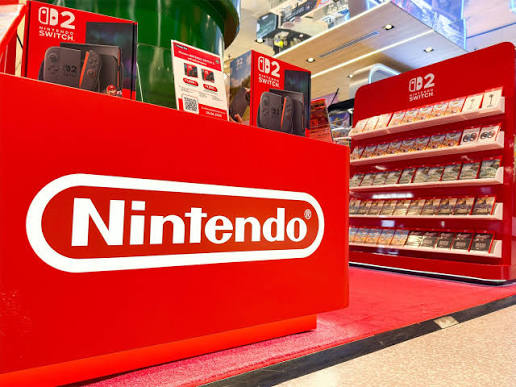
Nintendo sits at the top of this list with $14.23 billion in annual revenue, and the gap between first and second place is substantial. The Kyoto-based company has spent the better part of four decades as Japan's most valuable gaming export, and the 2025 launch of the Switch 2 has only reinforced that position.
The company's franchise portfolio remains unmatched. Mario, Zelda, and Pokémon function less as individual game series and more as cultural institutions that transcend the medium. In Metacritic's 2026 publisher rankings, Nintendo was the only publisher to score 90 or higher on more than one title, buoyed by Zelda ports for the Switch 2 and a new Donkey Kong game. That critical performance helped Nintendo jump 10 spots in Metacritic's year-over-year rankings.
Nintendo's 2026 is already off to a strong start. The company shipped one of the best-reviewed Pokémon games in the franchise's history early in the year, and the Switch 2's install base continues to grow. Nintendo's strategy remains consistent: exclusive, polished first-party software that sells hardware. It's a model that competitors have tried to replicate for decades, and none have succeeded.
2. Sony Group Corporation (Sony Interactive Entertainment)

Sony Interactive Entertainment, headquartered in Tokyo, operates as both platform holder and publisher. The PlayStation ecosystem generated over $28 billion in revenue globally in 2025, making Sony the second-largest gaming company in Japan and one of the largest in the world.
First-party franchises like God of War and The Last of Us anchor Sony's publishing arm, but the company's revenue streams extend across console hardware sales, digital content, and PlayStation Plus subscriptions. In 2026, Sony's stated priorities include expanding PlayStation Network's reach, advancing cloud gaming capabilities, and extending its gaming intellectual properties into film and television. The recent success of adaptations like The Last of Us on HBO has validated that strategy.
Sony also leads the Japanese industry in employee compensation. The company's average employee yearly income sits at approximately ¥11.13 million, roughly $75,000 USD, the highest among Japanese game companies. That figure reflects both Sony's financial scale and its position as a diversified technology conglomerate rather than a pure game publisher.
3. Bandai Namco Holdings
Bandai Namco Entertainment, based in Minato, Tokyo, reported $3.2 billion in revenue for 2025. The company operates one of Japan's most diversified portfolios, spanning fighting games, arcade classics, and a dominant position in anime-licensed titles.
Tekken remains the company's flagship fighting franchise, while Pac-Man endures as one of gaming's most recognizable characters. But Bandai Namco's real strength lies in its licensing agreements with anime properties. Dragon Ball games alone represent a significant revenue stream, and the company has built a publishing model that pairs Japanese pop culture with game development expertise.
The company pays its employees well, ranking second among Japanese game companies with an average yearly income of 10,950,000 yen, approximately $74,000 USD. Bandai Namco has also successfully expanded into global markets while maintaining its dominance in Japanese arcade and console gaming, a balance few publishers have managed to strike.
4. Nexon

Nexon's inclusion on this list comes with an asterisk: the company was founded in South Korea. But Nexon is headquartered in Minato, Tokyo, and operates as one of Japan's largest publishers by revenue, reporting $3.0 billion in 2025.
The company's business model revolves around free-to-play titles with aggressive monetization. MapleStory and Dungeon Fighter Online have proven extraordinarily profitable in Asian markets, where live-service games with microtransactions dominate player spending. Nexon's success demonstrates the divergence between Western and Asian gaming markets, where subscription models and premium pricing give way to free entry points and ongoing monetization.
Nexon continues to expand its portfolio with new intellectual properties, but its legacy franchises remain the core of its revenue. Dungeon Fighter Online, in particular, has sustained remarkable player engagement for nearly two decades. In 2026, Nexon's focus remains on mobile and PC markets, where its expertise in live-service operations gives it a competitive edge.
5. Sega (Sega Sammy Holdings)

Sega, headquartered in Shinagawa, Tokyo, reported $3.0 billion in revenue in 2025, placing it in a statistical tie with Nexon for fourth place. But Sega's cultural footprint in the West far exceeds its Japanese rival.
The company's franchise portfolio spans generations of gaming history. Sonic the Hedgehog remains one of the most recognizable characters in the medium, while the Yakuza/Like a Dragon series has become a critical darling with a dedicated Western following. Through subsidiary Atlus, Sega also controls the Persona franchise, which has grown into one of the most beloved RPG series in the world.
Sega has experienced something of a renaissance in recent years. Successful film adaptations of Sonic have introduced the character to new audiences, and the company's game releases have maintained consistent quality. Sega ranks third among Japanese game companies in average employee yearly income at 9,626,857 yen, roughly $65,000 USD. The company has also expanded into theme parks and anime production, diversifying beyond its core gaming business.
6. Konami Group (Konami Digital Entertainment)
Konami, headquartered in Chūō, Tokyo, reported $2.27 billion in revenue for its digital entertainment division in 2025, with the parent company generating $3.32 billion overall. The company has undergone a significant transformation over the past decade, shifting from traditional console publishing toward diversified entertainment.
The departure of Hideo Kojima and the cancellation of Silent Hills in 2015 left lasting scars on Konami's reputation among core gamers. But the company has rebuilt its business around different pillars. eFootball, formerly Pro Evolution Soccer, operates on a free-to-play model that generates consistent revenue. The Yu-Gi-Oh! franchise continues to perform strongly in both physical card and digital formats, with Duel Links serving as a reliable mobile revenue driver.
Konami's gaming machine business remains highly profitable, and the company's pachislot operations contribute significantly to its bottom line. While Konami no longer commands the critical respect it once did in the console space, its financial performance keeps it firmly among Japan's largest publishers.
7. Capcom
Capcom earned its third consecutive top-three finish in Metacritic's 2026 publisher rankings, a remarkable achievement for a company that doesn't match the revenue scale of the publishers above it. The company's 322.2 Metacritic publisher score reflects consistent critical excellence across its 2025 output.
Monster Hunter Wilds led Capcom's 2025 slate with a 90 Metascore on Xbox, and the company's overall performance would have been perfect if not for the PC version of Onimusha 2: Samurai's Destiny Remaster, which broke an otherwise flawless run. Capcom's 15 products across 7 titles earned 93% good ratings, a hit rate few publishers can match.
Capcom is already off to a strong start in 2026 with positive reviews for Monster Hunter Stories 3: Twisted Reflection and Resident Evil Requiem. The company's ability to maintain critical quality across multiple franchises, from Resident Evil to Street Fighter to Monster Hunter, sets it apart from peers that rely on a single dominant series. Capcom ranks seventh in average employee yearly income among Japanese game companies at approximately 8,328,000 yen, roughly $56,000 USD.
8. Square Enix
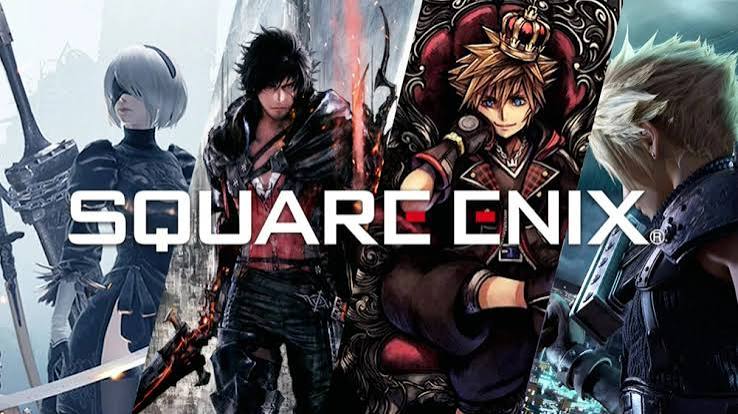
Square Enix, headquartered in Shinjuku, Tokyo, reported $1.83 billion in revenue for 2025. The company's identity remains tied to the RPG genre, where it operates as the undisputed global leader.
Final Fantasy, Dragon Quest, and Kingdom Hearts have generated billions in revenue across three decades. Final Fantasy XVI achieved record-breaking sales in Japan upon its 2023 release, selling over 3 million copies within its first month. The company's MMO arm has also proven resilient, with Final Fantasy XIV Online maintaining over 2.5 million active subscriptions in Japan alone.
Square Enix has faced criticism in recent years for its approach to exclusivity deals and HD-2D remakes, but the company's core franchises remain commercially reliable. Its expansion into mobile gaming has produced mixed results, though the company continues to invest in the space. In 2026, Square Enix's challenge lies in balancing its legacy RPG audience with the need to attract younger players who didn't grow up with Final Fantasy.
9. Cygames

Cygames, based in Shibuya, Tokyo, reported $1.37 billion in revenue for 2025, making it the most profitable mobile-first publisher on this list. The company operates as a subsidiary of CyberAgent and has mastered the live-service model that dominates Japanese mobile gaming.
Granblue Fantasy, Princess Connect! Re:Dive, and Uma Musume Pretty Derby have each achieved massive success in Japan's mobile market. Uma Musume, in particular, became a cultural phenomenon upon its 2021 release, blending horse racing simulation with idol training mechanics in a way that captured the Japanese market's imagination.
Cygames has also expanded into console gaming. Granblue Fantasy: Relink received strong critical acclaim upon its 2024 release, demonstrating that the company can produce traditional premium games alongside its mobile portfolio. In 2026, Cygames represents the future of Japanese gaming publishing: mobile-first, live-service driven, and increasingly willing to compete in the console space.
10. Koei Tecmo
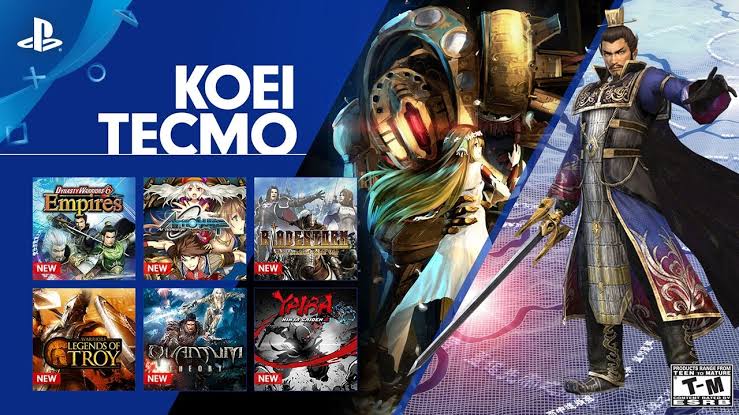
Koei Tecmo returned to Metacritic's 2026 publisher rankings after sitting out the previous year, posting a 289.2 publisher score with a 78 average Metascore. The company's 22 products across 9 titles earned 73% good ratings, a solid if unspectacular performance.
The company's 2025 output was anchored by several Atelier JRPG games, including Atelier Ryza Secret Trilogy Deluxe Pack, which earned an 87 Metascore on Nintendo Switch. Dynasty Warriors: Origins, a hack-and-slash reboot of the company's signature Musou franchise, also performed well critically. The remaster Ninja Gaiden 2 Black rounded out a strong year.
Not everything worked. Warriors: Abyss attempted to add roguelite elements to the Dynasty Warriors formula with mixed results, and it became the company's biggest critical disappointment of 2025. But Koei Tecmo's Musou franchise remains a reliable revenue generator, and the company's willingness to experiment with its core formula suggests a publisher still willing to take risks after three decades in the industry.
Several patterns emerge from this list. First, Japan's gaming industry remains bifurcated between traditional console publishers and mobile-first operators. Nintendo, Sony, and Capcom continue to define the premium console space, while Nexon and Cygames demonstrate the profitability of live-service mobile gaming.
Related Posts




0 Comments
Join the discussion and share your thoughts
No Comments Yet
Be the first to share your thoughts on this article!