Top 10 Best Web3 Wallet Apps In South Africa 2026

Table of Contents
South Africans have embraced self-custody crypto at a pace few markets can match. Between a volatile rand, strict exchange controls, and a thriving informal P2P economy, the best Web3 wallet apps in South Africa for 2026 have become practical tools rather than novelty downloads. We looked at the wallets that actually get used here, weighing several factors: user adoption figures, breadth of blockchain support, security architecture, fiat on-ramp access for ZAR holders, dApp compatibility, and how well each app handles the realities of South African crypto life, from load-shedding-proof mobile design to low-fee chains like Solana and Base.
To build this ranking, we considered global download and active-user data, local community sentiment from South African crypto groups and forums, developer activity, and the strength of each wallet's on-ramp and off-ramp partnerships. Security model mattered heavily: we favored wallets with proven track records, hardware integration options, and transparent risk warnings. We also factored in cost sensitivity, since South African users consistently gravitate toward chains and wallets that keep transaction fees low. The result is a list that balances global heavyweights with specialist tools that punch above their weight in this market.
The Top 10 Best Web3 Wallet Apps In South Africa 2026:
1. MetaMask
MetaMask remains the default gateway to Ethereum and its sprawling ecosystem, and that dominance shows no sign of cracking in 2026. Developed by ConsenSys and launched back in 2016, the wallet reports more than 30 million monthly active users and supports over 10 EVM-compatible chains. For South Africans deep in DeFi, NFTs, or token launches, MetaMask is usually the first wallet installed and often the last one abandoned.
The mobile app and browser extension cover the essentials: built-in token swaps, NFT management, staking, and a Portfolio dashboard that tracks holdings across chains. Hardware wallet integration with Ledger and Trezor gives higher-value holders a cold storage path. Fiat on-ramps through third-party providers let users buy crypto with rands, though the fees vary by provider and are worth comparing before committing.
What keeps MetaMask at number one is the developer ecosystem. Nearly every dApp assumes MetaMask compatibility first, and features like Smart Transactions and Snaps have expanded what the wallet can do without bloating the core experience. The trade-off is that MetaMask's interface can feel overwhelming to newcomers, and gas fees on Ethereum mainnet remain punishing for small transactions. South African users typically pair it with a low-fee chain or a Layer 2 to keep costs manageable.
2. Trust Wallet
If MetaMask owns Ethereum, Trust Wallet owns mobile. Acquired by Binance in 2018, it has racked up over 100 million downloads and supports more than 100 blockchains, covering Bitcoin, Ethereum, Solana, BNB Chain, and Tron among others. The wallet holds a staggering range of assets, with support for 10 million-plus tokens across those networks.
Trust Wallet's popularity in African markets comes down to accessibility. Onboarding is simple, there's no desktop requirement, and the dApp browser opens the door to BNB Chain's cheap transaction environment, which matters when every fee is measured against the rand. Built-in staking and a clean mobile interface round out the package.
In South Africa, Trust Wallet shows up frequently in P2P trading circles, remittance flows, and everyday BNB Chain activity. Its tie to Binance's ecosystem makes moving between centralized exchange and self-custody relatively painless, though users should remember that Trust Wallet itself is fully self-custodial and Binance cannot recover lost funds. The wallet's breadth is both its strength and its weakness: supporting everything means occasional interface clutter, but few competitors match its reach.
3. Phantom
Phantom built its reputation as the definitive Solana wallet after launching in 2021, and it has since expanded to Ethereum, Polygon, and Bitcoin. With more than 15 million monthly active users, it has become one of the few wallets genuinely capable of challenging MetaMask's grip on the market.
The appeal for South Africans is straightforward: Solana's transaction fees are fractions of a cent, which makes frequent trading, NFT minting, and DeFi activity far more affordable than Ethereum mainnet. Phantom's interface is clean and fast, with swaps, staking, and NFT management all handled inside the app. The browser extension and mobile app stay in sync, so users can move between devices without friction.
Phantom's multi-chain expansion has broadened its usefulness beyond the Solana ecosystem, though Solana remains where it performs best. For South African users exploring low-cost chains for the first time, Phantom is often the recommended starting point, and its rapid user growth suggests that recommendation is being taken.
4. Binance Web3 Wallet
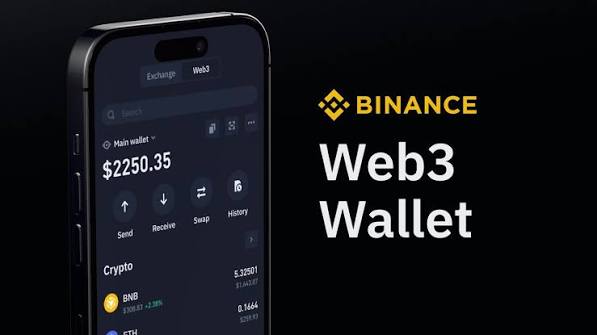
Binance Web3 Wallet takes a different approach to self-custody. Launched in 2023, it lives inside the main Binance app, which already has more than 200 million registered users globally. That integration is the wallet's defining feature: users who already trade on Binance can access DeFi, cross-chain swaps, and airdrop opportunities without leaving the app they know.
Security is handled through MPC, or Multi-Party Computation, which splits private keys across multiple parties rather than storing a single seed phrase. This removes the seed phrase management headache that trips up so many first-time self-custody users, though it also means the security model differs from traditional wallets in ways worth understanding before committing significant funds.
For South Africans, the biggest practical advantage is fiat on-ramping. Moving rands into Binance and then into the Web3 Wallet is far simpler than juggling separate exchange accounts and standalone wallets. The trade-off is dependence on Binance's platform, which has faced regulatory scrutiny in various jurisdictions. Users who value convenience over absolute independence tend to find the trade worthwhile.
5. Exodus
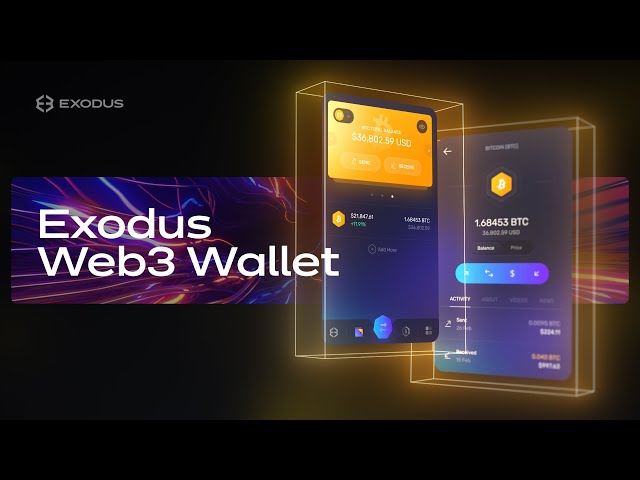
Exodus has been around since 2015 and has built a reputation for polish. The wallet supports over 15,000 assets across 50-plus networks and serves more than 5 million users on desktop and mobile. Where MetaMask feels like a developer tool and Trust Wallet feels like a marketplace, Exodus feels like a consumer product.
The interface is the selling point. Portfolio tracking, a built-in exchange, and staking for assets like Solana, Cardano, and Cosmos are all presented in a way that doesn't require a crypto glossary to navigate. Exodus also offers 24/7 human customer support, which is rare in this space and genuinely useful when something goes wrong at 2am. Trezor hardware integration gives users a path to cold storage without leaving the Exodus ecosystem.
South African users who want to manage a diverse portfolio without wrestling with technical complexity tend to gravitate here. The built-in exchange fees are higher than using a dedicated DEX, so cost-conscious traders often use Exodus for holding and staking while executing swaps elsewhere.
6. Ledger (Ledger Live)
Ledger is the world's leading hardware wallet manufacturer, with more than 6 million devices sold, and Ledger Live is the companion app that turns those devices into a full Web3 wallet. The app supports over 5,500 assets and connects to dApps through its Discover section, covering staking, swaps, and NFT management across multiple chains.
For South Africans holding serious crypto value, Ledger represents a security tier that software wallets simply cannot match. Private keys stay on the physical device, isolated from internet-connected hardware, which neutralizes most remote attack vectors. Given the volume of phishing and wallet-draining scams targeting crypto users, that isolation is not paranoia; it's basic hygiene.
Ledger Live is not the right choice for someone trading small amounts frequently. The hardware requirement adds friction, and the device itself costs money. But for long-term holders treating crypto as a store of value, the combination of Ledger hardware and Ledger Live software is the closest thing this industry has to a gold standard.
7. Rabby Wallet
Rabby Wallet was built by DeBank specifically to fix what frustrates people about MetaMask, and for DeFi power users, it succeeds. The browser extension supports over 100 EVM chains and has crossed 1 million users, a modest figure compared to the giants but meaningful given its specialist focus.
The standout feature is transaction simulation. Before a user confirms anything, Rabby shows exactly what will happen: which tokens leave the wallet, which arrive, and what the net effect will be. It also handles automatic chain switching and flags risky transactions before they're signed. In a market where wallet-draining scams are common, that pre-transaction transparency is a genuine safety improvement rather than a marketing bullet point.
Rabby's adoption among South African DeFi users has grown steadily, particularly among those who've been burned by a bad transaction or watched a friend lose funds to a malicious contract. It's not a beginner's wallet, and it doesn't try to be. For anyone doing regular on-chain DeFi activity, the risk warnings alone justify the switch.
8. Base App (formerly Coinbase Wallet)
Coinbase rebranded its self-custody wallet as Base App in 2025, repositioning it as an "everything app" that blends social features, DeFi, and NFTs into a single product. The wallet is backed by Coinbase, which serves more than 100 million users globally, and it leans heavily on the Base Layer 2 network for low-cost transactions.
Base L2's cheap fees make it a practical option for South African users who want on-chain activity without Ethereum mainnet pricing. The wallet supports multiple chains, includes a built-in browser, and offers fiat on-ramps through Coinbase, though availability of those ramps varies by region and South African users should verify current support before relying on them.
What separates Base App from traditional wallets is its social layer. A built-in feed and creator tools give it more in common with a social platform than a pure utility app, which appeals to users who want discovery and community alongside storage. Purists may find the social features unnecessary, but for newcomers, the lower barrier to engagement has real value.
9. ZenGo
ZenGo attacks the single biggest point of failure in self-custody: the seed phrase. The wallet uses MPC technology to split keys between the user's device and ZenGo's servers, eliminating seed phrases entirely while remaining self-custodial. It has over 1 million users and supports Bitcoin, Ethereum, Solana, and more than 100 other assets, with built-in swaps and staking.
The recovery model is what makes ZenGo stand out. Losing a phone doesn't mean losing funds, because the key shares can be reconstructed through ZenGo's recovery process. For newcomers terrified of writing down twelve words and losing them, that's a meaningful reduction in anxiety and a lower barrier to entry.
South African users new to crypto often find ZenGo's simplified security model easier to trust than traditional wallets, even if the underlying MPC architecture takes some explanation. The trade-off is a degree of reliance on ZenGo as a service provider, which sits awkwardly with the most ideologically pure definitions of self-custody. For practical users, the convenience usually wins.
10. Backpack
Backpack is the smallest wallet on this list by user count, but its influence in the Solana ecosystem far exceeds its size. Developed by Coral, a team founded by former Solana engineers, Backpack functions as both a wallet and an exchange. It supports Solana, Ethereum, and other chains, with a focus on developer-friendly tooling and deep dApp integration.
The wallet's signature innovation is xNFTs, or executable NFTs that function as applications inside the wallet itself. It's a genuinely different way of thinking about what a wallet can be, and it has attracted a loyal following among Solana power users and NFT collectors. South Africa's growing Web3 developer community has taken notice, particularly among builders who want tooling that matches their technical ambitions.
Backpack isn't for everyone. The interface assumes a level of familiarity that casual users may not have, and its smaller ecosystem means fewer integrations than Phantom or MetaMask. But for the niche it serves, it's influential well beyond its user numbers, and it's worth watching as Solana's developer activity continues to expand.
Related Posts

0 Comments
Join the discussion and share your thoughts
No Comments Yet
Be the first to share your thoughts on this article!