Top 10 Best Tech Hubs In Europe 2026

Table of Contents
Europe's technology sector entered 2026 with more capital, more founders, and more unicorns than at any point in its history. To identify the top 10 best tech hubs in Europe for 2026, we weighed ecosystem size, venture capital availability, talent density, unicorn output, cost of living, and quality of life. Our ranking draws on the FT/Statista 2026 Europe's Leading Start-Up Hubs study, TechStaq's 2026 European Tech Hubs comparison, e-Resident's 2026 startup hub analysis, and Pixelmatters' 2026 country-level assessment. Where those sources disagreed, we favored the ranking that reflected the widest set of measurable inputs rather than a single metric.
London still sits at the top, but the gap is narrowing. Paris raised more than €8 billion in venture funding in 2025, Munich claimed the number one spot in the Financial Times and Statista hub ranking, and Stockholm's Sting incubator jumped 21 places in a single year. The result is a continent where capital and talent are spreading outward from the traditional Anglo-French axis into Germany, the Nordics, Iberia, and the Baltics.
What follows is our ranked list of the ten cities shaping European tech in 2026, with the data behind each position.
These Are The Top 10 Best Tech Hubs In Europe 2026:
1. London, United Kingdom
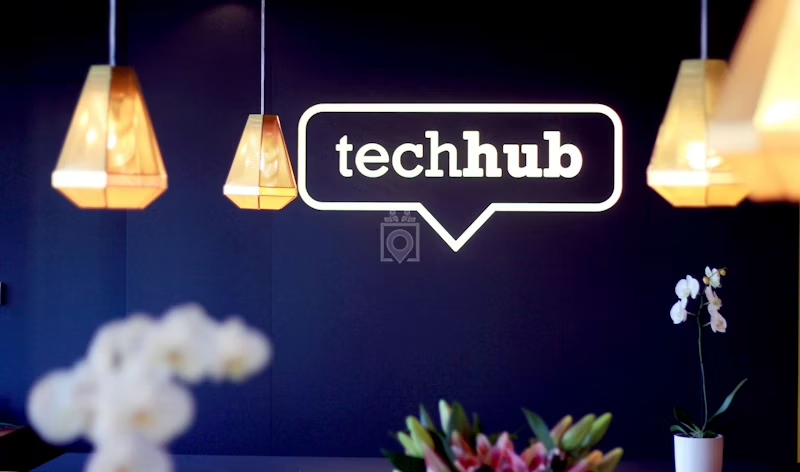
London remains the largest technology ecosystem in Europe, valued at more than $1 trillion and home to over 100 unicorns. The city captures roughly 40% of all European tech investment, a share no other hub has come close to matching. Deep capital markets, Imperial College London, UCL, and the London School of Economics feed a talent pipeline that stretches from Shoreditch to King's Cross.
The corporate presence is unmatched on the continent. Google, Amazon, Meta, and DeepMind all run major offices in the city, and London produces more billion-dollar startups than any other European hub. English as the default business language gives it a structural advantage in recruiting global talent, even as post-Brexit visa rules complicate hiring for some founders.
That regulatory friction is real, but it hasn't slowed deal flow. London's fintech and enterprise software clusters continue to attract later-stage capital that smaller hubs simply cannot access at the same scale.
2. Paris, France
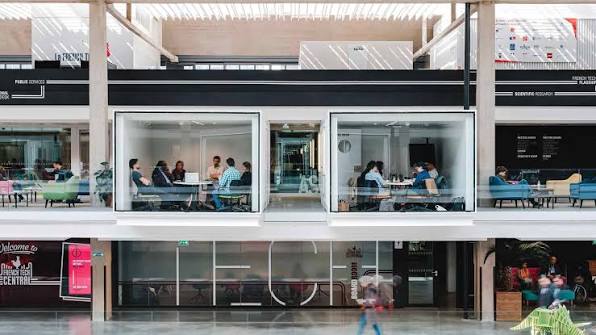
Paris has become continental Europe's premier tech hub, and the numbers back it up. The city raised more than €8 billion in venture capital in 2025 and counts over 25 unicorns. Station F, the world's largest startup incubator, houses more than 1,000 companies under one roof in the 13th arrondissement.
President Macron's France Tech initiative gave the ecosystem political backing that few European cities enjoy. The research tax credit known as CIR, combined with one of the strongest engineering talent pipelines in Europe, makes Paris unusually attractive for deep tech and AI founders. Meta AI and Google DeepMind both operate Paris research labs, and Mistral AI has emerged as the continent's leading homegrown AI champion.
La Défense anchors the corporate side, while fintech, health tech, and deep tech startups cluster across the city. For founders weighing a European base outside the UK, Paris is now the default answer.
3. Berlin, Germany
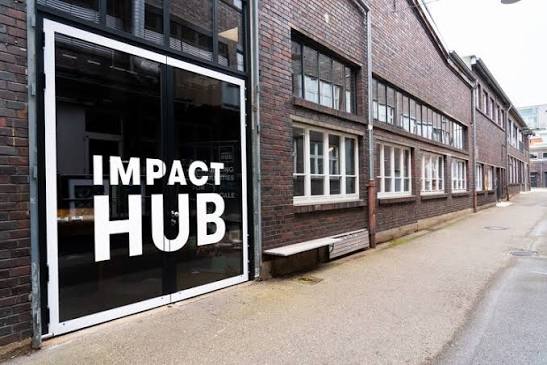
Berlin offers something no other major European capital can match: affordability at scale. With 3,000+ active startups and €5.5 billion raised in 2025, the city combines low living costs with a famously international, English-speaking startup culture that draws founders from across the continent.
Fintech is Berlin's strongest vertical, with N26 and Trade Republic leading a cluster that has matured well beyond its early experimental phase. AI and SaaS are growing quickly, supported by the Factory Berlin network and a dense alumni web from the Rocket Internet era.
Germany's industrial base gives Berlin startups access to manufacturing and enterprise customers that purely digital hubs struggle to reach. The trade-off is late-stage capital. Berlin still lags London and Paris when startups need growth rounds above €100 million, and many founders end up raising from abroad.
4. Munich, Germany
Munich took the number one position in the Financial Times and Statista 2026 ranking of Europe's leading start-up hubs, an outcome that surprised observers who assumed Berlin would hold the German crown. UnternehmerTUM, Europe's largest entrepreneurship center, ranked first among individual hubs, with Start2 Group at second.
The city's strength lies in deep tech, mobility, and AI, backed by corporate R&D from BMW, Siemens, and Allianz. Technical University of Munich and LMU supply a steady stream of engineers, and Munich holds Germany's highest density of patents. Two DAX-listed tech giants, SAP and Infineon, reinforce the region's industrial credibility.
High living costs are the main drawback. Strong salaries and quality of life offset that for most engineers, and the concentration of hardware and automotive expertise makes Munich hard to replicate elsewhere.
5. Amsterdam, Netherlands

Amsterdam runs on balance. The city hosts 2,500+ startups, over 200 international tech headquarters, and Europe's third-largest data center cluster. Adyen, Booking.com, and Mollie anchor a fintech and e-commerce scene that punches well above the city's size.
Two structural advantages stand out. The Netherlands offers a startup visa and a 30% expat tax ruling that make relocation easier than in most EU countries. And AMS-IX, one of the world's largest internet exchanges, combined with Schiphol Airport, gives Amsterdam connectivity infrastructure that few European cities can match.
Founders who want work-life balance over the intensity of London or Paris consistently land here. The compact, bike-friendly layout means the entire ecosystem is reachable in under thirty minutes, which matters more than it sounds when you're running between investor meetings.
6. Stockholm, Sweden

Stockholm produces more unicorns per capita than any city in Europe outside Silicon Valley. Spotify, Klarna, and Skype all started here, and the ecosystem's strength in fintech, music tech, and gaming remains intact through Klarna, Tink, King, and Mojang.
Sting, Stockholm's flagship incubator, jumped from 41st to 20th in the FT's 2026 ranking, a 21-place climb that reflects how quickly the city's early-stage pipeline has matured. Sweden's digital infrastructure and near-universal English fluency remove friction for international founders.
Generous parental leave and a strong social safety net make Stockholm particularly attractive to founders with families, a factor that rarely shows up in rankings but shapes retention over the long run.
7. Dublin, Ireland
Dublin is the European headquarters capital for American tech. Google, Meta, Apple, Microsoft, and LinkedIn all run their European operations from the city, drawn by Ireland's 12.5% corporate tax rate and an English-speaking workforce inside the EU.
Annual venture capital investment exceeds €1.5 billion, and a growing indigenous startup scene in fintech and SaaS has emerged alongside the multinational cluster. IDA Ireland's incentive programs continue to pull foreign direct investment, and EU membership gives Dublin a bridge position between US and European markets that no other hub can replicate.
Housing supply remains the city's biggest constraint. Costs have risen sharply, and talent retention is harder than it was a decade ago. The regulatory environment and talent pool remain world-class, which is why the multinationals stay.
8. Barcelona, Spain

Barcelona is the fastest-growing tech hub in Southern Europe, with 1,300+ startups and €1.2 billion in venture capital raised in 2025. The city combines a low cost of living with a vibrant international community and strong design and UX talent that feeds directly into its startup scene.
Mobile World Congress gives Barcelona an annual moment in the global spotlight, and hubs like Pier01 and Tech Barcelona anchor the day-to-day ecosystem. Fintech and health tech are the fastest-moving verticals.
Spain's startup law, known as the Ley de Startups, introduced tax incentives and a digital nomad visa that have accelerated founder migration into the city. For remote workers and bootstrapped founders, Barcelona's lifestyle advantages are a genuine competitive edge, not just a marketing line.
9. Lisbon, Portugal

Lisbon has grown 30% year over year and now hosts 500+ active startups. Web Summit relocated here from Dublin in 2016 and has been the single biggest catalyst for the city's transformation into one of Europe's most dynamic emerging tech hubs.
Cost of living is the lowest of any major city on this list. A government-backed startup visa and a thriving community of remote workers and founders have built momentum that feeds on itself. Portugal's ecosystem spans fintech, SaaS, and gaming, with unicorns like Farfetch and Feedzai proving that scale is possible from Lisbon.
Infrastructure and salaries still lag Northern Europe, and that gap won't close overnight. But the trajectory is clear, and founders who moved early have benefited from a market that is still underpriced relative to its potential.
10. Tallinn, Estonia
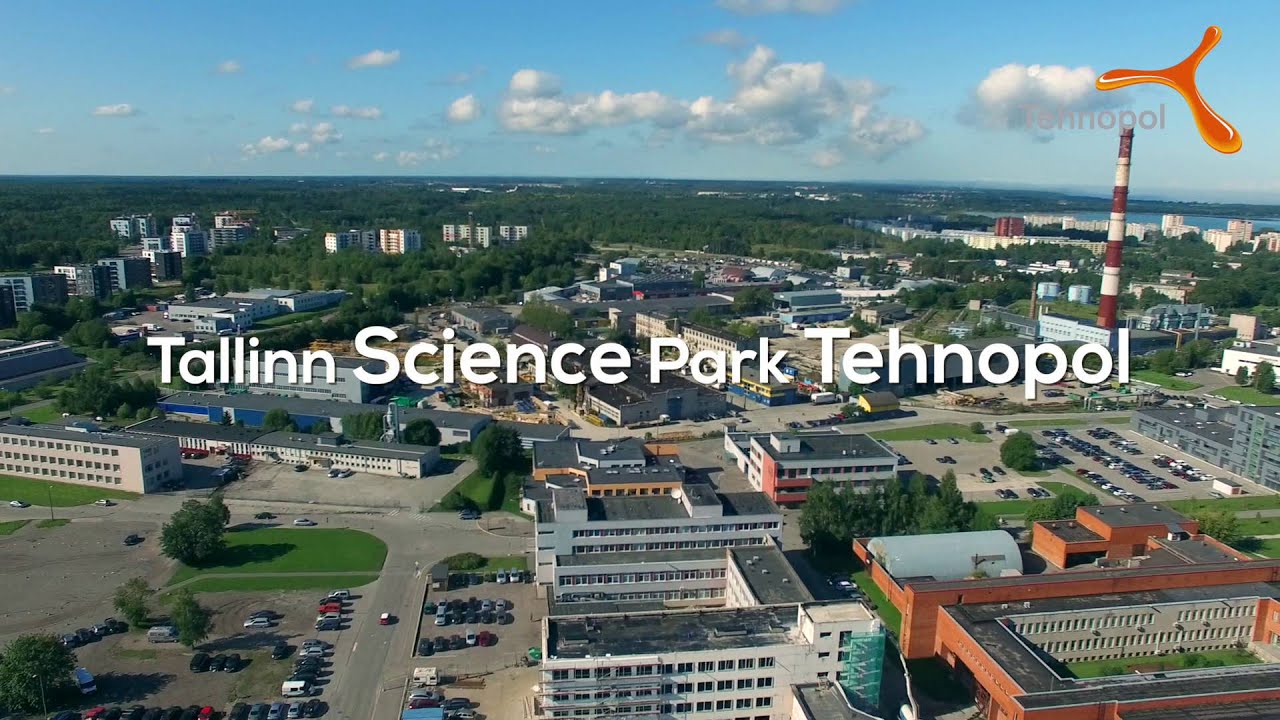
Tallinn is the smallest city on this list and arguably the most digitally advanced. Estonia's e-Residency program lets anyone register an EU company remotely, and 99% of government services are digital, a level of public-sector digitization no other European country has achieved.
The startup density per capita is unmatched globally. Wise, Bolt, and Skype all originated here, and Estonia's flat 20% corporate tax on distributed profits gives founders a predictable, founder-friendly regulatory environment.
Compact size limits how far a startup can scale without leaving, and that's Tallinn's real constraint. What it lacks in scale, it makes up for in influence. The city's outsized impact on European tech policy and digital infrastructure is undeniable, and for early-stage founders who value speed and simplicity, few places in Europe come close.
The 2026 data points to a continent where capital is spreading beyond the traditional leaders. London still dominates on absolute numbers, but Paris, Munich, and Stockholm are closing gaps in specific verticals where they hold structural advantages. Berlin's affordability and Barcelona's lifestyle pull are attracting a different kind of founder than the growth-at-all-costs profile that defined the last decade.
For anyone choosing a European base in 2026, the decision increasingly comes down to what you're building. AI research points to Paris or London. Deep tech and mobility favor Munich. Fintech founders have strong cases for Berlin, Amsterdam, or Stockholm. Bootstrapped and remote-first teams get the most mileage out of Lisbon or Barcelona.
What's consistent across all ten hubs is that Europe's tech ecosystem is no longer a single-city story. The top 10 best tech hubs in Europe for 2026 each offer a distinct combination of capital, talent, cost, and quality of life, and the right choice depends as much on what you're building as where you want to live.
Related Posts



0 Comments
Join the discussion and share your thoughts
No Comments Yet
Be the first to share your thoughts on this article!