Top 10 Best Social Media Management Tools In The World 2026


Table of Contents
Social media management has evolved from a nice-to-have into a core business function. As of 2026, brands face an increasingly fragmented landscape of platforms, from TikTok and Instagram to LinkedIn and Pinterest, each demanding tailored content, timing, and engagement strategies. Choosing the right social media management tool is no longer just about scheduling posts. It is about unifying analytics, enabling team collaboration, managing customer interactions, and increasingly, leveraging artificial intelligence to predict performance and automate workflows.
To build this ranking, we analyzed dozens of industry roundups from 2025 and 2026, cross-referencing user ratings on platforms like G2 and Capterra, market adoption figures, feature depth, pricing competitiveness, and specialization for specific use cases. We weighed criteria such as analytics depth, multi-network support, team collaboration features, integration ecosystems, and AI capabilities. The result is a list of ten tools that represent the best options for businesses of all sizes, from solo creators to global enterprises and niche newsrooms. Each entry below reflects our assessment of where these platforms stand in the current market and where they are headed.
The Top 10 Best Social Media Management Tools In The World 2026:
1. Sprout Social
Sprout Social holds the top spot because multiple 2025 and 2026 industry analyses consistently cite it as the best all-around option for analytics and enterprise collaboration. The platform serves more than 30,000 brands and earns strong user ratings: 4.3 out of 5 on G2 and 4.4 out of 5 on Capterra as of 2025. Sprout Social is an enterprise-grade social media management platform that offers publishing, a unified inbox, social listening, and advanced analytics across major networks including Facebook, Instagram, X, LinkedIn, TikTok, and Pinterest.
What sets Sprout apart is its reporting and analytics depth. Users can generate tag-based reports, profile-level and post-level performance metrics, and combined paid and organic reporting in a single view. The social listening capabilities allow teams to monitor brand sentiment and competitive trends in real time. Beyond analytics, Sprout provides helpdesk-style collaboration features such as message assignment and approval workflows. Its integrations with customer relationship management (CRM) and customer care stacks make it particularly popular with larger teams and agencies that need governance and compliance at scale.
2. Hootsuite
Hootsuite is one of the oldest and most widely adopted social media management tools in the world, with more than 18 million users globally as of 2025. It supports over 35 social networks, making it the broadest platform on this list. Hootsuite offers multi-channel scheduling, team workflows, social listening, and advertising tools in a single dashboard. Supported networks include Facebook, Instagram, X, LinkedIn, YouTube, Pinterest, and TikTok, plus app integrations for tools like Canva and Dropbox.
Hootsuite ranks second because 2025 and 2026 comparisons consistently position it as a top all-in-one platform for mid-to-large organizations. It sits just slightly behind Sprout Social in analytics depth but ahead in ecosystem breadth and market penetration. The platform's strength lies in its large ecosystem, customizable streams, and training resources through Hootsuite Academy, which helps teams standardize processes. For organizations that need to manage a wide variety of networks and onboard teams quickly, Hootsuite remains a reliable choice.
3. Buffer
Buffer takes the third spot due to its focus on simplicity and value. With more than 140,000 users and customers in over 100 countries, Buffer is designed for small businesses, creators, and lean marketing teams. It offers a free plan plus paid plans starting under $10 per month as of 2025, making it one of the most accessible tools on the market.
Buffer supports scheduling to major networks including Facebook, Instagram, X, LinkedIn, Pinterest, and TikTok. Its features include best-time-to-post suggestions, content queues, and a built-in AI assistant for caption ideas. Buffer also provides post and channel analytics, basic engagement tools, and landing page creation for link-in-bio campaigns. Multiple 2026 lists highlight it as the best value and ease-of-use option for small teams, offering a strong feature set at a lower price point than most enterprise tools.
4. Zoho Social
Zoho Social is designed for businesses that want social media tightly integrated with CRM and sales workflows. As part of Zoho's ecosystem, which serves more than 100 million users, Zoho Social supports publishing, monitoring, and reporting across major networks. Its standout feature is the ability to automatically link social interactions to leads and contacts in Zoho CRM, creating a seamless bridge between social engagement and sales pipeline management.
Features include customizable content queues, approval workflows, live stream monitoring, and performance reports with team activity tracking. Industry reports from 2025 and 2026 consistently single out Zoho Social as the leading social CRM combination for small and medium businesses and mid-market teams already using Zoho. The unusually deep CRM linkage sets it apart from generalist tools that treat social data as separate from customer records.
5. SocialPilot
SocialPilot is a budget-friendly, agency-oriented social media management tool that supports bulk scheduling, client management, and white-label reporting. It earns ratings around 4.5 out of 5 on major review sites and supports up to 75 social profiles on higher-tier plans as of 2025. SocialPilot covers core platforms including Facebook, Instagram, X, LinkedIn, Pinterest, and TikTok, and offers content curation, RSS automation, and team workflows at relatively low per-seat costs.
Its reporting and client approval flows are designed to help agencies manage many accounts efficiently. Features like role-based access and separate client workspaces make it a strong fit for teams that handle multiple brands. Expert roundups from 2026 repeatedly put SocialPilot among the best tools for agencies and price-sensitive teams that still need multi-brand support and solid reporting.
6. Sendible
Sendible is tailored to agencies and multi-brand marketers, offering robust client dashboards, approval workflows, and white-label reporting. It supports more than 20 social platforms and blogging platforms, including integrations with WordPress and Medium for content publishing, and cloud storage services like Google Drive for asset management.
Features include content recommendations, queues, a unified social inbox, and customizable reports that can be scheduled for automatic delivery to clients. Analyses from 2025 and 2026 frequently list Sendible as a top specialist tool for agencies. It sits slightly behind SocialPilot in pricing competitiveness but ahead in white-label customization and integration breadth for content publishing. For agencies that need to deliver polished, branded reports to clients, Sendible offers a compelling package.
7. Tailwind
Tailwind is a niche-focused tool that specializes in Pinterest and Instagram scheduling, visual planning, and content optimization. As an official Pinterest Marketing Partner, Tailwind offers features such as SmartSchedule for determining the best times to post, hashtag suggestions, drag-and-drop grid planning for Instagram, and powerful pin-looping and board lists for Pinterest.
Tailwind also provides AI-assisted design tools and pre-built templates for social posts and email, plus Tailwind Communities for content sharing among users. Multiple 2026 lists call it the best dedicated solution for Pinterest and visual marketing. However, its narrower platform scope keeps it below broader multi-network tools. For businesses that rely heavily on Pinterest and Instagram, Tailwind remains the go-to choice.
8. Birdeye
Birdeye is a reputation and customer experience platform that includes social media management for local and multi-location businesses. It serves more than 100,000 local businesses as of 2025. Birdeye centralizes reviews, listings, and social posts, enabling teams to publish and respond across Facebook, Instagram, Google, and more from one dashboard.
The platform provides advanced analytics on customer sentiment, review volume, and location-level performance, blending social data with review insights for brick-and-mortar brands. Industry reports emphasize Birdeye's strength in combining reviews with social management for multi-location businesses. It is less of a pure-play social suite than higher-ranked tools, but for businesses that need to manage both reputation and social presence, Birdeye offers a unique integrated solution.
9. Social News Desk

Social News Desk is a specialized social media management platform built for news organizations and broadcasters. Used by approximately 2,500 newsrooms and broadcasters globally, it focuses on workflow automation for posting breaking news across multiple pages and profiles, content routing by desk or show, and compliance features suited to regulated media environments.
In 2026, the company highlights its AI-powered tools for content recommendations, posting time optimization, and auto-generation of social copy tailored to each platform. Social News Desk ranks ninth because it is a recognized leader in the newsroom niche with strong AI innovation, but its specialization and narrower target market place it below more generalist top tools. For newsrooms that need speed, compliance, and multi-profile management, it remains the standard.
10. AI-First Social Media Management Tools
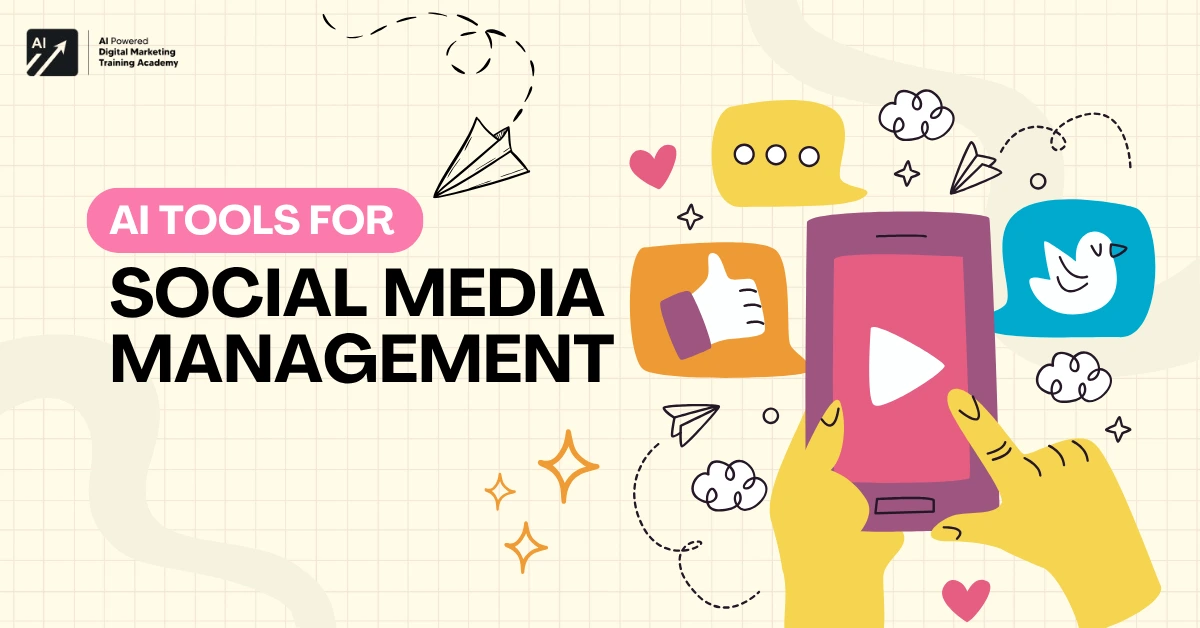
The final spot on our list belongs to the emerging category of AI-first social media management tools. These platforms, highlighted in 2026 best AI social media management tools shortlists, focus heavily on automated content generation, performance prediction, and autonomous scheduling. They typically use large language models to draft posts, repurpose content across networks, and suggest optimal formats, while also providing predictive analytics on which posts are likely to perform best.
Examples described in 2026 product concept rankings include AI Content Calendar Builders and Social Intelligence Dashboards that automate much of the planning and optimization process. This category ranks tenth because, while AI capabilities are rapidly improving and highly promising, many solutions are still maturing and lack the proven stability, market share, and depth of ecosystem that define the higher-ranked established platforms. For early adopters willing to experiment, these tools represent the frontier of social media management in 2026.
Selecting the right social media management tool depends on your organization's size, budget, and primary use case. For enterprise analytics and collaboration, Sprout Social remains the gold standard. For broad network support and ecosystem depth, Hootsuite is a proven workhorse. Small teams and creators will find Buffer's simplicity and price hard to beat. And for those ready to embrace the next wave, AI-first tools offer a glimpse into a future where social media management becomes increasingly autonomous.
Related Posts


0 Comments
Join the discussion and share your thoughts
No Comments Yet
Be the first to share your thoughts on this article!