Top 10 Best Shipping Lines In Europe 2026

Table of Contents
Europe remains the nerve center of global maritime trade, with its carriers moving roughly a quarter of the world's containerized cargo. But the rankings shift every year, and 2026 brings some notable changes. To build this list, we weighed fleet capacity, global market share, schedule reliability, technological investment, and each company's strategic positioning across key trade lanes. We also factored in recent alliance realignments, which have reshaped how European carriers cooperate on major routes.
The result is a mix of deep-pocketed global giants and specialized regional specialists. Some of these names you already know. A few might surprise you. Here is our ranking of the top 10 best shipping lines in Europe for 2026.
These Are The Top 10 Best Shipping Lines In Europe 2026:
1. Mediterranean Shipping Company (MSC)
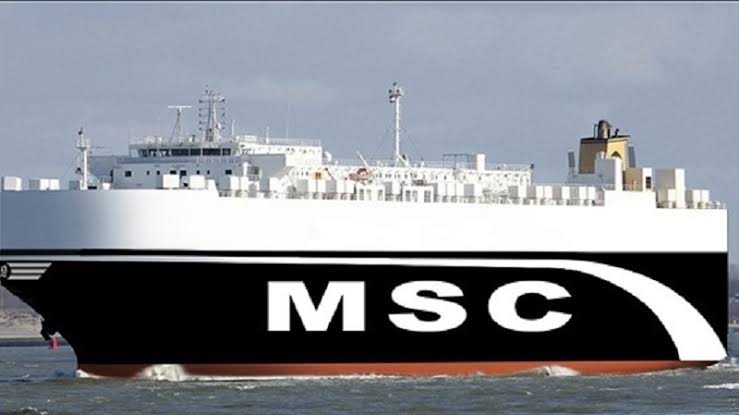
MSC sits at the top of this list, and it is not particularly close. The Geneva-based carrier operates 999 vessels with a combined capacity of 7,333,579 TEU, giving it a 21.5% share of global container capacity. That is more than 2.5 million TEU ahead of its nearest rival, a gap that widened over the past year as MSC expanded its fleet by 13.2%.
What sets MSC apart is its independence. While other major carriers anchor themselves to alliances, MSC operates alone, giving it complete control over routing decisions. When the Red Sea crisis forced mass diversions around the Cape of Good Hope, MSC could reposition vessels faster than carriers stuck in alliance committees. The trade-off is an aging fleet, averaging around 17 years old, but the company holds a 2.05 million TEU orderbook of dual-fuel vessels scheduled to arrive by 2029. Its consolidated operations include WEC Lines and Log-In Logistica.
2. A.P. Moller - Maersk
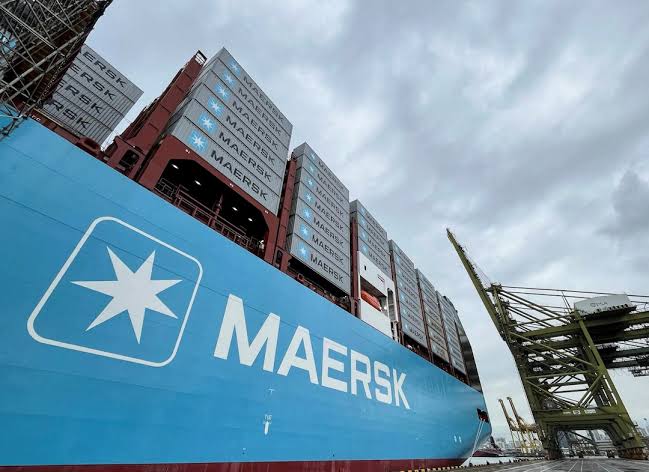
Maersk, headquartered in Copenhagen, remains Europe's second-largest carrier with 744 vessels and 4,709,894 TEU of capacity, representing 13.8% of the global market. But capacity is no longer the company's primary obsession. Maersk has repositioned itself as an integrated logistics provider, stitching together ocean freight with air cargo and inland warehousing into a single supply chain offering.
The strategy appears to be working. Maersk posted revenue above $52 billion in 2024 and maintains a schedule reliability rate of 74.1%, among the best in the industry. The company has also staked its reputation on decarbonization, committing to net-zero emissions by 2040 through a fleet powered by green methanol. Its Gemini Cooperation with Hapag-Lloyd, launched in early 2025, optimizes transit schedules across major east-west routes. Hamburg Sud, Alianca, and Sealand all operate under the Maersk umbrella.
3. CMA CGM Group
France's CMA CGM, based in Marseille, holds the third spot with 730 vessels and 4,348,121 TEU of capacity, good for 12.8% of the global market. The group has grown aggressively in recent years, both organically and through acquisitions, and now operates more than 600 ships across all major trade lanes.
CMA CGM has leaned hard into digitalization, deploying real-time tracking, IoT sensors, and AI-powered route optimization across its fleet. Its ownership of CMA CGM Air Cargo gives the group a multimodal edge that few competitors can match, particularly on Asia-Europe and Africa-bound shipments. The company is part of the Ocean Alliance and consolidates APL, ANL, CNC, Containerships, and MacAndrews under its corporate umbrella.
4. Hapag-Lloyd
Hapag-Lloyd, headquartered in Hamburg, is Germany's flagship carrier and one of the oldest names in the business, with roots stretching back more than 150 years. The company operates 286 vessels with 2,384,470 TEU of capacity, capturing 7.0% of the global market. It serves more than 120 countries across over 120 trade routes.
Where Hapag-Lloyd excels is reliability. The carrier has built a reputation for schedule adherence and careful cargo handling, making it a preferred partner for high-value shipments on the Transatlantic and Europe-Latin America lanes. Its Gemini Cooperation with Maersk prioritizes predictable transit times over raw capacity growth, a deliberate strategic choice. The fleet is also being modernized with dual-fuel engines capable of running on synthetic natural gas. NileDutch and DAL operate under the Hapag-Lloyd banner.
5. Ocean Network Express (ONE)
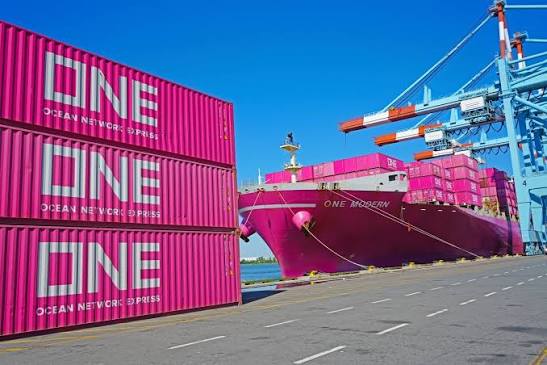
ONE, the joint venture formed in 2017 from the container divisions of Japan's three largest shipping lines, has grown into a formidable mid-tier carrier. Headquartered in Singapore with deep Japanese roots, the company operates 273 vessels with 2,159,154 TEU of capacity, representing 6.3% of the global market.
You can spot ONE's vessels from a distance, thanks to their distinctive bright pink containers. The company covers more than 120 countries with particular strength on Asia-US routes, where it competes aggressively on pricing. ONE operates within the Premier Alliance and has shown consistent growth since its formation, consolidating the container operations of Mitsui O.S.K. Lines, K Line, and Nippon Yusen Kaisha into a single efficient entity.
6. DP World Shipping Solutions
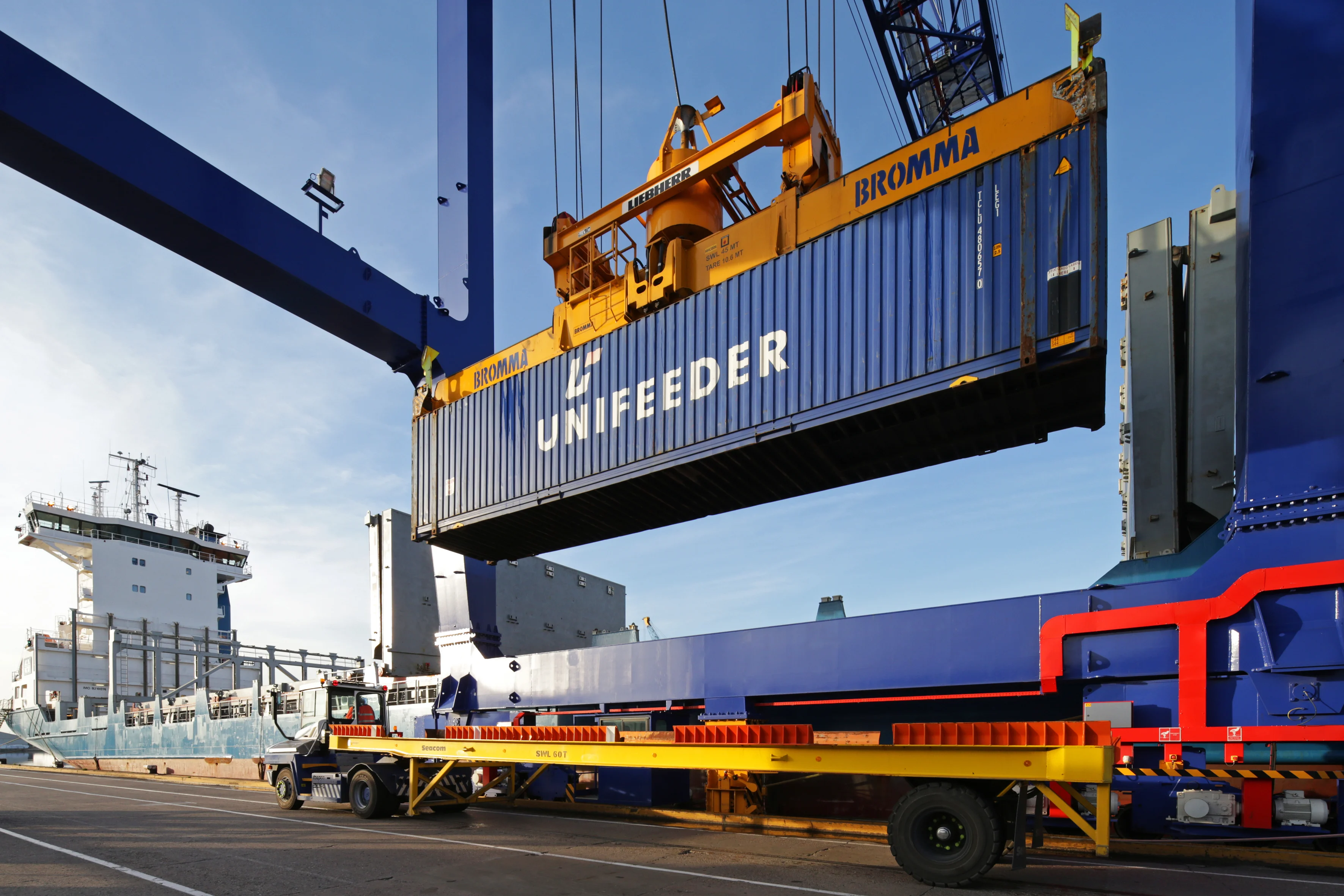
DP World Shipping Solutions, formerly Unifeeder, occupies a different niche entirely. The Danish company, owned by Dubai-based DP World, is Europe's leading feeder and short-sea operator, connecting major hub ports with smaller regional ports that the global giants skip. Its 94 vessels carry 165,289 TEU, just 0.5% of global capacity, but its importance to European trade far exceeds that number.
The company's integration with DP World's terminal network gives it a trimodal advantage, connecting sea, rail, and road across regional industrial corridors. DP World Shipping Solutions's consolidated operations include Unimed Feeder Services, Feedertech, Shreyas Shipping, and Transworld Feeders, giving it reach across Europe, the Americas, and the Indian Subcontinent.
7. Grimaldi Group
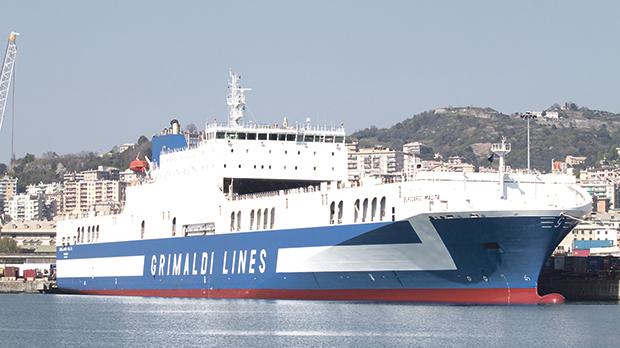
Grimaldi, founded in Naples in 1947, is one of Europe's most established shipping companies. The group operates 50 vessels with 77,276 TEU of capacity, but its real strength lies in specialized segments: roll-on/roll-off (Ro-Ro), car carriers, and container shipping across the Mediterranean and Northern Europe.
The company has invested heavily in environmentally friendly tonnage, including some of the world's largest hybrid Ro-Ro vessels. Its consolidated operations include Atlantic Container Line, which extends its reach across the Atlantic, and Finnlines, which covers Baltic Sea routes. For automotive manufacturers and project cargo shippers, Grimaldi remains a trusted partner.
8. Samskip
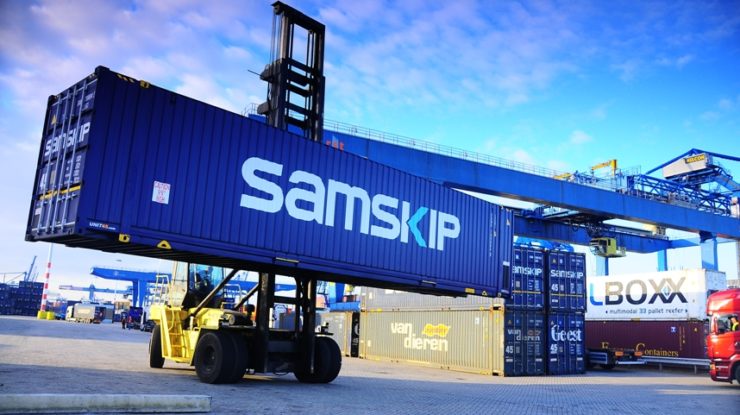
Samskip, headquartered in Reykjavik with major operations in Rotterdam, is a leading European multimodal transport provider. The company runs an integrated network of short-sea shipping, rail, and road services across Northern Europe, Scandinavia, and the Baltic region, offering shippers a viable alternative to road-only freight.
Its consolidated operations include Nor Lines A/S and Seaconnect, strengthening its position in Norwegian coastal shipping. Samskip has built its reputation on sustainable transport solutions, and for shippers looking to reduce their carbon footprint on European corridors, it is one of the more compelling options available.
9. DB Schenker
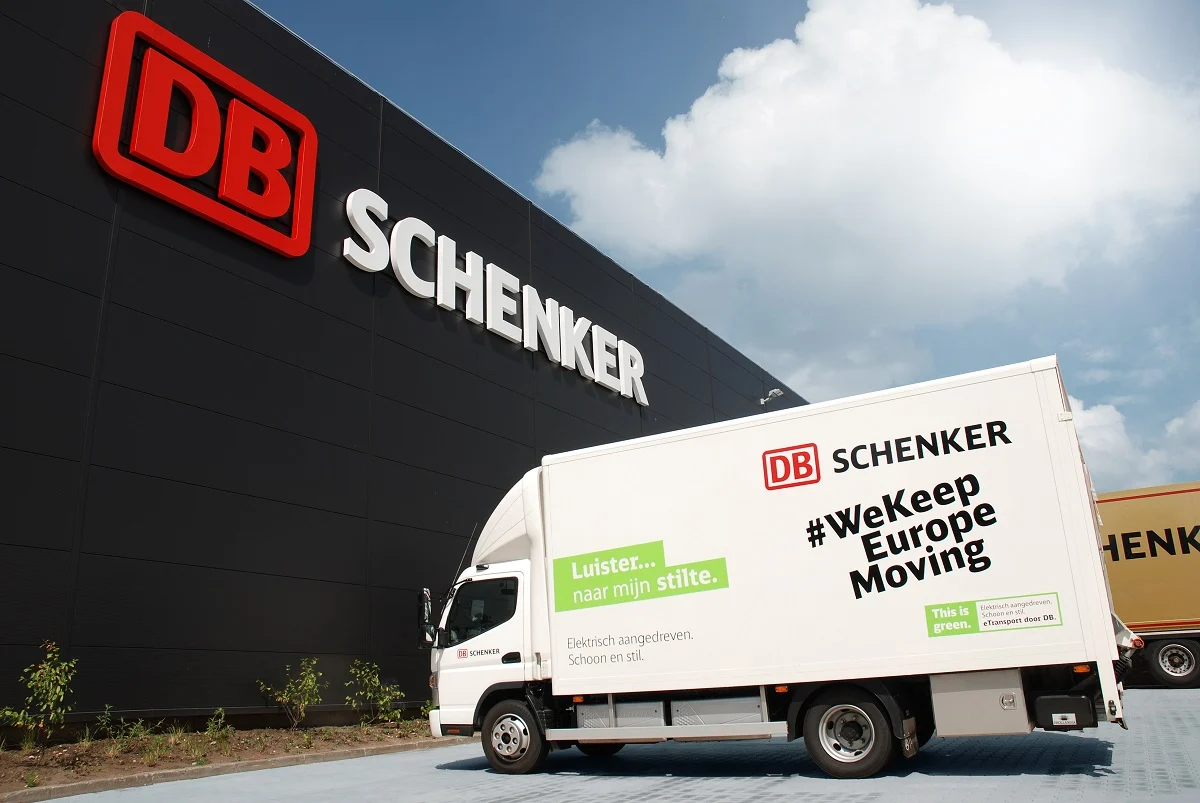
DB Schenker, the German logistics giant, offers a different kind of shipping service. While not a traditional ocean carrier, the company provides comprehensive freight solutions across Europe, including land, air, ocean, and parcel delivery. With over 2,000 locations worldwide and 720 branches across Europe offering LTL services, DB Schenker is a one-stop shop for European shippers.
The company specializes in time-critical ground freight with fixed delivery windows, plus seamless international tracking. It is particularly strong in perishable food and beverage logistics, and its European parcel network competes directly with national postal operators. For businesses shipping within Europe, DB Schenker's breadth of services is hard to beat.
10. PostNL

PostNL rounds out our list. The Dutch courier, headquartered in The Hague, is a major player in European eCommerce shipping, serving the Netherlands, Italy, Germany, and the United Kingdom. The company specializes in small packages, envelope-sized mail, and cross-border eCommerce delivery across the Eurozone.
PostNL has built a reputation for reliable last-mile delivery and robust tracking capabilities, making it a go-to partner for online retailers serving European customers. While it does not compete with the ocean carriers on container volume, its importance to the European shipping ecosystem is substantial, particularly as cross-border eCommerce continues to grow.
These rankings reflect the state of European shipping as of early 2026. The industry remains in flux, with alliance reshuffles, decarbonization mandates, and geopolitical disruptions all reshaping competitive dynamics. But the carriers on this list have positioned themselves to lead through whatever comes next.
Related Posts




0 Comments
Join the discussion and share your thoughts
No Comments Yet
Be the first to share your thoughts on this article!