Top 10 Best Grocery Delivery Apps In UK 2026

Table of Contents
Online grocery shopping in Britain has settled into a mature, fiercely competitive market, and the best grocery delivery apps in the UK for 2026 reflect that. Tesco, Ocado, and the major supermarket chains now compete directly with rapid-delivery newcomers like Getir and Gopuff, while Deliveroo and Uber Eats have pushed hard into supermarket partnerships. According to Statista, grocery delivery app downloads in the UK have remained elevated since the pandemic-era surge, and consumer group Which? continues to track satisfaction scores across the sector.
Our ranking weighs market share, delivery speed, slot availability, loyalty integration, and pricing. We drew on Statista download data, Which? customer satisfaction surveys, published company figures, and forum sentiment from communities such as r/london, where shoppers regularly compare reliability and value. What follows is our assessment of the ten apps that matter most to UK households in 2026.
How We Ranked These
We assessed each app on five factors: grocery market share and scale, delivery speed and slot reliability, loyalty scheme value, product range, and how customers actually rate the experience. Which? satisfaction scores carried weight, as did published delivery slot figures and partner network size. We also considered pricing transparency, subscription costs, and whether an app suits a full weekly shop or just a top-up. No paid placements influenced the order.
These Are The Top 10 Best Grocery Delivery Apps In UK 2026:
1. Tesco Grocery & Clubcard
Tesco remains the benchmark for online grocery in Britain, and no rival has come close to matching its scale. The supermarket holds roughly 27% of the UK grocery market and offers more than one million delivery slots every week, a figure that dwarfs most competitors. That slot availability matters: one of the most common complaints about grocery apps is finding a delivery window that fits around work and family life, and Tesco consistently has the deepest pool to draw from.
The app's integration with Clubcard is where it pulls ahead. Shoppers collect points on every order and can spend them against future shops, and Clubcard Prices discounts apply automatically at checkout. Tesco's Whoosh service, available from hundreds of Express stores, delivers in as little as 30 minutes for customers who need something urgently rather than a full weekly shop.
Product range is the other decisive advantage. Tesco stocks a wider selection than any other UK grocer, from budget own-brand lines to premium Finest products, which means fewer substitutions and fewer reasons to open a second app. Reddit users in r/london frequently name Tesco as the default for large orders, even when they use faster apps for small top-ups.
2. Ocado
Ocado built its reputation as the UK's original online-only grocer, and Which? surveys have repeatedly placed it at or near the top for freshness, order accuracy, and customer service. Customer satisfaction scores have consistently exceeded 90% in Which? testing, and the company holds around 1.7% to 2% of the UK grocery market despite operating no traditional supermarkets of its own.
The app offers one-hour delivery windows, which gives shoppers more precision than the broader windows most supermarkets provide. Ocado Zoom, the company's rapid service, delivers in under 60 minutes across major cities. A price-match guarantee against Tesco on thousands of branded items addresses the long-standing perception that Ocado is the expensive option.
Its partnership with Marks & Spencer is the feature no competitor can replicate. M&S food is available exclusively through Ocado online, which gives the app a premium grocery range that appeals to shoppers who want quality fresh food alongside everyday essentials. The trade-off is cost: Ocado's own-brand lines are priced above supermarket equivalents, and delivery charges apply unless you take a Smart Pass subscription.
3. Deliveroo
Deliveroo has moved well beyond restaurant food. The platform now operates in more than 100 UK towns and cities and partners with over 18,000 grocery and convenience sites, including Sainsbury's, Waitrose, Aldi, Morrisons, Co-op, and Boots. Through its Hop service and supermarket partnerships, delivery can arrive in as little as 20 to 30 minutes.
What makes Deliveroo useful is the breadth of the partner network in a single app. A shopper can order a Waitrose weekly shop, a Co-op top-up, and a Boots pharmacy item without switching platforms. That convenience explains why the app has become a fixture for urban households that want speed over the lowest possible price.
Deliveroo Plus, at £7.99 per month, provides free delivery on orders over £25. For frequent small-basket shoppers, the maths works: a handful of orders a month and the subscription pays for itself. Prices on grocery items typically run slightly above in-store rates, which is the cost of on-demand convenience, and availability varies considerably outside major cities.
4. Uber Eats
Uber Eats has quietly become one of the most important grocery players in the UK. The app is available in more than 150 towns and cities, and its grocery partner network includes Sainsbury's, Asda, Iceland, and Boots, with delivery in as little as 30 minutes.
The Uber One membership, at £5.99 per month, bundles free delivery on grocery and restaurant orders with discounts on rides. For households already using Uber for transport, the combined value is hard to beat, and it undercuts Deliveroo Plus on price. That cross-service bundling is Uber's clearest structural advantage in the UK market.
Late-night availability is another strength. Many grocery partners on the platform deliver until midnight or later in urban areas, which serves a demand that traditional supermarket slots cannot meet. The dense courier network means orders are rarely left waiting, though item pricing tends to run above supermarket shelf prices.
5. Amazon Fresh
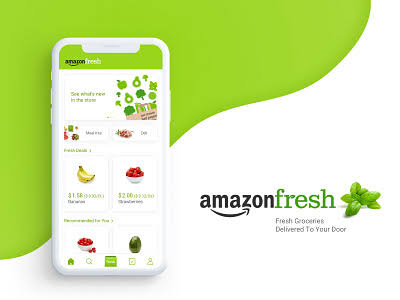
Amazon Fresh is available to Prime members in over 100 UK postcodes, with free same-day delivery on orders over £35. The service stocks Amazon's own "by Amazon" range alongside branded products from major suppliers, and it sits directly inside the main Amazon app.
That integration is the real selling point. Shoppers can add groceries to the same basket as general merchandise, which no supermarket app can match. For Prime members who already pay the annual subscription, the marginal cost of using Fresh is effectively zero on qualifying orders.
Amazon has expanded its UK grocery footprint steadily, including physical Amazon Fresh stores in London that double as local fulfilment points. Pricing on essentials is competitive, particularly on the by Amazon range, though the product selection is narrower than Tesco or Sainsbury's for a full weekly shop. Availability remains concentrated in major cities and their surrounding areas.
6. Sainsbury's Groceries
Sainsbury's holds roughly 15% of the UK grocery market, supported by more than 600 supermarkets and over 800 convenience stores. The app offers one-hour delivery slots, which puts it level with Ocado on precision, and Chop Chop provides rapid delivery in under 60 minutes for smaller orders.
Nectar integration works much like Tesco's Clubcard: shoppers collect points on every order and redeem them against future shops, and Nectar Prices discounts apply at checkout. For households already invested in the Nectar scheme, the app is the natural choice.
Reliability is where Sainsbury's earns its place. The app is regularly praised for accurate order fulfilment and consistent slot availability, and it offers both home delivery and click-and-collect across most of the UK. It rarely wins on price against Tesco or Asda, but it seldom disappoints on execution either.
7. Morrisons
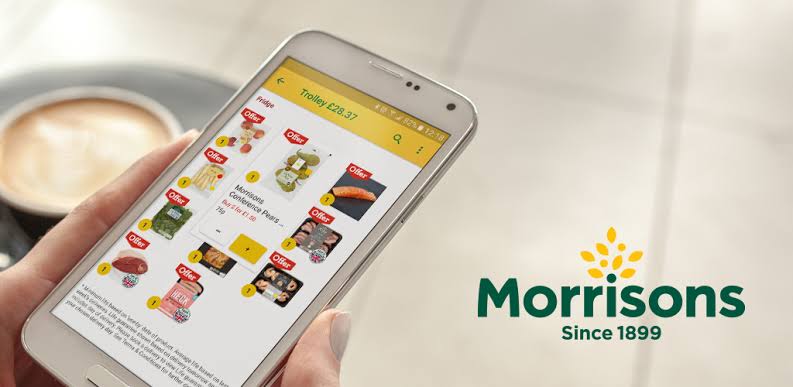
Morrisons runs its own delivery app while also supplying Amazon Fresh's UK grocery operation and partnering with Deliveroo and Gopuff for on-demand delivery. That multi-channel approach means Morrisons products reach customers through more routes than almost any other UK grocer.
The company's vertically integrated supply chain is its quiet advantage. Morrisons owns its own farms and food manufacturing sites, which helps it compete on freshness and price in categories like fresh produce and meat. The Market Street counters, staffed by butchers, bakers, and fishmongers, translate reasonably well to online orders, and the More Card loyalty programme offers points and personalised discounts.
Morrisons holds around 10% of the UK grocery market. The app provides next-day slots rather than the same-day speed of Deliveroo or Getir, so it suits planned weekly shops more than urgent top-ups. Pricing on fresh food is among the most competitive of any major supermarket.
8. Waitrose & Partners
Waitrose holds around 5% of the UK grocery market, and Which? has rated it among the top online supermarkets for product quality and customer satisfaction. The online range now exceeds 30,000 products, covering everyday essentials through to premium own-brand lines.
My Waitrose members get free delivery on orders over £40, which is a lower threshold than most competitors offer for free delivery. Next-day and same-day slots are available across most of the UK, and the app's customer service record is strong.
A partnership with Deliveroo provides rapid delivery in under an hour in many areas, giving Waitrose a fast option without building its own courier network. The obvious caveat is price: Waitrose sits at the premium end of the market, and the app makes no attempt to compete with Aldi or Asda on cost. For shoppers who prioritise quality over value, it delivers consistently.
9. Getir
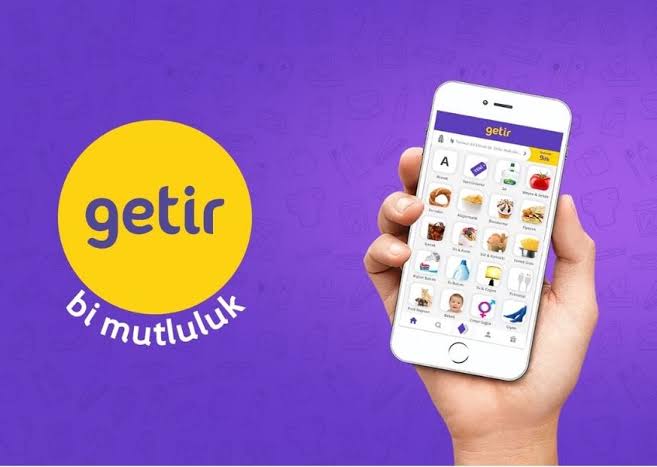
Getir specialises in ultra-fast delivery, typically arriving within 10 to 20 minutes from hundreds of dark stores across London and major UK cities. The Turkish-founded quick-commerce company raised billions in funding during the delivery boom, and while it has retreated from several European markets, it remains a prominent player in UK cities.
The model is fundamentally different from a supermarket app. Getir stocks convenience essentials, including snacks, drinks, fresh produce, and household items, rather than the full range needed for a weekly shop. It exists for the moment you realise you're out of milk, not for planning Sunday dinner.
Pricing carries a premium that reflects the speed, and the range is deliberately limited. Where Getir wins is in dense urban areas where a 15-minute delivery genuinely changes the calculus. Outside those zones, its coverage thins quickly, and the app makes little sense for households doing a full grocery run.
10. Gopuff
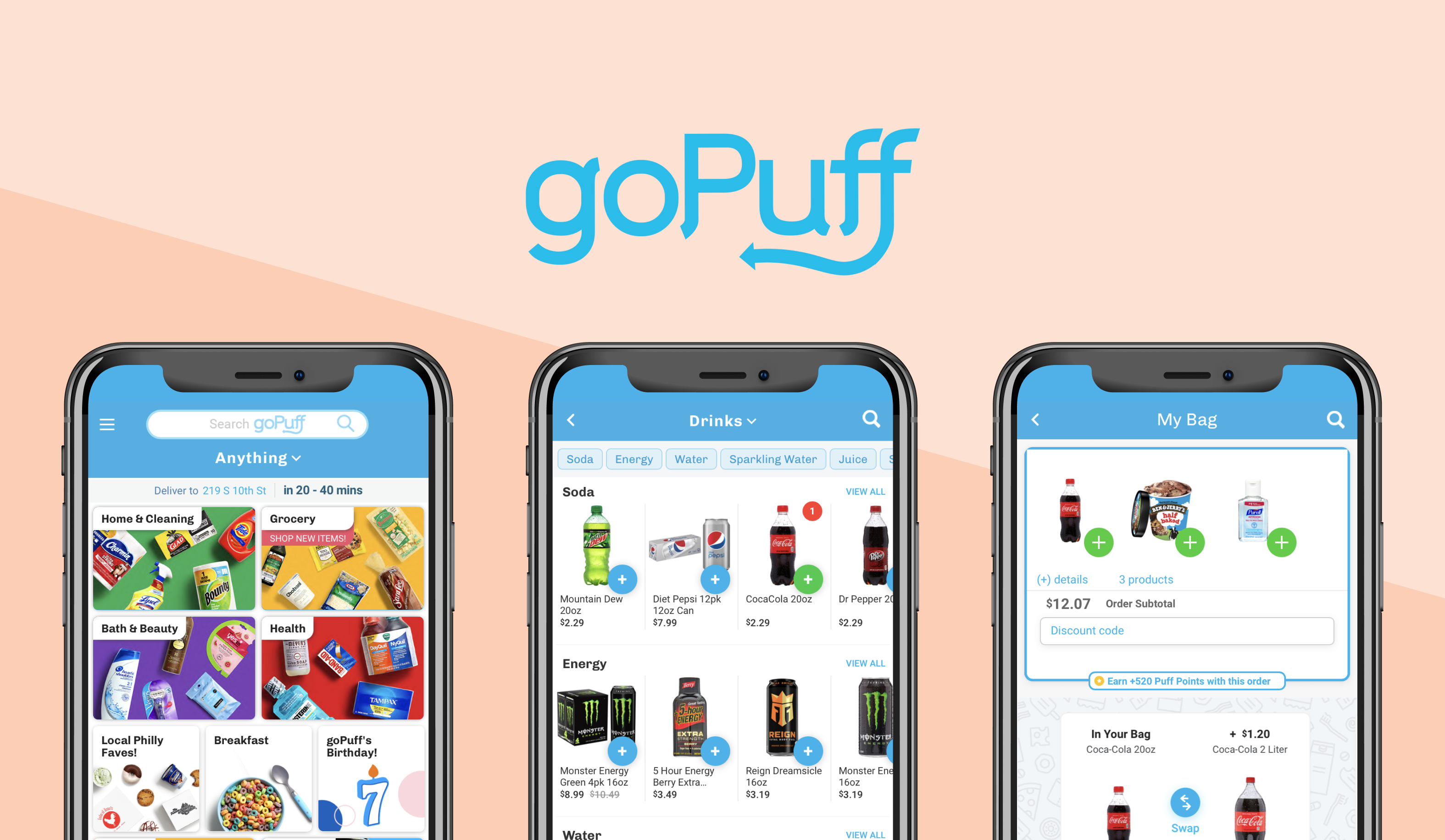
Gopuff is a US-founded instant-needs platform that expanded into the UK and now delivers from more than 30 micro-fulfilment sites in around 15 to 30 minutes. In many locations, it operates 24 hours a day, which sets it apart from nearly every other app on this list.
Its partnership with Morrisons allows Gopuff to offer fresh food and branded groceries alongside the snacks, alcohol, and household essentials that form its core range. That arrangement gives the app a credible fresh-grocery offer without the overhead of running its own supply chain.
The flat-fee Fam membership provides free delivery on orders over a low minimum, which appeals to late-night and impulse shoppers. Gopuff's weakness is range depth: it cannot match a supermarket for a full weekly shop, and pricing on individual items runs above shelf price. As a convenience play for odd hours and small baskets, it fills a gap the big supermarkets have largely ignored.
The right choice depends on how you shop. For a full weekly shop with the widest range and best slot availability, Tesco remains the strongest grocery delivery app in the UK for 2026, with Sainsbury's a close alternative for Nectar users. Ocado justifies its premium for shoppers who value freshness, accuracy, and access to M&S food.
For speed and small baskets, the picture splits. Deliveroo and Uber Eats offer the broadest on-demand supermarket access, while Getir and Gopuff serve the ultra-fast convenience market in major cities. Amazon Fresh makes the most sense for existing Prime members who want groceries and general merchandise in one basket.
Most UK households now use two or three apps rather than one, pairing a supermarket app for planned shops with a rapid-delivery service for top-ups. That pattern, visible across r/london discussions and reflected in Statista's download data, tells you more about the market than any single ranking can.
Related Posts
4 Comments
Join the discussion and share your thoughts