Top 10 Best Mobile Payment Services In Australia 2026


Table of Contents
Australia has become one of the most cash-averse economies on the planet, and the top 10 best mobile payment services in Australia for 2026 reflect that shift. According to data from the Reserve Bank of Australia, contactless payments now account for the overwhelming majority of in-person transactions, with tap-to-pay adoption exceeding 90 percent at Australian card terminals. That infrastructure has turned the smartphone into the default wallet for millions of consumers, from commuters tapping onto trains to market stallholders accepting card payments on a phone.
To build this ranking, we weighed several factors. Merchant acceptance across Australia carried the most weight, since a payment service is only as useful as the places that take it. We also considered active Australian user numbers, security architecture, breadth of functionality beyond simple payments, fee structures for both consumers and merchants, and how deeply each service is embedded in the daily financial habits of Australians. Where a service leads its category, such as cross-border transfers or buy-now-pay-later, that leadership counted in its favour. We drew on published user figures, transaction data, and pricing from the providers themselves, along with sentiment from Australian consumer forums and small business communities.
What follows is our 2026 ranking of the ten mobile payment services that matter most to Australian consumers and businesses.
The Top 10 Best Mobile Payment Services In Australia 2026:
1. Apple Pay

Apple Pay remains the dominant mobile wallet in Australia, and the gap between it and the rest of the field is not close. An estimated 5 million-plus Australians use it, and it works at more than 90 percent of Australian card terminals through near-field communication. That near-universal acceptance is the single biggest reason it holds the top spot for 2026.
The service supports cards from all four major Australian banks, Commonwealth Bank, Westpac, ANZ, and NAB, along with a long list of smaller institutions and fintechs. It runs on iPhone, Apple Watch, and Mac, which means the same wallet follows users from the checkout counter to their online shopping. Security is handled through tokenization, so actual card numbers are never shared with merchants, and every transaction requires Face ID or Touch ID authentication.
Australia's contactless infrastructure deserves part of the credit here. Because tap-to-pay terminals are so widespread, Apple Pay users rarely encounter a situation where they need a physical card. That combination of hardware integration and merchant coverage keeps Apple Pay at number one.
2. Google Wallet
Google Wallet, the platform formerly known as Google Pay, is the primary rival to Apple Pay in Australia and comes pre-installed on more than 80 percent of Android devices sold in the country. It handles tap-to-pay via NFC on Android phones and Wear OS watches, and it works with all major Australian banks.
Where Google Wallet pulls ahead of its Apple counterpart is in non-payment functionality. It stores boarding passes, event tickets, and loyalty cards, and as of 2026 it supports digital driver's licences in participating states including New South Wales and Victoria. That makes it less a payment app and more a digital wallet in the fullest sense.
The open-platform approach also matters. Android's wider hardware range means Google Wallet reaches budget phones that Apple Pay cannot, giving it a broader potential user base across the Australian market. It sits comfortably at number two.
3. PayPal

PayPal is the most established online payment platform in Australia, with more than 9 million active Australian accounts and roughly AUD $40 billion in annual Australian transaction volume. For a generation of online shoppers, it was the first way they ever paid for anything on the internet, and that trust has carried into the mobile era.
The mobile app supports QR code payments at participating retailers, in-store tap through linked cards, and one-touch checkout at millions of online merchants. PayPal Pay in 4, the company's buy-now-pay-later product, has become a common sight at Australian online checkouts. Cross-border capability is another strength. For Australians buying from overseas merchants, PayPal's currency handling and buyer protection remove a layer of risk that card payments often carry.
Its longevity and merchant ubiquity secure the number three ranking, even as newer wallet-first services chip away at its in-store presence.
4. Samsung Pay (Samsung Wallet)
Samsung Wallet, which absorbed the old Samsung Pay branding, offers something none of the top three can match. Alongside standard NFC tap-to-pay, it retains Magnetic Secure Transmission technology, which lets Galaxy devices pay at older terminals that lack NFC readers entirely. In a country where most terminals are modern, that advantage is narrower than it once was, but it still matters at older registers and regional merchants.
The service supports major Australian banks and stores digital keys, IDs, and loyalty cards alongside payment cards. Its Australian market share trails Apple Pay and Google Wallet, largely because it is limited to Samsung Galaxy hardware. Within that ecosystem, though, the integration is tight and the payment experience is polished.
Samsung Wallet ranks fourth for hardware versatility rather than raw user numbers.
5. Square

Square, owned by Block, Inc., is the leading mobile card reader and point-of-sale solution for Australian small businesses. More than 400,000 Australian businesses use Square hardware or software, and the pitch is simple. A Square Reader costs around AU$65, plugs into a smartphone or tablet, and turns it into a tap-and-go payment terminal.
Pricing sits at 2.2 percent plus AU$0.15 per tap or chip transaction, with no lock-in contracts. The mobile app doubles as a full point-of-sale system with inventory tracking, invoicing, and reporting, which is why cafés, market stalls, and tradespeople have adopted it so widely. For a sole trader who needs to take a card payment on the spot, Square is often the fastest route.
It earns the number five spot as the top merchant-side mobile payment service in the country, a category that matters enormously given how many small Australian businesses now run entirely on mobile hardware.
6. Wise

Wise, formerly TransferWise, is the go-to mobile service for Australians sending and receiving money internationally. More than 600,000 Australian customers use it, and its multi-currency accounts support over 50 currencies at the mid-market exchange rate.
Fees typically run between 0.3 and 1 percent, which is dramatically lower than what traditional banks charge on international transfers. The Wise app supports instant transfers, local account details in multiple countries, and integration with both Apple Pay and Google Pay. Travellers, freelancers, and expats make up the bulk of its Australian user base, and word of mouth within those communities has driven steady growth.
For anyone moving money across borders, Wise is close to essential. It ranks sixth for its dominance in cross-border mobile payments, a category the major wallets largely ignore.
7. Afterpay

Afterpay pioneered buy-now-pay-later in Australia and remains the market leader in mobile-first instalment payments. The service has over 3.5 million active Australian customers and partnerships with more than 70,000 Australian retailers.
The model is straightforward. Shoppers split purchases into four interest-free payments, managed entirely through the app. In-store, users generate a barcode that the retailer scans. Online, Afterpay is embedded directly into checkout flows at thousands of Australian retail apps and websites. Since Block acquired Afterpay, the company has sat alongside Square within the same corporate family, giving it both consumer and merchant reach.
Afterpay's cultural ubiquity among younger Australian shoppers is hard to overstate. It ranks seventh, held back only by the fact that it is an instalment tool rather than a general-purpose wallet.
8. Zip Co
Zip is Australia's second-largest BNPL provider, with approximately 3 million Australian customers and more than 60,000 merchant partners across Australia and New Zealand. The homegrown fintech offers two products through its mobile app. Zip Pay covers everyday purchases up to AU$1,000, while Zip Money handles larger transactions up to AU$50,000 with interest-free periods.
The app includes a virtual card that works with Apple Pay and Google Pay, plus a rewards program. That virtual card is what separates Zip from many competitors, since it lets users tap their phone at any retailer that accepts card payments, not just Zip's merchant partners.
As a locally founded company, Zip carries a degree of brand recognition in Australia that international BNPL entrants have struggled to match. It ranks eighth.
9. Beem It
Beem It is an Australian-built peer-to-peer payment app backed by Commonwealth Bank, Westpac, ANZ, and NAB. More than 1.5 million Australians use it, and the appeal is straightforward. Transfers between users are instant, settle directly between bank accounts, and carry no fees.
Unlike PayPal, Beem It holds no stored balance. Money moves bank to bank, which means there is nothing sitting in an account waiting to be withdrawn. The app handles splitting bills, settling group expenses, and QR-code payments at merchants. Its bank-backed neutrality is unusual in a market where most payment apps are tied to a single institution or a foreign parent company.
For splitting rent, dinners, and shared costs, Beem It has become a quiet workhorse of Australian personal finance. It ranks ninth.
10. Stripe
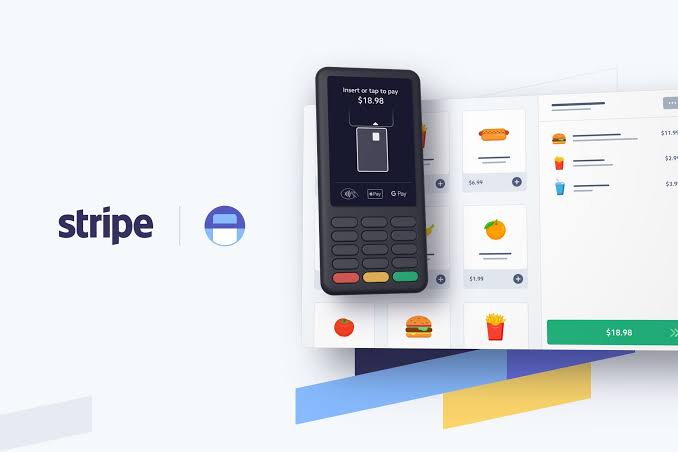
Stripe is the leading developer-focused payment platform in Australia, and while it is primarily merchant-facing, its mobile integration makes it essential to the country's payment ecosystem. The company charges 1.6 percent plus AU$0.30 per domestic card transaction and powers payments for millions of Australian businesses, including Canva and Atlassian.
Its mobile SDKs and APIs let businesses accept payments inside apps and on mobile websites, while Stripe Terminal enables in-person tap-to-pay through mobile card readers. Stripe supports Apple Pay, Google Pay, and Afterpay natively, along with subscriptions, invoicing, and marketplace payouts.
Most Australian consumers will never open a Stripe app, but they interact with Stripe infrastructure constantly without knowing it. It rounds out the list at number ten for that invisible but indispensable role.
The 2026 landscape splits into three broad groups. Wallet-first services like Apple Pay, Google Wallet, and Samsung Wallet dominate consumer tap-to-pay. Platform services like PayPal, Wise, and Beem It handle transfers, cross-border payments, and peer-to-peer settlement. Merchant-side tools like Square and Stripe keep Australian businesses running, while Afterpay and Zip own the instalment space.
Related Posts



2 Comments
Join the discussion and share your thoughts