Top 10 Best Scuba Diving Spots In Thailand 2026

Table of Contents
Thailand's dive sites remain among the most varied in Southeast Asia, spanning granite pinnacles in the Andaman Sea, coral gardens in the Similan Islands, and World War II wrecks in the Gulf of Thailand. Our ranking of the top 10 best scuba diving spots in Thailand for 2026 weighs site reputation among dive operators, marine life reliability, visibility and depth profiles, access via liveaboard or day boat, and suitability across skill levels. We drew on expert consensus from established dive travel sources and cross-referenced seasonal conditions to build this list. The Andaman coast dominates with seven entries, while the Gulf of Thailand contributes three sites known for pinnacles, a sunken ferry, and a decommissioned naval vessel.
One note before the list: Thailand's dive calendar splits along two coasts. The Andaman Sea sites (Similans, Surin, Koh Lanta, Phuket) run roughly October to May, while Gulf sites around Koh Tao and Koh Phangan operate year-round but peak between March and September. Planning around these windows matters as much as picking the right site.
These Are The Top 10 Best Scuba Diving Spots In Thailand 2026:
1. Richelieu Rock
Richelieu Rock holds the top position for good reason. This horseshoe-shaped limestone pinnacle in the Surin Islands is consistently ranked among the top 10 dive sites in the world, and it remains Thailand's most celebrated underwater destination. The rock barely breaks the surface at low tide, which means most of the dive happens around a submerged structure blanketed in purple and violet soft corals.
What draws divers back is the pelagic action. Whale sharks and manta rays pass through with enough regularity that operators plan entire liveaboard itineraries around the site. Dense schools of barracuda, trevally, and fusiliers swirl around the pinnacle in numbers that can block out the light. This isn't a beginner site. Currents can be strong, and the best encounters typically reward divers with solid buoyancy control and experience in open water conditions.
2. Similan Islands

The Similan Islands form a national park of 11 islands in the Andaman Sea, open to diving only from October through May. That seasonal closure protects the reef, and the payoff is some of the clearest visibility in Thailand, often exceeding 30 meters.
The archipelago's signature topography is granite boulders stacked into swim-throughs, swim-overs, and dramatic formations. Elephant Head Rock and West of Eden are two of the most requested sites on liveaboard routes. Coral gardens sit in the shallows while deeper bommies attract reef sharks and schooling fish. For divers weighing a liveaboard against day trips, the Similans are the strongest argument for booking a multi-day boat: the distance from the mainland makes day trips impractical for most sites.
3. Koh Tachai
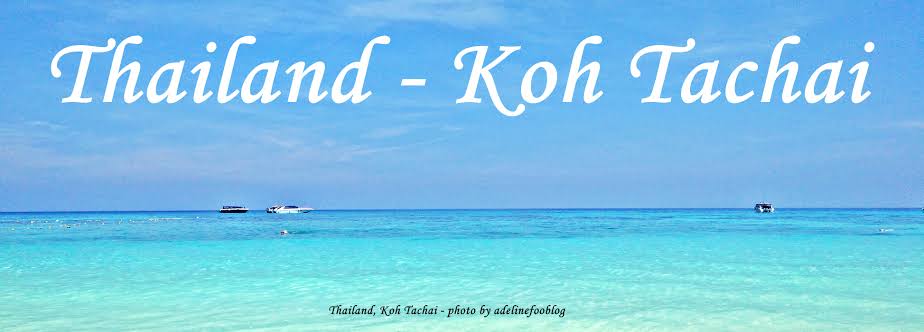
Sitting between the Similan and Surin island groups, Koh Tachai is home to the Twin Pinnacles, a pair of granite spires rising from a sandy seabed. The site is built for advanced divers, with strong currents that create drift diving conditions and the kind of big-fish action that comes with moving water.
Leopard sharks rest on the sand between the pinnacles, giant groupers patrol the structure, and schools of chevron barracuda hang in the blue. Manta ray sightings are possible here, though less predictable than at dedicated cleaning stations. Most liveaboard itineraries include Koh Tachai as a northern route highlight, and it pairs naturally with Richelieu Rock on the same trip.
4. Sail Rock
Sail Rock is the premier dive site in the Gulf of Thailand, a granite pinnacle that rises from 40 meters to just above the surface between Koh Phangan and Koh Tao. Its most famous feature is the Chimney, a vertical swim-through that starts at 18 meters and exits at 6 meters. Divers ascend inside the rock itself, which makes for one of the more unusual swim-throughs in the region.
The rock functions as a cleaning station for whale sharks, and sightings, while never guaranteed, are frequent enough that operators track reports closely. Batfish, groupers, and barracudas populate the structure year-round. Day trips run from both Koh Tao and Koh Phangan, making this one of the more accessible top-tier sites on the list.
5. Chumphon Pinnacle
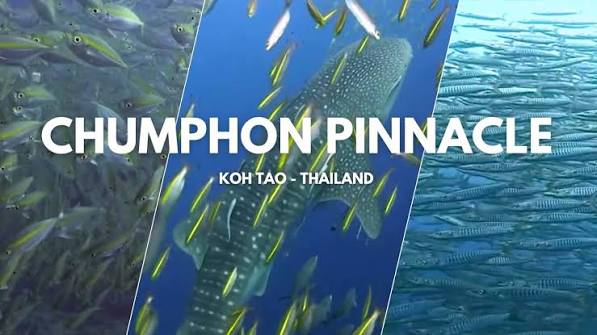
Northwest of Koh Tao, Chumphon Pinnacle is a system of interconnected granite pinnacles reaching depths of 36 meters, covered in pink anemones. It ranks among the best sites in the Gulf and is a standard fixture on Koh Tao dive schedules.
Whale sharks visit with notable regularity, particularly between March and May, which is when many divers time their trips specifically for this site. Large schools of jacks and batfish swirl around the main pinnacle, and the deeper sections suit advanced divers working toward their deep specialty. The site can be dived as part of a multi-level profile, with the shallower pinnacles offering relief for less experienced buddies.
6. Koh Bon
Koh Bon is a small island in the Similan chain, and its western ridge serves as a manta ray cleaning station. Divers regularly encounter mantas hovering over the reef while cleaner wrasses work on them, which makes for extended, close-range observation without chasing the animals.
The island also offers a shallow fringing reef and a deeper pinnacle, so the site works across skill levels. That flexibility makes Koh Bon a common inclusion on northern Andaman liveaboard routes, often dived the same day as Koh Tachai. Manta season here overlaps with the general Andaman diving window, though encounters peak in the cooler months when plankton concentrations draw the rays in.
7. Hin Daeng & Hin Muang
South of Koh Lanta, these two submerged pinnacles are usually dived together and rank among the deepest and most challenging sites in Thailand. Hin Daeng, or Red Rock, features a steep wall covered in red soft corals. Hin Muang, or Purple Rock, is a fully submerged pinnacle blanketed in purple anemones.
Both sites attract advanced divers and underwater photographers, drawn by the drop-offs, soft coral coverage, and the possibility of whale sharks in the blue. The depth and exposure mean this isn't a site for newly certified divers. Liveaboards running southern Andaman routes include both, and the crossing from Koh Lanta makes them a full-day commitment for day boats.
8. King Cruiser Wreck
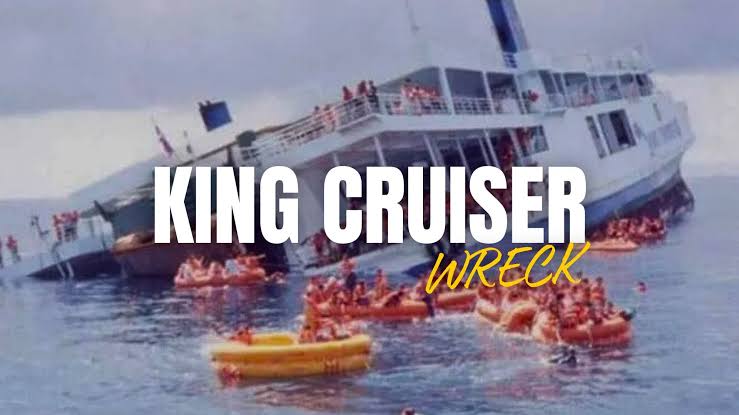
The King Cruiser is an 85-meter passenger ferry that sank in 1997 after hitting Anemone Reef, and it now sits at 30 to 32 meters between Phuket and Koh Phi Phi. It's one of Thailand's most famous wreck dives and a thriving artificial reef.
Soft corals encrust the hull, and large schools of snapper, barracuda, and lionfish occupy the structure. The wreck offers penetration opportunities for divers with wreck training, though the depth and occasional current demand solid experience. Most Phuket-based operators run the King Cruiser as part of a three-site day that includes Anemone Reef and Shark Point, which gives divers a mix of wreck and reef diving in a single trip.
9. Koh Dok Mai
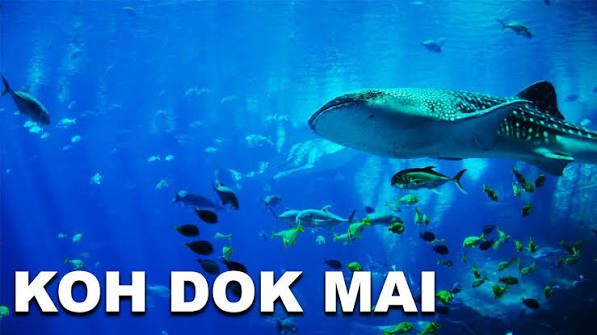
Koh Dok Mai, known as Flower Island, sits near Phuket and offers something different from the big-animal sites: a vertical wall on its west side that drops to 25 meters, covered in soft corals and sea fans. The wall is a habitat for harlequin shrimp, seahorses, and a wide range of nudibranchs.
A small cave at 12 meters gives divers something to explore, and the site has become a favorite for underwater photographers chasing macro subjects. It's a quieter dive than the headline sites, often combined with other Phuket-area locations on a day boat. Divers carrying a camera should budget extra time here, because the wall rewards slow, methodical looking.
10. HTMS Sattakut
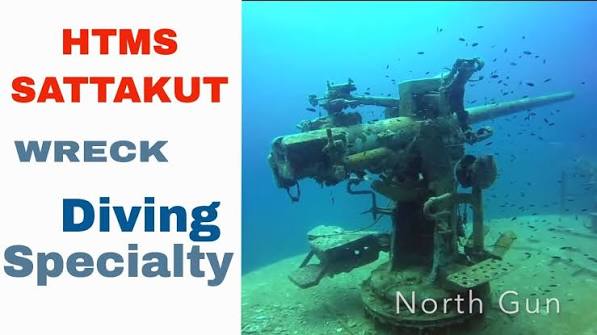
The HTMS Sattakut is a 49-meter World War II US Navy ship that was scuttled in 2011 to create an artificial reef off Koh Tao. It rests upright on a sandy bottom at a maximum depth of 30 meters, with penetration opportunities into the bridge and cargo holds.
The wreck suits advanced divers, and it's frequently paired with a dive at nearby Hin Pee Wee for a mix of wreck and reef in one outing. The upright position makes orientation straightforward, and the structure has accumulated enough marine growth in the years since sinking to feel fully integrated into the reef. For divers working through wreck specialty training on Koh Tao, the Sattakut is the standard classroom.
Our advice for 2026: pick a coast, not a single site. Thailand's best diving rewards trips built around a region rather than a checklist, and the liveaboard routes that string together the Similans, Koh Bon, Koh Tachai, and Richelieu Rock remain the most efficient way to hit the top of this list in a single week.
Related Posts




0 Comments
Join the discussion and share your thoughts
No Comments Yet
Be the first to share your thoughts on this article!