Top 10 Best Robotic Manufacturing Company In India 2026

Table of Contents
India's robotic manufacturing sector has moved well past the pilot-project stage. The top 10 best robotic manufacturing companies in India in 2026 now run factories that build robots for warehouses, auto plants, hospitals, farms, and defense installations, and several of them export to more than a dozen countries. We ranked these companies on manufacturing depth, installed base, revenue scale, indigenous IP, and global reach, drawing on company disclosures, Reliance and Jio Platforms filings, and industry reports on India's robotics market.
The shift is easy to see in the numbers. Addverb Technologies alone has deployed warehouse automation across more than 10 million square feet for 350-plus clients. GreyOrange has crossed 1,000 robotic deployments in over 30 countries. TAL Manufacturing Solutions, a Tata Motors subsidiary, has been building industrial robots in India since 2000. What follows is our ranked list of the ten manufacturers that matter most heading into 2026.
How We Ranked These
We weighed four factors: in-house manufacturing capability (does the company actually build robots, not just resell them), installed base and deployment scale, revenue and funding strength, and global footprint. Companies with indigenous IP and domestic factories ranked above pure system integrators. We also factored in sector importance, which is why drone and defense robotics manufacturers earn places on a list dominated by warehouse automation. All figures come from company disclosures and 2024-2025 industry reports.
Here Are The Top 10 Best Robotic Manufacturing Companies In India 2026:
1. Addverb Technologies
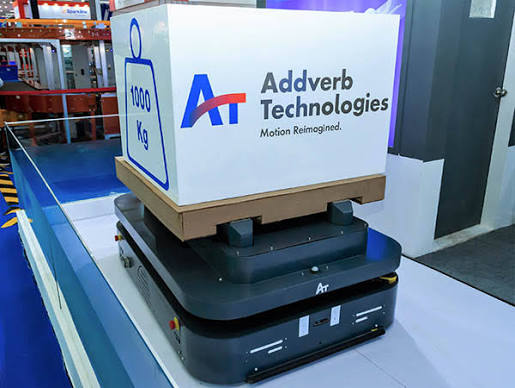
No other Indian robotics company matches Addverb's combination of scale, in-house manufacturing, and global reach. Founded in Noida in 2014, the company builds autonomous mobile robots, sorting robots, and automated storage and retrieval systems at its 150,000-plus square foot "Bot Valley" facility, one of the largest robot factories in South Asia.
The product line covers the Dynamo AMR, the Quadron carton shuttle, and the Zippy sorting robot. Clients include Flipkart, Amazon, Unilever, and Coca-Cola, spread across 15-plus countries. Addverb has deployed warehouse automation across more than 10 million square feet and serves over 350 clients globally.
Reliance Retail acquired a majority stake in 2021, and that backing has pushed the company into Europe and the US. Heading into 2026, Addverb is tracking toward a valuation above $1 billion. For a company barely a decade old, that is remarkable. It is also the clearest sign yet that Indian robotics manufacturing can compete internationally on its own IP.
2. GreyOrange
GreyOrange carries a US headquarters, but its engineering core sits in Gurugram, where it designs and manufactures the Ranger series of autonomous mobile robots and runs development on GreyMatter, its fulfillment orchestration platform. Founded in 2011 by Samay Kohli and Akash Gupta, the company has raised more than $500 million, including a growth round of over $135 million led by Anthelion Capital in 2024.
More than 1,000 robotic deployments and clients in 30-plus countries make it one of India's most valuable robotics unicorns. Fortune 500 retailers and logistics operators form the bulk of its customer base. The software layer is the differentiator here: GreyMatter coordinates fleets of robots in real time, and that AI capability is what separates GreyOrange from hardware-only competitors.
3. TAL Manufacturing Solutions
TAL is the elder statesman of Indian robotics. Established in 2000 under Tata Motors, it launched the TAL Brabo, India's first indigenous industrial robot brand, and has since completed more than 100 robot installations on Indian automotive and manufacturing lines. The Brabo series handles welding, material handling, and machine tending.
What makes TAL unusual is its dual manufacturing profile. Alongside robots, it produces aerospace components for Boeing and Airbus. That aerospace work demands tolerances and quality systems far stricter than most industrial applications, and the discipline carries over into its robotics lines. Tata Group companies also provide captive demand, which gives TAL a stability that startups rarely enjoy.
4. DiFACTO Robotics and Automation
Bengaluru-based DiFACTO has spent over 20 years building robotic cells and has completed more than 1,500 robot installations, the largest count of any Indian system integrator on this list. The company partners with FANUC, Yaskawa, and KUKA, combining imported robot arms with indigenously engineered cells for welding, painting, and material handling.
Its customer roster reads like a directory of Indian automakers: Maruti Suzuki, Tata Motors, and Mahindra have all commissioned DiFACTO lines. The model is a hybrid one. DiFACTO does not manufacture the robot arms themselves, but the turnkey robotic manufacturing solutions it delivers, from cell design to commissioning, are engineered in India. For Indian factories looking to automate without building a robotics division from scratch, it remains the default choice.
5. Asteria Aerospace

Drones are robots too, and Asteria Aerospace is India's largest manufacturer of them. Founded in Bengaluru in 2011 and acquired by Reliance's Jio Platforms in 2021, Asteria has manufactured more than 3,000 drones and logged over 10,000 flight hours. Its A200 and A410 platforms serve defense, agriculture, and enterprise surveillance customers.
Multiple Asteria models hold DGCA Type Approval, a certification that matters more than it sounds: it clears drones for legal commercial operation in Indian airspace, a hurdle many competitors have not crossed. The defense and precision-agriculture segments give Asteria exposure to two of the fastest-growing robotics markets in the country. Reliance's backing provides the capital to scale production as defense procurement accelerates.
6. Systemantics India
Systemantics builds the Asimov series of robotic arms and collaborative robots entirely in India, making it the country's first indigenous cobot manufacturer. More than 500 industrial robot arms are deployed, with clients in over 10 countries. The Bengaluru company targets small and mid-sized manufacturers in electronics, pharma, and automotive components.
That focus on MSMEs is strategically smart. Cobots cost less than traditional industrial robots and are safer to deploy alongside human workers, which lowers the barrier to automation for smaller factories. Systemantics is one of very few Indian firms with full-stack capability: robot design, control software, and manufacturing all happen in-house. If affordable automation spreads through India's small-scale manufacturing sector, this company will be a big reason why.
7. Hi-Tech Robotic Systemz
Few Indian robotics firms have been at it longer than Hi-Tech Robotic Systemz. The Gurugram company has operated for over 20 years and deployed more than 1,000 robots. Its Trakr autonomous mobile robot line serves warehousing and logistics, while the Novus Drive advanced driver-assistance systems are supplied to commercial vehicle OEMs.
That combination of AMRs and ADAS products is unusual in the Indian market and reflects deep computer-vision research. HRS has also built partnerships with global OEMs, which gives it distribution reach beyond India. The company's longevity says something in a sector where several well-funded startups have folded: diversified product lines and steady OEM contracts beat chasing a single hot category.
8. Sastra Robotics
Kochi-based Sastra Robotics occupies a narrow but profitable niche: robots that test other products. The company has deployed more than 100 robotic testing systems for automotive, aerospace, and electronics manufacturers, with clients including Bosch, Continental, and Wipro. Its SCARA and humanoid testing robots automate quality assurance tasks that are repetitive, precise, and increasingly hard to staff with human workers.
Specialization pays. Testing automation commands strong margins because the work is technical and the switching costs are high once a manufacturer has integrated robotic validation into its production line. Sastra's global client stickiness reflects that dynamic. It is not the biggest name on this list, but it may be the hardest one to replace.
9. Asimov Robotics
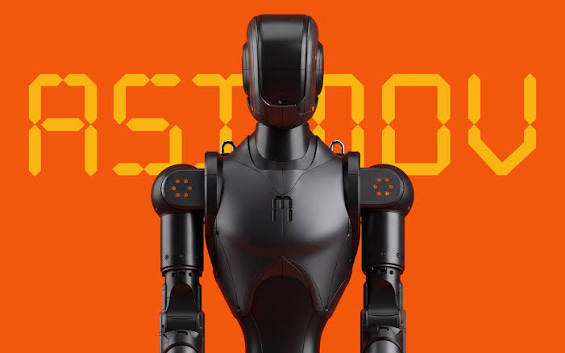
Service and healthcare robotics form a small slice of India's robotics sector, and Asimov Robotics is its most visible manufacturer. The Kochi company has deployed more than 50 healthcare and service robots, including disinfection units, delivery robots, and telepresence systems. Its KARMI-Bot earned national attention during the COVID-19 pandemic when hospitals used it to disinfect wards without exposing staff to infection.
Deployments have since spread across hospitals and airports. Healthcare robotics is a demanding market: reliability standards are high, procurement cycles are slow, and the robots must operate around vulnerable people. Asimov's proven real-world track record in that environment gives it a credibility that demo videos cannot buy.
10. Gridbots Technologies
Ahmedabad-based Gridbots builds robots for environments where failure is not an option. The company manufactures industrial arms, defense robotics, and nuclear-deployment robots designed for hazardous settings. More than 200 robotic systems are deployed, and the client list includes ISRO, DRDO, and BARC.
Supplying India's space, defense, and atomic energy agencies is a rigorous validation process, and few Indian firms have cleared it across all three. Gridbots has operated for over 15 years and built product lines spanning industrial automation to nuclear-grade robotics. The volumes are lower than warehouse automation, but the technical bar is higher, and that positions the company well as India's defense robotics budgets expand.
The best robotic manufacturing companies in India in 2026 share one trait: they build in India, not just sell in India. Several have crossed into exports, and Reliance's investments in both Addverb and Asteria Aerospace signal that large domestic capital now sees robotics manufacturing as a serious sector. The next few years will show whether these companies can move from national champions to global players. The early evidence says they can.
Related Posts




0 Comments
Join the discussion and share your thoughts
No Comments Yet
Be the first to share your thoughts on this article!