Top 10 Best Resource Management Games In 2026


Table of Contents
Resource management games have quietly become one of the most demanding genres in the medium. The best entries in 2026 ask players to balance supply chains, water tables, labor forces, and political factions, all while a clock ticks somewhere in the background. Our editorial team compiled this list using Metacritic aggregate scores, Steam review data, and critical coverage from established simulation-focused outlets, including GamerZakh's 2026 roundup of perfect 10/10 management games.
What follows is a ranking of the ten strongest resource management titles available right now, from lumberpunk beaver colonies to galaxy-spanning factory networks. Each entry reflects a distinct approach to the same core question: how do you keep a fragile system alive?
How We Ranked These
We weighed four factors: critical reception (Metacritic scores where available), player sentiment (Steam review percentages and volume), mechanical depth of the resource systems themselves, and long-term support from developers. Games with active update schedules and proven post-launch content pipelines received preference over titles that launched strong and stalled. We did not factor in marketing spend, publisher size, or review bombing incidents. Only games with verifiable 2025-2026 relevance made the cut.
The Top 10 Best Resource Management Games In 2026:
1. Timberborn
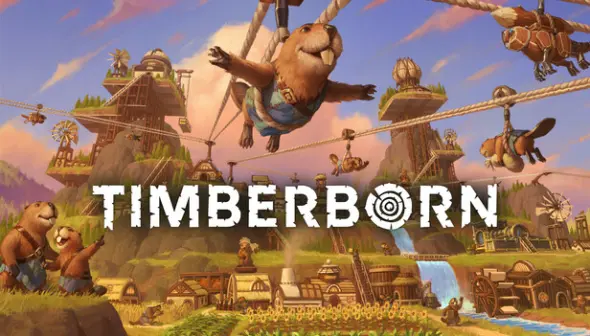
Timberborn sits at the top of this list because it does something no other city-builder does: it makes water the enemy. The game's lumberpunk beavers build dams, reservoirs, and vertical architecture to survive droughts that drain entire riverbeds. Managing wood, water, and food across a colony that can only expand upward forces a spatial logic most builders never attempt.
The numbers back it up. Timberborn holds a 96% positive rating on Steam across more than 23,000 reviews, and its Metascore sits at 85 as of 2026. The game officially exited early access with its 1.0 release in March 2026, and developer Mechanistry has kept momentum going with Update 1.1 and continued seasonal content.
What separates Timberborn from the pack is the drought cycle. You don't just build a settlement; you build a water storage system that has to survive weeks of zero rainfall. That single mechanic reshapes every decision about where to place a dam or how deep to dig a reservoir. For players who want resource management with genuine stakes, this is the genre's current benchmark.
2. Frostpunk 2

Frostpunk 2 launched on September 17, 2024, and earned an 85 Metascore. Two years later, it remains the most morally uncomfortable game on this list. You manage coal, food, and materials in a frozen post-apocalyptic city, but the real resource is political capital.
Factions within your city demand resource allocations that conflict with each other. The Frostlanders want survival at any cost. The Technocrats want progress. Every distribution decision alienates someone, and the game tracks that resentment across a full campaign. Where the original Frostpunk focused on heat and hunger, the sequel expands into social systems that make resource management a question of governance rather than logistics.
Developer 11 bit studios has continued supporting the game with post-launch content, and the political layer has proven durable enough to keep players returning for multiple playthroughs with different faction alignments.
3. Oxygen Not Included
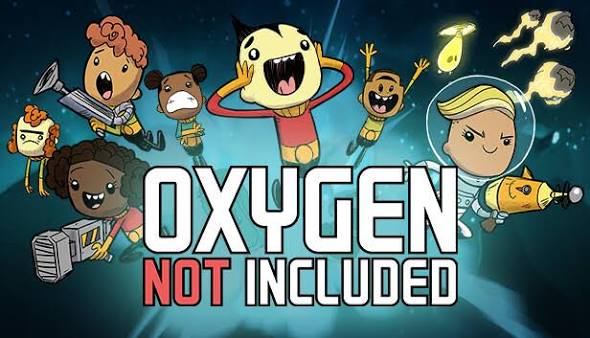
Klei Entertainment's space colony sim appeared in GamerZakh's 2026 list of perfect 10/10 simulation and management games, and the placement is deserved. Oxygen Not Included simulates physics, thermodynamics, and fluid dynamics at a level of detail that borders on obsessive.
You manage oxygen, water, food, and temperature for a colony of duplicants living inside an asteroid. Every resource interacts with every other resource. Pumping water generates heat. Heat kills crops. Dead crops mean starving colonists. Colonists who starve stop maintaining the systems that keep everyone else alive. The failure cascades are the point.
What makes it endure is the puzzle structure underneath the simulation. Each asteroid presents a different resource distribution, and solving the optimization problem for one map teaches you nothing about the next. It's the deepest systems-based resource game on this list, and arguably the hardest to master.
4. Factorio
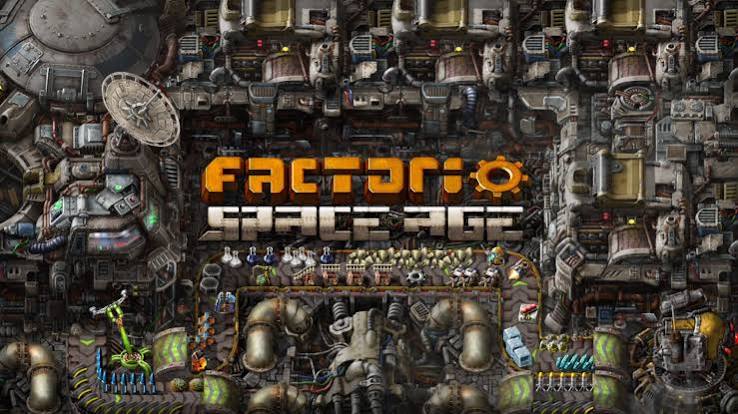
Factorio has been in the conversation for over a decade, and it still hasn't been dethroned as the definitive automation game. You crash-land on an alien planet, extract raw resources, and build production chains that grow from a single mining drill to a sprawling factory complex that consumes entire ore patches.
The resource management here is spatial and logistical. Belts, inserters, and assemblers form a machine that either works or doesn't, and the game gives you no ambiguity about which. Hostile creatures attack your factory, forcing you to allocate resources to defense without starving production. Developer Wube Software continued updating the game through 2025 and 2026, and the Space Age expansion added interplanetary logistics that scale the resource problem to multiple worlds.
Factorio's reputation rests on near-infinite optimization potential. There is no final build. There is only the next bottleneck.
5. RimWorld
RimWorld manages resources differently from everything else on this list. Instead of optimizing throughput, you're keeping a handful of colonists alive on a procedurally generated alien world while an AI storyteller throws disasters at you. Food, medicine, materials, and morale all compete for the same limited attention.
The storyteller system is what makes it work. Events escalate based on your colony's wealth and population, so success creates new problems. A thriving colony attracts raids. A raid wounds colonists. Wounded colonists consume medicine you were saving for winter. The resource web tightens with every decision.
Ludeon Studios has supported RimWorld with expansions through 2025, and the modding community has added thousands of resource chains on top of the base game. It's a genre staple for a reason: no two colonies fail the same way.
6. Cities: Skylines
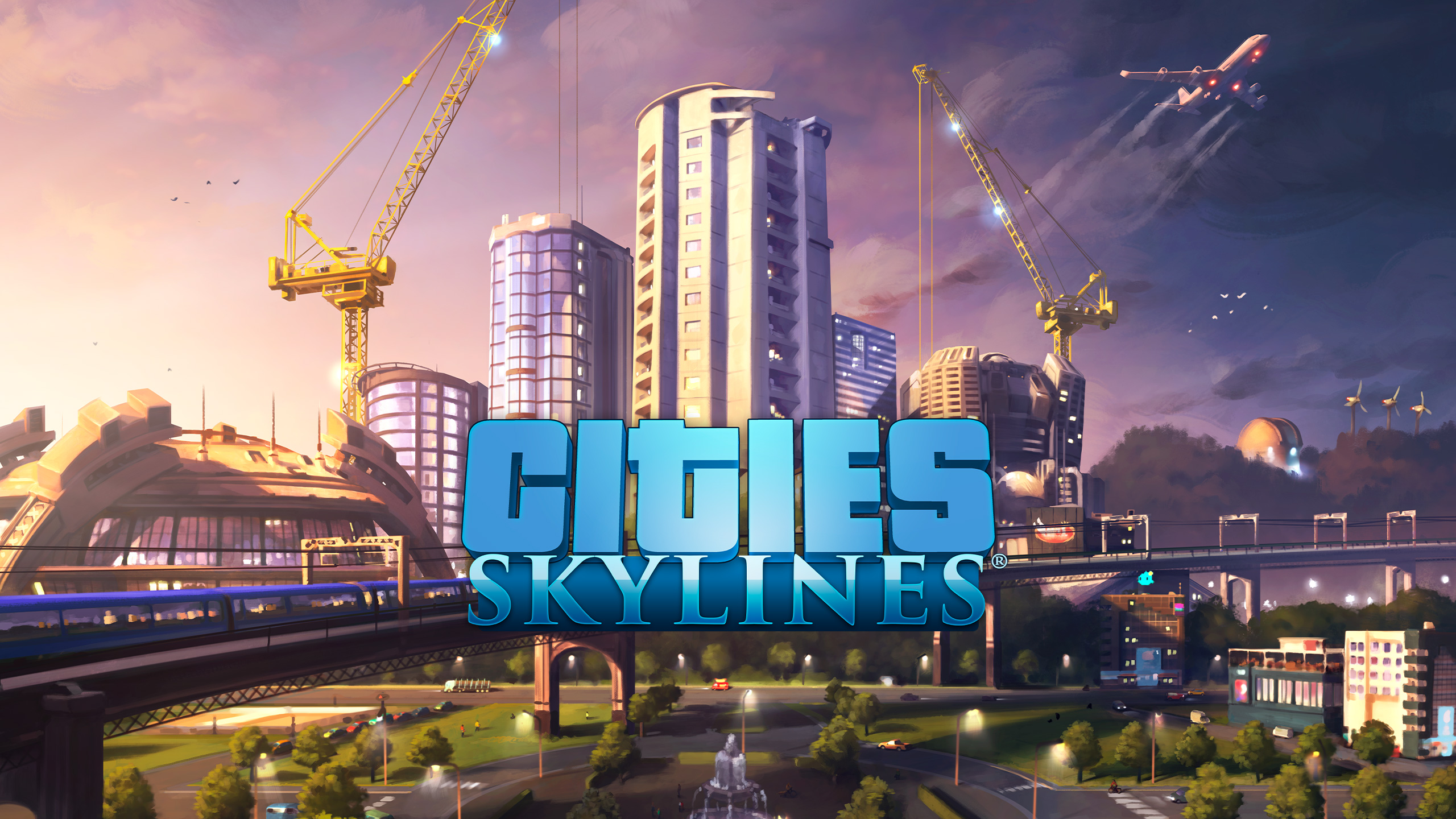
Cities: Skylines carries an 86 Metascore from its March 10, 2015 release, and it remains the benchmark for modern city-building resource management. Developer Colossal Order built a simulation where electricity, water, sewage, and taxation all feed into a single urban system.
The district-based taxation system lets you manage resources at a granular level. Zone a neighborhood for high-density residential, adjust its tax rate, and watch the population shift. Water pumps need clean sources. Sewage needs somewhere to go. Traffic, the game's most notorious resource, determines whether goods reach commercial zones before demand collapses.
Ten years after launch, the game still holds a dedicated player base, and its mod support has extended its lifespan well beyond what the base simulation alone would sustain. For players who want resource management at a macro scale, it's still the standard.
7. Against the Storm
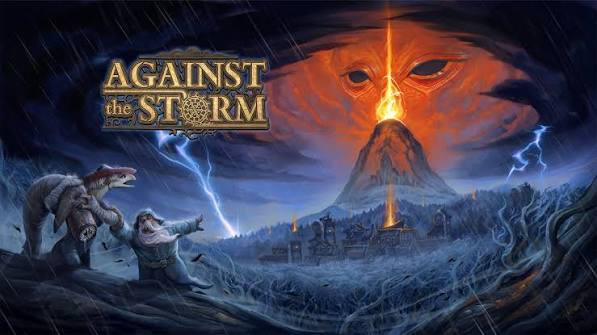
Against the Storm is the only roguelite on this list, and that combination works better than it has any right to. You build settlements in randomized biomes, manage food, materials, and population needs, then watch a catastrophic storm destroy everything before you start again.
Each run lasts a few hours. The resource challenge is adapting to what the biome gives you. A map with abundant wood but scarce fertile soil forces different priorities than one with the reverse. The roguelite progression carries upgrades between runs, so failure still contributes to long-term advancement.
Eremite Games appeared alongside Factorio, RimWorld, and Oxygen Not Included in GamerZakh's 2026 perfect-score roundup, which places it in genuinely elite company. The storm timer creates urgency that most city builders lack, and the randomized resource distribution keeps every settlement feeling like a fresh problem.
8. Satisfactory
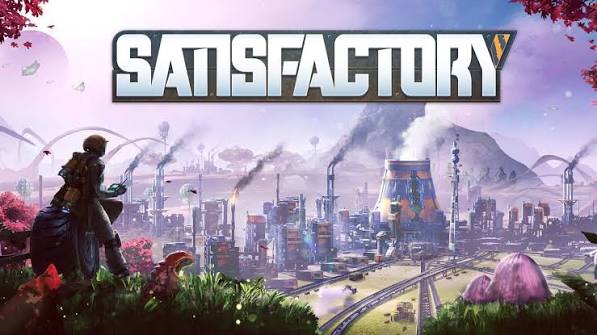
Satisfactory takes the factory-building formula and drops it into first person. You explore an alien planet, extract resources, and build conveyor networks, pipelines, and power grids from the ground up. The 3D perspective changes how you think about resource management: verticality matters, and a production chain that looks efficient on a map can be a nightmare to navigate on foot.
Coffee Stain Studios has kept the game in active development through 2025 and 2026, and its 1.0 release solidified the endgame resource chains. The combination of exploration and automation separates it from Factorio. You're not just optimizing a factory; you're scouting resource nodes across a handcrafted world and deciding which ones justify the infrastructure investment.
For players who want resource management with a sense of physical place, Satisfactory delivers something the top-down competitors can't.
9. Dyson Sphere Program
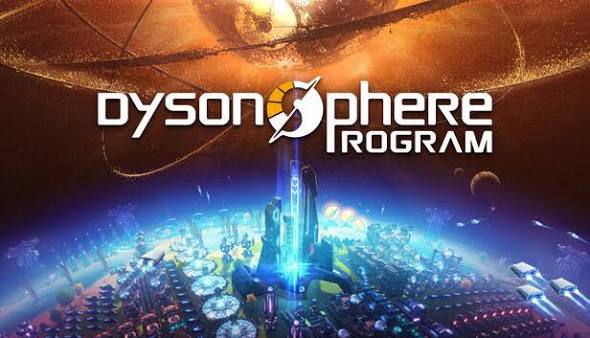
Dyson Sphere Program scales resource management to a galactic level. You start on a single planet, extract resources, build factories, and eventually construct interstellar logistics networks that span multiple star systems. The endgame goal is a Dyson Sphere, a megastructure that harvests the energy of an entire sun.
Developer Youthcat Studio built a game where the resource challenge grows with every planet you colonize. Interstellar logistics require managing transport vessels, fuel consumption, and production bottlenecks across light-years. The scale is absurd in the best way, and the optimization problems it generates are genuinely novel compared to ground-based factory games.
It appeared in GamerZakh's 2026 perfect-score list alongside Factorio and Satisfactory, which makes sense: all three share the same DNA of exponential production growth, but Dyson Sphere Program pushes the ceiling higher than either.
10. Anno 117: Pax Romana

Anno 117: Pax Romana released on November 13, 2025, and earned an 85 Metascore. Set in the Roman Empire, it puts you in the role of a provincial governor managing resources, trade routes, and production chains across a diverse population with competing needs.
The Anno series has always excelled at economic simulation, and Pax Romana continues that tradition. You balance economic growth against military expansion, manage supply chains for goods that different social classes demand, and adjust trade routes as your province grows. The Roman setting adds a layer of historical texture that distinguishes it from the series' previous entries.
It's the newest game on this list, and its placement at number ten reflects that it hasn't had the same years of post-launch refinement as the titles above it. But the core resource management systems are as deep as anything Ubisoft Blue Byte has produced, and the Metascore confirms it landed well with critics.
Related Posts




2 Comments
Join the discussion and share your thoughts