Top 10 Best Mobile Wallets In Nepal 2026

Table of Contents
Nepal's digital payment market has moved well past the trial stage. Mobile wallets now handle everything from Kathmandu cafe bills to remittances sent home from the Gulf, and the list of licensed providers keeps growing. Our ranking of the top 10 best mobile wallets in Nepal for 2026 weighs user numbers, transaction volume, service breadth, and market presence drawn from Nepal Rastra Bank licensing records, industry reports, and published app-store rankings. Figures reflect the most recent publicly available data from 2024 and 2025, projected forward to 2026.
The short version: eSewa still dominates, Khalti is closing fast, and a cluster of smaller licensed wallets is fighting for specific niches like remittances, telecom top-ups, and rural inclusion. Here is how they stack up.
How We Ranked These
We built this list around four factors: registered user base, transaction volume where disclosed, breadth of services (bill payments, transfers, QR merchant payments, remittances), and overall market presence. Nepal Rastra Bank's licensed payment service provider registry confirmed which wallets are legally operating. App-store finance rankings and user discussion on forums like Reddit r/Nepal shaped the sentiment side. We did not weight these factors with a scoring formula; the order reflects the overall picture, with scale and merchant acceptance carrying the most influence.
The Top 10 Mobile Wallets In Nepal 2026:
1. eSewa
Launched in 2009, eSewa is Nepal's first digital wallet and still its largest, operated by F1Soft Group. Registered users have crossed 6 million, and the network spans more than 100,000 merchants and agents nationwide. That early-mover advantage is hard to overstate: the green "eSewa counter" sign is a fixture on shopfronts from Kathmandu to remote district headquarters, and the wallet is deeply integrated with Nepali banks.
The service list covers utility bills, mobile top-ups, domestic money transfers, QR merchant payments, and online ticketing. For most Nepalis, eSewa is the default first wallet, which keeps it at the top of this ranking on user base, operating history, and merchant acceptance combined.
2. Khalti
Khalti Digital Wallet (Pvt. Ltd.), launched in 2017 by Janaki Technology, has grown into the clear number two with more than 3 million registered users. Its playbook is aggressive cashback campaigns and a polished app interface, and it has worked: Khalti frequently tops app-store finance rankings in Nepal and holds strong loyalty among students and urban professionals.
Beyond rewards, the service range now includes bill payments, remittance integration, insurance premiums, and event ticketing. As a challenger brand, Khalti has the fastest growth trajectory of any wallet on this list and the second-largest active user base in the country.
3. IME Pay
IME Pay, run by IME Digital Solution Ltd. under the IME Group, sits at the intersection of wallet payments and Nepal's remittance economy. With over 2 million users, its standout feature is direct integration with IME's remittance corridors: money sent from abroad can land straight in a recipient's wallet. That linkage gives it a customer base the purely urban wallets struggle to reach.
The wallet holds a Nepal Rastra Bank payment service provider license and covers domestic and international transfers, utility payments, and merchant QR payments. Agent banking expansion into rural areas has extended its footprint well beyond the Kathmandu Valley.
4. Prabhu Pay
Prabhu Pay is the digital wallet arm of the Prabhu Group, one of Nepal's largest diversified financial conglomerates, and serves more than 1 million users. It handles money transfers, mobile top-ups, bill payments, and QR merchant payments, with tight integration into Prabhu Bank and Prabhu Remit.
Where eSewa and Khalti compete on consumer-app polish, Prabhu Pay's edge is institutional: cross-selling across banking, insurance, and remittance customers gives it a steady user pipeline. The trade-off is visibility. It has less consumer-app popularity than the top three, but the corporate backing provides stability that smaller wallets can't match.
5. Moru Pay
Moru is a modern, app-first wallet operated by Moru Digital Wallet Ltd., a subsidiary of the IME Group, and it has passed 500,000 users. The pitch targets younger users: instant money transfers, bill payments, mobile recharge, and merchant QR payments wrapped in a clean interface with digital loyalty features.
Growth has concentrated in the Kathmandu Valley's cafe, retail, and online-service ecosystem, where QR payment habits form fastest. Moru's trajectory is strong, though its scale still trails the established top four. For readers comparing wallets for everyday urban spending, our guide to digital payment adoption in Nepal covers how these habits are shifting.
6. CellPay
CellPay, operated by Cellcom Pvt. Ltd., carved out a niche the big wallets mostly treat as a feature: telecom-linked payments. The licensed wallet emphasizes mobile recharge, data pack purchases, and utility payments, partnering with telecom operators and offering frequent recharge bonuses that keep prepaid mobile users coming back.
It also supports fund transfers and QR payments at partner merchants, with roughly 300,000 users. The merchant network is thinner than the leaders', so CellPay works best as a companion wallet for heavy mobile users rather than a primary one.
7. Namaste Pay
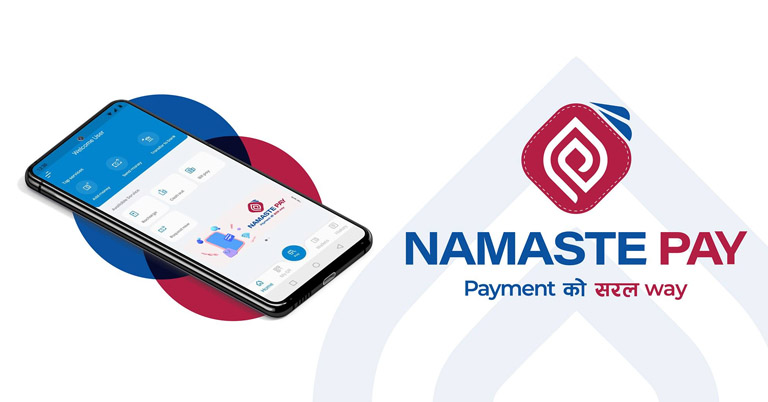
Namaste Pay is a joint venture of Nepal Telecom, the state-owned telecom, and Rastriya Banijya Bank, a state-owned commercial bank. That public-sector parentage is unique on this list and gives the wallet credibility with users who distrust private fintechs, plus potential reach through Nepal Telecom's enormous subscriber base.
With around 250,000 users, it offers bill payments, mobile top-ups, money transfers, and QR payments, with a stated focus on government-service payments and financial inclusion. Adoption is still building, but the institutional mandate suggests staying power.
8. Fonepay (Fonepay Consumer App)
Fonepay, operated by Fonepay Payment Service Ltd. under F1Soft Group, is Nepal's largest interoperable QR payment network, linking more than 50 banks. Its consumer app enables QR payments, fund transfers, and bill payments across that entire network, functioning as a de facto wallet with merchant interoperability no single wallet can match.
We rank it eighth rather than higher for one reason: Fonepay's core identity is a network and gateway, not a standalone stored-value wallet. As a consumer tool, though, its merchant coverage is unmatched in Nepal.
9. MyPay
MyPay is a Nepal Rastra Bank-licensed digital payment service provider offering wallet services, bill payments, mobile top-ups, and merchant QR payments, with roughly 200,000 users. Partnerships with multiple banks and remittance companies have widened its service footprint, and it targets SME merchants with payment-collection tools.
It appears regularly in Nepali digital-payment industry listings, and the SME focus is a sensible differentiator. Brand recognition and consumer scale remain smaller than the wallets above it.
10. dPaisa
dPaisa rounds out the list as the most inclusion-focused wallet here, with around 150,000 users. It targets semi-urban and rural customers through an agent-assisted model, offering money transfers, utility bill payments, mobile recharge, and hands-on help for people new to digital finance.
Industry compilations flag dPaisa as an emerging player, and that's the right frame: smallest scale and brand presence among the ten, but a strategy aimed at the large share of Nepalis who still don't use digital payments at all. Our coverage of financial inclusion in Nepal tracks why that segment matters for the market's next growth phase.
The ranking above reflects today's market, but the gaps are narrowing. Khalti's growth rate and eSewa's installed base set the pace at the top, while IME Pay and Moru lean on remittance flows and app-first design respectively. The wild cards are interoperability through networks like Fonepay, which erodes the advantage of a single wallet's merchant network, and Nepal Rastra Bank's licensing decisions, which determine how many competitors enter the field.
Related Posts

0 Comments
Join the discussion and share your thoughts
No Comments Yet
Be the first to share your thoughts on this article!