Top 10 Best Mining Companies In Australia 2026

Table of Contents
Australia's mining sector entered 2026 in rare form. Gold prices pushed toward US$5,000 an ounce, iron ore held firm on Asian steel demand, and lithium staged a recovery that pulled battery metals stocks back into favor. The result was a year in which the top 10 best mining companies in Australia added hundreds of billions in combined market value, and in which a single company, BHP Group Ltd, widened its lead over the rest of the field to a margin never seen before in the history of MINING.COM's Top 50 ranking.
To build this list, we weighed four things. First, market capitalization as of mid-2026, using the June 30 and July 31 cutoffs published in MINING.COM and PwC data. Second, global standing, drawing heavily on PwC's Mine 2026 report, which ranks the world's 40 largest miners and identifies which Australian companies make the cut. Third, commodity exposure and diversification, since a miner concentrated in a single metal carries different risk than one spread across iron ore, copper, gold and base metals. Fourth, 2026 share price performance, which matters more than usual in a year when precious metals producers posted triple-digit gains. We did not weight analyst price targets, since those shift weekly and would date the ranking within days of publication.
One pattern stands out immediately. Six of the ten companies here have significant gold exposure, a direct consequence of the bull market in precious metals. The other four are diversified majors or battery metals specialists. What follows is our ranking of the ten best mining companies operating in Australia in 2026, with the data behind each placement.
The Top 10 Best Mining Companies In Australia 2026:
1. BHP Group Ltd
There is no serious argument about first place. BHP is not only Australia's largest diversified miner; it is the largest mining company in the world by market capitalization, valued at US$216 billion as of July 31, 2026, up from US$208.2 billion at the end of June. The company added A$62 billion of market value during 2026, a 41% gain, and the gap between BHP and second-placed Rio Tinto now sits at roughly A$50 billion. According to MINING.COM, that is the widest margin between first and second in the history of its Top 50 ranking.
The earnings engine remains Western Australian iron ore. BHP's July 2026 production report showed record iron ore output from the Pilbara, a result that few analysts expected given the grade decline challenges the company has managed for years. Copper has become the second pillar, with the Escondida operation in Chile giving BHP exposure to a metal that most forecasters expect to face structural deficits through the 2030s as electrification demand grows. Metallurgical coal rounds out the core portfolio.
PwC's Mine 2026 report lists BHP as the top-ranked Australian miner in the global top 40. For context on scale, BHP's market value exceeds the combined capitalization of several companies further down this list. The company's dividend policy, which returns a minimum 50% of underlying attributable profit each half, has made it a default holding for Australian income investors and superannuation funds.
2. Rio Tinto
Rio Tinto sits in the unusual position of being one of the two largest mining companies on earth while still trailing its domestic rival by a wide margin. The dual-listed giant, headquartered in London and Melbourne and founded in 1873, carried a market capitalization of US$162.7 billion as of June 30, 2026, on revenue of US$50.55 billion. PwC ranked it third globally in its 2025 top 40, and it remains one of only two Australian miners consistently placed in the global top three.
CEO Jakob Stausholm has reshaped the portfolio around four segments: aluminium, iron ore, copper and other minerals. The 2023 acquisition of OZ Minerals for US$9.6 billion brought the Carrapateena and Prominent Hill copper-gold mines in South Australia under Rio's control, strengthening its copper pipeline at a time when the metal's long-term outlook keeps improving. The Jansen Stage 1 potash project in Saskatchewan, Canada, is under construction with first production targeted for 2026, giving Rio a foothold in agricultural minerals that no other Australian major currently matches.
Aluminium is where Rio differs most from BHP. The company operates bauxite mines, alumina refineries and aluminium smelters across Australia, Canada and beyond, making it one of the few fully integrated aluminium producers in the world. That integration insulates it somewhat from input cost spikes, though it also exposes it to power price volatility in Queensland and New South Wales.
3. Fortescue
Fortescue (ASX: FMG) ranks third as Australia's largest pure-play iron ore miner and the country's third mining major in PwC's global top 40, where it placed 14th in 2025. The company's Pilbara operations ship hundreds of millions of tonnes annually, and its cost position among the lowest in the industry has allowed it to keep generating cash even when iron ore prices soften.
What separates Fortescue from every other company on this list is Fortescue Energy. The division pursues green hydrogen, green ammonia and renewable energy projects across Australia, the United States and South America, a diversification strategy driven by executive chairman Andrew Forrest. Analysts remain divided on the timing of returns from these ventures, but the strategic logic, which is to build a second earnings base before iron ore demand peaks, has few parallels among pure-play miners.
On capital returns, Fortescue has historically distributed substantial dividends and buybacks during commodity upcycles. That track record matters to Australian retail investors, who hold a meaningful share of the register. The company's ranking here reflects its scale in iron ore plus the optionality its energy arm provides, though the energy division has yet to contribute material earnings.
4. Evolution Mining
Evolution Mining delivered the most notable ranking debut of any Australian miner in 2026. The gold specialist entered PwC's list of the world's 40 largest mining companies for the first time, placing at #39 in the Mine 2026 report. For a mid-tier producer that spent most of the past decade below the global radar, the entry marks a genuine milestone.
The mechanism behind the rise is straightforward. Gold prices surged through 2025 and 2026, driving earnings uplift across the sector and lifting cash generation at operations that had previously run on thinner margins. Evolution's portfolio spans gold and copper assets in New South Wales, Queensland, Western Australia and Canada, including the Cowal and Ernest Henry operations that anchor its production base.
Evolution ranks fourth here as the highest-placed Australian gold specialist on PwC's 2026 global list. That placement puts it ahead of larger gold names by global ranking, a reflection of how steeply the company has climbed rather than a claim that it outproduces Northern Star or Newmont in Australia. Investors looking at the gold sector should note that Evolution's copper by-product credits from Ernest Henry provide partial insulation if gold prices stall.
5. Northern Star Resources
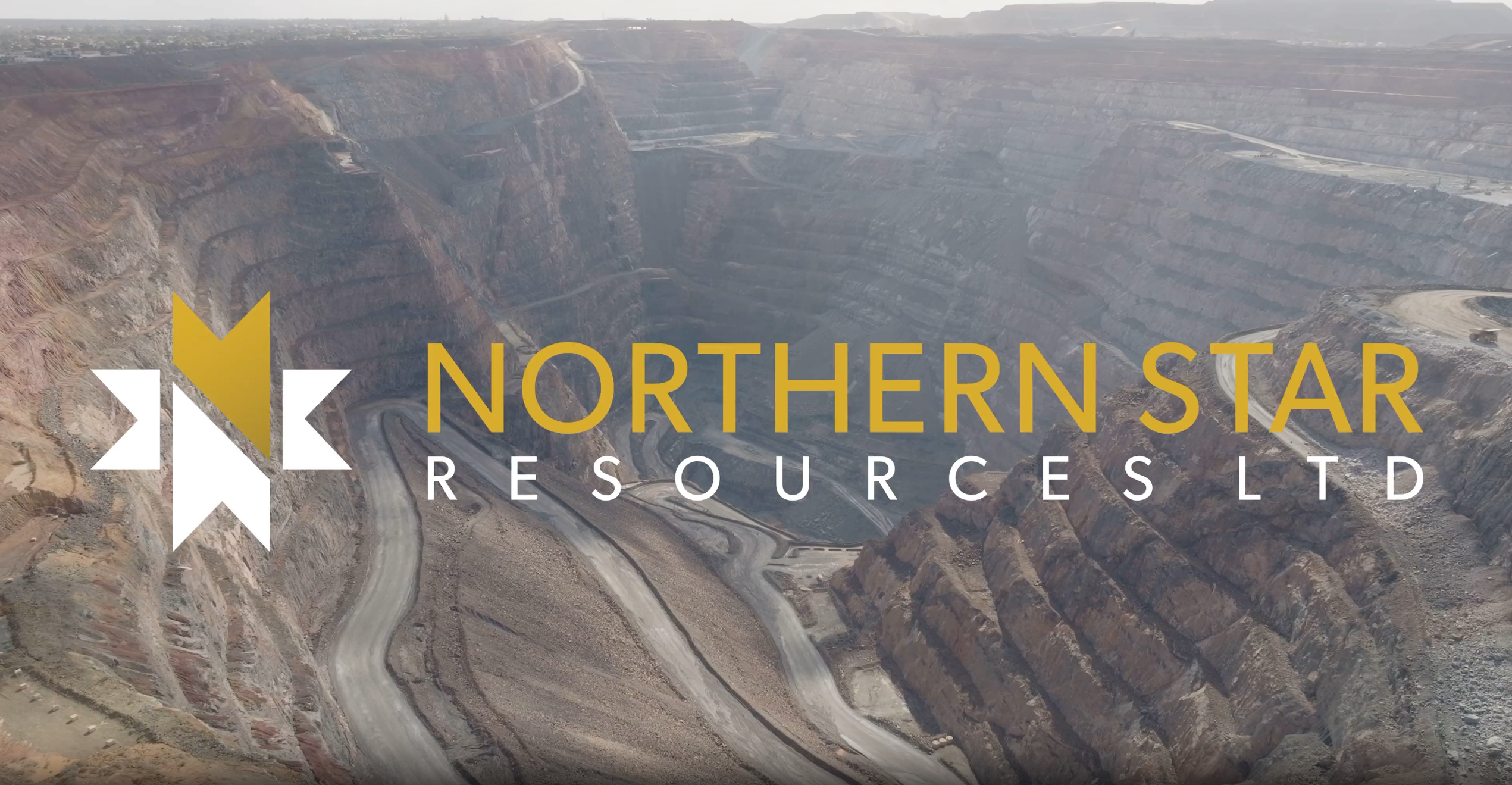
Northern Star Resources (ASX: NST) ranked #31 among the world's 40 largest mining companies in PwC's Mine 2026 report. A separate top-50 market analysis placed the company at #30 and identified it as one of only seven Australian companies to make that list. The Perth-based producer has assembled a portfolio of gold mines across Western Australia and Alaska, including KCGM, one of the largest gold operations in the country.
The broader gold sector context explains much of the enthusiasm. Australian gold miners delivered exceptional performance in 2026, with eight of the top 10 performing mining stocks up more than 120%. Analyst forecasts of gold reaching US$5,000 per ounce underpinned much of that rally, and Northern Star's leverage to the gold price is among the highest of any large-cap Australian producer.
Northern Star ranks fifth on the strength of its position as Australia's leading large-cap gold producer by global ranking. Production growth from KCGM and the company's development pipeline give it a path to higher output without relying solely on price. The main risk is cost inflation, which has pressured margins across the WA goldfields as labor and energy expenses rise.
6. Pilbara Minerals
Pilbara Minerals (ASX: PLS) is the highest-profile Australian battery metals specialist to carry a current analyst endorsement. Stocks Down Under named it an "Analyst Pick" among the best ASX mining stocks to buy in April 2026, a call that reflects both the company's position in the lithium supply chain and the recovery in battery metal prices after a brutal 2023-2024 downturn.
The company operates the Pilgangoora operation in Western Australia, one of the largest hard-rock lithium mines in the world. Australia is among the world's leading producers of lithium, and Pilbara Minerals is a direct beneficiary of that endowment. Its spodumene concentrate feeds converters across China, South Korea and Japan, which in turn supply battery makers for the electric vehicle industry.
Lithium remains the most volatile commodity on this list. Prices collapsed more than 80% from their 2022 peak before recovering through 2025, and another swing in either direction would hit Pilbara Minerals harder than any diversified miner here. The ranking reflects the analyst endorsement and the company's cost position, not a claim that lithium demand is guaranteed. Investors weighing battery metals exposure should treat this placement as the highest-risk entry on the list.
7. Newmont Corporation
Newmont is the world's largest gold mining company, and its Australian operations are substantial enough to earn a place here despite its American headquarters. The company operates the Boddington gold mine in Western Australia, one of the largest gold mines in the country, along with other Australian assets. Its market capitalization reached US$99.7 billion as of June 30, 2026, making it the third-largest mining company globally by market value.
Shares rose 155.2% year-to-date in 2026. The precious metals sector showed extraordinary strength during the period, driven by inflation hedge demand, sustained central bank buying, geopolitical uncertainty and currency devaluation fears. Newmont's scale means it captures that rally across a global portfolio, and its Australian assets contribute meaningfully to group production.
Newmont ranks seventh because of its major Australian gold operations and its position as the world's dominant gold producer. The company's size cuts both ways: it offers liquidity and diversification that smaller gold miners cannot match, but its production growth profile is flatter than pure-play developers. For investors wanting gold exposure with Australian assets attached, Newmont is the most direct large-cap option.
8. South32

South32 is the diversified base metals play on this list. The company's portfolio spans bauxite, alumina, aluminium, copper, silver, lead, zinc, nickel and manganese, a breadth that few Australian operators match. Australia produces 19 useful minerals from over 350 operating mines, and South32 is a key operator across several of the most important ones.
The company was spun out of BHP in 2015 to hold assets that no longer fit the parent's focus on iron ore, copper and coal. A decade later, that portfolio looks considerably more attractive. Australia is one of the world's leading producers of bauxite, lead, zinc, nickel and manganese, and South32's exposure to those commodities provides resilience across price cycles in a way that single-commodity producers cannot replicate.
South32 ranks eighth for its broad diversification and its role in Australia's base metals sector. The trade-off is that diversification dilutes upside: when one commodity rallies hard, as gold did in 2026, South32 captures only part of the move. For investors seeking lower volatility within the mining sector, that trade-off is often the point.
9. AngloGold Ashanti
AngloGold Ashanti posted one of the best share price performances of any major precious metals producer in 2026, with shares up 256.0% year-to-date and a market capitalization of US$43.6 billion. The company operates the Sunrise Dam and Tropicana gold mines in Western Australia, giving it a direct stake in the country's gold output.
The surge reflects the broader gold bull market. Global investment banks including JP Morgan, Goldman Sachs and Bank of America have projected gold prices touching US$5,000 per ounce, and producers with high leverage to the spot price have re-rated accordingly. AngloGold Ashanti's gains outpaced Newmont's 155.2% and Barrick's 167.5%, making it the strongest performer among the gold majors on this list.
AngloGold Ashanti ranks ninth on the strength of its Australian gold assets and its exceptional 2026 performance. The company's portfolio also includes operations across Africa and South America, so Australian exposure is partial rather than dominant. Investors should note that a 256% annual gain cuts both ways; gold miners that rise fastest in a bull market often fall fastest when the cycle turns.
10. Barrick Mining Corp
Barrick Mining Corp rounds out the list as a major global gold and copper producer with substantial Australian exposure. The company's market capitalization reached US$61.6 billion as of June 30, 2026, with shares up 167.5% year-to-date. It ranks among the global top 10 mining companies by market value and holds a significant position in Australia's gold sector.
Barrick's asset base includes the Porgera mine in Papua New Guinea, which restarted production after a prolonged suspension, along with various Australian gold assets. The copper component of its portfolio differentiates it from pure gold producers, giving it exposure to a metal with its own structural demand story tied to electrification and grid investment.
Barrick ranks tenth as a major international gold producer with substantial Australian exposure and strong 2026 performance. Its market value sits below Newmont's but above AngloGold Ashanti's, and its share price gain fell between the two. For investors wanting gold and copper exposure in a single large-cap vehicle, Barrick is the most balanced option on this list.
Related Posts


2 Comments
Join the discussion and share your thoughts