Top 10 Best Business Management Colleges In India 2026

Table of Contents
Choosing a business school in India remains one of the most consequential decisions a graduate can make, and the 2026 landscape is more competitive than ever. Our ranking of the top 10 best business management colleges in India for 2026 draws on the National Institutional Ranking Framework (NIRF) 2025 management scores, placement data from the 2024 recruitment cycle, accreditation status, and recruiter sentiment gathered from CAT and XAT preparation platforms. We weighed NIRF scores heavily because they capture teaching quality, research output, graduation outcomes, and peer perception in a single verifiable number, then cross-referenced each school's average and highest placement packages to confirm the rankings reflect what graduates actually earn. Institutional age, program diversity, and specialization strength also factored in, particularly for schools whose reputations rest on a single flagship discipline.
The result is a list dominated by the Indian Institutes of Management, with two IIT-affiliated programs and one private institution breaking through. Average packages across the top five schools now exceed ₹30 lakh per annum, and international offers have crossed the ₹1 crore mark at the very top. For aspirants weighing CAT percentiles against return on investment, the gap between the top three and the rest remains wide, but schools ranked four through ten offer compelling niches in technology management, human resources, and executive education.
Here Are The Top 10 Best Business Management Colleges in India 2026:
1. Indian Institute of Management Ahmedabad (IIM Ahmedabad)

Established in 1961 as India's first IIM, IIM Ahmedabad holds the top spot with a NIRF 2025 score of 83.29, the highest in the management category. Its average placement package reached ₹34.5 LPA in 2024, and admission to the flagship two-year PGP remains brutally selective, with CAT cutoffs typically exceeding the 99.5 percentile for roughly 400 seats.
The institute's case study methodology, modeled on Harvard Business School pedagogy, has been emulated across Indian B-schools for decades. IIM Ahmedabad holds AACSB accreditation and maintains a global footprint through exchange partnerships and its case research center, which produces some of the most widely taught management cases in South Asia.
Recruiters span global consulting firms, investment banks, and conglomerates. For candidates targeting the absolute top of Indian management education, IIM Ahmedabad remains the benchmark against which every other school is measured.
2. Indian Institute of Management Bangalore (IIMB)
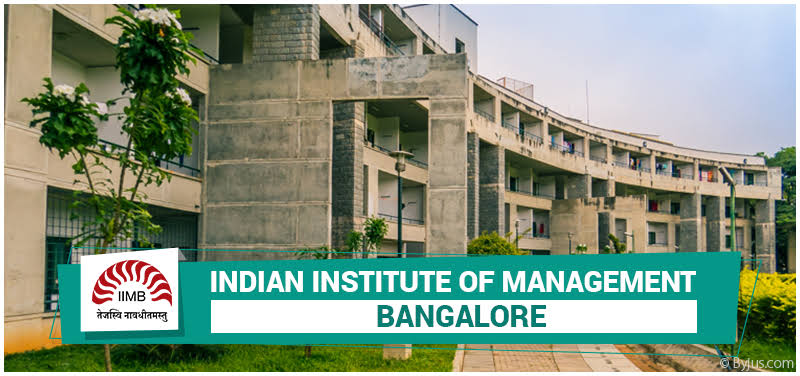
Founded in 1973, IIM Bangalore ranks second with a NIRF 2025 score of 81.56. The headline number from its 2024 placement season was a highest international offer exceeding ₹1.2 crore, the strongest international placement record among Indian B-schools.
What separates IIMB from its peers is its entrepreneurship infrastructure. The NSRCEL incubator has supported over 1,000 startups since its inception, giving the school a genuine claim to being India's most innovation-driven management campus. The institute also holds both AACSB and EQUIS accreditation, a combination shared by very few Indian institutions.
Its Executive Post Graduate Programme (EPGP) attracts mid-career professionals, while the full-time PGP leans heavily into technology management and analytics. For students who want to build companies rather than join them, IIMB's ecosystem is hard to match.
3. Indian Institute of Management Calcutta (IIM Calcutta)
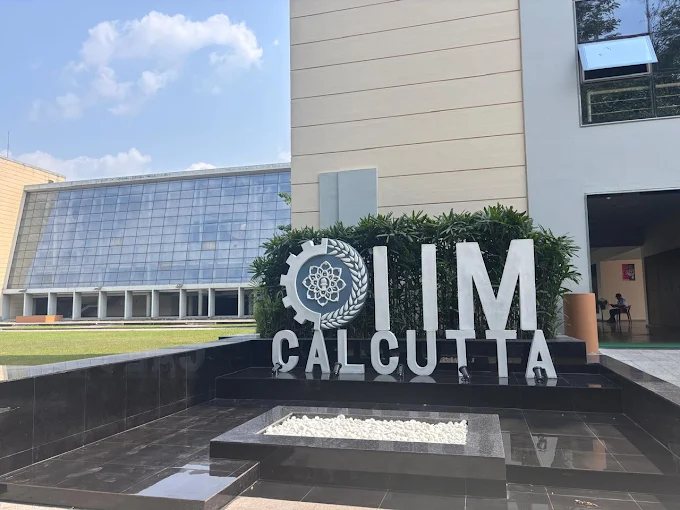
IIM Calcutta, established in 1961 in collaboration with MIT Sloan School of Management, is India's oldest IIM and ranks third with a NIRF 2025 score of 79.63. Its average placement package of ₹35.1 LPA in 2024 actually edged past IIM Ahmedabad's, a reflection of its dominance in finance recruiting.
The institute holds triple accreditation from AACSB, AMBA, and EQUIS, a distinction very few Indian institutions can claim. Its MBA (Finance) specialization is widely considered the best in the country, feeding directly into investment banking, private equity, and consulting pipelines.
The quantitative curriculum is famously rigorous, and the "IIM ABC" tier, referring to Ahmedabad, Bangalore, and Calcutta, remains the gold standard for Indian management education. Candidates with strong quantitative backgrounds tend to thrive here.
4. Indian Institute of Management Lucknow (IIM Lucknow)

Established in 1984, IIM Lucknow is the fourth-oldest IIM and ranks fourth with a NIRF 2025 score of 76.21. Its average placement package stood at ₹30.5 LPA in 2024, with recruiters including McKinsey, BCG, and Hindustan Unilever.
The school's flagship PGP is complemented by specialized programs in agribusiness management (PGP-ABM) and sustainable management, giving it a more diversified academic profile than most IIMs. Corporate ties run deep across FMCG, consulting, and BFSI sectors.
For aspirants who want IIM pedigree with sector-specific depth, particularly in agribusiness or sustainability, IIM Lucknow offers options its higher-ranked peers don't.
5. Indian Institute of Technology Bombay - Shailesh J. Mehta School of Management (SJMSOM)

SJMSOM, established in 1995 within IIT Bombay, is the top-ranked non-IIM B-school in NIRF 2025 with a score of 74.12. Its average placement package reached ₹28.6 LPA in 2024.
The school's defining advantage is integration with IIT Bombay's engineering and technology ecosystem, producing a tech-forward MBA that excels in operations, analytics, and technology management. Graduates flow into IT consulting, e-commerce, and product management roles at a rate that pure business schools struggle to match.
Location matters too. Mumbai gives SJMSOM direct access to India's financial and corporate capital, and the IIT Bombay brand carries weight with technology recruiters in a way few management programs can replicate.
6. Indian Institute of Management Kozhikode (IIM Kozhikode)
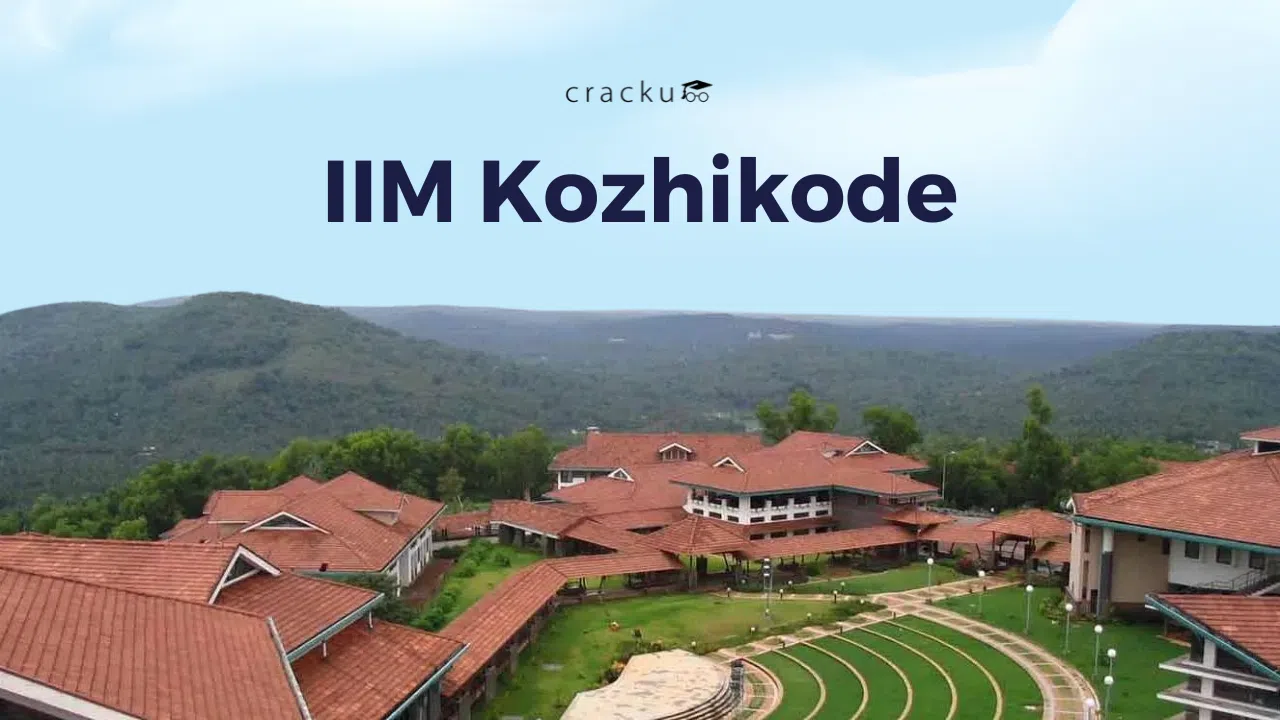
Founded in 1996 as India's fifth IIM, IIM Kozhikode ranks sixth with a NIRF 2025 score of 73.48 and an average placement package of ₹29.2 LPA in 2024. The campus sits on a hilltop in Kerala, widely regarded as one of the most scenic in Indian higher education.
Its standout feature is gender diversity. Women comprise over 40% of the PGP cohort, among the highest ratios in Indian B-schools, a deliberate policy that has reshaped the classroom dynamic. The school also offers an unusual MBA in Liberal Studies & Management, blending humanities coursework with business fundamentals.
Placements are strong in consulting, BFSI, and IT services, and the school has held a top-six NIRF position consistently since the rankings began.
7. Indian Institute of Technology Delhi - Department of Management Studies (DMS)

IIT Delhi's DMS, established in 1993, ranks seventh with a NIRF 2025 score of 72.05 and an average placement package of ₹27.4 LPA in 2024. It is the second-highest ranked non-IIM program on this list.
The department offers a full-time MBA and a specialized MBA in Technology Management, combining engineering rigor with business strategy. Operations research, analytics, and public systems management are particular strengths.
Its position in the National Capital Region opens doors to government policy bodies, consultancies, and technology firms that cluster around Delhi. For candidates who want an MBA with genuine technical depth, DMS is a strong contender.
8. Indian Institute of Management Indore (IIM Indore)
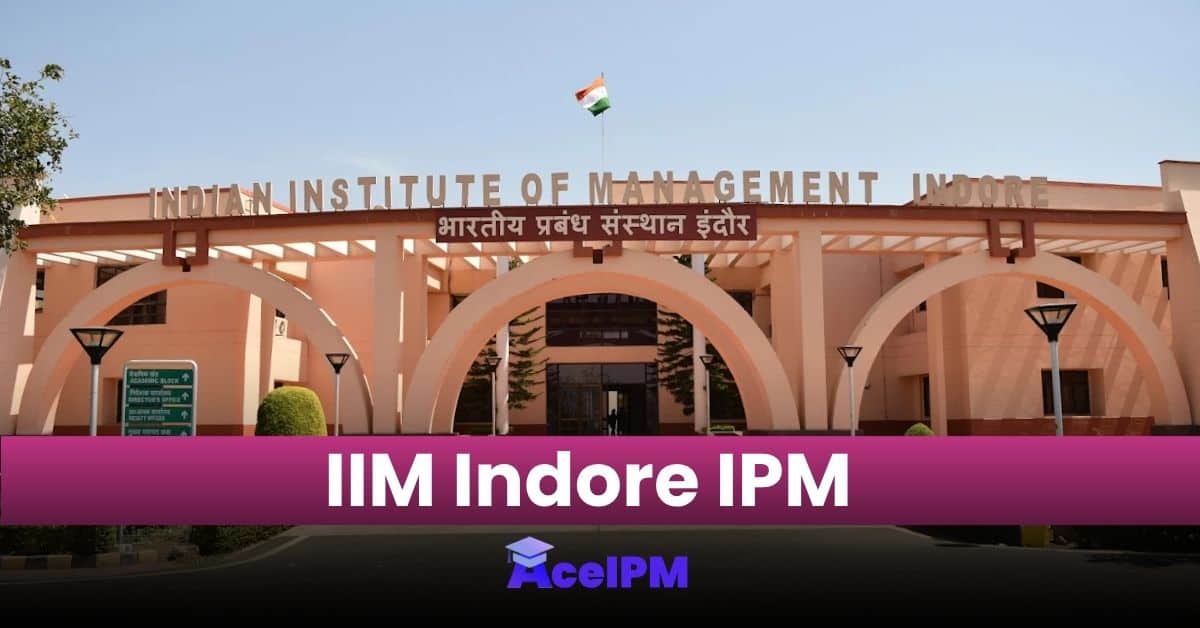
Established in 1996 as the sixth IIM, IIM Indore ranks eighth with a NIRF 2025 score of 71.34 and an average placement package of ₹28.8 LPA in 2024. It was the first IIM to launch a five-year Integrated Programme in Management (IPM) for undergraduates, a model now copied across the IIM system.
The campus is one of the largest in the IIM network, with over 1,000 students across programs. Its executive education and EPGP offerings are among the biggest in the system, and industry linkages across central India give it a regional recruiting advantage.
For school leavers who know they want a management career early, the IPM route at IIM Indore remains the most established path.
9. Xavier School of Management (XLRI), Jamshedpur
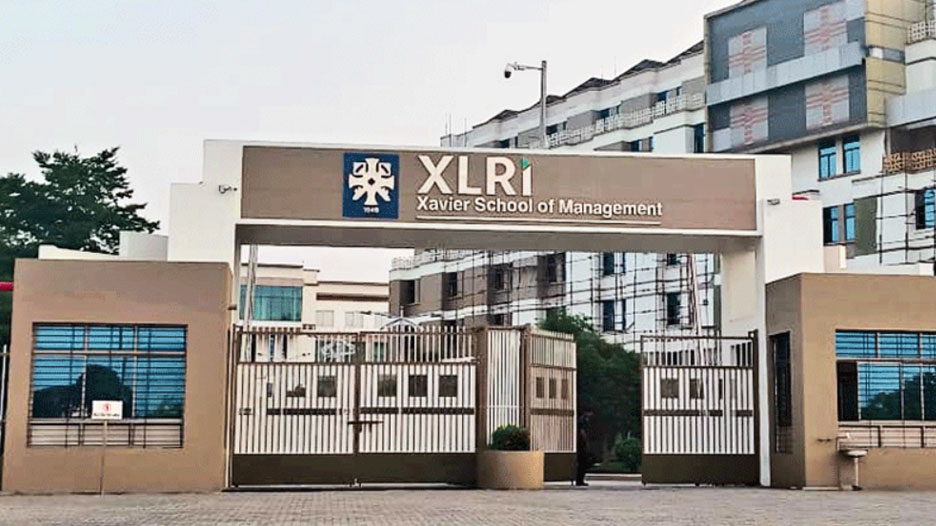
XLRI, founded in 1949 by the Jesuits, is India's oldest business management institute and the top-ranked private B-school in the country. It ranks ninth with a NIRF 2025 score of 69.87 and an average placement package of ₹32.5 LPA in 2024, a figure that beats several higher-ranked IIMs.
Its reputation rests on two flagship programs: Human Resource Management (HRM) and Business Management (BM). The HRM program has been ranked first in India for decades and is the default destination for anyone serious about an HR career. Admission runs through XAT, the entrance exam XLRI itself conducts.
For candidates who want private-sector agility with placement outcomes that rival the IIMs, XLRI is the strongest non-IIM option in the country.
10. Indian School of Business (ISB), Hyderabad/Mohali
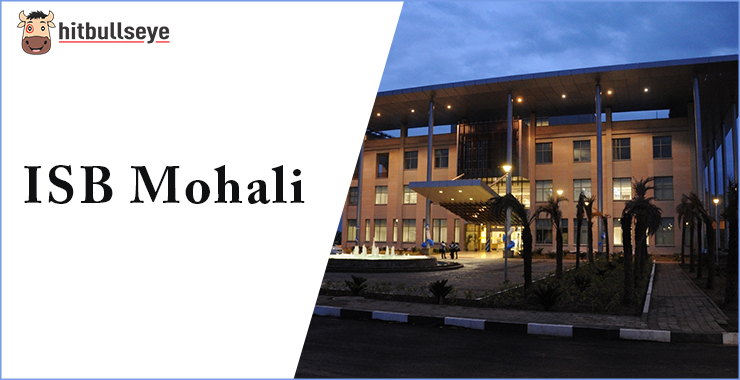
ISB, established in 2001, occupies a category of its own. It offers a one-year Post Graduate Programme in Management designed for mid-career professionals with four to eight years of experience, and its average placement package hit ₹34.8 LPA in 2024, with a post-MBA salary increase of roughly 120%.
Globally, ISB is the only Indian school to feature in the Financial Times top 30, ranked #26 in the FT Global MBA 2024 list. Its alumni network across consulting, technology, and private equity gives it outsized placement leverage for a school barely two decades old.
The one-year format and non-IIM status place it at #10 on this NIRF-weighted list, but for experienced professionals calculating return on investment, ISB's numbers are difficult to argue with. The opportunity cost of one year instead of two, combined with a 120% salary jump, makes it the most efficient MBA in India on a pure ROI basis.
The ranking above reflects NIRF scores and placement outcomes, but the right school depends on what you want from an MBA. Candidates targeting investment banking should weight IIM Calcutta's finance program heavily. Entrepreneurs will find IIM Bangalore's NSRCEL ecosystem more valuable than a marginally higher NIRF score elsewhere. Working professionals with existing experience should run the ISB ROI calculation before committing to a two-year program.
Entrance exam strategy matters too. The IIMs and most schools on this list admit through CAT, while XLRI requires XAT and ISB accepts GMAT or GRE. Application timelines for the 2026 intake begin in August 2025 for CAT-registered schools, so aspirants should have their shortlists finalized well before then.
Related Posts



0 Comments
Join the discussion and share your thoughts
No Comments Yet
Be the first to share your thoughts on this article!