Top 10 Best Investment Apps In The World 2026

Table of Contents
Choosing where to put your money has never been more complicated, or more convenient. The best investment apps in the world for 2026 span everything from full-service brokerages managing trillions in assets to micro-investing platforms built around spare change. To build this ranking, we weighed criteria including assets under management, fee structures, customer satisfaction scores, research tools, and how each platform serves different investor profiles. We also factored in industry recognition from sources like NerdWallet, Forbes Advisor, and StockBrokers.com, alongside user sentiment and platform capabilities.
This ranking reflects the platforms that matter most right now. Some dominate because of their sheer scale. Others earned their place by redefining how everyday people access markets. Whether you are a first-time investor or a seasoned trader, these ten apps represent the current standard for mobile investing.
The Best Investment Apps In The Worlds 2026:
1. Fidelity Investments

Fidelity sits at the top of our list for a simple reason: it does nearly everything well. The company reported $7.8 trillion in assets under management in Q2 2026 and serves roughly 50 million customers. Those numbers alone would justify a top ranking, but Fidelity's strength goes deeper than scale.
The platform won multiple "Best of" awards from Bankrate, StockBrokers.com, and NerdWallet for 2026, specifically for its research capabilities, educational content, and retirement account offerings. The mobile app is notably clean and intuitive, and it does not aggressively push users toward products they do not need, which is increasingly rare in this industry.
Customer support remains a differentiator. Fidelity offers 24/7 phone support and maintains over 200 physical investor centers across the United States. For investors who want the option of talking to a human, that matters. The combination of low costs, deep research tools, and accessible support makes Fidelity the most complete package available in 2026.
2. Charles Schwab
Charles Schwab consistently earns 5/5 customer satisfaction ratings, and that reputation is well earned. The platform offers 24/7 support with no account minimums, making it accessible to investors at every level.
Schwab's real strength is flexibility. The platform handles self-directed trading and robo-advisor services with equal competence, and users can move between the two approaches without friction. The research and educational content available through the app rivals what you would find on desktop platforms, which is a significant advantage for mobile-first investors.
In direct comparisons, Schwab typically lands just behind Fidelity, and the gap usually comes down to research tools. Fidelity's screening capabilities and data depth edge out Schwab in specific broker comparisons. But for customer service and overall reliability, Schwab remains a top-tier choice that suits both beginners and active traders.
3. Vanguard
Vanguard manages over $8 trillion in global assets as of 2026, and the company that pioneered low-cost index investing continues to dominate that space. For long-term, passive investors, Vanguard is still the benchmark.
The platform offers an extensive selection of proprietary mutual funds and ETFs with expense ratios that remain among the lowest in the industry. Retirement planning tools are particularly strong, which makes sense given Vanguard's historical focus on retirement savings.
The trade-off is the user interface. Vanguard's app is functional but not flashy, especially compared to platforms like Robinhood or Webull. The company seems to accept this trade-off willingly, prioritizing investor returns over trading frills. For wealth accumulation over decades, Vanguard remains a top-tier choice. For someone who wants a sleek, gamified trading experience, it is not the right fit.
4. Robinhood
Robinhood changed the industry when it introduced commission-free stock trading, and every major brokerage eventually followed its lead. That alone secures its place in this ranking.
The app offers a highly intuitive, mobile-first experience with no minimum balance requirement. It remains especially popular with younger, tech-savvy investors who appreciate the simplicity of the interface. Robinhood has expanded well beyond basic stock trading, now offering crypto, options, and retirement accounts with matching contributions.
The platform's weaknesses are well documented. Research tools are limited compared to full-service brokers, and customer support has faced criticism over the years. For active traders who need advanced data and analysis, Robinhood falls short. But for someone starting out who wants a straightforward way to buy stocks and crypto, it remains one of the most accessible options available.
5. M1 Finance
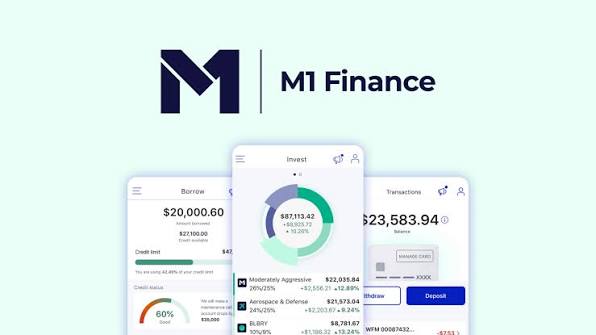
M1 Finance occupies a unique position in the market. It combines the automation of a robo-advisor with the control of a self-directed brokerage, and it does both well.
The core feature is the "pie" system. Users build custom portfolios of stocks and ETFs, then M1 automatically rebalances them. This is ideal for hands-off investors who want specific allocation without manually monitoring their portfolio. Fees are waived for investable assets of $10,000 or more, or with an M1 Personal Loan, which makes the platform competitive on cost.
M1 also offers a borrowing feature and a high-yield checking account, creating a broader financial ecosystem. The research tools are not as comprehensive as Fidelity or Schwab, but the automation features are best-in-class. For investors who want a set-it-and-forget-it approach with more control than a traditional robo-advisor, M1 is the standout choice.
6. Wealthfront

Wealthfront ranks as a premier robo-advisor, offering fully automated portfolio management with sophisticated features that appeal to passive investors. The platform provides tax-loss harvesting and direct indexing, features typically reserved for high-net-worth clients at traditional firms.
The high-yield cash accounts are another draw. Wealthfront offered APYs above 5% in 2026, among the highest in the industry, and new funded accounts received a $50 bonus. The platform also functions as a modern banking alternative, with cash management tools that go beyond basic investing.
Wealthfront's limitations are structural. There are no human advisors and no traditional trading options. Investors who want to pick individual stocks or talk through their strategy with a person will not find that here. But for fully passive investors who want sophisticated automation, Wealthfront delivers exceptional value.
7. Webull
Webull is the platform of choice for active and tech-savvy traders who want advanced tools without paying commissions. The app offers stocks, ETFs, options, and a substantial selection of cryptocurrencies, all with zero commission.
The charting and real-time market data are particularly impressive. Webull's analytical tools rival what you would expect from desktop trading platforms, and they are fully accessible on mobile. For traders who want to monitor multiple timeframes and indicators, Webull is hard to beat.
Webull also runs aggressive promotions. New users can receive up to 2 free stocks valued between $2.50 and $250 for account creation, plus 2 more valued between $2 and $1,600 for a $100 deposit. The platform falls short on financial planning tools and human customer support, which keeps it below full-service brokers. But for active trading, it is one of the best mobile experiences available.
8. Coinbase
Coinbase is the largest U.S. cryptocurrency exchange by volume, and it remains the most accessible gateway for investors looking to trade digital assets. The platform supports a vast array of cryptocurrencies and offers both a simple buy/sell interface for beginners and a more advanced "Advanced Trade" platform for professionals.
Security is a major focus. Coinbase maintains strong protocols and insurance coverage for digital assets held on the platform. The educational rewards program, which pays users crypto for watching videos, is a distinctive feature that helps newcomers learn while earning.
The main drawbacks are fees and focus. Coinbase's fee structure for small trades is higher than stock trading apps, and the platform is limited to crypto. Investors who want a single app for both stocks and digital assets will need to use multiple platforms. For dedicated crypto investors, though, Coinbase remains the standard.
9. Acorns
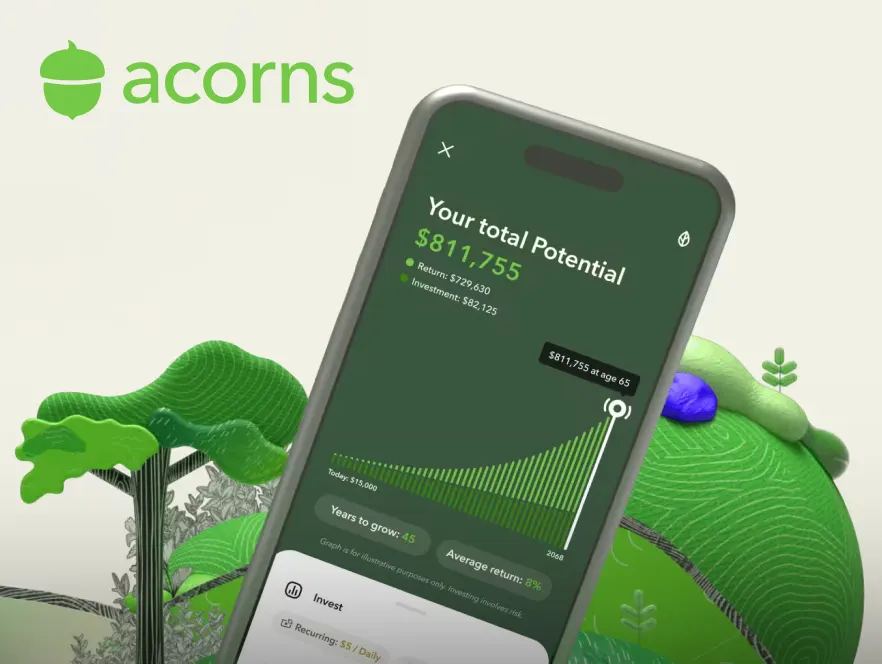
Acorns takes a fundamentally different approach to investing. Instead of requiring users to make deliberate trades, it automates investing by rounding up everyday purchases to the nearest dollar and investing the spare change.
This micro-investing model is designed for financial beginners who want to build wealth passively. The platform connects to users' bank accounts and cards, automatically investing spare change into diversified portfolios of ETFs. Recurring investments, retirement accounts through Acorns Later, and a debit card with investment rewards round out the offering.
The subscription fee structure starts around $3 per month, which can represent a significant percentage of small portfolios. That is a legitimate criticism. But for someone who would not otherwise invest at all, the simplicity and automation make Acorns a valuable entry point into the market.
10. Stash
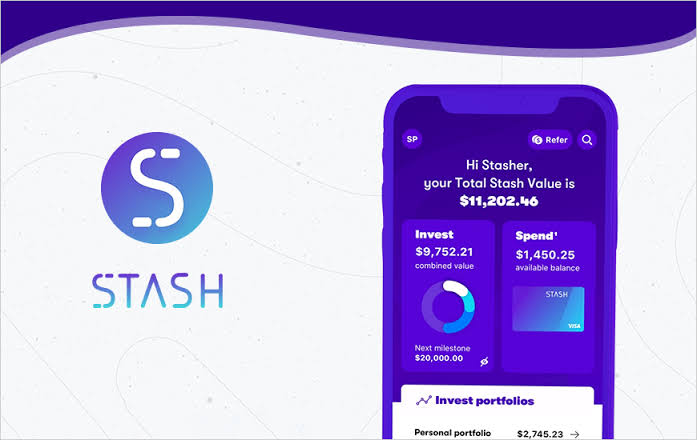
Stash rounds out our top ten with a focus on financial education and accessibility. The platform allows users to buy fractional shares of stocks and ETFs with as little as $1, which lowers the barrier to entry significantly.
The "Learn" section is a standout feature. Stash curates educational content that helps users understand investing basics, from how ETFs work to the mechanics of diversification. The platform also offers a banking and investing ecosystem with a debit card that provides stock-back rewards, turning everyday spending into investment opportunities.
Stash's higher monthly fees and limited advanced trading tools make it less suitable for experienced investors. But for beginners who want to learn while they invest, Stash provides a supportive environment that many competitors lack.
The best investment app in the world depends entirely on your goals, experience level, and preferred approach to investing. Fidelity and Charles Schwab offer the most complete packages for investors who want research, support, and a wide range of options. Vanguard remains the choice for long-term, low-cost index investing. Robinhood and Webull appeal to active traders who want a streamlined mobile experience. M1 Finance and Wealthfront serve hands-off investors who want automation. Coinbase is the gateway for crypto. Acorns and Stash help beginners start small and learn as they go.
Related Posts


1 Comment
Join the discussion and share your thoughts